
| No | Name | Description |
|---|---|---|
 11 days
|
To start the tour you take a train from Riga to Liepaja, a city with white sandy beaches and a lively cafe culture. The route goes through suburbs of Liepaja to the former millitary town where you see the Orthodox cathederal, old naval fortifications, former barracks and an imposing military prison which is now a tourism site. Pavilosta is a small seaside town and a favourite with windsurfers. Next the route follows the picturesque coastline, including steep banks at Jurkalne and finishes at the well-maintained town of Ventspils. Then along to fishing villages that are home to the tiny Finno-Ugric ethnic group, the Livs. At Cape Kolka the Baltic Sea meets the Gulf of Riga. Here, sampling the local smoked fish is a must. Further on, the route crosses three different types of sea shore – the stony beach at Kaltene, a sandy one at Upesgriva and coastal meadows at Engure. Finish with the trails at Kemeri National Park and return to Riga from the popular resort town of Jūrmala. |
|
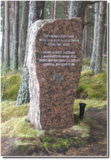 |
A memorial to Finnish soldiers in
Klapkalnciems – five such soldiers from
World War I are buried here. The memorial
was first installed in 1929, but it was
destroyed by the Soviet authorities. It was
recreated in May 2004. The Lapmežciems
Museum features photographs and more
information about the Finnish soldiers.
|
|
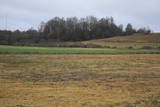 |
Atrodas Vārtājas ielejas labajā krastā un labi saskatāms no Priekules – Grobiņas (P106) ceļa. Senās kuršu zemes – Piemares pilskalns, kas vēstures avotos pirmo reizi minēts 1253. gadā – līgumā starp Kurzemes bīskapu un Livonijas ordeni. Viens no lielākajiem Dienvidkurzemes pilskalniem. Iespējams, ka iepriekš – arī sens kulta kalns. Pagājušā gadsimta sešdesmitajos gados veiktajos arheoloģiskajos izrakumos konstatēts, ka pilskalns bijis apdzīvots jau vidējā dzelzs laikmetā. Pie tā konstatēta liela senspilsētas vieta. |
|
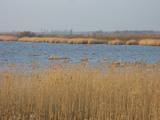 |
A shallow, eutrophic (more than 60% coverage), lagoon-type lake, which is a restricted area to protect the overgrowing lake and the damp meadows which surround it. There are some 60 species of nesting birds in the area. The system of dams on the southern shore of the lake can be used by visitors to look at the area.
|
|
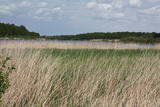 |
The main “treasure” in this restricted area is the shallow and eutrophic lake, which is home to many important birds. The lake and its flood-land meadows also feature many different plants. The Svētupe River flows from the northern part of the lake.
|
|
 |
Atrodas Kokneses tūrisma centra telpās (1905. gada ielā 7). 160 cm garais un 120 cm augstais makets ir Vittingenas (Vācija) dāvinājums Koknesei, atzīmējot 10 gadu sadraudzības jubileju. Šāda Kokneses pils izskatījās ap 1701. gadu. |
|
 |
The farmstead "Vitolini" specializes in horse breeding, as well as horse-riding lessons. It is possible to go horse-riding in the forest or to take a ride in a horse team. |
|
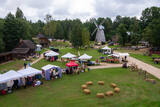 |
The venue features tools, farm machines, mechanisms and everyday objects that are typical of Latvia’s countryside. These are both in the yard and in the buildings of the enterprise. You can help to bake bacon rolls and loaves of bread in areal country oven. The owners will be happy to provide you with an informative tour. Water mill that is used for grinding grains: coarse milling, pearling, and making groats. At the annual Sowing Festival and Harvest Festival, the exhibited steam-powered machine and threshing machine can also be seen in action. During festivals, countryside markets and tastings also take place. |
|
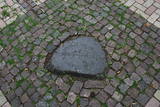 |
The Strūves Park is toward the northwest of Jēkabpils, on the left bank of the Daugava, and opposite the Ādamsona (Krustpils) island. The park was established in the 19th century as a place where the city’s residents could relax and hold celebrations. It can be said with absolute certainty that this is a place of global importance, because the park contains a memorial stone to Professor Friedrich Georg Wilhelm Struwe (1793-1864) from the University of Tartu. He was an astronomer and geodesist. The stone is at a place where Struwe completed his land survey of the Vidzeme Province of the Russian Empire. The meridian location which Struwe identified (and other points related to those locations are found in many other European countries) is on the UNESCO list of world heritage. |
|
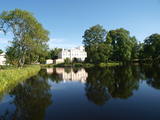 |
The castle, built in 1880 by von Pistolkors family, has been renovated and awaits guests in its new splendour. Guesthouse 78km from Riga. Premises for banquets, wedding, seminars. Sauna, swimming pool. Cultivated landscape.
|
|
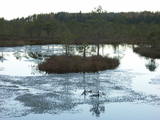 |
Teiči Nature Reserve — untouched territory, bogs, and birds. This is a significant bird resting place before seasonal migrations. Here you can see up to 1,500 cranes and 8,000 geese at once. The bog is a mating-place for black-cocks, therefore if you are near in an early spring, listen, and maybe you will hear these majestic mating calls. The trail can be visited only with the Nature Conservation Agency employee's escort from June 1 until October 31. |
|
 |
The café and guest house, located in the centre of Ventspils, is housed by a classical 19th century wooden building that used to belong to the Kupfer family and is listed as European Heritage. Latvian cuisine: farmer's breakfast, oat or semolina porridge, potato pancakes. |
|
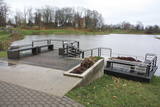 |
Gar Grobiņas ūdenskrātuvi (Ālandes labais krasts) izveidota mūsdienīga un labiekārtota pastaigu un atpūtas vieta - promenāde, uz kuras izvietotas plāksnes ar Zentas Mauriņas un Jāņa Raiņa citātiem. No promenādes paveras labi skatu punkti uz Skābaržkalnu un Grobiņas pilsdrupām. Grobiņas ūdenskrātuves sašaurinājumā pāri Ālandei ved neliels tiltiņš, kas ir bijušā Liepājas – Aizputes šaursliežu dzelzceļa tilta ferma. |
|
 3 days
|
This trip will allow you to visit a farm in Kurzeme and to experience the diversity of its output. Tasty and interesting! From Rīga, the road will lead you along the Gulf of Riga and through fishing villages which are full of the aroma of smoked fish. On the way to Talsi, you will visit an orchard and farm that produces apple chips. Talsi is known not just as the town on nine hills, but also as the home of the tasty "Talsi Wheel" brand of cheese. Also here is the Latvian Agriculture Museum with an exhibition about farming from the late 19th century to the present day. The symbol of Kuldīga is a red brick bridge across the Venta River, as well as the charming Old Town. Next you will visit the seashore to learn about fishing, fish smoking and bread baking traditions. Visit the unique steep shores of Jūrkalne. On the way back you will visit a winemaking facility and a farm where shiitake mushrooms are grown. You will also learn about the path of milk from a cow to finished dairy products and visit a farm at which people will tell you about the story of their family which dates back to the age of noblemen and baronial estate. |
|
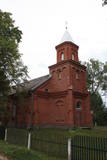 |
Atrodas iepretim bākai. Saukta arī par Pizes (Miķeļtorņa lībiskais nosaukums) baznīcu. To uzcēla 1893. g. Padomju laikā ēkā bija izvietots pionieru nometnes klubs. Tagad tā atkal kalpo savam pamatmērķim. |
|
|
|
One of the oldest towns in Latvia, about which data can be found already beginning from 1378. As a populated area it formed at the banks of the Tebra River (the side of Riga-Prussia road), where once the fortified wooden castle Beida of the Cours Land Bandava was located. In the medieval times Aizpute was the centre of Kurzeme bishopric. After joining Kurzeme to Russia in 1795, Jews settled for living in Aizpute. Today travellers in Aizpute are most attracted by the ancient city environment that is still alive here, as well as by the historical centre of the city and the castle ruins. |
|
 |
Jõeniidu is a small, lovely family farm offering accommodation and meals from vegetables grown on its farm and goat's milk. |
|
 |
The restaurant is on the seashore with two terraces and a lovely view of Jūrmala. Latvian cuisine: Marinated herring with cottage cheese, potato pancakes, fried Baltic plaice, lamb, Latvian cheeses. |
|
|
|
Gebaut am Ende des 18. Jh. im Stil des Frühklassizismus als der Besitz der Grafen von Mellin. Saaldekorationen vom künstlerischen Wert von K. V. Kalopka (1792) und Öfen (Ende des 19. Jh.). Ein Park. |
|
|
|
Einer der ausgeprägten Kaps der lettischen Küste mit Niederungsauen und einem in 1875 gebauten Leuchtturm. |
|


