
| No | Name | Description |
|---|---|---|
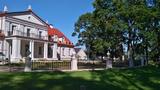 |
This mixed-type park dates back to the latter half of the 19th century and has remained all but unchanged. It is in a lovely place between two lakes, and its spatial structure was preserved when it was restored. The park covers 10 ha and has two parts. One is a fairly precisely rectangular territory alongside the state, surrounded by a stand of linden trees and introduced trees. The other part has a natural forest. The largest oak tree in the park has been declared to be a protected element of natural heritage. The mighty trunk of the tree is 6.3 m around, has a 2m diameter and stands 30.5 m high. |
|
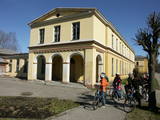 |
Kemeri (Kemmer) are mentioned in the literature sources for the first time in 1561. In the second half of the 18th century and in the beginning of the 19th century the curative properties of Kemeri sulphur spring waters and swamp mud are well known, therefore here representatives of the highest Kurzeme social circles arrive for treatment. The local foresters welcome the guests. During this time the first mud baths are organised. For some time the development of Jurmala and Kemeri beach is terminated by the Fatherland War of 1812. Two decades later – from 1833 until 1835 the benefits of Kemeri were enjoyed by General Governor of the Baltics Graf K. M. Palen, who addresses the Tsar of Russia Nicholas I for supporting further development of the health resort. Plead is supported and in 1836 Tsar allocates 700 ha of state land and grants 100 000 roubles for the construction of sanatorium and paving of the road from Kemeri till Sloka-Tukums high-way. Two years later (in 1938) the first state bath institution is opened. This is also considered the year of founding the health resort. In several stages the formation of Kemeri Landscape Park is begun, which is an important part of the health resort. In the middle and second half of the 19th century further development of the health resort is promoted by steamboat, as well as railroad traffic that are opened in 1877 from Riga till Tukums. In 1912 direct railroad line Kemeri-Moscow is opened. Early before World War I the number of patients reaches 8300 per year. The 1st battlefront of World War I is held in Kemeri swamp for several years and the health resort is significantly destroyed. Despite this fact after the war it develops rapidly and Kemeri becomes a beloved recreation place for the residents of Riga and one of the most modern health resorts in Europe. In 1924 a new bath institution with mud-baths is built in Kemeri, which at the time is one of the most modern in Europe, but in 1936 State President Kārlis Ulmanis opens one of the most prominent buildings of the first independent state of Latvia period – hotel "Ķemeri". Also after World War II – during the Soviet times the health resort is significantly expanded and almost 10 sanatoriums are established within its territory, in which about 100 doctors are employed. In 1971 Kemeri is awarded the status of All-Union health resort. From 1975 until 1985 the largest of sanatoriums is constructed in Kemeri – Līva (initially – Latvija), which has two blocks of eleven storeys. Up to 1200 patients at the same time could receive treatment at Līva, but within a year – up to 140 000 patients. The sanatorium is closed in the beginning of the 90ies of the 20th century as unprofitable. Up to 1994 five sanatoriums operate in Kemeri: "Čaika", "Daugava", "Dzimtene", "Ķemeri" and "Līva" (Latvija) and resort policlinic "Ķemeri". The latter period may be considered the declining fame period of Kemeri as a large-scale health resort. |
|
 |
The peat cement factory. This is an
abandoned but unique industrial
landscape. Follow markings when crossing
the factory’s territory.
|
|
 |
The Peppermint Hut offers various teas, cookies, candies, honey with peppermint and peppermint syrups. Periodically, new products area added to the range. Creative workshops are used to produce peppermint soap, plates with images of peppermint, decorative candles and many other things. The owner of the house also uses peppermint to produce powders and facial tonics. |
|
 |
This nature park features the most beautiful and distinct parts of the Vanema hillocks in Northern Kurzeme, and the aim is to protect the hillocks of Talsi. This is one of the loveliest parts of Kurzeme, with small but distinct hillocks and ravines among them. There are small but fairly deep lakes in the area – the Lake Ābeļi, Lake Čumals, Lake Sirdsezers, etc. Some of them are reminiscent of nothing other than deep craters. The territory is very good for active tourists – hikers (there are nature trails), bicyclists, etc. |
|
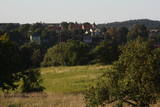 |
The hill is the highest point on the shores of the little Slocene River valley, and it is located in Tukums, at the side of Jelgavas Street. It opens up a broad view of the Slocene River valley and the town of Tukums with its historical centre on the opposite side of the valley. The view is particularly interesting in the evening, when the town is lit up. There is a monument to the liberators of Tukums.
|
|
 |
Located in Daugmale, surrounded by the waters of the Daugava. This special location allows the bees to harvest and bring high-quality honey that has been recognised several times in Latvian contests, as well as other beekeeping products. |
|
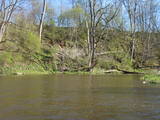 |
Small sandstone outcrops on the shores of the Ciecere River. Fish fossils have been found here.
|
|
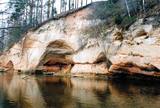 |
This is one of the most beautiful ancient river valleys in Estonia – 12 km long with nearly 40 revealed Devonian sandstone cliffs. Among these, the most important ones are Viira müür, Kalamatu müür, and Põdramüür.
|
|
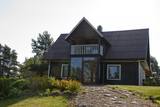 |
Ciemos gaidīti gan pāri, gan ģimenes, gan draugu kompānijas. Lauku sēta sastāv no piecām ēkām. Neskartā daba un tīrais gaiss ļaus atpūsties pilnīgā klusumā. Ap 50 m no Šventosios (Svētās) upes atrodas galvenā ēka, kurā ir divas guļamistabas ar tualeti un dušu nakšņošanai līdz 10 personām. Pirts namiņš būs ērts draugu lokam līdz 9 cilvēkiem. Pieejami trīs jauni VIP namiņi 2-4 cilvēkiem upes krastā. Piemērota vieta kāzu, dzimšanas dienu u.c. svinībām. |
|
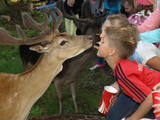 |
Some 200 fallow deer live in large paddocks at the park, and the largest deer sorting facility in the Baltic States is right next door. You can look at the animals from up close. The owner organises educational camps for children and offers consultations on the breeding of animals. |
|
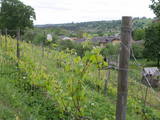 |
Already in the 10th century, an ancient village was located at the Sabile hill fort. After the division of Course land, Sabile was won by the Livonian Order, which built a stone castle (not preserved) here. Sabile is first time mentioned in written sources in 1253. During the 15th century an urban area started to develop at the castle. Town right was awarded to Sabile in 1917. Today Sabile is a small town, surrounded by many notable monuments. Roma culture is an integral part of Sabile and therefore, Sabile is also known as the Latvian capital city of Roma. Sabile has long been known for its wine-growing and oenological traditions, which have been reborn and enjoyable during the Sabile wine festival. |
|
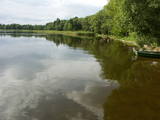 |
Ar mežiem, purviem un ezeriem (Riču, Sila u.c.) bagāta teritorija Latvijas - Baltkrievijas pierobežā. Galvenās aizsargājamās dabas vērtības - dažāda veida purvu, mežu un ezeru biotopi un tajos mītošās augu un dzīvnieku sugas. Ezeru krastos, kurus iecienījuši vietējie atpūtnieki, atrodas vairākas naktsmītnes. Ilgas muiža (celta 19. gs. kā medību pils) ir Daugavpils Universitātes studentu prakses vieta. Silenes dabas parkā ietilpst arī Glušonkas purva un Ilgas dabas liegumi.
|
|
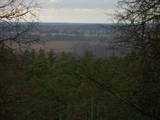 |
This is an area that is full of legend and tale. There is a stiff hillock, which stands about 66 metres above the surrounding land. From its southern side, you can see the Burtnieki lowlands. The tower, however, is not open to the public.
|
|
 2 days
|
The Gauja is the most beautiful river in Latvia, with an impressive river valley that is up to 80 metres in depth. Picturesque sandstone outcrops rise above the river. The Gauja is a calm river, with just a few small rapids. Leisure boating is perfect here. Between Cesis and Sigulda, the Gauja flows through the Gauja National Park . There are several well-appointed facilities for boaters on the banks of the river, with benches, tables, places for campfires, firewood and information stands.Several interesting heritage sites on the way - Ligatne Oldfashioned ferry, Turaida medieval castle and Krimulda Manor. |
|
 |
Saimniecība ir neliela un atrodas laukos, klusā vietā. Līdz ar to pilnīgi dabiski tiek nodrošināta mierīga un relaksējoša saskarsme un darbs ar zirgiem. Piedāvā izjādes ar diviem zirgiem, organizējam sacensības pajūgu braukšanā. Vasaras periodā nodrošina zirgiem pansiju. Atrodas tikai 4,5 km no valsts nozīmes A9 ceļa Rīga- Liepāja un 16 km attālumā no Rīgas Zoodārza filiāles „Cīruļi”. Vasarā ir ugunskura vieta, nakšņošanas iespējas teltīs. |
|
 |
The café is located in the centre of Talsi, near Church Square, not far from Talsi lake. Latvian cuisine: Bean, sorrel and chilled soup, grit or pea porridge, sautéed vegetables and meat, homemade steak haché, grey peas with bacon, pork ribs, potato pancakes, whipped fool, fruit juice gelatine with milk. |
|
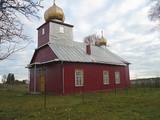 |
Notra’s Old-Believers Prayer House. The construction works
lasted from 1928 till 1931. The church is situated on the site of the
previous church that was originally built in 1853.
|
|
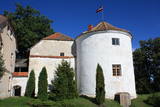 |
The first stone castle in Alsunga was built in 1372, starting with the central part of the southern wing. The authorised representative of the Livonian Order, who was subject to a higher-ranking official in Kuldīga, lived here. The guard towers and other parts of the castle were gradually added between the 15th and the 18th century. The Baroque castle with its two towers is quite impressive. The castle is unique in and outside of Latvia in that it is one of the rare Medieval castles to have survived to the present day in part, but in its original historical appearance. The castle offers an exhibition about its history. Visitors can look at a Suiti kitchen, write a letter with a fountain pen in Barbara’s boudoir, or celebrate a special event in the romantic venue of the castle’s round tower. Renovation of the castle began in 2018, and it is closed to visitors. Still, you can look at its exterior and tour its garden. |
|
 |
The farm is on the banks of the Daugava River and grows various berries, apples and pears. You can taste the fruit and berries in the garden and by products, as well. |
|


