
| No | Name | Description |
|---|---|---|
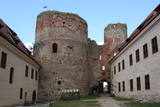 |
Bauska's name in historical sources for the first time is mentioned in 1443. This is the time when on the peninsula between Musa and Memel confluence construction of last Livonian Order castle on the present-day territory of Latvia was begun. At the castle – in Ķirbaksalā populated area so-called Vairogmiests developed. During the 17th century rapid boom of the town was observed. Here were working goldsmiths, silversmiths, carpenters, potters, shoemakers and other craftsmen. In later centuries the city suffered from wars, plague and Napoleon army. Today Bauska old town with reconstructed City Hall and the restored Bauska Castle is one of the most interesting Latvian historical town centres. Bauska is known for its annual events - Ancient Music Festival, Bauska town festival, country music festivals, and other events. |
|
 |
Atrodas Rīgas – Ventspils autoceļa (A 10) 88. kilometrā, pašā Abavas krastā. Pie stāvlaukuma interesants objekts – senais Zemgales un Kurzemes robežstabs un vēsturisko novadu robeža. Piedāvā kempinga pakalpojumus. |
|
 |
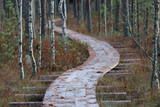
In 2006, a wooden pathway was installed across the Planči swamp – 500m long, which means that the visitor will spend around 20 minutes there. This is probably the only nature trail in Latvia for which there are plans to post information in Braille for people with impaired vision.
|
|
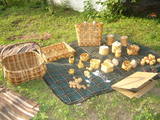 |
This is one of the few workshops in Latvia where things are woven with birch bark. You can look at the objects and discuss the experience of the craftspeople. They will help you to produce simple objects out of birch bark, and those will be excellent souvenirs. |
|
 |
This company has, for the past 16 years, produced classical candies of honey, peppermint, ginger and buckthorn, as well as other products. It also offers juice made of the common stinkhorn mushroom – a medicinal substance well known in Latvian folklore. You can purchase the products that are on offer. |
|
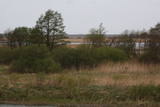 |
At the centre of this restricted area is the eutrophic Lake Tosmare, a former lagoon from the Littorina Sea. The lake and its surroundings offer protection to many plants and birds. At the southern end of the lake one can spot remnants of the former Liepāja fortification system, and to the West is one of the most important parts of that system – the Fortress canal. |
|
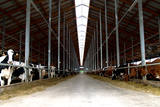 |
AS Agrofirma Tērvete is the largest multi-sector farming company in Latvia, operating in crop farming, dairy farming, horse breeding, public dining, biogas manufacturing and brewing of beer. Visitors can tour a brewery and the farm. The brewery produces popular Tērvete beer and kvass. Visitors can taste the products and take a small tour of the facilities. All of the types of beer can be tasted with delicious snacks. The Tērces farm is a dairy farm with modern technologies and 3,000 dairy cows. Visitors can tour the facility and have lunch at the company’s dining hall. |
|
 |
The chef's house is located in the former Līgatne Maternity Hospital "Wilhelma". It is intended as a place for chefs as well as other interested parties to do, create and experiment. The author of the idea is chef Ēriks Dreibants. The aim of this place is to encourage you to explore and discover the unique tastes and experiences of our region. The chef's house supports the slow food philosophy and the surrounding farmers and producers. Next to the house there is a Nature Observers' Garden, where there is a playground "Nest in the Tree", a magnifying glass for a closer look at the elements of nature, and a picnic area with a fireplace. There is an herb garden in the garden, fruit trees and berry bushes have been compiled, but in the center of it, next to the Bird Watching Square, there is a Butterfly Meadow. |
|
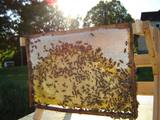 |
This family company offers high-quality and traditional beekeeping products in the Gauja National Park. There are some 110 hives of bees, and the products include honey, pollen, bee bread, wax and propolis. The owners also produce new and unprecedented products which satisfy the demand of clients for something that is unusual, but healthy. You can take a tour and purchase honey. |
|
 |
The viewing tower is on the western part of the Blue Hills of Ogre, not far from the Dubkalni quarry. Paths lead to the tower, as does a wooden staircase. The viewing platform offers a very broad view of the Ķegums hydroelectric power plant reservoir and the towers of
|
|
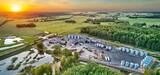 |
Z/s Kotiņi pamatnodarbošanās ir graudkopība ar specializāciju sēklkopībā. Vieni no lielākajiem sēklas ražotājiem valstī. Apsaimniekojamās zemes platība ir 4500 ha, no kuriem 3500 ha ir augstu kategoriju sertificētas sēklas lauki. Audzē kviešus, miežus, rapsi, pupas, zirņus, auzas, rudzus, eļļas rutkus, sinepes, griķus, āboliņu, sarkano auzeni, timotiņu, Speltas kviešus. Saimniecība piedāvā produktus ar pievienoto vērtību:
Daļa no Kotiņu produktiem ir atzīti ar zaļās karotītes kvalitātes zīmi! Kotiņi ir saimniecība, kur lieto Latvijā ražotu 100% zaļu enerģiju. |
|
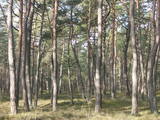 |
Ap 100 gadus veca priežu audze, ko iesēja pagājušā gadsimta sākumā. Sēklu materiāls bija nācis no kādas Vācijas (Darmštatē) sēklu tirdzniecības firmas. Mūsu klimatiskajos apstākļos priežu stumbri izauga līki un kroplīgi. Savdabīgā audze labi redzama no šosejas malas.
|
|
 |
Cheese farm Andre manufactures and sells globally renowned cheeses. Cows from happy farms give premium quality, delicious milk. Farm visitors can visit and see the cows, as well as watch the milking process. You can buy organic cheese and other organic local produce from small producers at the small farm store. |
|
 | ||
 12 days
|
The duration of the route is up to 12 days with self-drive transportation. The total distance is about 1 500 km.
|
|
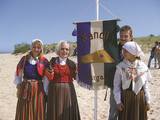 |
In a document from 1387, the village is named Minor Irva. Until the mid-20th century, Mazirbe was the largest Livonian village on the coast of Kurzeme. It was a fishing village and a centre for fishing. The village had a church, school, pharmacy, forestry company, several stores, a post and telegraph office, train station, barber shop, bakery and photo workshop, as well as a brick kiln. During the 1930s, a local fishing co-operative built a fish processing plant here. The Livonian Association was established here in 1923, and the Livonian People's Centre was opened in 1939. Oppoite the centre is the Stūrīši homestead (the home of the Taizel dynasty), where you can learn about everyday household objects and, by ordering it advance, taste local foods. The first chairmen of the Livonian Association, Kārlis Stalte and Māritņš Lepste, lived in Mazirbe. Cultural worker Kārlis Stalte (1870-1978) spent man years as the verger and organist of a church in Mazirbe. Mārtiņš Lepste was a Livonian language teacher in the 1930s. The former Maritime School building can be viewed from the outside. Some 2,000 students attended the school between 1894 and 1914. During Soviet years, the army had a base here. |
|
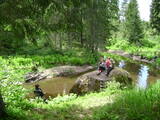 |
The trail tells about grey dunes which have survived thanks to the border restrictions and the presence of military. The trail starts from the parking place at the mouth of the Užava river. It is one of the few natural rivermouths in Europe. One can also see the „tacis”, an industrial installation for lamprey (Lampetra fluviatilis) fishing during their spawning migration period. The 3km long trail is circular. It winds for 1.5km from the Užava rivermouth to the North, along the coastline (the beach is covered with sand and pebbles), and returns to the starting point by a gravel road through grey dunes. Along the trail, one can observe a distinct white dune with rare plant species Linaria loeselii, Lathyrus maritimus, Anthyllis arenaria, Tragopogon heterospermus. About 1km from the rivermouth, in the sea, one can see a wrack of a sailing ship (parts of frame). The visibility depends on the flow of sand in the sea. The way back opens a beautiful view of the range of grey dunes. Unfortunately, Scots Pine starts taking over the area. There are three important biotopes of EU significance: „Fixed dunes with herbaceous vegetation 2130”, „Decalcified fixed dunes with Empetrum nigrum 2140” and „Dunes with Salix arenaria 2170”, forming a unique mosaic. Typical species here: mountain Alison ‘(Alyssum gmelinii), Pasqueflower (Pulsatilla pratensis), Sand Pink (Dianthus arenarius), Rosemary Leaved Willow (Salix rosmarinifolia), Dark Red Helleborine (Epipactis atrorubens), Kinnikinnick (Arctostaphylus uva-ursi). As a former military site, some military constructions can be seen here like horseshoe-shaped sand ramparts by the road in gray dunes. They were built to disguise military vehicles in case of sea attack. By the Kangroti graveyard, towards the Užava river, there is an underground pillbox. It is a one-man fortification to fire along the coastal perimeter. The Mouth of River Užava walking route is in the nature reserve „Užava” |
|
|
|
Together with Valga on Estonian side - a peculiar frontier twin town. |
|
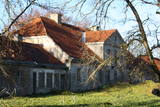 |
Matsalu muiža pirmoreiz vēsturiskajos avotos ir minēta 1560. g., kad tā ietilpa Lihulas bīskapijas sastāvā. Tagad redzamās ēkas ir celtas laikā no 18. gs. otrās puses līdz 20. gs. sākumam. Pagājušā gadsimta sešdesmitajos gados te plānoja izveidot Matsalu rezervāta centru, taču „veiksmīgā loze” tika netālu esošajai Penijē muižai (sk. iepriekš). Mūsdienās muižas pils, citas ēkas un parks (tajā dīķis ar salu) atrodas kritiskā stāvoklī. Taču kā nozīmīgu vēstures liecinieku arī šo muižu var iekļaut apskatāmo objektu sarakstā. Muižas komplekss atrodas pa ceļam uz Kēmu (Keemu) putnu vērošanas torni. |
|
 10 days
|
Этот тур рассчитан на семейный отдых. В нем культурные и природные достопримечательности сбалансированы с множеством забав для детей. Маршрут включает в себя несколько ферм, где можно понаблюдать за домашними животными и Природные тропы Лигатне, где можно увидеть диких животных. На пути есть несколько средневековых замков и живописных городов. Побережье моря встретит Вас песчаными пляжами и рыбацкими деревушками, где Вы сможете отведать копченой рыбы. Национальные парки Гауя и Слитере предложат Вам несколько природных троп и живописные пейзажи. |
|


