
| No | Name | Description |
|---|---|---|
 |
Located in the northern part of Valmiera, the Valmiermuiža Estate mansion (Neo-Baroque Style) was built between 1764 and 1771 by Prince August Friedrich of Schleswig, Holstein and Soderburg. Over the course of time it has been owned by other people. According to modern evidence, the mansion was a one-story building with a Baroque tower and a two-story addition in the early 20th century, which made it appropriate as a summer home and hunting lodge. The building burned down in 1918. Two years later, Valmiermuiža became a prison camp for captured soldiers. Later the addition to the mansion was restored and used as an elementary school. In 1936, the building became a prison, and it was once again a prison camp for captured soldiers during World War II. Later the building burned down again, and the ruins were removed. Still surviving is the Valmiermuiža tower, with ceiling paintings that are a cultural monument, as is the surrounding park. The Valmiermuiža brewery is alongside the historical monument, thus providing second wind for the whole region. |
|
 |
The Eversmuiža Estate is in the centre of Cibla and is dominated by a 1680 mansion that was built in the style of Classicism and was rebuilt several times later. There is a home for servants, a gatehouse and ancillary buildings that are in poor shape. A stone wall surrounds the park of the estate. Since the 17th century and for nearly two centuries, the estate belonged to an aristocratic Polish family, after it was owned by various others. Today the mansion houses a boarding school and the Cibla Regional Research Museum, which offers tours. A cultural and historical trail runs along the banks of the Ilža River. |
|
|
|
Der Turm befindet sich im Gutspark Kiiu. Wurde im ersten Viertel des 16. Jh. errichtet und diente als einen „Schutzraum” für Grundbesitzer. Geöffnet für Besucher und bietet den berühmten estnischen Likör „Kiiu torn” an. |
|
 |
Atpūtas vietā ir apskatāmas 370 no koka veidotas skulptūras. Ir izveidoti 5 labirinti- 630 m garš pikants labirints ar “pipariņu” tikai pieaugušajiem, tulpju meditatīvais labirints, “Šausmu labirints”mežā, bērniem- 25 m garš labirints ar maldīšanos upenēs “Tracis”, zaru labirints “Dižputna ligzda”. 60 dažādas lielformāta brīvdabas spēles un atrakcijas. Dabas taka “Putnu iela”, kurā apskatāmi Latvijas dobumperētāju putnu būrīši. |
|
|
|
This exhibition has been assembled over the course of many years by its owner, Valdis Tumovs. He features war weapons, fragments of munitions, uniforms, everyday objects, military equipment such as a motorcycle, etc.
|
|
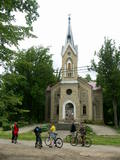 |
18 A. Upīša Street. The church was built in 1897 in the Neo-Gothic style (Architect H. Shel) and it is one of the few19th century city brick buildings. In the church there is the altarpiece "Christ healing the sick" - I. Zeberliņš (1943). You can see the church from the inside during the worship or by a prior arrangement. Near the church, you can see a monument designed by E. Laube (1926) to 80 Latvian riflemen who died in World War I and who were buried in the Warrior's Cemetery near the river Vēršupīte. Near the cemetery, there are also buried J. Kārkliņš and F. Siliņš, fighters of the Kauguri Battle of May 18, 1919. By a prior arrangement, tourist groups can see the church from the inside. |
|
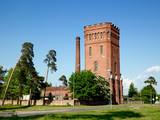 |
Encircled by apartment buildings, some of which are abandoned, the Tosmare water tower, which was built in 1905 in a pseudo-Gothic style and is made of red bricks, stands tall and proud. It is 37 metres high. Steam pumps were once used to pump underground water into the tower (the pumps have survived to this very day). Water was delivered three times a day to the residents of Karosta. The tower is no longer used for its original purpose, however. The tower can be viewed from the outside at any time. This is a unique aspect of Latvia’s industrial heritage.
|
|
 |
The statue of Virgin Mary, also called „the statue of Madonna” was
repeatedly erected in Lūznava Manor park in 1991.
|
|
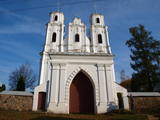 |
Located on the right bank of the Daugava, the church can be seen from various parts of Piedruja. The first wooden church was built at the instruction of Prince Jan Stapekha in 1632, and it burned down in 1759. The Baroque stone church that is there now was built in 1759 with its two towers, and it may have been designed by an Italian architect. The towers stand 27 m high, and under the church is a cellar. The towers have three bells – the largest one dates back to 1711, the middle-sized one was manufactured in 1896, and the smallest dates back to 1619. The largest bell weighs nearly 0.4 tonnes. Inside the church are many important cultural and historical monuments, including a central wooden altar with a painting of the assumption of Mary, three 18th century altars, a pulpit from the early 19th century, St Anton’s altar, a fresco of the Holy Trinity, church dishes from the 17th century, etc. The building is surrounded by a large garden with a stone fence and stone repositories at the corners of the garden. Two priests, Kazimirs Konvalevskis and Broņeslavs Stefanovičs are buried here. Stefanovičs played a major role in the restoration of the church after World War I. The Piedruja congregation first emerged during the first half of the 17th century. |
|
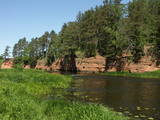 |
This park is in an area which has not been affected much by humankind – sandstone cliffs, an undisturbed diversity of caves, other habitats, species and landscapes is the attractive aspect of this area. The Salaca River is one of the most important rivers in the Baltic Sea region for the spawning of salmon, and it is the second most popular river for water tourists in the Latvian region of Vidzeme. There are geological monuments which are very attractive to visitors – the Red cliffs, Skaņais Hill, the Neļķu cliff, the Velna (Devil’s) cave, etc. There are also cultural monuments such as the Livonian castle hill, the Vecsalaca baronial estate, the Livonian Museum, the Vantenberģi estate, the unique Salaca lamprey weirs, etc. Also in the park is one of the most popular tourist destinations in Northern Vidzeme – the Skaņākalna park, which has a dense network of footpaths. The Salaca is also popular among fishermen. This is part of the Northern Vidzeme Biosphere Reserve. |
|
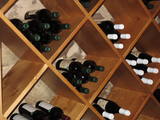 |
In the 400-year old manor’s cellars (possibly the oldest in Latvia) one is offered to taste the home-made wines produced in Kurzeme (3-7 different wines), as well as the special wine of Shlokenbeka manor with the indigenous countryside goods (you are promised a suprise!) |
|
|
|
Одно из сравнительно редких мест, где на побережье можно понаблюдать за рыбаками в работе. Ветряная мельница «Клаюми» (1930 г.) является одним из самых высоких сельских строений. Рядом с мельницей находится Юрмалциемский Туристический информационный пункт, информационный стенд и место для отдыха.Здесь же видны старые деревянные корпуса барж, брошенных рыбаками. Экспозиция«Старинные предметы жителей Юрмалциемса» находится в восточной части поселка, где в деревянном сарае представлены собранные местными энтузиастами предметы быта и орудия труда окрестных жителей. |
|
 |
This cosy tavern in the centre of Elva will not only provide you with a delicious meal, but also a friendly atmosphere. Even the most demanding of visitors, including vegans, will find their favourites on the vast menu. It is possible to rent the premises, order meals. The outdoor terrace is also available during the summer season. |
|
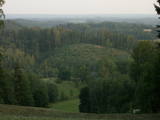 |
From the highest point in the Alūksne highlands, you will see an unusually beautiful view of the surrounding forested hillocks and the small areas of meadows and farmland. Sadly, there are no improvements to the location, which can be difficult to access. It is on private property.
|
|
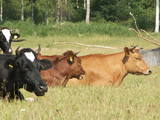 |
The farm grows peas, grits and beans, and it breeds cattle. Visitors can take a tour to learn about biodynamic agricultural techniques. |
|
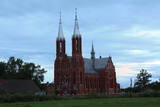 |
Церковь строилась с 1909 по 1913 год. Качество красного кирпича, используемого в строительстве храма, было плохим, поэтому с 1939 года заменено около 60 000 кирпичей! Храм считается одним из самых внушительных сакральных строений Латвии. В строительстве церкви применены декоративные элементы неоготического стиля, а в интерьере - алтарь, кафедра, хоры органа, молитвенные скамейкии изготовленные в наши дни исповедальни созданы в готических формах. Орган строился в 1931 году. Храм пострадал во время Первой мировой войны и был восстановлен в 1921 году. Осмотр церкви рекомендуется проводить в сопровождении гида. |
|
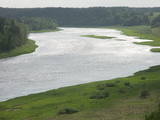 |
The Dinaburga trail first goes downhill, and then it quickly goes uphill to the steep shores of the Daugava river. Among a set of gullies, there is the Naujene (Vecpils) castle hill – some 25m high and the “cradle” of the city of Daugavpils. The ruins of the castle are still visible, and a unique open-air model of the old Dinaburga castle has been prepared. There is a lovely view of the Daugava river valley, and the visitor can expect to spend 20 minutes to an hour here. Objects are located in a protected area of Augšzeme landscapes and in the Curves of Daugava nature park.
|
|
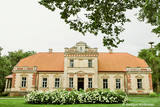 |
The Jakiškiu Estate was first mentioned in documents in the late 16th century. The estate had elements of Classicism in terms of its architecture. Among the buildings, the only ones that have survived are the mansion, an ice cellar and a steam-driven windmill. The estate has not been restored, so it is still authentic. Its artistic soul is preserved by various objects that remain from the time when people lived at the estate and from the Soviet era. Alongside the estate are a few fragments of a park, which covers approximately 2 ha. There is an ancient alley of linden trees that are on both sides of the entrance road, as well as several other valuable types of trees and a small pond. |
|
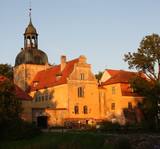 |
The Lielstraupe Castle is the only building in Latvia which contains a Medieval castle and a church. Work on the castle began in 1263. The building suffered great damage during the 17th and 18th centuries, as well as during the riots of 1905. The complex was restored in 1909 by the architect Wilhelm Bockslaff. There are several artistic monuments in the church – the organ loft from the 17th century and the pulpit paintings of the 18th century. In 1944, two stained glass windows produced by the artist Sigismunds Vidbergs were installed at the church – Golgotha and Birth of Christ. The tower contains a clock produced by a local clockmaker, and there is a sun dial on the wall of the church. Visitors to the park of the castle will see the wooden bell tower which dates back to 1744. A memorial plaque to men who fell during World War I and Latvia's liberation battles was installed in the church in 1938. A drugs treatment hospital was installed in the castle in 1963. The church is open during worship services, and the rest of the complex can only be viewed from the outside. |
|
|
|
This is Latvia’s largest lake island and is found in the middle of Lake Usma. The island is restricted to protect old stands of pine, as well as various plants and birds. |
|


