
| No | Name | Description |
|---|---|---|
 |
The craftsman typically produces objects that are of use on an everyday basis. They have laconic forms and reticent decorations. You can take a tour of the workshop and kiln, watch demonstrations, and work with the clay yourself. You can purchase finished products, look at the beekeeping operation, and taste and purchase honey. |
|
 4 days
|
Participants in this tour will learn about Latvia’s most modern crop farms that are typical in Zemgale. During the first day, participants will meet with specialists from the Latvian Agriculture Ministry and agricultural NGOs. They will also tour Rīga, which is part of the UNESCO List of World Heritage, and the Rīga Central Market, which is one of the largest closed markets of its type in Europe. Participants will visit a health food store and have dinner to enjoy traditional Latvian foods and beers. The next day we will go to Jelgava, where the 18th-century castle of the Duchy of Courland and Zemgale will host a meeting with faculty members from the Latvian Agricultural University, which is housed in the palace. We will visit a biologic bakery, as well as a farm that engages in crop farming, livestock breeding and manufacturing of biogas. An artificial wetland is used to purify runoff water. Dinner will be served at a modern leisure complex. On the third day, we will visit one of the largest multi-sectoral farms in Zemgale. It specialises in plant farming, livestock breeding, horse breeding, biogas manufacturing and beer brewing. During the afternoon, we will visit the largest and technologically most modern grain farm in the region, after which we will tour the most outstanding castle in the Baltic States – the Rundāle Castle. Built as a summer residence for Duke Ernst Johann Bieron, the castle was designed by the distinguished Italian architect Francesco Bartolomeo Rastrelli. Dinner will be served at a venue that has an historical windmill and an exhibition related to grain farming. On the morning of the fourth day, we will visit a farm that grows grains for seed, and then a biological farm that produces wheat, barley, peas, beans, rapeseed, herbs and herbal teas. Lunch will be served at a farm that will offer dishes made of home-grown grains and rough-milled flour. Then we will return to Rīga. |
|
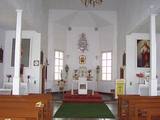 |
Holy Trinity Parish Catholic Church of Strūžāni was renovated
and sanctified in 1958. The church has no towers because they were not allowed in the time of the Soviet
Union.
|
|
 |
This beautiful garden of practical ideas offers colourful flowers and a wide collection of coniferous trees which visitors can visit all year long. Behind the house are a vegetable garden and a group of greenhouses. |
|
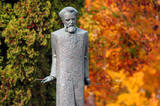 |
In Limbazi, in the crossroads of Cesu and Dailes streets, there is a monument dedicated to the author of Latvian anthem. The monument was designed by the sculptors Zigrīda Rapa and Juris Rapa. It was unveiled on May 16, 1998, when Limbaži was celebrating its 775th anniversary. |
|
 |
The restaurant is in the Grand Hall of the restored Liepupe Estate. Ancient cooking traditions are merged with modern culinary methods. The restaurant works with local farmers and grows greens and herbs in its own garden. Guests are welcome to help with preparing foods on a wood-fired stove in the antique kitchen. Latvian cuisine: Rye bread canapé, a plate of Latvian cheeses, country salad with greens, grilled seasonal vegetables, estate stock, local fish dishes, baked port chop, baked herb-crusted mutton. |
|
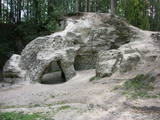 |
This is a sandstone cliff with several arches, pillars and niches. The set of caves (Little Hell, Devil’s Kiln, Devil’s Cave, Liepmuiža Cave and Liepa Cave) are a bit more than 20 m, with a ceiling height of 3.5 m and a width of 5 m. A powerful stream flows from the cave, which is thought to have been formed around 7,000 years ago. The cave is much damaged, because white sand was dug from it in the early 20th century. Great Ellīte is an ancient cult site. Today the site has been much improved. |
|
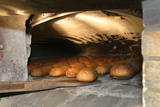 |
Lāči brand bread is popular in Latvia and abroad, because the bakery uses ancient mastery and skills. Baking traditions are supervised by 2 master bakers and 4 journeymen. You can take a tour of the bakery, knead and bake your own little loaf of bread, have lunch at a cosy saloon and purchase the bakery’s products. Lāči uses its own ingredients for its dishes, combining them with seasonal products from local farms. The bakery shop offers a wide range of products from bread to confectionery. Latvian cuisine: Cream of mushroom soup, various hot potted dishes, bread soup, baker’s dessert. |
|
 |
This company uses natural juices and other raw materials to produce blackberry, black currant, sea buckthorn and spinach glazes that are used to decorate handmade gingerbread. You can listen to stories, take part in thematic activities, bake your own gingerbread, and buy dough and finished cookies. |
|
 |
The Ķemeri water tower was built in 1929
and used to be a reservoir for drinking and
mineral water. Until World War II, there was a
viewing platform at a height of 42 metres from
which one could see the surroundings of
Ķemeri.
|
|
 |
Öun Drinks makes refreshing lemonades and ciders from Estonian apple juice. You will also see the lemonade making process. You can taste and buy it to enjoy at home. |
|
 4 days
|
This is a professional livestock farming tour to visit farms that breed cows, sheep, goats and pigs. During the introductory day, participants will tour the Latvian capital city of Rīga, which is on the UNESCO List of World Heritage, and meet with representatives of the Latvian Agriculture Ministry and agricultural NGOs. The next morning it’s off to Kurzeme to visit a farm that breeds meat cattle. The second farm on the list specialises in the breeding of purebred and mixed breed cattle for siring, fattening and meat production. It sells piglets and offers pork, grains, potatoes and beekeeping products. In the evening we will visit Kuldīga to see Europe’s widest waterfall on the Venta River. The next morning we will travel to Vidzeme, where the first farm specialises in livestock breeding and intensive farming, while the second specialises in dairy farming and the production of grains and grasses. We will visit the ruins of the Koknese castle, which stands along the banks of the legendary Daugava River. In the evening, we will visit one of the largest goat farms in Latvia, with some 160 purebred goats (Alpine, Anglo, German White Noble), as well as hogs for breeding. Several types of cheese will be available for tasting. The next morning, we will visit one of Latvia’s largest sheep farms. The biological farm has about 250 head of sheep. The second farm grows grain and grasses and engages in dairy farming and livestock breeding. We will visit the Medieval castle in Cēsis, which was the residents of the masters of the Livonian Order and one of the most fortified fortresses in the territory of the Baltic States. At the conclusion of the day, we will go to Ungurmuiža Estate, which is one of the most outstanding examples of 18th century Baroque wood construction in Latvia. |
|
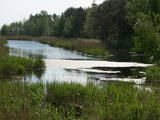 |
Taka izveidota 2005. gadā. Tā atrodas uz Lapmežciema un Bigauņciema robežas un izskatās kā koka dēlīšu laipa gar Siliņupi. Taka aizved līdz jūrai, kur apskatāms vecais Lapmežciema mols. Siliņupē novērojami ūdensputni. |
|
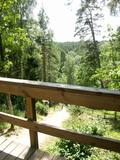 |
The tower is on the banks of the little Tērvete River, with a view of the river valley and surrounding forests. Good views of the Tērvete River valley are also available from the nearby Zviedru Hill and the Tērvete castle hill. Note: The viewing tower at the Tērvete Ancient History Museum is not open to visitors!
|
|
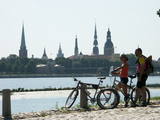 |
The Capital of Latvia. The Old Town of Riga (included in UNESCO Cultural Heritage list) - an excellent medieval building monument. The pearl of Art Noveau in Europe. The former city of Hanza. |
|
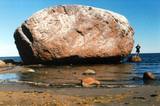 |
This is the largest rock in the Baltic States and, according to some sources, in all of the segment of Northern Europe which was affected by the last Ice Age. Its size is 930 m3! The rock is 7.5 m high, 16.5 m long and 14 m high, with a circumference of 48.5 m. The rock resembles a huge pebble from a distance, and it is on the sandy and rocky beach. Depending on the season, it can be out in the water. The Ice Age carried the rock to its current location from the southern shore of Finland. It is made of pegmatite.
|
|
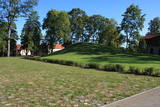 |
The German order built a stone castle here in 1242, and only a few fragments of it remain along with a vaulted cellar in which local wines can be tasted if you register in advance. The castle of the Duke of Courland was here later, but it was destroyed during the Great Northern War in 1701. Reconstruction of the park involved wooden pathways and bridges, information stands, a pergola and a fountain. There are 22 sculptures in the park that are the work of Līvija Razevska. |
|
 |
Atrodas Rīgas – Ventspils autoceļa (A 10) 92. kilometrā. Piedāvā ēdināšanas pakalpojumus, klāj galdus un organizē citus pasākumus. |
|
 |
Tillu is a home café located in Põlva farm store. The place has a slightly eclectic, bohemian vibe, but is warm and cosy at the same time. Pastries and pies are made here every day, therefore the place is filled with pleasant aromas. |
|
 |
The saloon is in the most popular pedestrian thoroughfare in Jūrmala. The wooden building is typical of the town, has a nice interior and offers Latvian cuisine. The saloon offers the largest selection of Latvian draft beers. Latvian cuisine: Lamprey chops, pike haché, potted lamb a la Courland, sautéed pork ribs, fried Baltic plaice, bread soup. |
|


