
| No | Name | Description |
|---|---|---|
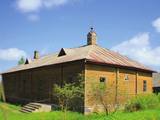 |
St. Alois Roman Catholic church of Ostrone (Ustroņu) was built
in 1935 in the time of dean B. Valpitrs CCM (Congregation Clericorum
Marianorum).
|
|
 |
Meklējama pilsētas centrā - Tirgus laukumā 11. Dievnams uzcelts 1886. g. Ēkā atrodas vairāki nozīmīgi mākslas pieminekļi – gleznas, krucifikss (18. gs.) u.c. Baznīcas dārzā apskatāma skulptūra “Latgales māte” (tēlnieks B. Buls) un piemineklis politiski represēto piemiņai (tēlniece V. Dzintare). Baznīca ir apskatāma arī no iekšpuses. |
|
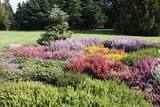 |
One of the youngest Latvian towns, in 2013 it will celebrate its twenty year anniversary. A number of significant scientific institutions in a Latvian scale is located in Salaspils (in Soviet times it was built as a science centre) - Institute of Biology, Institute of Inorganic Chemistry, Institute of Physics, National Botanic Gardens, former Salaspils nuclear reactor and the Forest Research Institute "Silava". Over the last decade the infrastructure has been developed, as well as wide areas of private houses are developed. In 1996 a new Catholic church was built in Salaspils. Most of the town residents commute each day to Riga for work. |
|
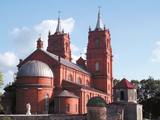 |
Immaculate Conception of Virgin Mary Roman Catholic Church of Nautrēni (Rogovka). The construction
works of the brick church lasted from 1901 till 1914. It is an example of Romantesque style. The
organ was bought in 1939; it is a national cultural monument.
|
|
 6 days
|
The tour introduces a variety of attractions and values outside big cities revealing the true character of the countries. Visitors will experience the beauty of nature in national parks, charming ambience of rural manors, visit traditional rural farms and skilful traditional artisans and craftsmen. |
|
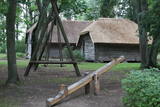 |
The Dole is the largest island in the Daugava River, surrounded to the Northeast by the rapid waters of the Daugava and to the Southwest by calm and gradually overgrown waters from Dry Daugava. The island is a specially protected nature park, established in 1986 to protect the landscape and cultural and historical values of the island in the wake of the construction of the Rīga hydroelectric power plant, as well as rare and protected species of plants and animals. The island is also meant to provide education and leisure for visitors. Best known on the island is the Daugava Museum, which is in the mansion of the old Dole Estate. The museum features some 13,000 exhibits that speak to the history of the island and the river – Baltic and Livonian apparel, tools and household objects. The exhibition also presents the Daugava as an important waterway and the related history of forms of transport and rafters. In the park is an open-air exhibition with reconstructed lamprey eel traps and a barrier to fish salmon, along with a set of fishing tools. A dolomite cliff is alongside the museum on the steep shore of the Dry Daugava. The ruins of the Vecdole castle can be found on the south-eastern end of the island, near Bēči. |
|
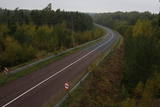 |
This is the ancient shore of the Baltic Ice Lake. We can only imagine the landscape 10,000 years ago, when the Kurzeme peninsula was covered with vegetation reminiscent of a tundra, and waves from the icy lake dashed against the ancient shoreline. We know that the lake was full of icebergs of various sizes. Today the cliff is more than 20 km long (some 9 km of it are in the Slītere National Park), and it is as much as 42 m high. It is the most impressive cliff of its type in all of Latvia. At the foot of the cliff are the Irve flatlands (the name comes from the Liv 'īrva' or 'īra', both of which refer to deer). The flatlands are the former bottom of the Baltic Ice Lake. The Blue Hills are crossed by many small streams and rivers (Pitragupe, Lorumupe, Kaļķupe, Mazupe, etc.). Their valleys are the basis for a branched and very complicated system of waterways which look particularly impressive when the trees are bare. In many places the cliffs and valleys display small areas of sandstone from the Narva suite. These are Latvia's oldest sediment cliffs that can be seen above ground. Although the Blue Hills are very impressive in scope, there are only a few places where there are important viewing areas (a viewing tower at the Dundaga-Mazirbe road, the view from the Šlītere lighthouse, the view from Mežlīdumi). The mightiness of the ancient shoreline can truly be enjoyed from the Cirste-Mazirbe road, the Cirste-Riepaldi road, Mežlīdumi and the Vīdala-Melnsils road). It is worth visiting the area in the springtime, when the slopes of the Blue Hills seem to be sinking under the fresh greenery. |
|
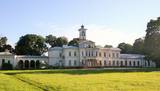 |
This is one of the most expressive estates built in the style of Romanticism. Dating back to the 19th century, it is on a peninsula in Astravo, which can easily be reached from Biržu along the longest wooden bridge in Lithuania, crossing Lake Širvenos. Covering 18 ha, the mixed-plan park was installed from 1851 until 1862. Local fir trees, linden trees and pine trees grow in the park. |
|
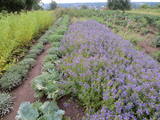 |
The farm is along the upper reaches of the Daugava Ancient River Valley, and it offers more than 100 types of plants, including decorative plants, herbs, medicinal plants and traditional Latvian farm plants. You can tour the largest field of so-called Northern kiwis in Latvia. Take a tour, purchase plants, taste teas, fruits and berries, and receive consultations from the owner. |
|
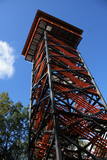 |
Labi redzams no Kornetu centra. Līdz tornim var nokļūt pa taku, kas ved pāri pļavai uz uzlokas pa stāvā Dzērves kalna nogāzi. No torņa paveras viens no skaistākajiem Vidzemes un Latvijas skatiem. Redzams Dēliņkalns, blakus esošie Dzērves un Ievas ezeri, Hānjas augstiene un Lielais Munameģis (acīgākiem vērotājiem). |
|
 3 days
|
This tour will take you on a walk through the Curonian Spit from Nida to Smiltynė. The Curonian Spit National Park is located on a long, sand-dune spit that separates the Curonian Lagoon from the Baltic Sea coast. A sand beach of ~50 km is running on the western side of the dune spit, while the shore of the Curonian Lagoon is shallow and characteristic of ridged bays overgrown with reeds. The Baltic Coastal Hiking Route starts in the centre of Nida near the port. In Nida, it runs along the Curonian Lagoon promenade, offering beautiful views of the spacious waters. From Nida to Bulvikio Cape, the Baltic Coastal Hiking Route winds along small forest paths leading up and down pine-covered dunes; in the village of Preila, the trail runs along the promenade of the lagoon. Between Pervalka and Juodkrantė, the Baltic Coastal Hiking Route leads along a beautiful, sandy beach. You can take the Raganų kalnas (Hill of Witches) trail in Juodkrantė. The route alternates between the Baltic Sea coast, the dunes and the Curonian Lagoon until it finally reaches the ferry, which will take you to Klaipėda. |
|
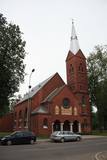 |
The church was built between 1932 and 1938 to replace an old Neo-Gothic wooden church. It was designed by J. Cīrulis. Until 1994, the building housed a venue that rented out films. Today it houses an exhibition, “From Foundations to the Steeple: Photographs of Ancient Lettigalian Construction Jobs.” This documents the construction of the church. The 37 metre steeple offers a good look at Rēzekne. |
|
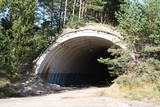 |
This was at one time an important element in the protection of Soviet Latvia’s shoreline. A visually interesting and impressive territory near the seashore, it has sadly not been properly managed and is thus full of trash.
|
|
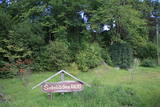 |
Atrodas ~ 1,5 km ziemeļos no Krāslavas centra, Jāņupītes krastā (ir norāde). Pēc atsevišķiem savrupatradumiem var spriest, ka pilskalns apdzīvots laikā no I g. t. pr. Kristus līdz vēlajam dzelzs laikmetam. Domājams, ka savu nosaukumu tas ieguvis šeit sastopamo mālu dēļ. Nelielas mālu ieguves vietas pilskalna nogāzēs ir redzamas arī šodien. Saglabājies nostāsts, ka grāfs Plāters šeit apraudājis savu sievu, kuru pats neuzticības dēļ licis iemūrēt pazemē. |
|
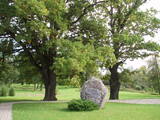 |
This is one of the rare cases in which we know precisely when the trees were planted. It was in 1685 and 1689, and they were planted by the priest of the local congregation, Ernest Johann Glück (1654-1705) in commemoration of the fact that he had completed the translation into Latvian of the Old Testament and the New Testament respectively.
|
|
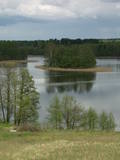 |
In Vecslabada, there is a peninsula among Lake Dziļezers, Lake Audzeļi, and Lake Istra. From the highest point on the peninsula, you will see a truly unusual view of the land of the blue lakes – lake islands, as well as the village of Vecslabada with its church towers. The Lake Istra nature reserve is nearby.
|
|
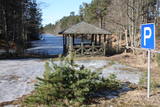 |
The Vecročupe river flows out of the artificial Vaide pond. It was created by blocking the Vaide and the Kukšupe rivers. This happened during the Soviet occupation, when forestry people decided to establish a fishing pond and an area for recreations. A wooden pergola has been installed at the pond, and there is an information stand, as well. On the northern shore of the pond is the Vaide cemetery, which dates back to 1928 and has interesting wooden crosses. |
|
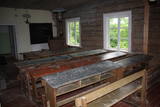 |
The Old School of Druviena is alongside the Druviena-Liezēre road. The historical school building became home to a museum in 1964. The school is closely linked to the great Latvian writer Jānis Poruks (1871-1911), and a memorial room to him has been installed in the building. On the second floor, you can look at a classroom, sit on an old-time school bench and try to imagine yourself as a schoolchild long ago. Interesting exhibits include boxes in which children brought food from home – the same ones which were used by two of Poruks’ most popular characters, Cibiņš and Buņģis. |
|
|
|
This is the grave of the
parents of Captain A. Bertholds with an unusual grave monument.
|
|
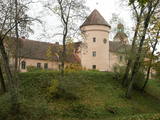 |
Every traveller in Latvia relates the name of Edole to Edole Castle. The beginning of it dates back to the middle of the 13th century, but the outbuildings of it were constructed in the 16th and 19th centuries, when patio was formed. During reconstruction of the castle implemented in the 30ies of the 19th century the facades of the castle acquired their current – Neo-Gothic appearance. From the16th century until 1920ies Edole Castle was located within the property of a baron family. In 1905 during rebellions it was burnt down, but in 1907 it was reconstructed. Many legends and ghost stories are told about Edole Castle. |
|


