
| No | Name | Description |
|---|---|---|
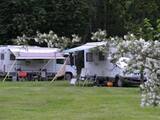 |
The "Jurmala" campsite is located in the park territory of the "Rīgas Līcis" sanatorium and offers facilitated tent, camper and caravan sites, as well as holiday homes for rent. The campsite is located next to the beach and is suitable for recreation with family and friends, as well as for organizing a variety of thematic and recreational events. The proximity to the "Dubulti" and "Jaundubulti" railway stations makes it easy to move around Jurmala or get to Riga. The campsite is also suitable for families with pets. |
|
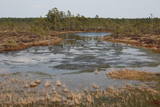 |
Iepazīstina ar Somā nacionālā parka lielākā purva – Kureso (Kuresoo) ziemeļaustrumu daļu, kur redzamas purva ezeriņu un lāmu ainavas. Takas sākumā atrodas igauņu komponista, ērģelnieka un folkloras vācēja Marta Sāra (Mart Saar) (1882. – 1963.) dzimtās mājas. To apkaimē pļavas apsaimnieko aitas. Lokveida takas garums ir 4,2 km. |
|
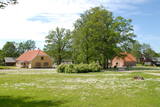 |
The Turaida Museum Reserve is found at the place where the deep gullies of a number of small streams split up the right bank of the ancient Gauja River valley. The Turaida Museum Reserve features monuments of Baltic importance, and their history dates back more than 1,000 years. Among the treasures are the Turaida Estate (21 buildings), the grave of the Rose of Turaida, the Turaida Lutheran Church (one of the oldest wooden churches in Latvia, 1750), and the Turaida Castle. Nearby is Folk Song Hill, where various thematic events are organised. |
|
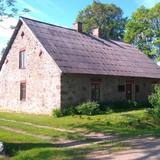 |
Operdziedātāja Jāņa Zābera muzejs "Vecais ceplis" atklāts 1973. gada 11. augustā - dziedātāja dzimšanas dienā - viņa dzimtajās mājās. Muzejā apskatāmas fotogrāfijas no viņa dzīves gājuma, afišas un operu tērpi. Tāpat pieejami dziesmu un operu āriju ieraksti mākslinieka izpildījumā. Muzeju pārzina Jāņa Zābera brāļa meita ar ģimeni. To ir iespējams apmeklēt, iepriekš saskaņojot laikus.
|
|
 8 days
|
This tour has a very summery feel since it never wanders too far from the sea. Latvian sea resort Jurmala attracts with characteristic wooden cottages from the 19th century, Dzintari concert hall and a lively beach. Cape Kolka is located in Slitere National Park which also includes the traditional villages of the smallest ethnic group in the world, the Livs. Enjoy empty beaches and locally smoked fish. Ventspils is an immaculately maintained town with a medieval castle and well equipped beach. Pavilosta is Latvia's unofficial windsurfing capital, while Palanga in Lithuania has an excellent amber museum. Lithuania's pearl is the Curonian Spit and its lagoon which attracts with its vast sand dunes and Nida, a charming village with a Thomas Mann Museum. Back in Latvia, Liepaja is an exciting city with a historic quarter, beach, lively restaurants and clubs and a distinctive millitary heritage in the form of former naval forts and a military zone. Kuldiga is loved by artists due to its picturesque little cobbled streets with wooden houses and the Europe's widdest waterfall on the Venta river. |
|
 12 days
|
This tour offers seeing the capital cities and most attractive towns of Lithuania, Latvia and Estonia through the freedom of independent travel and using public train and bus services. Getting around in cities and towns is easy, either by walking, or by using local public transport or taxis. The Old Town of Vilnius is in the UNESCO World's Cultural Heritage list. Daugavpils Fortress and the museum of Mark Rothko, the world famous abstractionist, are two highlights of Daugavpils city, Rēzekne city is known as the heart of Latgale region. Riga, the capital city of Latvia, offers a variety of cultural experiences and entertainment. Sigulda is famous for its landscapes and medieval castles. Cēsis is one of the most charming towns in Latvia with many attractions ranging from medieval heritage to nice restaurants, exhibitions and festivals. Valmiera offers art galleries, museums, nature trails and Valmiermuža beer from the famous local brewery. Tartu in Estonia is a university town, with some very popular tourist attractions such as the interactive AHHAA science centre, the largest in Baltic countries. Narva is a border town overlooking the Ivangorod fortress in Russia across the river Narva. Finish the tour in Tallinn – the capital city of Estonia. Tourist information centres in cities and towns will help you with maps, information on sights, attractions and guided tours, food, shopping and public transport. |
|
 |
The museum offers information about the history of chocolate, allowing you to learn all about the process, from raw materials to finished products. You can also prepare and taste your own bitterly sweet treat in the creative workshop. Products are available at the little store that is next door to the museum. |
|
 3 days
|
From Riga the route goes to the historic Estonian sea resort and then by ferry to Muhu island. On the way there is ethnographic village of Koguva, the Liiva church and the elegant Padaste Manor. Overnight at Muhu island. 28 km cycling there juniper fields, its small fishing villages, and the magnificent Juigu cliffs, which open up a view of the other small islands in the Monzunda archipelago. Then drive to Saaremaa and stay in Kuressare, the island's capital. There the rooute covers such attractions as Kaali meteorite crater, impressive Valjala church and castle mound, Piretikivi rock and Poide church. Cycle along the Tagameisa Peninsula, up to 30 km. Driving to the ferry take a loop along Viidumae National Park with its viewing tower, Kihelkonna Church, the Odaletsi streams and nature trail and the dolomite Panga cliffs. |
|
 |
This farm is in a lovely location that offers a view of Lake Sauka. He breeds cattle which spend all year long on the sides of nearby hillocks. The owner will offer you a tour, show you the animals, and offer sweet cherries and apples from his garden. |
|
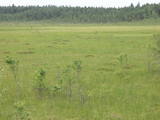 |
Dabas liegums veidots salīdzinoši neliela pārejas tipa purva aizsardzībai. Purvu lieliski var pārredzēt no nelielā skatu torņa.
|
|
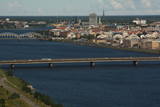 |
This 368 metre structure is the highest television tower in the European Union. Its viewing area, which is at a height of 97 metres, is the highest publicly available viewing area in Latvia. The location offers a fantastic view of Rīga and Old Rīga to Pārdaugava, the Bay of Rīga and Sigulda – a radius of at least 50 kilometres.
|
|
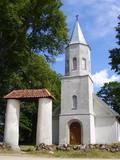 |
Renda is a very old town, first mentioned in historical sources in 1230. During the 13th century, Renda was one of the centres of the ancient Courlandian land of Vanema. When Courland was split up in 1235, Renda was taken over by the German Order, and local residents were forcibly drafted into its military. During the age of the Duchy of Courland (1562-1795), the region flourished despite wars, the bubonic plague and other problems, particularly during the rule of Duke Jacob (1642-1682). During the 17th century, Renda became something of a manufacturing centre, churning out timber products, with local lime kilns, watermills, flax weaving facilities, a glass factory and a boiling house for saltpetre and soap. Wine, perfumes and barrels were produced in Renda, as was cast iron for nails and many other things. The court at the Jelgava Castle loved the sour wines from Renda. All of this was destroyed during the Great Northern War (1700-1721). During the 19th century, a chemicals factory was built on the site of the burned Renda castle, and nearby was one of the largest leather tanning plants in Kurzeme, along with a manufacturing facility for turpentine. Cultural life began to develop in parallel to this. Renda suffered much during the two world wars and the subsequent Soviet repressions. The so-called Courelian Battalion of partisans went into the forests after the occupation to continue their struggle against the Soviet regime. Renda today is a small and quiet village with the Lielrenda Estate, a local church, the “devil’s boat” at the Abava River, and the Īvande waterfalls. |
|
 |
The Kemeri railroad station dates back to 1877,
when the rail line was opened. A train from Moscow
travelled to Ķemeri for awhile, and until 1920, there was
a tram leading from the train station to the beach at
Jaunķemeri. The station was destroyed during World
War I and rebuilt in 1922 (the architect was Artūrs
Medlingers). This was the first building in Ķemeri to be
erected after the establishment of Latvia’s
independence. The station building was rebuilt once
again after World War II. A bike rental facility is found
inside.
|
|
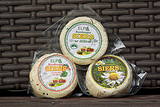 |
For more than 20 years the company has been partnering with some 100 local suppliers of milk. Its main principle is to offer healthy dairy products, including kefir, cottage cheese, cream, yogurts and soft cheese. SIA Elpa is the only dairy processing company in Southern Kurzeme that offers tours and tastings of products. Products can be bought, and during the tours, visitors can taste kefir, cheese and yogurt and help with the dairy processing process themselves. |
|
 |
There is a memorial to the victims of World War I on the side of the Klapkalnciems-Tukums road. |
|
 |
Handicraft house Heltermaa is a local Hiiumaa grocery and handicraft shop, open during the summer season. The selection is very wide, starting from ceramic dishes and ending with Hiiumaa lemonade. |
|
 |
This is a single-family farm, and visitors are welcome to tour it and see white peacocks, pheasants, ducks, chickens, French cattle and white genetic fund pigs from Lithuania. |
|
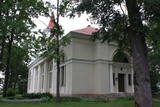 |
The Krustpils Lutheran Church is found at Rīgas Street 211A in Krustpils, on the right bank of the Little Daugava. The stone church which is there was built between 1818 and 1820 and consecrated in 1824. Two older churches stood on the site before then. The church was seriously damaged during World War I, and it was restored in 1924. There are several notable cultural monuments in the church – the altar painting, “Christ Prays in the Garden of Gethsemane”, the organ (with pipes that were manufactured in Germany), etc. The church is seen as one of the best examples of Empire-style architecture in Latvia, and in 1999 it was granted the European blue flag as an element of cultural heritage. There are legends about underground passages to Daugavsala, which is to the West of the church. The church is closed to visitors most days and can only be viewed from the outside. Nearby the church are two monuments – one commemorating the politically repressed, and the other memorialising national partisans.
|
|
 |
In the studio it is possible to buy or order different craftsmanship items, as well as to learn about craftsmanship process. The studio specializes in creating folk costumes, weaving and all sorts of handicrafts, creating jewellery, patchwork, sewing and silk painting. It is possible to see the crafts’ exhibition and buy souvenirs. |
|
 |
Redzamas pa lielu gabalu Vecumnieku – Skaistkalnes un Stelpes ceļu krustojuma tuvumā. Šīs Holdandes tipa vējdzirnavas uzcēla 1903. gadā. Sākot ar 20. gs. 30. gadiem dzirnavas darbojas ar elektrības palīdzību. Līdz mūsdienām ir saglabājušies vējdzirnavu vēsturiskie mehānismi. Kādreiz daudzie vējdzirnavu stāvi bija raksturīga Zemgales vēsturiskajam novadam, ko pamatoti dēvē par Latvijas „maizes klēti”. Diemžēl līdz mūsdienām ir saglabājušies tikai daži. Šīs vējdzirnavas ir apskatāmas tikai no ceļa malas.Ap 8 km rietumos (Iecavas virziens) redzamas vēl vienas – Kāravu vējdzirnavas. |
|


