
| No | Name | Description |
|---|---|---|
 1 day
|
Dodieties ekskursijā, lai gūtu ieskatu lauku profesijā un dzīvesveidā, kā arī iegūtu jaunus iespaidus un labu atpūtu visai klasei. Ekskursijas laikā apmeklējiet saimniecību, kuras galvenā specializācija ir piena lopkopība un graudkopība. Pēc tam izbaudiet pikniku Vilces dabas parkā, kurš ir izvietojies Vilces upītes un tās pieteku gravu krastos. Pie Vilces pilskalna atrodas Zaķu pļava – labiekārtota un iecienīta apmeklētāju atpūtas vieta. Tālāk dodieties uz maizes ceptuvi, lai iepazītos ar maizes cepšanas arodu, degustētu un iegādātos maiznīcas izstrādājumus. Ekskursijas noslēgumā apmeklējiet saimniecību, kur audzē graudaugus un kartupeļus, piedāvā apskatīt senu darba rīku un piena pārstrādes iekārtu kolekciju un praktiski darboties ar tiem. Bērni var atpūsties un pavadīt brīvo laiku atrakciju parkā. |
|
 1 day
|
Kihnu Island is the largest island in the Gulf of Rīga and the seventh largest island in Estonia. Its total area is 16.9 km², the island is 7 km long and up to 3.3 km wide. The former seal hunter and fishermen’s island, with around 600 inhabitants, is currently eager to maintain its identity in spite of everything. The unique characteristics of the Kihnu cultural space, like the lifestyle of the community, the diverse cultural traditions, the Kihnu language, music, national costumes and nature, are included in the UNESCO cultural heritage list. A coastal route that goes through four villages – Sääre, Linaküla, Rootsiküla and Lemsi - will help you to discover the cultural and natural values of Kihnu Island. You can visit Kihnu Museum all year round and get insight into the history of the island, including the life of the famous local captain, Kihnu Jõnn. It is also worth seeing Kihnu Church and the cemetery located across from the museum. In the summer, you can enjoy a beautiful view of the island, the surrounding sandbanks and the sea from the lighthouse. The commemorative stone by the former house of Kihnu Jõnn introduces you to the island’s legendary “wild captain”. |
|
 |
The landlady of this farm will tell you about healthy herbal teas and home-based goodies. If you wish to spend the night under the stars, we offer a place for tents and a campfire on the banks of local river by the old Lūkas windmill. “Aploki” will welcome anyone who wants to relax in a peaceful and quiet atmosphere. |
|
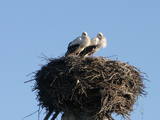 |
This lovely territory includes the hillocks of Embūte, which are in the ancient Embūte valley. The aim of establishing the park was to protect the landscape, biotopes and species of the region. An ecological tourism trail has been established in the valley, as has a forest trail through the nature park (accessibly only in the company of a guide). Visitors will learn about the hillocks and ravines left behind by the Ice Age. The ravines and the forests along their sides are protected biotopes. There are also important natural and cultural monuments, including the Embūte castle hill and the ruins of a baronial estate, castle and church. Other points of interest include the death place of the Courlandian warrior Indulis, the Joda dam, meadows, a viewing tower, etc. Three unmarked bicycle trails are in the area. |
|
 |
Located in the centre of Gulbene. The cake shop in Gulbene, offering various sweetshop goods from natural ingredients, freshly made juices, aroma teas and coffee, as well as salads and appetizers. In Gardums it is possible to taste snacks and dishes typical for Gulbene district. |
|
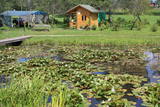 |
On the edge of the Bērzkrogs-Madona road in the centre of Vecpiebalga, you will find a pond full of various types of water lilies of different colours. The owner will tell you all about the popular folk song about water lilies from Vecpiebalga, offer plants for sale and offer practical advice. The pond also has carp which children can feed by hand while their parents are listening to the stories. |
|
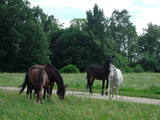 |
It is possible to look at different animals at the farm – horses, goats, rabbits, dogs, cats and marmots. It is possible to participate in farming tasks and try out farm instruments, to learn the steps of ancient dances, to walk along the animal paths and to taste pancakes baked on the open fire with goat cheese. You can also buy sauna accessories or herbal teas. |
|
 |
~6,000, including nearly 300 types of dahlias, 120 types of azaleas, and 100 types of outdoor rhododendrons.
The conservatories of the botanic gardens contain various exotic and tropical plants and fruit trees, including lemon, banana, pineapple, fig, olive, avocado and coffee bean plants. There is a broad collection of cacti, as well as the largest collection of palm trees in Latvia. Outdoors, there are lots of winter-resistant plants, medicinal plants, and poisonous plants. The plants are arranged in systematic groups – something which is typical only of the botanic gardens of universities. This is the only place in Latvia where you can see so many flowering magnolias in a single place in the spring.
Outdoors you will find the Sweet Chestnut (Castanea sativa), the Gingko (Ginkgo biloba), the Dawn Redwood (Metasequoia glyptostroboides), the White Mulberry (Morus alba), and the Common Walnut (Juglans regia). The conservatories include several types of the highland tamarin (Araucaria bidwillii and A. heterophylla), the Wollemia Pine (Wollemia nobilis), the Moreton Bay Fig (Ficus macrophlla), the Water Lily (Victoria regia), etc.
|
|
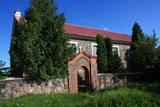 |
The Archangel Michael Catholic Church of Subate is in the historical centre of Subate. The building, which does not have a tower, was built of fieldstones in 1831, with financing from Count Mikhail Sieberg-Plater. An impressive bell tower was built in front of it. The church contains a sculptural group, “Golgotha,” from the late 18th century, along with a crucifix and a major altar relief that is made of carved wood. It is based on the globally famous Leonardo da Vinci fresco “The Holy Supper.” |
|
 |
The Sutru Berry Garden is in the Sutru Parish in the Līvāni Administrative District. It grows blackberries in tunnels, which means that the berries ripen far more quickly than elsewhere in Latvia. You can purchase berries on site. |
|
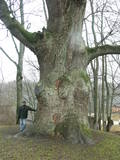 |
This tree is in the park of the Sēja Estate and is one of the four trees in Latvia that have a circumference of more than four metres.
|
|
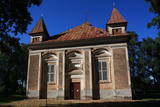 |
The St George Lutheran Church of Subate is on the north-eastern shore of Lesser Lake Subate. The church was built in the Byzantium style in 1685 and 1868 and was commissioned by the owner of the Prode Estate, H.F. Osten-Sacken. This is the only church in Latvia which is reminiscent of the typical appearance of Protestant churches in the late 17th century. The small towers at the corners of the building are of interest. Inside you will find a richly ornamented ensemble of sculptures and wood carvings, including a 17th-century altar, pulpit and pews, as well as artworks from the 17th and 18th century and a bell that was cast in 1682. Some of the interior design was the work of students at the Stelmuže wood carving school. |
|
 |
Ceļa malā, kas ved uz Kärdla pilsētu, ir zivju pārstrādes veikals, kur iespējams iegādāties Hījumā zvejnieku nozvejotas zivis gan svaigas, gan kūpinātas, kā arī tiek pārdoti Hījumā mazo ražotāju produkti. Zivis iespējams nobaudīt arī turpat uz vietas, veikalā ir kafejnīcas stūrītis, bet vasarā ārpusē ir terase.
|
|
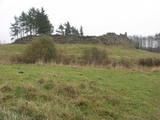 |
This area was established to protect the cultural and lake-related landscapes of the central section of the Vidzeme highlands, with Lake Alauksts, Lake Inesis, Lake Tauns, etc., with their species and biotopes. There are many important cultural objects in this territory – the Vecpiebalga Lutheran Church, the Vecpiebalga castle ruins, the Vecpiebalga baronial estate, as well as locations where several distinguished figures from the Latvian world of culture have lived and worked. Memorial museums have been established to commemorate them. The lakes are great for fishing, and cross-country competitions are traditionally held in the area of Lake Alauksts during the winter. The Sproģi nature reserve has been established on the islands and peninsula of Lake Inesis.
|
|
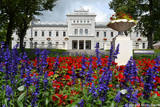 |
The Plunge Estate is famous because its park, which is a mixed-type park that was established during the 18th and 19th century at a holy forest that used to be a sacrificial place. The pride and joy of the park is the Thunder oak tree, a legendary weeping linden tree and an elm tree with five trunks. The lord of the state ordered the digging of seven ponds with cascades. These are linked by rock bridge sluices. The Babrungo River, which flows alongside the estate offers an outstanding landscape for the park. |
|
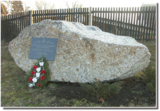 |
The memorial stone to Augusts Muižulis,a recipient of the Lāčplēsis Military Order, is placed in the Lapmežciems, at the edge of the road (P 128, Jūrmala-Talsi) at the marker for the 9th kilometre. A. Muižulis, (189 –1941) was a lieutenant colonel in the No. 4 Valmiera Infantry Brigade. The adjacent Tuteņi homestead is his native home. |
|
 |
This farm has more than 20 years of experience with beekeeping products and their sale. Groups of tourists can tour the farm with the help of a knowledgeable guide. There are creative workshops for children, games for teams, tastings of products, a location for picnics, as well as luncheons of soup cooked on a campfire along with honey bread. |
|
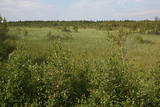 |
There is no need to enter the bog to see it, there are good views from the highway Ventspils – Riga (77 km, bus stop “Pagrieziens uz Elkskeni”). The main value of restricted area is chalky fen bog with brown bog-rush (greatest habitat finding in Latvia). Be careful when stopping on the highway – mind the traffic! A couple of kilometers towards Riga, on the right side of the highway, there is sign to Grizu Velna kresls ( Grizu Devil Chair) which is an attractive boulder (protected).
|
|
 |
The owner of this guesthouse is a homeopath and phytotherapist who grows ecological medicinal plants. She offers educational programmes for adults and children, as well as a large library of books about health issues. All visitors are welcome to enjoy medicinal plant baths, herbal teas, colour therapy, aroma therapy, and camps that offer a chance to pick medicinal plants to produce healthy nutrition. The sauna and healing facility offers health promotion and beauty procedures. |
|
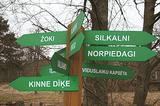 |
is seen as the newest village along the Livonian coastline. It was established during the 17th century. Košrags had 78 residents in 1826. The first reading school for Livonian children in the Dundaga seashore villages was opened at the Žoki homestead in 1832. One of the teachers was Nika Polmanis, who was the first Livonian to have completed a professional education. He also translated the Gospel of Matthew into the Eastern Livonian dialect. Košrags had a windmill, water mill and boat building facility. During the spring, job seekers from Saaremaa stopped here. A port was installed in 1932, and a breakwater to collect sea fertiliser followed in 1938. During the 1930s, Košrags was regularly visited by Finnish and Estonian linguists to study the folklore of the Livonians. The Norpiedagi homestead was built by Livonian activist Didriķis Volganskis (1884-1968). His son, Livonian cultural worker and pastor (in Finland) Edgars Vālgamā (Volganskis, 1912-2003) was born there. He translated the Andrejs Pumpurs epic "Lāčplēsis" into Finnish. Košrags today is a cultural monument of national importance. |
|


