
| No | Name | Description |
|---|---|---|
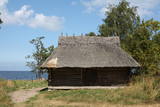 |
Altja village in Lahemaa National Park was first recorded in writing in 1465. It is a typical seaside village with houses along one street. Traditional farmsteads of Uustalu and Toomarahva from the late 19th C are open to visitors. Renovated fishnet sheds are located on Altja Cape. The village has a swing and a tavern (Altja Kõrts) providing national food |
|
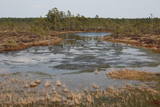 |
Iepazīstina ar Somā nacionālā parka lielākā purva – Kureso (Kuresoo) ziemeļaustrumu daļu, kur redzamas purva ezeriņu un lāmu ainavas. Takas sākumā atrodas igauņu komponista, ērģelnieka un folkloras vācēja Marta Sāra (Mart Saar) (1882. – 1963.) dzimtās mājas. To apkaimē pļavas apsaimnieko aitas. Lokveida takas garums ir 4,2 km. |
|
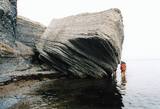 |
There are two islands here – Suur Pakri (Great Pakri) and Väike Pakri (Small Pakri). They are 3 km to the West of Paldiski. During Soviet times, the islands were used for target practice by the Soviet air force, which is seen in the many craters and spent munitions that can be found on the island even today. The island is mostly covered with scrappy areas of juniper, but the limestone cliffs at the northern and north-eastern end of the island are quite impressive – as much as 6 m in height.
|
|
 4 days
|
Participants in this tour will learn about Latvia’s most modern crop farms that are typical in Zemgale. During the first day, participants will meet with specialists from the Latvian Agriculture Ministry and agricultural NGOs. They will also tour Rīga, which is part of the UNESCO List of World Heritage, and the Rīga Central Market, which is one of the largest closed markets of its type in Europe. Participants will visit a health food store and have dinner to enjoy traditional Latvian foods and beers. The next day we will go to Jelgava, where the 18th-century castle of the Duchy of Courland and Zemgale will host a meeting with faculty members from the Latvian Agricultural University, which is housed in the palace. We will visit a biologic bakery, as well as a farm that engages in crop farming, livestock breeding and manufacturing of biogas. An artificial wetland is used to purify runoff water. Dinner will be served at a modern leisure complex. On the third day, we will visit one of the largest multi-sectoral farms in Zemgale. It specialises in plant farming, livestock breeding, horse breeding, biogas manufacturing and beer brewing. During the afternoon, we will visit the largest and technologically most modern grain farm in the region, after which we will tour the most outstanding castle in the Baltic States – the Rundāle Castle. Built as a summer residence for Duke Ernst Johann Bieron, the castle was designed by the distinguished Italian architect Francesco Bartolomeo Rastrelli. Dinner will be served at a venue that has an historical windmill and an exhibition related to grain farming. On the morning of the fourth day, we will visit a farm that grows grains for seed, and then a biological farm that produces wheat, barley, peas, beans, rapeseed, herbs and herbal teas. Lunch will be served at a farm that will offer dishes made of home-grown grains and rough-milled flour. Then we will return to Rīga. |
|
 |
The bar is in Tirgus Square in the historical centre of Dobele, offering Latvian cuisine and Tērvete beer, which is brewed from Latvian ingredients. A summer terrace is open during the season. Latvian cuisine: Cold soup, grey peas with bacon, Tērvete steak haché, Tērvete leg of pork. Special foods: Tērvete cheesecake. |
|
 |
The beginning of this circular trail can be found at the Krimulda church – the oldest in Latvia. In one direction, the tourist will pass along the banks of the little Runtiņupīte river (Runtiņš) to the place where it flows into the Gauja river. Among the points of interest along the way are the parsonage of the church, the Kubesele castle hill, a memorial to the Livonian chieftain Kaupo, the Kubesele cave, the Saulstari rock, the “Great Rock”, ancient anchor blocks, ancient graveyards, a unique labyrinth, etc.
|
|
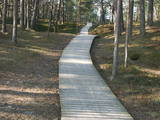 |
Plieņciema taka atrodas dabas liegumā "Plieņciema kāpa" starp Plieņciemu un Ķesterciemu. Pāri kāpai ir izveidota laipu taka un atpūtas vieta. Taka ir izveidota, lai mazinātu negatīvo ietekme uz Plieņciema kāpas dabas vērtībām – zemsedzes nomīdīšanu, piegružošanu ar atkritumiem, braukšanu ar autotransportu.
|
|
 |
The Boulder of Subinaite can be found in Sakstagala rural municipality opposite Vaļenieku House that
is on the left side of the river Rēzekne. The base of the boulder is below the river level; it is 5,2 m long, 4,4
m wide, it rises about 1,6 m above the water level, about 2,5 m below the water level, capacity 26 m3.
Reddish surface is heavily eroded and full of moss. Protected since 1977.
|
|
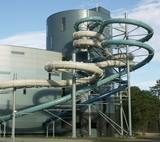 |
Der älteste und größte Kurort Litauens (seit 1794). Mikroklima (Luft der Umgebungswälder), salzhaltigee Quellen, Heilschlamm. Die Altstadt ist ein städtebauliches Denkmal. |
|
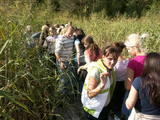 |
Kaut arī Augštaitijas nacionālo parku uzskata par floristiskā ziņā ļoti bagātu teritoriju, šī ir vienīgā vieta, kur varam iepazīt augu valsts bagātību. To īstenot palīdz takas malās izvietotie informācijas stendi. 3,8 km garās lokveida takas sākums ir meklējams Palūšē, Lūšu (Lūšiai) ezera galējā austrumu punktā. Taka ved gar ezera krastu, mežainām kāpām, nelielu strautu ielejām un pa purvāju. Nenomaldīties palīdz krāsu marķējums uz koku stumbriem. |
|
 |
Traķu pussalas pils austrumu mūrim pieguļ ar mežu apaudzis iespaidīgs pilskalns (uzved koka kāpnes) – t.s. Upurkalns, kurā pirms mūra pils celtniecības stāvējusi koka pils. 1779. g. dominikāņu mūki sagrautās Pussalas pils vietā uzsāka baznīcas celtniecību. Jau vēlāk – 1822. – 1823. g. vienā tās daļā uzcēla dominikāņu klosteri, bet otrā – kapelu. 1990. g. šeit izvietoja Traķu vēstures muzeja administrāciju, bet 2005. g. kapelā izveidoja Sakrālās mākslas izstādi. 2011. g. ēku kompleksā notika vērienīgi rekonstrukcijas darbi. |
|
 |
Saimniecība audzē dažādus dārzeņus, lapu salātus, gurķus, dilles, ķiplokus, brokoļus, ziedkāpostus, sīpolus, ķirbjus, bietes utml. Vasarā un rudenī pieejamas avenes. Pārdošanā svaigi dārzeņi un augļi. |
|
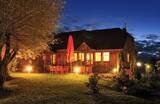 |
The saloon is at the edge of the Murjāņi-Limbaži road (P9) and alongside the Igate Castle. It is built on the foundations of a former windmill, and the wheel of the mill has been preserved. The old watermill is still hard at work and is used to mill grain for traditional porridge and buns. The saloon works with local farmers. Latvian cuisine: Mushroom soup, barley porridge with meat, barley buns, grit sausage with lingonberry sauce, crepes with jam, potato pancakes, fried plaice or pike, stacked rye bread. Special foods: Sautéed rabbit, stuffed filet of turkey. |
|
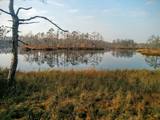 |
Cena's heath swamp's trail was made to introduce vistors to one of the most beautiful things in nature - a moss swamp. The pathway goes not only around beautiful swamp lakes but also meets the degraded part of the swamp. At the beggining and the end is a watch tower. |
|
|
|
Das größte im Baltikum. Marathonloipe von Tartu, Wand der künstlichen Felsen und Trasse der Radmarathon. Skimuseum. Auf der Tehvandi-Sprungschanze ist ein Aussischtsplatform eingerichtet. |
|
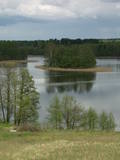 |
In Vecslabada, there is a peninsula among Lake Dziļezers, Lake Audzeļi, and Lake Istra. From the highest point on the peninsula, you will see a truly unusual view of the land of the blue lakes – lake islands, as well as the village of Vecslabada with its church towers. The Lake Istra nature reserve is nearby.
|
|
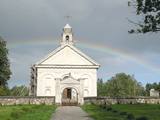 |
Divine Providence Catholic Church of Rikava (Baltini) was built in Doric style in 1929 by the donations
of landlord Alexander Riks. The church has icons „St. Antony” and „Jesus Christ appears to Mary
Magdalene”. Beside the church there is a cemetery and family vault of Riks.
|
|
 |
Here you will enjoy an educational programme that teaches you that cattle offer not just food, but also communications. You will see cattle learn about how they are bred, and what they provide for the local village and nature. |
|
 |
This museum is along the road from Jaunpiebalga and Vecpiebalga and was opened in 1969. It focuses on the life and work of two distinguished Latvians – the composer Emīls Dārziņš (1875-1910) and the poet and writer Jānis Sudrabkalns (1894-1975). It features items related to the lives of the two men. Music by Dārziņš can be heard in the museum, tours are offered to individual visitors and groups, and thematic and musical events are held at the museum. |
|
 |
The Alejas bakery and guest house is located 0.5 km from the centre of Rucava. The bread here is made with natural sourdough and baked in a wood oven. Various types of rye bread (ordinary rye bread, sweet and sour rye bread with or without other ingredients, rye bread with fruit, etc.), rye bread and garlic croutons, and various types of white bread. By prior arrangement it is possible to buy bread to take home. |
|


