
| No | Name | Description |
|---|---|---|
 |
Kodas is a forward-thinking cider brand from Southern Estonia, known for its sustainable and precise approach to cider-making. They grow over 30 apple varieties organically, ensuring authentic flavors without artificial additives. Kodas emphasizes pure, undiluted apple juice in their ciders, collaborating with fermentation experts to refine unique production methods. Sustainability is central to their philosophy, with a zero-waste approach that transforms apple byproducts into spirits, purees, and more. Kodas rebranded in 2021, expanding its focus to include non-alcoholic beverages, spirits, and food products, all crafted with a balance of tradition and innovation. |
|
 |
The farm offers premium, locally grown products from herbs found in Dole Nature Park and those that are self-grown. A family-owned company that respects and keeps traditions. |
|
 |
The company produces butter, cream, cottage cheese, cottage cheese products, yoghurt and desserts, using high-quality milk that comes from more than 100 local farms and three co-operatives. Technological processes are observed and improved during the manufacturing process so that the product retains its value in terms of taste and nutrition. Tourists are welcome, and tastings are available. This is one of five companies in Latvia that can produce “Summer Solstice” cheese as an EU guaranteed traditional product. The company’s products also have the “Green Teaspoon” quality mark. |
|
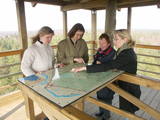 |
Ložmetējkalns Hill is one of the highest locations at the Long Dune. There is a monument to heroic Latvian riflemen who suffered great losses here during the Christmas battles of late 1916. There is a great view of forests all the way to Jūrmala, as well as of the Maztīrelis swamp, where the embankment of the former narrow-gauge railroad is very evident. This is part of a memorial park to commemorate the Christmas battles. You can visit the Mangaļi museum, the restored “German Rampart,” monuments and other objects.
|
|
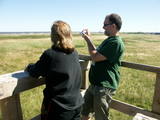 |
The key treasure in this park is that it has a lake that is one of the most intensive sites for birdwatchers in all of Latvia. It also features outstanding flora and the shallow waters of the Bay of Rīga. Recommended: Hike along the seashore from Mērsrags to Engure (20 km). See wild domestic animals (horses and cows) on the eastern shore of Lake Engure. There’s a bird-watching tower on the NW shore of the lake (approach from Kūļciems, where you can see domestic animals adapted to life in the wild, including the Blue Cows of Latvia). A bird-watching tower can be found at a place called Jomiņa near Mērsrags, where the seashore meadow is an uncommon biotope
|
|
 |
This beautiful garden of practical ideas offers colourful flowers and a wide collection of coniferous trees which visitors can visit all year long. Behind the house are a vegetable garden and a group of greenhouses. |
|
 |
The History Centre Wittenstein is located in the Livonian Order castle on the rampart hill in Paide, where a time machine lift transports visitors through historic events and periods. The trip covers the period from 10,000 BC to the present day. The Centre uses lots of sound and light effects, video programmes and illusions. |
|
 |
Das Gedenkzeichen in Ošvalki, das den lettischen Flüchtlingen (1944 – 1945) gewidmet ist, die über die Ostsee in Fischerbooten nach Schweden geflüchtet sind. |
|
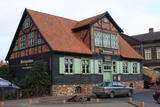 |
From the historical and architectural perspective, this is an interesting monument to urban construction between the 17th and 19th centuries. Old Liepāja is in the area of the old market and Kuršu Square, where merchants sold their wares beginning in the 1560s. Until 1792, Kuršu Square was also where punishments were implemented. The current Pētertirgus pavilion was installed alongside the square in 1910. A map shows that the network of streets has partly preserved the chaos of street planning that was typical in Medieval towns. |
|
 |
The mouth of the most beautiful river of Vidzeme. On the seashore between the mouths of River Gauja and River Daugava, one of the largest dune ranges in Latvia with distinctive parabolic dunes overgrown with forest (wooded dunes) is situated. The Mouth of River Gauja is unique as it is one of the few major rivers in Latvia and in EU countries to flow into the sea naturally. There is no harbour or other hydro-engineering construction. It is a popular recreation area in the vicinity of Riga and Saulkrasti while, unfortunately, the lack of infrastructure makes it suffer from anthropogenic load. Not far from the rivermouth, hidden in dunes, there are pillboxes which were built in 1920 or 30ies as anti-airborne barriers. There was a whole range of them along the coastline from the mouth of the River Lielupe to the mouth of the River Gauja forming a part of the Daugavgrīva Fortress fortifications. The pillbox is made of concrete, ca 1.5m thick. Every year, on the 3rd Sunday in August, a lamprey festival takes place in Carnikava town by the Gauja rivermouth. Carnikava is called the Lamprey Capital as it is famous for its lamprey fishing tradition and generous catches. The Mouth of the River Gauja is a good bird-watching area, especially in spring and autumn when one can observe the highest variety of species. Just few of the many bird species that can be observed near the Gauja rivermouth |
|
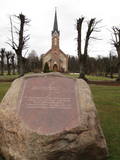 |
The first church in Piņķi was made of wood. The idea of building a new church emerged in the 1850s, and the cornerstone for a design by the architect J.D. Felsco was laid on May 25, 1872. The church that is there today was completed in 1874. The nine-register organ was built by the distinguished organ builder Wilhelm Sauer in 1890. On July 17, 1916, the 5th Latvian Riflemen’s Battalion was on its way to the front lines at Smārde and stopped at the Piņķi Estate. Col Jukums Vācietis delivered a sermon at the church on that date (though not all historians agree that he did so), and that has gone down in history as one of the most important events of the day. The historical even inspired Aleksandrs Čaks to write the poem “Sermon at the Piņķi Church.” The church is a cultural monument and can be toured. It is lit up at night. Alongside the stone is a rock that was installed in commemoration of the Latvian riflemen. |
|
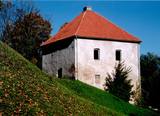 |
The square structure with walls that are nearly two metres thick became known as the Gunpowder Tower during the rule of Duke Jacob, because that is what was stored here. There might have been a well here, because groundwater is close to the surface. The tower and the castle were linked by a 12-metre bridge on one pillar. The tower is only visible from the outside. |
|
 |
RADADA ir radošā darbnīca, kura ierīkota senā ugunsdzēsēju depo. Audumu apdrukas ar saviem orģināliem zīmējumiem rokas sietspiedes tehnikā. Apdrukā apģērbu ar rakstiem un simboliem, kas simbolizē Latvijas dabu, latviešus un to spēku. |
|
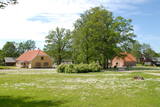 |
The Turaida Museum Reserve is found at the place where the deep gullies of a number of small streams split up the right bank of the ancient Gauja River valley. The Turaida Museum Reserve features monuments of Baltic importance, and their history dates back more than 1,000 years. Among the treasures are the Turaida Estate (21 buildings), the grave of the Rose of Turaida, the Turaida Lutheran Church (one of the oldest wooden churches in Latvia, 1750), and the Turaida Castle. Nearby is Folk Song Hill, where various thematic events are organised. |
|
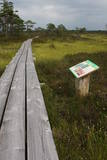 |
The trail informs visitors about one of the loveliest natural habitats in
|
|
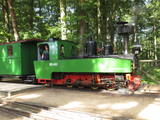 |
This little tram offers a great opportunity to return to history, when small trams were found all over Latvia. Until the 1960s, there was a narrow-gauge railroad that linked shoreline fishing villages along the shores of Northern Kurzeme. Only a few remnants of the old tracks can still be found in nature, and there are only a few train stations or parts thereof. Visitors to the Ventspils Open Air Museum can take the 1.4 km Circle Line or the 3 km Mountain Line. The locomotive was built in Germany in 1916, and the museum features a station building with all of its elements. |
|
 |
The cafeteria is on the main street in Līvāni, offering country cooking and Latvian dishes. Latvian cuisine: Potato pancakes, cold soup, pearl barley and barley porridge, pork ribs with sauerkraut, bread soup. Special foods: “Rocks of Dubna and Daugava” – potato dumplings stuffed with cottage cheese in a cream sauce. |
|
 7 days
|
We strart the tour from Riga by bus and proceed along the Baltic Sea coast, passing through many different landscapes - white sandy beaches, coastal meadows, dunes with pine forests and steep banks. Many beaches are wild and completely deserted. Access to these territories were highly restricted during Soviet times. The route leads through ethnographic fishermen villages at Nida, passing Pape nature reserve where wild horses graze. The bustling city of Liepaja impreses with its lively promanade and music scene. The city also has a long military history which can cleary be seen walking among the naval fortifications and visiting the former millitary town. Well-maintained Ventspils has a pleasant market, castle and numerous parks. A restored narrow-gauge railway with working steam engine is well worth a visit as well as the Craft House - ideal for local handmade souvenirs. On the way back the tour goes through the pretty provincial town of Kuldiga with well- preserved wooden architecture. The tour includes two of the most interesting national parks: Slitere which holds the geological history of former ages and Kemeri with its great heath trail and sulphur springs. |
|
 1 day
|
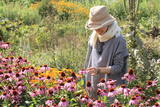
The distance from Riga to Tallinn is more than 300 km and it takes approx. 5 hours by bus. Therefore we suggest stopping on the way for a brief excursion to a herb farm and lunch in a country pub. This stopover is approx. 1.5 hours’ drive from Riga, just at that point when one needs to stretch one’s legs and enjoy a change of scene. The visit will give an insight in rural life and it may surprise visitors to learn how well Latvians understand nature, knowing and using herbs for food, health and beauty. After the excursion, the group will have lunch in a country pub serving meals made from locally grown ingredients. |
|
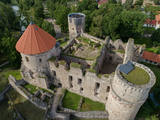 |
Cesis Castle complex is a place where the past meets the future. |
|


