
| No | Name | Description |
|---|---|---|
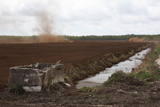 |
Nature restricted area is established to protect various wetland habitats – Big Kirba Bog and protected plant species within it. Only the West part of the Bog is a protected nature area. The rest of the bog is used mainly for intensive extraction of peat and large cranberry cultivation. Nature restricted area of the bog has no tourism infrastructure therefore is not useable for tourist visits.
|
|
 |
Prepares dishes from local Latvian products. The menus are changed every season, meaning that the guests can enjoy seasonal dishes. The 360-degree glazed terrace offers a picturesque view of Rose Square, in the heart of Cēsis City. |
|
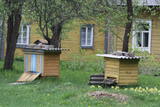 |
Ja mērķis ir savākt pilnvērtīgu etnogrāfisko ciemu fotokolekciju, ir jāapskata Strazdi (no lietuviešu valodas strazdai tulkojumā nozīmē strazds), kas ir pavisam neliela apdzīvota vieta Balošas (Baluošas) ezera ziemeļu krastā. Strazdi pirmoreiz rakstos minēti 1783. g. un ciema nosaukums cēlies no kādas mežziņu dzimtas uzvārda. |
|
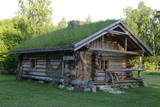 |
The ancient sauna house is a great place for rest and relaxation in Hiiumaa. The house is built of thick logs and has a sod roof. The house has a sauna. |
|
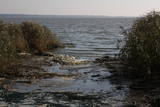 |
Das beinah 100 km langes und bis zu 36 km breites aus dem Süßwasser bestehende Haff, das im Norden mit der Ostsee verbunden ist. Das Haff trennt vom Merr die eindrucksvolle Kurische Nehrung. Ins Kurische Haff mündet der größte Fluss Litauens Nemunas ein. |
|
 1 day
|
The Forest Trail leads down from the highest point of the Haanja Upland. The most important sight on this route is the Suur Munamägi Hill – 318 m above sea level. The highest point of the Baltics with its observation tower provides its visitors with a splendid 50 km range view of the Estonian nature. The 150 year-old western taiga spruce forests grow on the slopes of Suur-Munamägi. Further on the trail circles around the southern part of Lake Vaskna, and continues down small country roads surrounded by solitary homesteads and small clusters of farms. The route ends in a small village, Tsiistre, where the Linen Museum is located. The museum has a collection of folk linen. Flax is one of the oldest cultural plants in Estonia and a few decades ago, blue flax fields were a common sight in southern Estonia. |
|
 |
This is one of two sanatoriums in Jūrmala where mud from the surrounding area is used for medical procedures. The Jūrmala Spa Museum of History was opened here in 2009, and it offers interesting information about the history of the spa and the sanatorium. You will see historical photographs and medical equipment from the 1970s and 1980s. Guides will tell you all kinds of interesting information. |
|
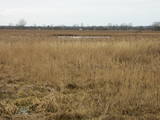 |
Most of this restricted area is made up of a shallow and eutrophic body of water in which many species of birds, including some that are rare and protected, nest. Specialists say that anywhere between 150 and 450 pairs of black-headed gulls nest in this area on a regular basis.
|
|
 |
Auces novads miniatūrā izveidots ar Auces novada nozīmīgākajiem un atpazīstamākajiem objektiem miniatūrā, kuri apdzīvoti ar mājdzīvniekiem. Iespēja Auces novada iedzīvotājiem un viesiem izveidot saikni ar dabu un vienlaicīgi iepazīt Auces novadu. Mazajiem apmeklētājiem izglītojoša saikne ar dzīvniekiem, iespēja tos pabarot ar saimnieku sarūpētajām veltēm. Veicināta Auces novada atpazīstamība caur miniatūriem objektiem. Tiek piedāvāta ekskursija, kuras laikā iespējams apskatīt 4 saimniecības: Zemnieku saimniecību ‘’Skabargas”, Lauku sētu ‘’Krastiņos’’, saimniecību ‘’Andulaiši’ un Lauku sētu ‘’Baltiņi’’. Ekskursija notiek gida pavadībā. Tiek gaidīti viesi, grupās no 10 cilvēkiem, ar iepriekšēju pieteikšanos. |
|
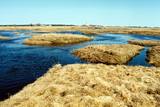 |
This is one of Estonia’s most beautiful karst fields, covering 125 hectares which feature different karst processes – subterranean streams, the dry Jõelähtme River bed, karst streams, funnels, ditches, caves, cliffs, a unique rock “mushroom,” etc. During the spring, the field is flooded, but at other times of the year, its contents are easily visible.
|
|
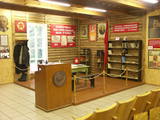 |
Das einzige Museum solches Maßstabs unter freiem Himmel im Baltikum. Gegründet in 1999. Die Ausstellungsobjekte einbezogen die monumentalen Denkmäler spiegeln die sowjetische Ideologie wieder. Ein Minizoo. |
|
 |
This site features a folklore trail to explain the content of ancient writings, symbols and folk songs. Visitors can learn about the importance of plants in human health, sing songs and play games. On offer are various lifetime rituals, including baptism and so on). There are fire and sauna rituals and annual festivals. Register in advance for a traditional meal. |
|
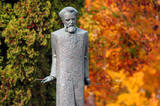 |
In Limbazi, in the crossroads of Cesu and Dailes streets, there is a monument dedicated to the author of Latvian anthem. The monument was designed by the sculptors Zigrīda Rapa and Juris Rapa. It was unveiled on May 16, 1998, when Limbaži was celebrating its 775th anniversary. |
|
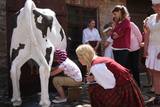 |
The granary and cheese-making building of the former Seiksāte (Berghof) Estate houses a museum that was opened in 1985 and demonstrates the route of milk from the cow to finished dairy products. You can try your hand at milking a cow and churning butter, and then you can taste what you have made. |
|
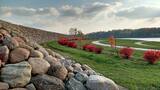 |
To the south of Koknese, the Destiny Garden is on an island that is surrounded by the waters of the Pļaviņas hydroelectric power plant (there is a bridge to the shore). The aim of this fundamental open-air object was to commemorate people in Latvia who suffered because of totalitarian regimes. The first work here began in 2008, and the designer of the landscape was a Japanese landscape architect, Shunmyo Masuno. Work on the garden continues, but it is already a popular tourist destination. The first permanent structure is a terrace that offers a view of the Koknese castle ruins and the local Lutheran church. This means that there will be something new each time that people visit the park. People are invited to bring rocks for this nationally important location that commemorates Latvia’s history. |
|
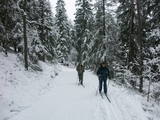 |
The nature park near the town of Ogre is a popular place for leisure, hiking and, in the winter, cross-country skiing. Most of the park is covered with coniferous trees that are on a long and comparatively narrow line of hillocks with steep sides – another element of nature left behind in Latvia by the Ice Age. Many different plants can be found here. The Jaunogres castle hill is one of the most distinct hillocks in the area. |
|
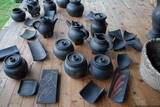 |
The attractive potter is a member of the “Potter School,” and he uses knowledge from his ancestors. The “Malny Wylky” workshop offers a look at traditional pottery work, including a foot-powered potter’s wheel and a firing pit that uses firewood and the smoke technique. You can examine and purchase the finished products. Vēsma, in turn, is an oil painter and will demonstrate her artworks. |
|
 |
Lots of wild animals can be found in vast paddocks along the ancient Gauja river valley and its small tributaries – areas in which living conditions are as close to natural circumstances as possible. Here the visitor can find, if lucky, reindeer, deer, wild boars, bears, foxes, lynx, various kinds of birds, as well as aurochs. There is a dense network of pathways in the park, including lots of information. There is also a route for drivers and bicyclists. During the winter, it is used for distance skiing. There is also a visitors’ centre.
|
|
 |
The factory produces milk candy “Gotiņa”, toffee, sherbet, marmalade and candy cream from natural ingredients. We obtain fresh milk from local farms; other ingredients for the production process are obtained in the surrounding area. Each piece of candy “Gotiņa” is hand-wrapped. |
|
 |
After the death of the Kalnasikšņi oak tree, which was the mightiest tree in the Gauja National Park, the mighty Kvēpene oak tree has taken over that role. It has a circumference of 6.1 m, a height of 20 m, and a crown which measures 28 x 30 m. The beautiful tree is on the right bank of the Gauja River valley and is one of the most excellent trees in Latvia. Near it is the forested Kvēpene castle hill, as is the Svētavots stream, which is reputed to have medicinal waters. To the North of the castle hill is the Rūsiņš hillock, which offers a good view of the surrounding forests, the towers of the city of Cēsis, Ieriķi, and the Rakšupe estuary at the Gauja. There is a bench at the top of the hillock from which lovely sunsets can be seen. |
|


