
| No | Name | Description |
|---|---|---|
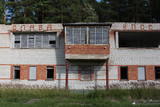 |
The firing range at Skujnieki was once used for summer sports, as well as training in the use of firearms. The Defence Ministry still uses the facility from time to time. The central building of the facility was built in 1982, and its façade is decorated with text in the Russian language: “Слава КПСС” (“All Honour to the Soviet Communist Party).
|
|
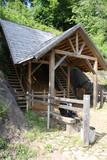 |
The park was established to protect the Venta River valley and the landscapes that are around its tributaries. On the west bank of the Venta, at Papilė, there is a cliff from the Jurassic period which is unique in the Baltic States, has been known since 1925, and has layers in which more than 300 forms of life have been identified over the course of time.
|
|
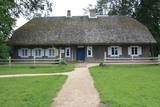 |
“Kalna Kaibēni” is on Kaibēni Hill (226 m above sea level) and 7 km to the West of Ineši. Nominated as Latvia’s oldest memorial museum (1929), this is a place with buildings from the 18th and 19th century. Inside you will see exhibits which speak to the lives and contributions of the schoolteachers and authors Reinis (1839-1920) and Matīss (1848-1926) Kaudzīte. The authentic farm includes a garden which the two brothers planted themselves, and the wooden sculptures which were produced by Krišjānis Kugra present characters from the brothers’ famous novel “Age of the Surveyors”. |
|
 |
Beautiful, harmonic and unique -- those are words to describe the garden at the Gundegas homestead in the Daudzese Parish. Owner Agrita Laizāne tends to her garden every day, particularly in the spring, when she is inspire to plant the flowers. In the autumn she thinks about work to be done next year, collecting seeds and preparing her garden for the winter. |
|
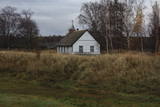 |
Labi aplūkojama (neliela izmēra vienstāvu ēka) no Klajumu vējdzirnavu puses. Baptistu draudze Jūrmalciemā dibināta 1933. gadā. |
|
 |
The Iesalnieki-1 farm is in the Vietalva Parish in the Pļaviņas Administrative District. It grows rapeseed, barley, wheat and grasses on 180 ha of land. The farm is run by two brothers who manage more than 800 ha of land in all. |
|
 |
Guest house “Hilda Villa” is located in Estonia, in Viljandi town center. Guest house has special family room for 4 person and smaller families also. On the first floor there are Hilda's room and the Tenant's room, bathroom, living room, and kitchen. On the second floor there are 3 bedrooms for accommodation, 2 showers, and 2 toilets. |
|
 |
The dairy makes cheese from old Latvian recipes, doing so by hand, as was the case centuries ago. The products have been awarded the “Green Teaspoon.” Fresh cheese can be smoked. Tours of the company are available, and the dairy accepts orders and delivers finished products. |
|
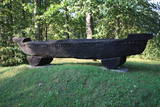 |
3 km to the south of the centre of Jūrkalne, near the old (gravelled) road between Liepāja and Jūrkalne, is the place where the three-year Feliksberga Maritime School existed between 1871 and 1902. The building is long gone, and the memorial has involves an oaken boat with two wooden poles on which old ownership signs have been engraved. |
|
 |
The five-story hotel with a tower at its centre was built in the style of Neo-Classicism between 1933 and 1936, and it is known as the "White House" or "White Ship." The building is seen as one of the most outstanding structures of the first period of Latvian independence, and it was one of the symbols of the independent state. The building has survived, as have some of the interior design elements and artworks of the vestibule, music salon, library and dining hall. The Ķemeri Hotel is also known for having served as a set for the Aigars Grauba film "Terrible Summer." In 1998, the sanatorium was privatised by the Ominasis Italia S.R.L. company. Restoration has continued for more than a decade, and the building can only be viewed from the outside. There is a garden on its western side. |
|
|
|
Ļoļi Devil’s Footprint is situated in Mākoņkalns rural territory in a small forest lawn several meters from the
ditch, which is a borderline of the Rēzekne and Krāslava districts. It is about 1,9 m high truncated cone, the base
perimeter 1,8 m. According to the legend, the boulder had a curvy of the horseshoe prints. Now it’s shapeless. For the
first time the stone as a geological monument was established in the 1930s. It was in Andrupene rural territory.
|
|
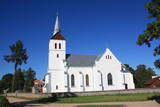 |
On sunny days, this white church absolutely sparkles. It is in the southern section of the village and can be seen from a great distance. Jesuits built the first wooden church at this location in 1759 in honour of St Peter and St Paul. The church that is there today was built nearly a century-and-a-half later, in 1893. The interior can be visited during worship services. Interred in the yard of the church is the Lithuanian pastor and wood carver Antons Rimovičs (1865-1933). The congregation building is opposite the church. |
|
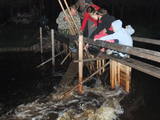 |
The owner offers groups of various sizes a chance to go to the sea in a fisherman’s boat and to watch shoreline fishing, as well. The lamprey eel weirs that are on the Svētupe River differ from those on the Salaca River in terms of their structure and the fishing principles. During the season, the owner prepares tasty smoked lamprey eels. |
|
 |
The Forest House (Meža māja) was built
in 1933, and this is one of the most
outstanding buildings in Latvia from the style
of National Romanticism. It used to house an
enormously popular restaurant, “Merry
Mosquito" (Jautrais ods). The restaurant was
popular among the spa’s guests, but also
among prominent people of the day. A
children’s sanatorium was installed here after
World War II for kids from all over the Soviet
Union. When the Ķemeri National Park was
established in 1997, the building became its
headquarters and today it is a modern visitors’
centre.
|
|
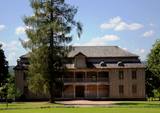 |
This estate is surrounded by an ancient and geometric landscape. During the latter half of the 19th century, it had a landscape style with various elements of geometry. The park covers 4.2 ha and has ancient linden, maple, elm, oak and other decorative bushes, with more than 20 types of plants that have turned into wood. |
|
 |
The farm is open to visitors all year round, but the best time to visit is during the spring and summer. The farm offers 45-minute lectures about plants, after which there is a 30-minute tour of local plants outdoors. |
|
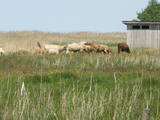 |
Overgrown with reeds, full of seashore meadows, lagoons, muddy little lakes and sandy shallows – this is the part of the Bay of Rīga shoreline which runs between Ainaži and Kuiviži. The Randi meadows are an important location for birds and plant life. It is a protected habitat with environmental restrictions. A bird-watching tower and nature trail have been installed so that visitors can study the meadows. The tour will take around one hour to complete. Objects are in the Northern Vidzeme Biosphere Reserve.
|
|
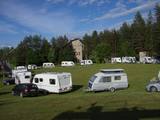 |
In the summer season we offer trips by raft and boats, camps for children, an area for organizing events, camping for the night. In the winter season "Baili" has a ski center - downhill ski tracks, ski and snowboard equipment rental, instructor services. Catering offer in a cafe. |
|
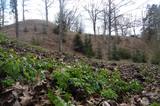 |
The Buse (Matkule) castle hill is next to the Imula River. The hill and the opposite bank of the river offer one of the loveliest views of small rivers in Kurzeme. They are best seen during the season when trees are bare so that leaves do not cover up the landscapes. There are trails for pedestrians in the area. |
|
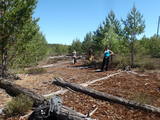 |
The Bažas swamp is the largest swamp in the Slītere National Park and is
entirely off limits to visitors.
|
|


