
| No | Name | Description |
|---|---|---|
 |
The single-storey wooden building, located in the centre of Ventspils, boasts an antique interior that repurposes various household and craft items from the past. Latvian cuisine: lamb soup, fried bull testicles, grilled pork, pork ribs, oven-fried pork shank, pork chop, rye bread cake, cottage cheese cream. |
|
 |
Located at Daugavas Street 58 in Skrīveri, this was the first home of the Andrejs Upītis (1877-1970). It was built in 1908, but the one that is there now was built on the foundations of the first one in 1921. The building houses a museum which features the life and work of the writer, including the writing his great novel “The Green Earth.” There is a garden around the building. In 1952, Upītis gifted the house and garden to the state. The museum offers tours and educational programmes. |
|
|
|
Das in 1671 gebaute Schloss wurde mehrmals umgebaut und die heutige Aussicht im Stil des Klassizismus hat das Schloss 1820 – 1923 erhalten. Der im 19. Jh angelegte Park mit einer Rotunde und einer Steinbrücke. Tematische Ausstellungen. |
|
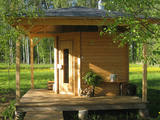 |
Sauna Museum is a private open-air museum founded in 2008. It is located 40 km from Riga by the Murjāņi - Saulkrasti road. The exhibition consists of six historic and one newly built sauna. They all work, but the hosts recommend to enjoy the black sauna. |
|
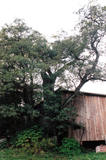 |
This is the thickest Black Alder (Alnus glutinosa) in Latvia
|
|
 4 days
|
The route leads through beautiful flower gardens of Kurzeme and Žemaitija. The largest in Latvia collection of Dwarf Bearded Iris is found in Kandava. Mierkalni is the largest daylily garden in Eastern Europe, with more than 1000 varieties. The owner also produces fruit and berry wines. In the Talsi Hillocks Nature Park there is the Kurzemnieki apple growing and processing apples (dried apples, apple chips, juices). It also grows Roman snails. The Upmaļi environmental and health farm produces teas, herbs, plant oils, special balms, cosmetics, plant-based soaps, etc., under the brand name AnnA Bermans. Latvia’s oldest magnolia, 50 years old, is found at Sauleskalni arboretum. Over 100 varieties of peonia are grown in Ziedoņi peony garden. The owners of Maras Manor offer stories of historical German manors in the area. Milk Estate Berghof houses a milk museum. Exotics flower and tree cultivars are found in Māra Lindes dendrological gardens. Turaidas farm produces herbal teas and sacks thereof as souvenirs or gifts, using lemon balm, raspberry, tansy, alchemilla, Plantago major and linden. In Nīca village, 7 decorative gardens maintaining the local gardening tradition are open for visitors. Rucava arboretum displays a collection of magnolias. The largest Japanese garden in Europe (16 ha) is a home to collection of traditional aromatic plants and vegetables. Palanga Manor housing the Amber Museum and Birutė Park is one of the best-preserved manor complexes in Lithuania. Kretinga Manor Park is one of the oldest surviving 16th–18th century manor parks in Lithuania. Klaipėda University Botanical Garden has a coastal ethnographic garden with flower arrangements characteristic of this area. Klaipeda, the most popular seaside resort town in Lithuania. The Sea Museum and Dolphinarium are among the most famous attractions there. Šilutė Manor has two parks – an English landscape park with walking paths and the forest park known as Varnamiškis, or “Crows’ Forest”. Pakalnė is a unique traditional fisherman’s homestead with garden plants typical of the Lithuania Minor region. |
|
 |
Here you can watch ponies, donkeys, dwarf sheep, dwarf goats, dwarf rabbits, dwarf pigs, a llama, chickens and other fowl. Children can take rides with a pony or donkey, and they can feed fish in the local pond. There is a playground, along with a picnic location, “Paradise for dwarves.” |
|
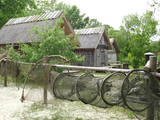 |
This is a very interesting monument to the history of fishing in the region. These areas had docks and areas where fishermen built huts to store their nets and other inventory. The areas also had a social role – men came together to discuss work that had to be done, while women and children wove nets. The huts at Bigauņciems were eventually washed into the sea, and the areas at Ragaciems have been partly destroyed. The ones at Lapmežciems are the ones which are best preserved. One of the net huts has been restored, but the others are in very poor condition, indeed. That may be why you should focus on these huts as you walk along the beach. Make sure that you take some pictures of this historic location. |
|
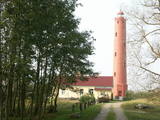 |
This was Coastal Defence Battery No. 500 at one time, and it was dismantled in 1955. There were four 130 mm cannons, and their foundations can still be spotted in the forest northeast from the lighthouse. They are mostly covered by moss and can be very hard to find. Those who are not familiar with the region will probably have the most trouble of all.
|
|
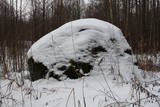 |
The historic stone, on which there is carved over 200 years old boundary-mark, sets the border between the Duchy of Courland and the Russian province. Nowadays, it sets the Babīte and Jelgava district boundary. The stone lies to the East of Kalnciems–Peat road (the south of the swamp Labais purvs) at the edge of a forest firebreak and it can be hard to find. To this end, the description of the road map may help: around 400 m south of the car parking lot at Lily Lake from Kalnciems-Peat road to the right (in the east) turns a forest road which leads down from hills Krāču kalni. It should be around 170 m to go until it abruptly turns to the right (to the southeast). Then you must go in this direction until after ~ 0.5 km to turn to the northeast where after further ~ 0.4 km of the current forest road intersection turn to the north. After ~ 0.4 km turn right (to the east) on a big firebreak, on the left (the north) side of which behind the drainage ditch during the non-leaf period there can be seen a rounded stone. Due to the poor condition of roads, the stone can be reached only on foot. |
|
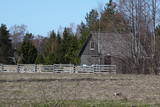 |
This village appears in historical documents from 1310. A census in 1582 and 1583 recorded eight farms in the village, while a 1731 census conducted by the Dundaga Estate found only three. In 1826, each farm had 16 or 17 people, with some 60 in total. A census in 1935 showed that all 49 Livonians in Saunags spoke the Lithuanian language, but only 11 of them spoke the language at home. There was a store that was owned by Kārlis Tilmanis, who also owned a factory where sprats were salted. Also born in Saunags was the seafaring captain Arvīds Ludeviks (1912-1996). In May 1945, he captained a tugboat, the Rota, in an attempt to bring Latvian refugees to Sweden. The ship was detained, and the captain was sent to Siberia. Another seafaring captain from Saunags was Visvaldis Feldmanis (1938-2017). |
|
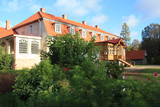 |
The oldest elements of the Oleri Estate date back to the 17th century. Initially there was a wooden mansion with an ancillary building. The new centre was built in the late 18th century in the style of Early Classicism. After agrarian reforms, the mansion housed an elementary school, and during the Soviet occupation and until the 1970s it was a school for children with mental disorders. The mansion suffered in a fire in 2000, after which it was restored. A local organisation was of great importance in this regard. The mansion is known for its Classicist paintings, with a unique “Painting Gallery.” The mansion is surrounded by a lovely park. The Oleri Estate is known for hosting chamber music concerts. The local Oleri swamp has a wooden pathway and a little viewing tower. |
|
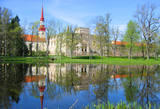 |
The Castle was built beside the Põltsamaa River in the 13th C and became the residence of Duke Magnus, King of Livonia in the 16th C. In the castle yard you find the tourist information centre, local history museum, wine cellar, Estonian Press Museum, art gallery, ceramic and handicraft workshop. |
|
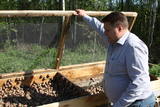 |
Here you will find an attractive and interesting story about Burgundy snails and how they are bred. You can tour the farm, receive valuable advice, taste Burgundy snails prepared on the basis of various recipes, and purchase semi-finished products. |
|
 7 days
|
The tour from Riga to Tallinn combines natural and cultural heritage and includes lovely landscapes and 15 nature trails which cross marshlands, meadows and forests along the shores of the Baltic Sea, including several protected nature reserves. Many trails are equipped with viewing towers for birdwatching. Randu meadows near Ainazi contains one third of Latvia's entire plant species. A boardwalk leads through reeds to a viewing platform with views over the meadow and the sea. Saaremaa island is interesting with very different natural attractions to the mainland - dolomite cliffs, juniper heaths, a meteorite lake and rocky sea shore. The tour passes rural farms and traditional villages typical of the coastal areas. Hiiumaa island is a laid back place and retains a very Estonian atmosphere with an important bird reserve at Kaina Bay, unusual Saare Tirp as well as several small islets off its south-eastern coast. Back on the mainland, Paldiski peninsula gives a glimpse of the recent history with its former Soviet military base. |
|
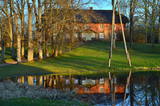 |
This museum is along the road from Jaunpiebalga and Vecpiebalga and was opened in 1969. It focuses on the life and work of two distinguished Latvians – the composer Emīls Dārziņš (1875-1910) and the poet and writer Jānis Sudrabkalns (1894-1975). It features items related to the lives of the two men. Music by Dārziņš can be heard in the museum, tours are offered to individual visitors and groups, and thematic and musical events are held at the museum. |
|
 7 days
|
Это богатый на мероприятия тур, ориентированный на семейный отдых. Запланированные мероприятия влкючают в себя катание на велосипедах, байдарках и пешие прогулки. После знакомства со Старым Городом и парками в Риге, вы сделаете остановку в Этнографическом музее под открытым небом, который дает практическое представление о жизни в старинной Латвии и ее архитектуре. В Сигулде пешая прогулка начинается у руин романтического средневекового замка и проходит вдоль долины реки Гауя к Турайдскому музею — резервату с его средневековым замком, обзорной башней, традиционными поместными зданиями и действующей кузницей, где вам понравится выковать монеты. Увлекательный сплав на байдарках от Цесиса проходит через несколько живописных прибрежных обрывов и небольших порогов, завершаясь у старомодного парома в Лигатне, который до сих пор действует ежедневно, работая от энергии течения реки. Будучи в Лигатне, прогуляйтесь по природным тропам, где сможете увидеть местных диких животных в больших вольерах, таких, как: дикие кабаны, медведи, рысь, волки и другие. Совершить «Путешествие во времени» вы сможете, отправившись на экскурсию в бывший секретный советский военный бункер, созданный на случай ядерной войны, в то время как экскурсия по средневековому Цесису и его замку Ливонского Ордена при свете фонарей предоставит вам иные исторические ощущения. Во время экскурсий дети смогут увидеть красивую природу, узнать много нового о местной флоре и фауне, заинтересоваться историей, получить полезные навыки и помимо всего прочего, им будет очень весело. |
|
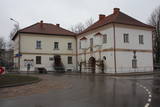 |
Vēstures avotos pirmoreiz minēta 1483. g. Pilsētas uzplaukums bija vērojams pēc dzelzceļa uzbūvēšanas 19. gs. beigās, kad barons Korfs sadalīja un iznomāja apbūvei muižas zemi. Pilsētas tiesības Priekule ieguva 1928. g. Pilsēta smagi cieta 2. pasaules kara pēdējos mēnešos, - t.s. Kurzemes katla laikā, kuru laikā tika sagrautas 410 no 450 ēkām. Mūsdienās tā ir neliela pilsētiņa ar mazstāvu apbūvi un nesteidzīgu dzīves ritmu. |
|
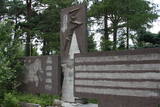 |
In Soviet times, the border guards of Ventspils established a major complex of buildings, open areas and various objects. Most of these are no longer in use, and the area is not under guard.
|
|
 |
Aktīvā atpūta svaigā gaisā, dabā. Dabas taka, atpūtas vieta, grilla vietas, lapenes. Lāzera cīņas jeb Laser tag ir spēle svaigā gaisā, ģimenes vai draugu kompānijā. Iegūsiet pozitīvas emocijas un kārtīgu adrenalīna devu, spēlējot augsti tehnoloģisko spēli reālā laikā un vietā. Lāzera cīņas ir visiem labi zināmā peintbola analogs, bet atšķirīgs ar to, ka Laser taga spēlē spēlētājus-pretiniekus “neitralizē” ar drošiem un nekaitīgiem lāzera šāvieniem no lāzera-ieroča, bet pati spēlētāja “neitralizācija” notiek, kad speciāli devēji (sensori), kuri ir nostiprināti uz spēlētāja apsaites, reģistrē pretinieka lāzera-ieroča staru, kas nozīmē, ka nav ne krāsu bumbiņu, ne sāpīgi sitieni, ne zilumi. Šī koncepcija padara Laser tagu pieejamu ne tikai vīriešiem, bet arī sievietēm un bērniem. |
|


