
| No | Name | Description |
|---|---|---|
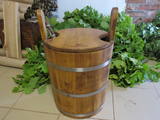 |
Here you will find everything that you need for a proper Latvian sauna – bowls, scoops, tubs large and small, switches, linen products and log saunas as such. You can tour the workshop, try out your own hand at the work that the owners do, and commission or purchase their products. |
|
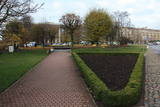 |
Истоки площади Роз уходят в 1911 - 1913 гг., когда на этом месте разбили открытый сад с > 500 кустами роз. В советское время рядом с площадью Роз был установлен памятник Ленину. Восстановленную в 2000 году площадь окружает Лиепайская Педагогическая академия, гостиница «Лива», Центр бизнеса и сделок De Rome (построен в XIX веке, архитектор Пауль Макс Берчи, бывшая гостиница «Рим») и Лиепайский дом латышского общества (камень в основание заложил Карлис Ульманис в 1934 г.). По бордюрам грядок роз размещены памятные знаки городов содружества Лиепаи. К площади Роз подходит улица Зивью (Рыбная), получившая свое название от когда-то существовавшего рыбного рынка. На улице Зивью находится Аллея славы латвийских музыкантов (с 2006 г.), где установлено 35 плит с бронзовым рельефом ладоней музыкантов, 10 плит, посвященные популярным латвийским музыкальным группам, а 5 – ушедшим в мир иной. Здесь же установлена самая большая гитара Латвии. |
|
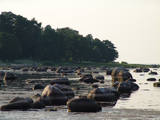 |
Back when the Baltic Sea was part of the ancient Littorina Sea, the coastline emerged as a small and shallow shore that was formed 4,500 to 5,000 years ago. The coastline has little rocks and gravel that have preserved typical examples of fauna from the Littorina Sea. The ancient cliff is best seen at the Dobeļi homestead in Kaltene. This is one of a few parts of the shore of the Bay of Rīga where there was an abrasion coastline during the era of the Littorina Sea. The shallow bay is popular among birds which feed and rest here during migrations. (Source: Roja TIC) |
|
 |
The restaurant is on the shore of the Bay of Rīga, between the VIA Baltica highway (A1) and the sea. It is part of the “Kapteiņu Osta” territory, which is surrounded by the meadows of Randa. The restaurant has a summer terrace with beautiful sunsets. Latvian cuisine: Cold beet soup, potatoes with cottage cheese and herring, smoked eel, oven-baked catfish, baked pike-perch with hemp butter, cottage cheese buns, strawberry soup. Special foods: Fish soup. |
|
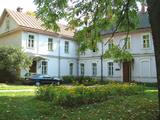 |
Veitko Manor was built in 1832. From 1993, there are hostels of
Latgale Craft School.
|
|
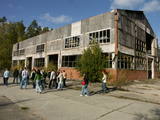 |
By far one of the most impressive Soviet military objects in Northern Vidzeme, this base has now been abandoned. There are buildings, underground bunkers, missile silos, areas of the firing of missiles, etc. This is one of the few remaining places in Latvia where a monument to Lenin still stands. The stone bust once stood in the central square of Alūksne. During the restoration of independence, it was taken down and moved to the missile base. We recommend that you bring a guide with you – otherwise it won’t be worth much.
|
|
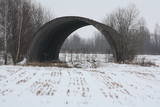 |
Few Soviet military objects are associated with more legends than this one. During Soviet times, this was a reserve airfield, as well as a storage site (just 50 kilometres from the republic’s capital city) for nuclear weapons. These were hidden in two cement hangars that were covered with soil and vegetation. Public information suggests that an RX-24 nuclear bomb weighing 430 kg and a RX-26 nuclear bomb weighing 1,030 kg were stored here, as were air-to-land missiles equipped with nuclear explosives. If there had been an accident here, what would have happened to Rīga, to Latvia, to the Baltic States and to Northern Europe? The airfield is a closed territory today.
|
|
 |
Organically certified farm. Produces greens, vegetables, micro-greens, vegetables and berry powder (gauze, balanda, dandelion, nettle, driven). Grown all year round. Offers product delivery in Riga, Valmiera, Cesis and Sigulda. |
|
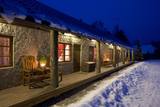 |
The farm, established in 1874, today provides comfortable tourist accommodation, saunas, an outdoor pool and organic food made to centuries-old recipes. Its little museum exhibits the exquisite needlework and farm tools of previous generations. All these items have a story to tell about their former owners´ dreams and work. |
|
 4 days
|
Poems are dedicated to trees in the garden sourrounding the memorial house of Edvarts Virza, a Latvian poet and writer who wrote a legendary novel about the lives of Latvian farmers. The beautiful 18th century Mazmežotne castle is renovated by a grain farmer’s family. The Rundāle castle is known as Latvia’s true jewel of Baroque and Rococo architecture featuring also a rose garden with over 2200 varieties of roses. At Brukna manor you will see a vegetable garden that is arranged as a Renaissance park, a rose garden and a vineyard. Pick your own blackcurrant berries at Bāniši berry farm. A beautiful landscape garden is open for visitors at Gundegas house. 200 year old oaks adorn the Vārkavas Park. Riekstiņi is an authentic single-family Selonian farm with a specific spirit and ambience. At Kaldabruņa you will visit an art gallery housed in a hay-shed together with a hay museum. Grape selection and cultivation was the great passion of Pauls Sukatnieks, and his memorial garden is worth visiting during the harvesting time. Dvietes Manor is proud of its 19th century landscape park and a stone bridge. Daugavpils, the 2nd largest city of Latvia, is famous for the renovated 19th century Daugavpils Fortress housing museums. Sēlija tree nursery offers a tour of their apple orchard, apple storage and production facilities. Enjoy a glass of apple juice and stories of vinemakers. Berķenele is the memorial house of Rainis, the distinguished Latvian author and social activist.The Rokiškis Regional Museum and Manor is one of the most important cultural centres of the Aukštaitija region. The Liudvika and Stanislovas Didžiulis Homestead Museum garden features traditional Lithuanian apple tree cultivars, flowers and herbs. The A. Baranauskas and A. Vienuolis-Žukauskas Memorial Museum presents culture, literature, history, agrarian culture, and technical history in the Anykščiai region. Traditional Lithuanian flower garden can also be seen at the Bronė Buivydaitė Memorial Museum. In Anykščiai you can enjoy the Treetop Walkway and Labyrinth Park, and take a train ride on Aukštaitija’s narrow-gauge railway. In Traupis Botanical Garden you will find everything from perennial flower collections and rock garden to a flower clock and decorative pool with aquatic plants. The interior of the Taujėnai Manor house was decorated extensively with the Radziwiłł family’s portraits, sculptures, hunting trophies, and antique weapons. Take a walk around the Ukmergė Old Town and enjoy the view from the old fire tower. Survilai Homestead offers a barefoot trail walking on pine cones, swamp, peat, clay, gravel, polished glass, pine-tree needles, straw. The Vytautas Magnus University Kaunas Botanical Garden exposes the Lithuanian Heritage flower garden plants according to their botanical classification. At Tadas Ivanauskas Homestead at Obelynė Park you will see a collection of 300 species and forms of plants, including some of the oldest trees on the planet – the ginkgo biloba and the dawn redwood. In Kaunas you will see the Oldest Apple Tree in Lithuania – almost 360 years old, 8 metres tall, with a girth of 285cm at a height of 1.3m. The tour ends in Kaunas, Lithuania's 2nd largest city that was the capital of the country from 1920 until 1939. |
|
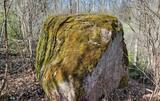 |
The Boulder of Labvārži is located in the Northern side of Adamova Nature Park, in the SW of Lake
Vizulītis (Labvārži). It is located 0,70 km from the Labvārži or Laboržu House. The boulder is 5.9m long and
4,0 m wide.
|
|
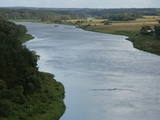 |
This lovely part of the Nemuna River between Alytus and Pakuonis meanders through cliffs that are up to 40 m high.
|
|
 |
A bar with a modern interior that offers street food from around the world, modern Latvian cuisine, including meat, fish and vegetarian dishes, as well as a wide range of drinks. |
|
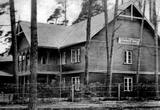 |
The “Strand” Complex – it was the largest and most luxurious recreational complex in Neibāde. It consisted of three buildings, a dance pavilion and a park. Only one building of the hotel, the same as what was once Saulkrasti outpatient clinic at 17 Ainažu Street, has survived until nowadays. |
|
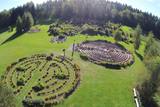 |
This park has five labyrinths with decorative plants, flowers and various kinds of medicinal plants. The longest path in the labyrinth is 1.7 km long. The total distance of the paths is 4.5 km. The park has three geometric figures -- a cupola, a mandala and a Merkabah. |
|
 |
Together with Valga on Estonian side - a peculiar frontier twin town. |
|
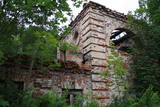 |
Atrodas Kraujā – Daugavas ielejas krasta malā un nogāzēs. Atrodama informācija, ka šajā vietā Livonijas kara laikā atradusies krievu karaspēka nometne. Muižas nosaukums cēlies no vācu Hof zum Berg – „Kalnu muiža”. Pēdējie muižas īpašnieki līdz 1. pasaules karam bija grāfu Šahno dzimtas pārstāvji. Viens no tiem – Marians Šahno 1910. gadā uzceļ muižas pili, kas bija būvēta eklektisma formās. Daļēji nojaukta tā pārdzīvo padomju laikus, līdz 2002. gadā nodeg. Līdz mūsdienām saglabājušās vien ēkas sienas, kuras slēpj biezs augājs. Var tikai iedomāties, kādi skati šeit kādreiz pavērušies uz Daugavas ieleju! Muižas parks ir vietējo iedzīvotāju pastaigu vieta. |
|
 |
The farm breeds cattle and grows vegetables. You can receive consultations and purchase seeds and vegetables. |
|
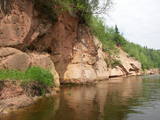 |
Eine der malerischen Sandsteinaufschüssen in Lettland. Die Länge beträgt ung. 500 m, die Höhe – 43 m. Gegenüber befindet sich die Ķūķu-Schnelle. |
|
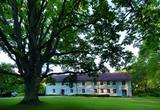 |
The first mention of Pēterupe Rectory goes back to the late 17th century. The Manor Park and the buildings have partially survived to the present day, including a linden alley at the end of Smilšu Street, planted by the pastor Jānis Neilands in 1879 and the grand oak planted by Johann Wilhelm Knierim in 1869. After the fire of 1908, the Rectory was restored and partially rebuilt. In Soviet times, the property was removed from the parish and the house was named “Līgotnes”. During German times the Rectory was occupied by legionnaires. After the war, the building of the Rectory was turned into a hospital, then into a secondary school and later it was transformed into a block of flats for teachers. Now the building again belongs to the parish and it is inhabited by a priest of the parish and his family. |
|


