
| No | Name | Description |
|---|---|---|
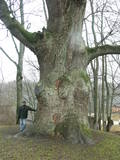 |
This tree is in the park of the Sēja Estate and is one of the four trees in Latvia that have a circumference of more than four metres.
|
|
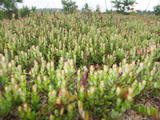 |
Large cranberries were first grown in the Laugas Swamp in Latvia in 1992. Today there are six types of cranberries that were originated in Latvia. Among them is a hybrid between large American cranberries and Latvian cowberries, and it is known as the noble cranberry. You can attend lectures, receive consultations, tour the swamp, and purchase cranberries, cranberry products, as well as purchase turf that is needed to grow your own cranberries. |
|
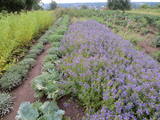 |
The farm is along the upper reaches of the Daugava Ancient River Valley, and it offers more than 100 types of plants, including decorative plants, herbs, medicinal plants and traditional Latvian farm plants. You can tour the largest field of so-called Northern kiwis in Latvia. Take a tour, purchase plants, taste teas, fruits and berries, and receive consultations from the owner. |
|
 |
The farmstead grows apples, strawberries, black currants, red currants, etc., berries and fruits; there is a big selection of processed goods: natural juices, nectars and syrups. There are offered apple, strawberry, red currant, gooseberry, sea-buckthorn and chokeberry saplings; consultations are given for making out a commercial garden and taking care of it. Excursions around the commercially grown plants. |
|
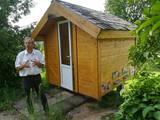 |
"Piebalga medus" is located in Vecpiebalga region, turning off the highway Cēsis – Vecpiebalga – Madona (P30). Beekeeping, apitherapy and narration "About and around bees". Tasting and purchase of beekeeping products. A candlestick workshop is available for visitors. Especially with the fact that the apiary only with Latvian hives. |
|
 3 days
|
The tour starts at Jaunmokas Castle estate, where you will also find the Forest Museum. The pride of the castle is its unique painted tile stove (beginning of the 20th century) made of 130 painted tiles featuring 50 different views of the cities Rīga and Jūrmala. The Forest Trails runs along smaller tracks through the Austrumkursa Uplands, the valley of the river Slocene, along Lake Sekļa and Lake Jumprava to finally reach the town of Tukums. Well, the town takes pride in its pots, planters and flower beds with blooming roses along its streets. Next, the route meanders through forests to the demanding hillock of Milzkalns and Lake Valguma, where you will find the barefoot trail and a secluded art space within the woods. The Forest Trail continues to make a stopover at the Ķemeri National Park. The park is dedicated to protection of wetlands, since it is home to one of the largest marshlands of Latvia – the Great Ķemeri bog. As to the town – Ķemeri – it is the former balneological and sulphur springs resort. The tour ends in the village of Bigauņciems, where the Forest Trail joins with the Baltic Coastal Hiking Route (E9 European long distance path). Optionally, one can take a detour along the Lake Sloka trail with its bird-watching tower or pay a visit to the “Forest House” – the visitor’s centre of the Ķemeri National Park. |
|
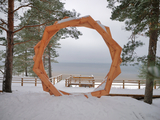 |
A new section of the walking trail along the sea has been built and an environmental object "Sunset watcher" has been created in Saulkrasti near the White Dune and Sunset Trail. It is a photo object where the newlyweds and every guest of Saulkrasti can capture memories in the symbol of the sun, which is so characteristic of Saulkrasti. |
|
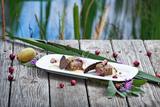 |
Located in the centre of Dikļi, the 1896 castle was renovated into a four-star hotel in 2003. The castle offers a look at antique furnishings, fireplaces and ovens, as well as paintings by Latvian artists. Two restaurants (summer and winter) offer fine dining and an individualised approach. The castle works with local farms. Latvian cuisine: Beefsteak, grilled trout, smoked wild board bacon, filet of pike from Lake Burtnieki, seasonal mushrooms and berries. Special foods: Venison chop, candied fruit in syrup, onion marmalade. |
|
 |
"Gusts Apinis" is located in Vidzeme highlands, Amata region. The company is unique in that it grows non-traditional crops in Latvia: quinoa, amaranth, millet, lentils, etc. Produces flour and pasta (buckwheat, buckwheat-quinoa) from grown products. |
|
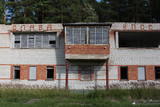 |
The firing range at Skujnieki was once used for summer sports, as well as training in the use of firearms. The Defence Ministry still uses the facility from time to time. The central building of the facility was built in 1982, and its façade is decorated with text in the Russian language: “Слава КПСС” (“All Honour to the Soviet Communist Party).
|
|
 |
Located in Vihula Manor Country Club&Spa complex, in the historical Ice Cellar, a rustic Estonian countryside tavern, is seating up to 100 guests on 2 floors. The tavern is featuring limestone walls decorated with old farm tools, wooden beams, waitresses in traditional Estonian customs, Estonian folklore music, traditional Estonian countryside cuisine based on natural and ecologically balanced produce and a large selection of beer and ale. The tavern offers traditional Estonian buffet lunch and dinner specifically designed for groups and also the possibility to book a folkloric dance show or traditional Estonian live music. |
|
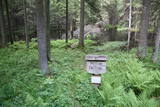 |
Ja apskatīta kodolraķešu bāze, tad var iziet 3,2 km garo Ploštines izziņas taku, kas sākas turpat netālu. Taka ved cauri dažādiem mežu tipiem, iepazīstinot ar sikspārņu būrīšiem (cilvēka radītas sikspārņu dzīves vietas), apkaimes augiem un putniem, kā arī aizsargājamu dabas pieminekli – Pileļu avotu (Pilelio šaltinis). |
|
 5 days
|
The "Baltic Way" route is in honour of a unique demonstration on August 23, 1989, when residents of the three Baltic States joined hands in a chain of participants that stretched along a nearly 600 km distance to link the three capital cities of Vilnius, Rīga and Tallinn. In historical terms, this route was used from the 14th or 15th century or even earlier than that. Grain-based foods in this region have a long history. Tasty and yeasty rye bread is common, and in Vidzeme, try it with some hemp butter. Barley is used to bake buns and for porridges. Wheat is used to bake water pretzels with caraway seeds. Visit farms and restored windmills to track the route of grain. A special cheese is part of Summer Solstice celebrations, and on a daily basis you can enjoy other tasty cheeses made of cow and goat milk. Various river and lake fishes are popular, as are local meat and fowl dishes and wild game with tasty sauces. A roast or a pot of soup cooked on a live campfire will have a lovely aroma, and it will be served with vegetables, greens, beans, peas and mushrooms. Wild plants such as sorrel, dandelion or young nettle leaves are added to soups and salads. Treat yourself with fresh honey, bacon pies, sheet cakes, pastries, rye bread desserts, honey cakes and gingerbread. You will find simple and traditional dishes, romantic meals in castles and estates, as well as a special knighthood repast with spices typical in the age of the Livonian Order. Slake your thirst with herbal teas, birch juice, berry beverages, tasty beer or wine or a glass of something stronger. |
|
 10 days
|
During this trip you will visit the workshops of craftspeople, farms that breed horses, as well as various destinations where you can enjoy country goodies. Ancient skills are now a modern application. First you will stop in Ikšķile, and at the very beginning of the trip, you will visit a cellar that stores birch juice wine and taste sparkling wine. In Skrīveri, you will be surprised by the transformation of milk. A cosy café on the main street of the small town offers outstanding homemade ice cream featuring strawberry, anchovy and horseradish flavours. In Koknese, you can supplement your wardrobe with a new leather belt, bag or stylish leather jewellery. A farm that grows hemp will offer a small tour, as well as hemp delicacies. The work of black ceramics masters in Latgale fits into modern interiors. The Aglona Bread Museum offers a chance for visitors to bake their own loaf of bread. The visit to the next farm will allow you to add tasty cheese that has been made from milk from Latvian brown cows. The last stop in Latvia will be Daugavpils, which features an art centre featuring the work of the globally known abstractionist Mark Rothko, as well as the Daugavpils fortress, that was built in the 19th century and is an impressive military building. This is one of the most popular tourist destinations. From there you will travel to Lithuania, where you will visit several traditional farms. The Ilzenbergo Dvaras estate has a bio-dynamic farm. You will taste Lithuania's national sweets which are called šakotis. You will visit the town of Anykščiai, which offers a hike along a trail that is above the trees. A horse museum offers a look at old farm equipment. Next you will visit farms that will inform you about traditional Lithuanian cuisine and the work of potters. The Dubingiu horse farm offers horseback rides. At the conclusion of the tour you will visit the unique Trakai lake castle (14th and 15th century), as well as Vilnius. |
|
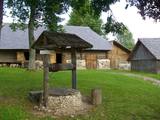 |
This is a unique open-air museum in South Estonia with displays on farming and school life in the late 19th and early 20th centuries. Its 5 ha grounds comprise a school, a court and a poorhouse with outbuildings, a communal granary, dwelling houses, and a Dutch windmill. Farm tools and machinery are also displayed. |
|
 |
The breeding of Californian red snails and production of bio-humus. You are offered a short excursion around the production, information about breeding snails and the production of bio-humus. |
|
 2 days
|
Маршрут подходит для активных туристов, интересующихся многообразием природной и культурной среды национального парка «Кемери». Национальный парк «Кемери» (основан в 1997 г.) создан, прежде всего, для защиты водноболотных угодий – мелководного побережья Рижского залива, заросших прибрежных озер, болот, влажных лесов (трясин и др.) и пойменных лугов, как значимых мест произростания многих растений (~ 25 % от видов растений, занесенных в Красную книгу Латвии) и обитания животных, особенно мест скопления гнездящихся и перелетных птиц. На территории парка находится один из крупнейших заболоченных массивов Латвии – Большое Кемерское болото. Заболоченные массивы являются значимым местом образования и выхода сероводородных вод, а также местонахождения лечебных грязей, используемых в медицине, которые в свое время послужили основанием для создания известного курорта «Кемери». Информация о маршруте от Latvijas Lauku forums |
|
 |
A gift shop in the old town of Cēsis near Rose Square, in the building of the former hotel "Baltischer Hof". The shop is named after the hotel's former owner, Karlīne. It is possible to buy gifts, handicraft items, souvenirs, as well as delicious homemade products, homemade wines and spirits here. |
|
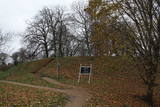 |
This ancient Courlandian castle hill has remnants of an ancient city. Historical sources indicate that in 1263, the Courlandians handed the castle over to the Livonian Order without a battle and that the castle was then burned down. The name of the place, Skābaržkalns, has to do with the name of the city, because hornbeam trees in the area were once known as grobi. |
|
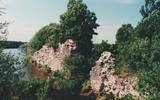 |
The castle hill is an island in the reservoir of the Pļaviņas hydroelectric power plant, and it can be accessed by boat. The ancient Selonian castle hill was settled several times between the 6th and the 12th century. This was the political and military centre of the Selonian region. In 1373, the Livonian Order built a stone castle on the hill, as it did on many other ancient hillocks. The castle was sacked in 1704 during the Great Northern War. Remnants of a square tower, a guard room and the 12 m embankment that once protected the castle are all that survive. Approximately 300 m to the North of the Sēlpils castle hill is Oliņkalns hill, which is underwater. |
|


