
| No | Name | Description |
|---|---|---|
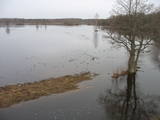 |
Jēsū – Kepu ceļa malā pie Leti (Läti) ciema ir izveidots autostāvlaukums ar putnu vērošanas torni, no kura paveras skats uz Hallistes upes palieņu pļavām un tuvējā ciema apkārtni. Stipru palu laikā arī no šī torņa redzamā apkārtne (izņemot ceļus) var atrasties zem ūdens. Laba putnu vērošanas vieta. Läti tulkojumā no igauņu valodas nozīmē Latvija. |
|
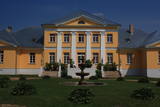 |
This estate is an unexpected surprise in this place and date. Work on the castle began in themed-18th century, and it was rebuilt one century later. During the first half of the 20th century the castle hosted an elementary school, and during the Soviet occupation it was an apartment building. Today the castle has been reborn in terms of form and content in the direct and indirect sense. The Mountain Holiness Community works here. During the summer, there are children's camps and other events. The old stairs, window shutters and brass door hinges are all original. A church is being built on the site. The Renaissance-style garden can be visited. Contact the estate in advance for a tour of the interior of the castle an church in the company of local residents who will tell you all about the history of the estate and its garden. 300 m to the south-west of the estate is the Brukna Castle Hill, which is hard to see in situ and even harder to access. |
|
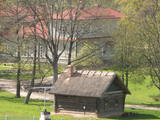 |
On the banks of Little Lake Ludza is a farm with a house, windmill, threshing barn and the workshop of the Lettigalian ceramicist Polikarps Vilcāns. Various events related to craftsmanship and culture are organised there. |
|
 |
Remnants of the plank ways of a fishing port can be seen on the shoreline and
in the sea opposite Mazirbe. They recall the former fishing co-operative Zivs, which
was here in the 1930s.
|
|
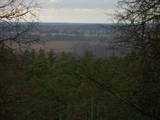 |
This is an area that is full of legend and tale. There is a stiff hillock, which stands about 66 metres above the surrounding land. From its southern side, you can see the Burtnieki lowlands. The tower, however, is not open to the public.
|
|
 |
Restaurant Ankur is a cosy place where home-made dishes are served, mostly from local products. Peipus Lake fish are of special value. There is also a hotel in the same building. |
|
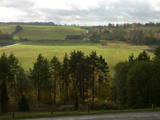 |
As you travel from Kandava to Sabile, you will find a parking lot on the right side of the road. From there, there are steps to a viewing area on the highest hill in the Abava Ancient River Valley – Greiļi Hill. This offers a wonderful view of the ancient river valley and the local mosaic of meadows and forests. The landscape is enriched by the Imula and Amula valleys that are on the other side of the ancient river valley.
|
|
 1 day
|
One of the most beautiful sections of the Baltic Coastal Hiking Route in Matsalu National Park, which leads through the agricultural lands and coastal meadows located near Matsalu Bay, where thousands of migrating cranes and geese gather in autumn. There are excellent birdwatching sites with towers near Haeska village (coastal meadows, shallow coves, small islets, cattle pastures) and at Cape Puise (coastal meadows with pastures, shoals). The most panoramic views of the sea and strings of islands can be seen in the surroundings of Põgari-Sassi and Puise nina |
|
 |
The Forest House (Meža māja) was built
in 1933, and this is one of the most
outstanding buildings in Latvia from the style
of National Romanticism. It used to house an
enormously popular restaurant, “Merry
Mosquito" (Jautrais ods). The restaurant was
popular among the spa’s guests, but also
among prominent people of the day. A
children’s sanatorium was installed here after
World War II for kids from all over the Soviet
Union. When the Ķemeri National Park was
established in 1997, the building became its
headquarters and today it is a modern visitors’
centre.
|
|
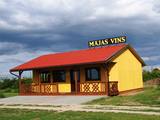 |
The owner uses Latvian products to make and offer more than 20 different wines, including some that are made of exotic flowers. You can taste and purchase wines made of berries, fruit, vegetables and flowers, including white jasmine, the elderberry tree, dandelions, the large cranberry, etc. There is a lily garden alongside which is the largest one in Eastern Europe and offers plants for sale. The day lily garden offers a look at globally famous types of day lilies which can be purchased. Many of these have been developed by the originator of the garden, Varis Baņģieris. More than 1,000 types of day lilies can be seen and purchased. The garden is open from 9:00 AM until 7:00 PM every day in July and August, when the flowers bloom. The owner also offers tastings of homemade wine that is called "Vējkalnietis." |
|
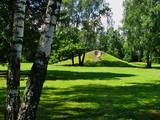 |
The monument dedicated to the Staburags cliff was installed in 2003. Designed by the sculptress Solveiga Vasiļeva, the monument is known as “The Ear of God,” and it is installed in the place where the reservoir of the Pļaviņas hydroelectric power plant flooded one of Latvia’s most interesting geological monuments. Staburags relates to many legends and stories told by rafters. It stood 18.5 m high and was a sandstone cliff on the left bank of the Daugava River, dating back to the last Ice Age. The Liepavots stream that trickled out of the cliff is now also underwater. Staburags and the flooded Daugava quarry were once among the most popular tourist destinations in Latvia. |
|
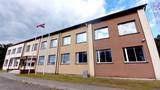 |
Located in Aizpute, within 200 metres of Exotic garden of Māris Linde and less than 1 km of Castle tavern, Hostelis R27 provides accommodation with a shared lounge and as well as free private parking for guests who drive. The property is situated 1.1 km from Art gallery Mētras Māja, 1.1 km from Aizpute Local History Museum and 1.1 km from Aizpute winery. The property is set 1.4 km from Aizpute Baptist Parish and less than 1 km from Livonian Order castle ruins. At the hostel, all rooms have a wardrobe. The shared bathroom is equipped with a shower and a hairdryer. At Hostelis R27 each room has bed linen and towels. Popular points of interest near the accommodation include Stone bridge, Manor Brewery and Aizpute old town. The nearest airport is Liepāja International Airport, 37 km from Hostelis R27. |
|
 |
The cafe is situated in the centre of Talsi. |
|
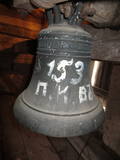 |
The church was opened in 1651 after half a century of sometimes interrupted construction. It was fully rebuilt and took on its current appearance in 1876. The church contains one of the most important church objects in Latvia – the oldest pulpit in the country (1590). It was designed in the style of Mannerism. The church also has a bell from a wrecked chapel of the local knighthood. The bell was manufacture in 1450 and was installed at the church in the 19th century. It is the oldest church bell in Latvia. The German painter F. Wolff painted the altar painting, “Christ on the Cross,” and it, along with the altar, have recently been restored. |
|
 |
An organic farm where it is possible to read and taste strawberries directly from the field during the season. There are also real wild strawberries. Sea buckthorn is also grown, can be read and tasted in September. Small-scale processing (juices, syrups, frozen products, jams) - home producer status. |
|
|
|
Das in 1671 gebaute Schloss wurde mehrmals umgebaut und die heutige Aussicht im Stil des Klassizismus hat das Schloss 1820 – 1923 erhalten. Der im 19. Jh angelegte Park mit einer Rotunde und einer Steinbrücke. Tematische Ausstellungen. |
|
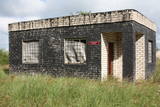 |
The Lūžņa radio equipment company was part of the Naval Border Guard in Soviet Times. The car park in the centre of Lūžņa offers a fine view of the former military complex. Some buildings are used as apartment buildings at this time.
|
|
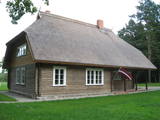 |
“Airītes” is a museum found at the place where the first commander of the Latvian Armed Forces, Col Oskars Kalpaks and other Latvian soldiers (including three officers) fell during a battle on March 6, 1919. The public donated money in 1920 to build a monument, and it was unveiled on September 3, 1922. In 1935, work began on a building that was proposed by the Col Kalpaks Battalion organisation, the plan being to exhibit items related to Kalpaks’ battles. It was opened a year later. The monument was destroyed during the Soviet era, and the building housed a post office and some flats. The memorial was restored during the national Renaissance in 1988 and 1989, and on November 11, 1990, the museum was reopened. During renovations in 2007, the second floor burned down. The museum and exhibition were renewed in 2013. The exhibits speak to Kalpaks’ life during World War I and Latvia’s liberation battles. Employees regularly organise commemorative events in honour of Kalpaks, as well as celebrations of Lāčplēsis (Veterans’) Day. |
|
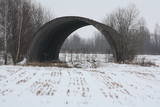 |
Few Soviet military objects are associated with more legends than this one. During Soviet times, this was a reserve airfield, as well as a storage site (just 50 kilometres from the republic’s capital city) for nuclear weapons. These were hidden in two cement hangars that were covered with soil and vegetation. Public information suggests that an RX-24 nuclear bomb weighing 430 kg and a RX-26 nuclear bomb weighing 1,030 kg were stored here, as were air-to-land missiles equipped with nuclear explosives. If there had been an accident here, what would have happened to Rīga, to Latvia, to the Baltic States and to Northern Europe? The airfield is a closed territory today.
|
|
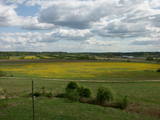 |
From the Asote castle hill, which is on the right bank of the Daugava River near Jēkabpils, there is a fine view of the Daugava River valley, the Ābeles Island, and the Kaupre castle hill that is at the northern end of the island.
|
|


