
| No | Name | Description |
|---|---|---|
 |
Kartavkalnā, kur senāk atradusies seno zemgaļu apmetne, ir izveidota dabas taka ar soliņiem, piknika vietām. Šeit apskatāms arī Jaunpils Kartavu kalns un lapegļu aleja, kā arī iespējams aplūkot, kāda izskatās senlatviešu apmetne ar īstu guļbaļķu sētu.
|
|
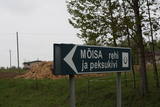 |
Neliela apdzīvota vieta nacionālā parka ziemeļrietumu daļā, kur kādreiz atradusies Rebases muiža. Mūsdienās no tās saglabājušās klēts atliekas, pie kurām apskatāms interesants vēstures liecinieks – sens akmens, ko izmantoja kulšanas procesā (Peksukivi). |
|
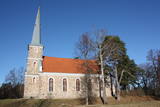 |
A wooden church was built here in 1766, and the new brick church was built on the foundations of the old church and consecrated in 1868. The tall steeple of the church helped ship captains orient themselves during the daytime. An altar painting by Gunta Liepiņa-Grīva, "Christ and Peter on the Sea," was consecrated in 1993 to replace the former painting, which was lost. The blue-white-green Livonian flag was consecrated at the Mazirbe manse (now a recollection centre) on November 18, 1923. Near the manse are several rocks which stand witness to the Black Plague in 1710 and 1711. The text in Latin said that Livonians on the coastline were conquered by Swedish King Karl IX and the bubonic plague. The texts on the rocks have eroded away, but records of them were made. The Mazirbe cemetery has a monument to Old Taisel, a monument to the parents of captain A. Bertholds, and the legendary grave of a werewolf. |
|
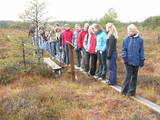 |
The tower is locatede in the Niedrāji-Pilka swamp. Access it via the old Ainaži-Valmiera-Smiltene narrow gauge rail line, which dates back to 1912, and then take the wooden footpaths which are approximately one kilometre long. This is a high-type swamp with small lakes at the foot of the tower. It is in the ZBR. |
|
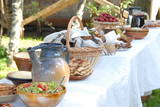 |
This facility is in the historical village of Pape in Southern Kurzeme. Accommodations are available in an historical granary with a roof made of reeds. It is appropriate for inhabitation during the late spring, the summer and the early fall. There are three bedrooms, a small front room and a kitchen, with two floors in all. The building will fit eight people. This is an ideal location for creative camps, plenary sessions, master workshops and other activities. There are tenting areas for as many as 80 people. The Mikjāņi farm observes local traditions and offers traditional foods such as “herring on coals,” white butter with boiled potatoes, fish soup, etc., for visitors who apply for a meal in advance. This offer is only available to groups which register in advance. |
|
 2 days
|
Here you will learn about home-based manufacturers, farms, companies and others in Kurzeme that produce various dairy products such as milk, yogurt, cottage cheese, cheese, ice cream, etc. Begin in Tukums, which offers lots of interesting foods and beverages. Then cross the ancient Abava River valley, which is one of the most beautiful river valleys in Latvia. The route leads to Wine Hill in Sabile and then Talsi, the “city of nine hillocks.” Further on you will find Dundaga and its legendary castle, pass through large and lonely forests on your way to Ventspils, and then continue along the shore of the Baltic sea to Medze. From there, travel back into the centre of Kurzeme, through Aizpute and Kazdanga, which is known for its own castle. Visit Latvia’s first shiitake mushroom farm at Garīkas, the Milk Estate and the Milk Museum. Further on will be Saldus with its tasty treats, then Džūkste, and then back to Tukums, where we started. |
|
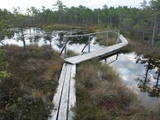 |
The Teiči Nature Reserve was established in 1982 and is one of the largest areas of moss swamps in the Baltic region. It consists of the Teiči and the Pelečāre swamps, with a variety of plants and animals, as well as adjacent territories which are under protection. The Teiči swamp is the largest nesting ground for a number of bird species, including the common crane, the whimbrel, the golden plover and the wood sandpiper. During migratory seasons, thousands of geese of various kinds are found in the area. The reserve can be toured only in the company of a guide from reserve headquarters, and one must apply in advance for such a tour. Visitors will see the pathway of footbridges on Lake Silda, as well as Siksala island, which offers a magnificent view of Latvian swampland from a viewing tower. |
|
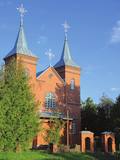 |
Holy Trinity Roman Catholic Church of Stoļerova. The construction
works of the church were finished in 1999 by the support of dean Butāns. The building is slightly larger than
the previous one; the newest (restored) church in Rēzekne district. The church has a specific icon of Our
Lady that was transferred from the chapel of Rozenmuiža.
|
|
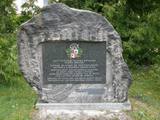 |
The rock is in the square outside the Skrunda Cultural Centre. It was installed in 2005 in honour of the victory of Col Oskars Kalpaks and his battalion over the Bolsheviks. During the Latvian liberation battles, on January 22, 1919, the Bolsheviks occupied Skrunda. Kalpaks’ battalion headed toward the town on January 29 from the Rudbārži Estate. After a three-hour battle, the victory was won, with the battalion taking over a strategic line near the banks of the Venta River. This was the first victory for Kalpaks’ men after many retreats, and that inspired the rest of the liberation battles. |
|
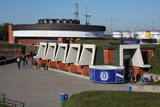 |
Das Museum befindet sich in der Festung von Kopgalis. Im Aquarium des Museums sind Fische und Tiere der Ostsee und anderer Meere und Ozeane zu sehen. Eine Ausstellung. Pinguine und Seehunde. In den Pulverkellern der Festung ist eine Ausstellung der Seefhrt Litauens, aber auf den Bollwerken eine Ausstellung der Gewehr eingerichtet. Das einzige Delfinarium im Baltikum. |
|
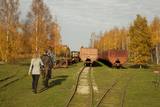 |
Sedas purva kājnieku maršruts atrodas dabas liegumā Sedas purvs, pārgājienu pa maršrutu iespējams apvienot ar Sedas pilsētas apskati, kas ir unikāls 20.gs. 50.–60. gadu pilsētbūvniecības un arhitektūras paraugs - kūdras purva strādnieku pilsēta. Maršrutam ir divi apļi - Jērcēnu aplis - 5,5 km un Sedas aplis - 4,2 km. Tajos apakatāms izstrādātais kūdras purvs, šaursliežu dzelzceļš, ritošais sastāvs, divi skatu toņi. Rudenī un pavasarī - putnu migrācijas lāikā - interesanta vieta putnu vērošanai. GPS koordinātes: Jērcēnu puses aplim: 57.7055987, 25.7001324; Sedas puses aplim: 57.6699587, 25.7514815. |
|
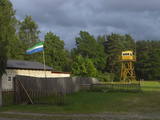 |
This coast guard facility was housed in a building that used to be a maritime school. In the post-Soviet era, accommodations were offered at the building. The coast guard tower is one of the best-preserved objects of its kind along the Latvian shoreline.
|
|
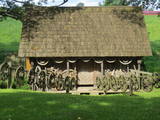 |
Saimnieks Valentīns Kuklis savā viensētā izveidojis no koka un citiem materiāliem un vēsturiskiem priekšmetiem veidotu brīvdabas kolekciju, kas savākta g.k. no Latgales lauku sētām. Daļa no vēsturiskajiem priekšmetiem ir izvietota saimnieka veidotā muzejā. Piedāvā ekskursiju un stāstījumu par savāktajiem darbarīkiem un sadzīves priekšmetiem. |
|
 |
A place where you can enjoy nature and food. The tavern Kogre got its name from Seven Fish Soup - crucian (koger), is the seventh fish. The owner is a fisherman, and together with his wife he prepares various dishes from his catch. |
|
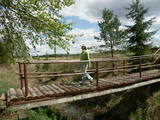 |
A small and forested territory with sulphurous springs, among which the most popular one is the Ellīte sulphur spring. It has sulphurous water with a low level of minerals, and the water supposedly has medicinal properties. The area around the stream is well-appointed, and a pathway leads to it. The stream is considered to be the source of the Iecava River. The restricted area is there to protect biotopes and protected plants which are in the area.
|
|
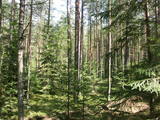 |
Ap 25 km gara un līdz 1,5 m plata vaļņveida reljefa forma Adzeles pacēluma dienvidu malā, kas apaugusi ar skujkoku mežu. Latvijā reti biotopi un nozīmīga daudzu aizsargājamu augu un dzīvnieku sugu dzīves vieta. Numerenes valni var ļoti labi "izjust", braucot pa Kārsavas - Tilžas ceļu. Dabas parkā atrodas slēpošanas kalns "Nūmerene".
|
|
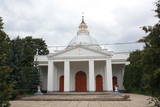 |
Atrodas Rīgas ielā 39. Dievnams celts 1848. – 1849. g. klasicisma stilā (arhitekts A. Štauberts), bet laikā no 1924. – 1934. g. pārbūvēts (A. Vizuļa projekts). Dievnama izskatu salīdzina ar Svētā Pētera katedrāles veidolu Vatikānā. Blakus baznīcai atrodas Rīgas ielas gājējiem domātā daļa. |
|
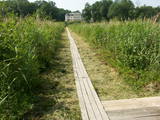 |
The best place to look at the restricted area of the Vīķi swamp and the Lielauce lake which is in the middle of that swamp is the Lielauce castle, where a wooden pathway stars. The pathway will lead visitors across the swampy shores of Lake Lielauce and deliver them at a boating area on the open part of the lake. The swamp itself is to the South-east of the lake. The restricted area is there to protect biotopes and species in the area. |
|
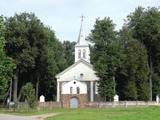 |
Sts. Peter and Paul Roman Catholic Church of Ozolmuiža was built in 1820 by the foundation of
counts Plāteri-Zībergi. It is a stone building with a small bell tower. The church has a huge stone altar with
four columns and a massive cross. It is a monument of state importance.
|
|
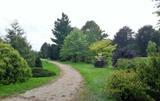 |
Work on this arboretum began in 1958 at a local forest research station that is near the village of Vaišvidava. The arboretum collects and exhibits various local and imported plants for scholarly, educational and decorative purposes. The arboretum covers some 50 ha of land, with more than 800 types of plants. Some parts of the arboretum have rare and protected trees and bushes, and these can only be visited if you contact the arboretum in advance. |
|


