
| No | Name | Description |
|---|---|---|
 |
A café and bakery in Kuldīga that offers fresh, home-made pastries until the very evening. |
|
 |
Old Kybyn Inn in Trakai serves traditional Lithuanian food like their Karaite meat pasty – the Kybyn as well as other sorts of food. |
|
 |
This farm produces tomatoes, apples, pears, raspberries, strawberries, etc. Visit the farm in the spring to see blooming pear and apple orchards and fields of raspberries. During the autumn you can help to harvest fruits with special "kangaroo pouches" and wheelbarrows. |
|
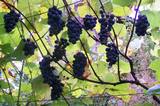 |
The visitors are offered the excursion around the wine garden and the story about different sorts of grapes and the secrets of wine-making. During the excursion the vistiors can learn about the traditions of growing grapes in Latvia, to see and taste the newest tendencies of grape selectioning,as well as receive advice on growing and tending grapes. It is also possible to try home-made wines and buy grapes saplings. |
|
 |
Atpūtas centrā tiek piedāvāta iespēja atpūsties brīvā dabā kolektīviem vai individuāliem apmeklētājiem. Iespējams izmēģināt dažādus metamos ieročus (nažus, cirvjus u.c.), kā arī šaušanu ar dažāda veida lokiem, arbaletiem, pneimatiku u.c. |
|
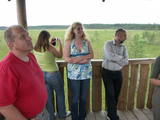 |
The tower is beyond the Oleri estate, in the small Oleri swamp, where at the end of a wooden footpath you can step upward a bit and learn about the landscape of a transitional swamp. This is part of the ZBR.
|
|
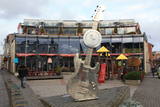 |
The word zivis means fish, and the name of the street is derived from a fish market that once existed at the end of the street near Kurši Square. There are old log warehouses in the yard of Zivju Street 4/6 and the yard of Peldu Street 2. One of the most popular destinations for tourists is the Latvian alley of fame for musicians (since 2006), with bronze replications of the palms of hands of 35 Latvian musicians. There are ten plaques dedicated to popular bands in Latvia, with five others focusing on musicians who have passed away. The largest guitar in Latvia is right nearby. |
|
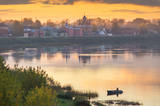 |
Krustpils was first recorded in documents in 1237 in relation to the construction of the Kreutzburg castle on the right bank of the Daugava River. A 1511 document lists it as a village. In 1585, Polish King Stefan Báthory gifted the town to Nicholas Korff, whose family continued to own it until 1920. Battles between Swedish and Polish forces occurred outside of Krustpils in 1626, and the sacked village was in poor shape until the mid-19th century. Jēkabpils, in turn, was constructed as a settlement for Old Believers who were persecuted in Russia. The Daugava has rapids opposite Krustpils and Jēkabpils, which means that boats had to dock there and reload their goods into wagons. The settlement flourished, and in 1670 it was given the rights of a city. It is named after Duke Jacob. When the Rīga-Daugavpils rail line opened in 1861, Krustpils flourished, and Jēkabpils did not flourish. The two cities were administratively merged in 1962, keeping the name of Jēkabpils. There are typical one-story wooden buildings from the 19th century, red brick buildings built at the turn of the 20th century, as well as seven churches used by different denominations. The dam along the left bank of the Daugava was built in 1861, and it was aimed at protecting the city against flooding. Today it is a promenade that is popular among local residents for strolling and leisure. |
|
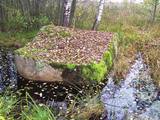 |
Platais Boulder (Wide boulder). You can find it in the rural municipality of Mākoņkalns not far from a
small meadow close to the boulder of Āžmugura. Both the boulders have their legends. Some say that the
boulder of Āžmugura is the part of Platais boulder and the rainwater from its cavity heals the warts.
|
|
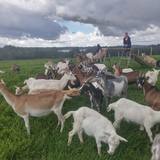 |
Santa Lasmane owns a farm near Lake Jumurda and manufactured goat’s cheese from 40 dairy goats (60 goats in all). You can buy the cheese there and at local markets. Products are delivered on demand. You can tour the farm, meeting Bonija the goat and her friends, and taste the cheese. |
|
 |
The farm offers various goodies, including cheese, butter, cream, cottage cheese and fresh eggs. |
|
 |
The town of Subate was first listed in documents in 1570, when Duke Gotthard Kettler of the Duchy of Courland sold the Subāte marketplace to Count G. Plater-Sieberg. When the Plater-Sieberg dynasty converted to Catholicism in the mid-17th century, Lutherans in Subate protested by moving to the eastern bank of Lake Subate. That was the property of the Prode Estate (only ruins remain at this time), which was owned by the Osten-Sacken dynasty. In 1685, the Osten-Sackens built a Lutheran church for the “refugees,” and Jaunsubate was established around it. Both parts of the town were merged again in 1894. During Latvia’s liberation battles in 1919, Subate was liberated by Lithuanians, at which time the town was divided up between Latvia and Lithuania (though the border between the two countries was set at the previous line in 1921). The historical centre of Subate was established between the 16th and the 19th century, and it includes four churches for various congregations and low wooden buildings which stretch along narrow and curvy streets. The town is on the shores of a sub-glacial depression with Great Lake Subate and Lesser Lake Subate therein. This provides the town with unusual landscapes for Latvia. |
|
 |
Regīna Kalniņa is one of the best known craftswomen in Kurzeme. She weaves blankets and shawls and knits colourful mittens. She also sews Rucava and Nīca folk costumes. The process of weaving and knitting can be viewed. Regīna’s products are widely demanded in Latvia and in other European countries. |
|
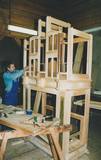 |
This is the only place in Latvia where old organs are restored and new ones are built. The workshop also manufactures music boxes. Tour groups can learn about the history and principles of organ building and about the instruments as such. The workshop was installed in the stable of a former manse in 2004, and it is owned by Jānis Kalniņš. |
|
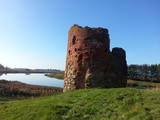 |
Piltene is one of the smallest and oldest cities in Latvia, first mentioned in 1295, and being granted the rights of a city in 1557. Between the 14th and 16th century, Piltene was the administrative centre for the Bishopric of Kurzeme. The historical streets that surround the castle ruins feature wooden buildings from the first half of the 19th century. The bishop’s castle in Piltene was built at the turn of the 14th century and used until the 16th century. Only its foundations and fragments of its tower on the banks of the Vecventa River survive. |
|
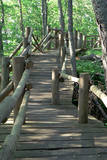 |
Augstrozes pilskalna taka atrodas ainaviskā vietā, gleznainā 13. gadsimta pilskalnā, kas apvīts ar teikām un leģendām. No pils drupām paveras labākais skats uz lielisko ainavu, ko veido Augstrozes Lielezers un Ziemeļu purvi.
|
|
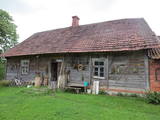 |
The master craftsman produces wooden spoons of linden and birch, as well as sauna switches with apples. You can watch him at work, try your own hand at making a spoon, purchase finished products, tour a collection of spoons, and also visit the old farm buildings. |
|
 3 days
|
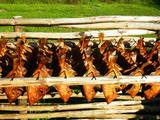
The Liv Coastline involves a series of shoreline villages from Ovīši to Ģipka along the shores of the Baltic Sea and the Bay of Rīga. Like Latvians, Livs are an indigenous population in Latvia, with ancestors who lived here at least 5,000 years ago. They populated extensive parts of Kurzeme and Vidzeme, and the area in which they lived the longest was Northern Kurzeme, on the shores of the Baltic Sea. Today visitors to the Liv Coastline mill meet real Liv fishermen, feel the aroma of smoked fish, enjoy traditional dishes, look at diverse ancient fences, learn about the reticent charm of the local landscape, enjoy the place where two seas, birds and people meet at Cape Kolka, hear the Liv dialect of the Latvian language, see rounded hillocks and swampy areas, visit the Šlītere lighthouse, and see the green-white-blue Liv flag, red bilberries, bird migration routes and blue cows. The oldest evidence of the life of Livs can be found in the Liv centres. The Liv language and culture are still alive in place names, handicrafts, folk costumes, and the world view and lifestyle of people who live in the area. The Liv language and cultural values are part of Latvia's national cultural heritage, and traditional Liv culture is part of the Latvian Canon of Culture. |
|
 1 day
|
Dodieties ekskursijā, lai gūtu ieskatu lauku profesijā un dzīvesveidā, kā arī iegūtu jaunus iespaidus un labu atpūtu visai klasei. Ekskursijas laikā apskatiet iespaidīgākās un krāšņākās smilšakmens klintis Vidzemes piekrastē, kur viļņi ir izveidojuši līdz 6 m augstu stāvkrastu. Pēc tam apmeklējiet muzeja ekspozīciju, kura iepazīstina ar leģendārā fantasta un melu karaļa piedzīvojumiem un dzīves gaitām. Turpat netālu mežā izveidots vairākus km garš taku tīkls, un taku malās izvietotas dažādas koka skulptūras. Ekskursijas noslēgumā dodieties uz keramikas darbnīcu, lai uzzinātu, kā no māla top dažādi trauki un sadzīves priekšmeti, kā arī paši pamēģinātu roku kāda priekšmeta izvirpošanā. |
|
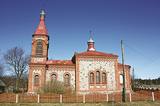 |
Was mentioned in 1387, where it was called Domesnes. That was the name until the early 20th century. A ledger at the Irbe-Ģipka church states that there were four farms in Kolka in 1770 -- Krogi, Ūši, Vecvagari and Kabriki. In 1844, a school for vergers was established, and Nika Polmanis worked there as a teacher. Kolka's first school was built in 1881, and Livonian Kārlis Bernšteins (1881-1951) worked there for nearly half a century as a teacher. The Dundaga riots that began in 1859 were led by Livonian Nika Šūbergs (1833-1884), the son of the owner of the Sārnasti farm. At the end of the 19th century, there were 392 residents in Kolka, and in 1935, 145 of the 343 residents were Livonians. During the mid-1980s, 13 Livonians spoke their language freely. Kolka is the only coastal Livonian village that continued to develop during the frontier regime of the Soviet Union, because it was the centre of a fishing kolkhoz. The number of residents increased rapidly in the 1950s and 1960s because new homes, a school, a people's centre, a kindergarten and several fish processing factories were built there. Today Kolka has 700 residents and is the largest village along the Livonian coastline. The "Līcis-93" fish processing factory is there, and local fishermen and smokers of fish work in the village. The Kūolka Livonian Centre and the Livonian ensemble Laula operate there, as well. The Ūši farm offers tastings of Livonian foods. |
|


