
| No | Name | Description |
|---|---|---|
 |
On 14 June 1991, this sign sculpted by Zezostrs Ķēde in memory of the repressions of 1941 and 1949 was unveiled in the garden of Pēterupe Church. |
|
 |
The restaurant is on the eight floor of the steeple of the Church of the Holy Trinity in Jelgava, offering an outstanding view of the town’s most important cultural and historical monuments. The restaurant offers fine dining on the basis of French cuisine, as well as everyday and business meals. Latvian cuisine: Herring filet with cottage cheese, potatoes and onions. Special foods: Marija cake. |
|
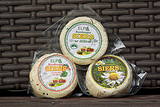 |
For more than 20 years the company has been partnering with some 100 local suppliers of milk. Its main principle is to offer healthy dairy products, including kefir, cottage cheese, cream, yogurts and soft cheese. SIA Elpa is the only dairy processing company in Southern Kurzeme that offers tours and tastings of products. Products can be bought, and during the tours, visitors can taste kefir, cheese and yogurt and help with the dairy processing process themselves. |
|
 |
This company is proud of more than 100 years of history. Today it is the third largest cheese manufacturer and sixth largest dairy processing company in Latvia. It partners with some 150 Latvian providers of high-quality milk. Smiltenes Dairy is the only one to manufacture “Latvian Cheese.” The company’s products have been awarded the “Green Teaspoon” award. Smiltenes Dairy exports products to five countries in the world and has a nearby store where you can purchase its products. |
|
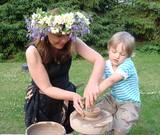 |
The craftswoman uses clay, rocks and other materials to produce dishware and various interior design objects, finishing them in an open kiln. Visitors can take an informational tour, watch the craftswoman at work, and sit down to produce their own cups. Guests are welcome to attend the opening of the kiln. |
|
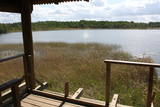 |
This is on the north-western shore of Lake Lielezers of Limbaži, at the start of the Lielezers nature trail. The tower opens up a view of the lake and its lovely shores. It is worth walking the trail, which is several kilometres long, because it is an interesting one. This is part of the ZBR. |
|
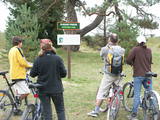 |
This is a route for hikers and bicyclists, starting at the village of Vaidava and then moving along the eastern shore of the narrow Lake Vaidava, which has steep cliffs around it. The trip covers the Veļķi baronial estate, the “Swedish pine”, the famous Vaidava (Metimne) hillfort, a series of streams, the great Rubene rock, the Vaidava baronial estate on the western shore of the lake. After that, the trail leads the visitor back to the starting point.
|
|
 |
Located on the bank of the Gauja River in the northern part of Līgatne is the only functioning crossing point on the Gauja River and the only one in the Baltic States which is powered by the river itself. This is a public transportation resource of local importance. |
|
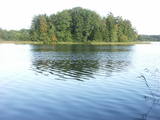 |
This restricted area protects Lake Jumurda, which is in the central part of the Vidzeme highlands, along with its three islands, the local broadleaf forests, and the surrounding landscapes.
|
|
 |
15.janvāra naktī Kalpaka bataljons izcīnīja pirmo kauju pie Lielauces, atvairot sarkano uzbrukumu. Tā bija pirmā nozīmīgā Kalpaka bataljona kauja, kad uzvara karavīriem deva īpaši spēcīgu morālu stimulu. 1934. gada 19. augustā pie Lielauces luterāņu baznīcas atklāja pelēkā granītā veidoto pieminekli Oskara Kalpaka bataljona pirmās kaujas vietā. Piemiņas zīme veidota pēc arhitekta P. Dreimaņa meta. Lielauces kauja notika 1919. gada naktī no 15. uz 16. janvāri starp kalpakiešu Cēsu un Virsnieku rotu no vienas puses un 2. strēlnieku pulka karavīriem. 50. gadu sākumā piemineklis tika iznīcināts, bet atjaunots 1991. gadā |
|
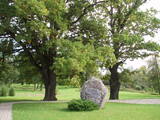 |
This is one of the rare cases in which we know precisely when the trees were planted. It was in 1685 and 1689, and they were planted by the priest of the local congregation, Ernest Johann Glück (1654-1705) in commemoration of the fact that he had completed the translation into Latvian of the Old Testament and the New Testament respectively.
|
|
 |
The saloon is in the restored complex of the Smuku Estate (16th century). During the summer, meals are served on the terrace of the “Zirgu stallis” guesthouse, while during the winter, they are served alongside the fireplace in the bar. Latvian cuisine: Milk dumpling soup with dried bacon (Kurzeme lunch), herring baked on coals, stacked rye bread with whipped cream, “countryside milk bun” (fresh milk, sugar, cinnamon, berry sauce), a cheesy potato with honey-roasted pork. |
|
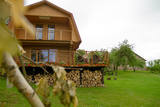 |
The guest house is located in Odziena, Vietalva Parish, Plavinas Region. The house has 5 bedrooms, guests can enjoy a sauna, a pool and a swim in the pond, as well as fishing. There is a large surrounding area for organizing activities and other classes - the guest house is suitable for both relaxation and celebrations. |
|
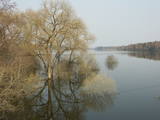 |
The Dviete ancient river valley is a unique territory of environmental, cultural and historical importance between Kaldabruņas, Bebrene and Dviete. The small Dviete River flows through the ancient river valley, through Lake Skuķi and Lake Dviete, and through the wetland meadows that are alongside the valley. During flooding season, these wetlands store up water from the Daugava River, rapidly absorbing masses of floodwater and then slowly returning the water to the river. The views during wet springs are incomparable to anything else that can be seen in Latvia. The specifics of the shifting water level in the ancient river valley are the reason why this is an important place for plants and birds during migration and nesting season. The Dviete Wetlands Nature Park has been set up to protect the territory. It is interesting that higher areas which do not disappear underwater during the floods are known as islands. Archaeologists who have studied the Dviete ancient river valley have found 15 possible settlements of the ancients (from the Stone Age, Bronze Age and Iron Age). They found a wealth of ancient objects of various kinds. There is reason to believe that this is one of the oldest and most important settlements in what is now southern Latvia. |
|
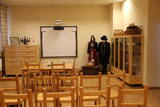 |
This collection features the heritage of the Suiti people, including an exhibition of folk costumes. Visitors can learn about the costumes and try them on. This is a cosy place for meetings, with well-equipped rooms for seminars and various types of training sessions. |
|
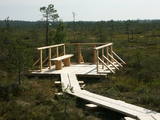 |
At the end of a wooden footpath in the Planči swamp is a viewing area and place for leisure. This is the place where you can enjoy landscapes of the high-type swamp and breathe the unusual air of the swamp. This is the only outdoor infrastructure object in Latvia with information posted in Braille. It is in the ZBR.
|
|
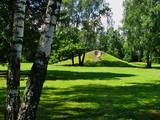 |
The monument dedicated to the Staburags cliff was installed in 2003. Designed by the sculptress Solveiga Vasiļeva, the monument is known as “The Ear of God,” and it is installed in the place where the reservoir of the Pļaviņas hydroelectric power plant flooded one of Latvia’s most interesting geological monuments. Staburags relates to many legends and stories told by rafters. It stood 18.5 m high and was a sandstone cliff on the left bank of the Daugava River, dating back to the last Ice Age. The Liepavots stream that trickled out of the cliff is now also underwater. Staburags and the flooded Daugava quarry were once among the most popular tourist destinations in Latvia. |
|
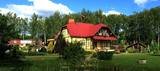 |
Nice rest in a country house, which is located 2 km from Aizkraukle city and 1.5 km from Aizkraukle railway station. The recreation complex is suitable for relaxation for two or a group of friends, up to 25 people. The holiday home has three separate rooms with double beds. Can accommodate up to 16 people with extra beds. In a separate building there is a party hall with a sauna and a hot tub. There is also a black bath. There are tent and caravan sites in the area. For active recreation, there are bicycle rental, Nordic walking, horse riding, museum of horse saddlery and a mini zoo. |
|
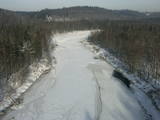 |
The impressive Gauja River valley and its best natural and cultural landscapes can be seen from Paradīze (Gleznotāji) Hill, the Sigulda castle ruins, the aerial tram, the Ferris wheel, the Ziediņi and Pilsēta ski trails, the area of the bobsled and sledding trail, Ķeizarskats, the viewing area of the Velnala cliffs, the mountain bike route of Sigulda (on the right bank of the Gauja, particularly when the trees are bare), the area of the Krimulda castle ruins, Dainu Hill, and the Turaida castle tower.
|
|
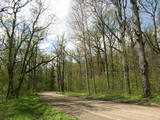 |
One of the few pure stands of oak trees in Latvia, this one covers 19.6 ha, and it was declared to be a protected territory back in 1928. The oldest trees are 300 to 400 years old. The stand of trees can be found alongside the Ezernieki-Andzeļi road. There is a small car park, along with a hiking trail, an information stand, and a leisure area with a plank from which the northern bay and islands of Lake Ežezers can be seen very well. There are typical species of plants, mushrooms and insects here, but only a specialist will be able to recognise them. |
|


