
| No | Name | Description |
|---|---|---|
 |
The “Lamb Club” is a farm in Mazsalaca, and it is special because the sheep live in a real club! The owners offer the atmosphere of a farm at which the sheep play major roles. Enjoy mutton and sheep milk foods and beverages, feel how comfortable it is to read your favourite while sitting on a fluffy sheepskin, and, in order not to get cold by the campfire in the evening, you can purchase warm woollen socks and woven woollen cloaks. The owners hope that people from Latvia and all around the world will spend more time at the farm, because accommodations involve a new glamping tent that is as close as possible to nature and the healthy rural environment. Don’t lose a lick of the comfort that you are used to in your everyday life! The owners, Ilze and Valters, will be happy to give you a tour during which they talk about herding sheep. If you contact them in advance, they will prepare a tasty mutton meal for you. The tour can also be supplemented with various activities such as games, quizzes and creative workshops at which sheep wool is utilised. |
|
 |
The town's name in historical sources was first mentioned in 1224. In 1340 Archbishop of Riga built a stone castle at the Latgalian hill fort (now - the Lutheran Church). In 1802 (owned until 1920) Vecgulbene estate was bought by Baron G. Wolf. Manors in the surroundings of Gulbene and Vecgulbene castle substantially suffered during the Revolution in 1905 and in the further historical events. Today, there is a substantial change in the landscape, especially in the area of White Castle, where a large-scale restoration works occurred in recent years. Either way, - Gulbene is the place worth visit to get new impressions and knowledge. |
|
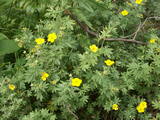 |
This is a swamp into which sulphurous waters flow, and it is on the left bank of the Abava River valley. This is the only place in Latvia where the protected shrubby cinquefoil is found in the wild. This bush covers approximately one-fifth of the restricted territory. It also includes forests, various kinds of meadows and sulphurous streams, including the one which is known as the Devil’s Eye. |
|
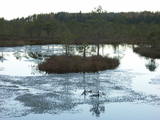 |
Teiči Nature Reserve — untouched territory, bogs, and birds. This is a significant bird resting place before seasonal migrations. Here you can see up to 1,500 cranes and 8,000 geese at once. The bog is a mating-place for black-cocks, therefore if you are near in an early spring, listen, and maybe you will hear these majestic mating calls. The trail can be visited only with the Nature Conservation Agency employee's escort from June 1 until October 31. |
|
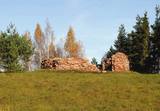 |
Swedish scanst (Kuce Hill, Jumprava Hill). Medieval fortification. The monument of national meaning
is located in the village Stari 450 m from Atspuki mill, 70 mto the Southeast from the ruins of Jumpravmuiža.
The territory is 0,7 – 1 m deep outside and 1 – 1,5 m high inside. The new road to the ruins of Jumpravmuiža
leads through the West side of the fortification.
|
|
|
|
Taka ap Ozolu Mazezeru. Purvaino krastu posmā, ap ezera rietumu galu, ierīkotas gājēju laipas. Novērojami purva, meža un ezera augi, dzīvnieki un biotopi. Jūlija beigās īpaši krāšņi zied ūdensrozes. Blakus atrodas Ozolmuiža ar parku.
|
|
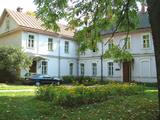 |
Veitko Manor was built in 1832. From 1993, there are hostels of
Latgale Craft School.
|
|
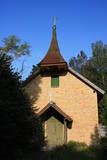 |
Atrodas Labraga – Apriķu ceļa malā. Kāds nostāsts vēsta, ka to 1896. gadā cēlis vietējais muižkungs, kurš vēlējies, lai viņa meitas laulības notiktu baznīcā. Dievnamā atrodas altārglezna "Kristus pie krusta un Sv. Marija Magdalēna", kas gleznota 19. gadsimtā (autors T. Šprengels). |
|
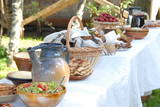 |
This facility is in the historical village of Pape in Southern Kurzeme. Accommodations are available in an historical granary with a roof made of reeds. It is appropriate for inhabitation during the late spring, the summer and the early fall. There are three bedrooms, a small front room and a kitchen, with two floors in all. The building will fit eight people. This is an ideal location for creative camps, plenary sessions, master workshops and other activities. There are tenting areas for as many as 80 people. The Mikjāņi farm observes local traditions and offers traditional foods such as “herring on coals,” white butter with boiled potatoes, fish soup, etc., for visitors who apply for a meal in advance. This offer is only available to groups which register in advance. |
|
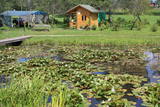 |
On the edge of the Bērzkrogs-Madona road in the centre of Vecpiebalga, you will find a pond full of various types of water lilies of different colours. The owner will tell you all about the popular folk song about water lilies from Vecpiebalga, offer plants for sale and offer practical advice. The pond also has carp which children can feed by hand while their parents are listening to the stories. |
|
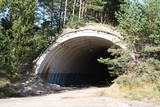 |
This was at one time an important element in the protection of Soviet Latvia’s shoreline. A visually interesting and impressive territory near the seashore, it has sadly not been properly managed and is thus full of trash.
|
|
 |
The area is in the centre of the Teirumnīki swamp, alongside a lake of the same name. There is a wooden footpath that crosses the swamp (800 metres). This is an excellent opportunity to study a high swamp, a swamp lake, and the surrounding environment.
|
|
|
|
This village is at the place where the Irbe (Dižirve, Īra) River flows into the sea, and it is on both shores of the river (sea side and land side). The name of Irbe was recorded for the first time in a 1310 border agreement between the bishop of Kurzeme and the Rīga Dome Capitol. The name of Lielirbe (Irvemūnde) was recorded for the first time in a document from an arbitration court in 1387. At the end of the 19th century, the small port at Lielirbe was an active centre for the sale and transport of timber materials. In the late 19th and early 20th centuries, the largest number of sailing ships among villages on the western shore of Kurzeme was built there. In 1939, the village had some 300 residents, more than 70 houses and a Baptist church which is now at the Ventspils Open Air Museum. A narrow-gauge railroad passed through the village, which had a post and telegraph office, two grocery stores, an elementary school, a choir and a brass band. Lielirbe was one of the largest villages to disappear after World War II. Cultural historian Valda Marija Šuvcāne (1923-2007) was born in Lielirbe, and her daughter, Baiba Šuvcāne, is continuing her mother's work by writing important papers about life along the Livonian coastline. By 2019, a bridge is to be reinstalled across the Irbe River. |
|
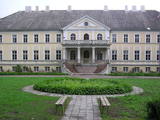 |
The Rudbārži Estate was built at the request of Baroness Thea von Firks from the aristocratic dynasty. After a reconstruction in 1883, the building became an ornate example of Mannerism and Renaissance architecture, with decorative finishing and a larger size. On December 15, 1905, the building was torched by revolutionaries. The restoration began three years later under the leadership of architect L. Reinier. The castle has a holiday hall with two marble fireplaces, the parquet in some of the rooms dates back to the early 20th century, and the outdoor doors have metal engravings. The castle was reconstructed in 1938. It housed a German field hospital during World War II, while after the war it housed a school for forestry workers. In 1962, the Rudbārži school moved into the building, which is now named after Oskars Kalpaks. A commemorative plaque outside the building is devoted to the Kalpaks battalion. During Latvia’s liberation battles, on January 22, 1919, the Bolsheviks occupied Skrunda, and seven days later, Kalpaks’ battalion attacked from the direction of the Rudbārži Estate. After a three-hour battle, the victory was won, with the battalion taking over a strategic line near the banks of the Venta River. This was the first victory for Kalpaks’ men after many retreats, and that inspired the rest of the liberation battles. |
|
 |
Atrodas Riekstusalas pussalas galā. No tā labi pārskatāma aizaugušā Kaņiera ezera ziemeļu un austrumu daļa. Izcila putnu vērošanas vieta. Pie torņa atrodas viena no retajām Latvijas kadiķu audzēm. Turpat meklējams Kaņiera ezera niedru laipas (uz pontoniem) sākums. |
|
 4 days
|
This is for birders who can’t afford to take longer breaks to enjoy birdwatching. Short but rewarding trip during spring migration. Cape Kolka is a place where pass the largest numbers of migrating birds in the spring time. More than several tenth of thousand birds cross the Cape each hour. During active period of migration it is possible to see more than 100 different species daily just at this one place. There are several birdwaching places located at different biotops – seaside meadows, sea cost and lakes and wetlands. Kemeri National Park is one of the best places for woodepecker watching. In a short period of time it is possible to see about seven species. |
|
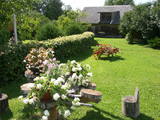 |
The farm produces dairy products and strawberries. You can learn to bake rye bread, make cheese and ice cream, and look at sheep, goats, pigs, calves, cows, horses, chickens, rabbits, guinea pigs, etc. If you like, you can help with the farm work and taste and purchase the products. |
|
|
|
Atrodas ~ 0,4 km no Latvijas – Lietuvas robežas, Sventājas ielejas labā krasta nogāzē. Atrodama informācija, ka avotu tīrot, atklājusies 5 x 5 m ozolkoka „grīda”. Avots ir labiekārtots – virs tā slejas lapene ar niedru jumtu. Vēl pavisam nesen pie tā auga Latvijas dižākā ieva (nolūza), kuras vietā tagad kuplo biezs atvašu pulks. |
|
 |
The café is located in the centre of Talsi, near Church Square, not far from Talsi lake. Latvian cuisine: Bean, sorrel and chilled soup, grit or pea porridge, sautéed vegetables and meat, homemade steak haché, grey peas with bacon, pork ribs, potato pancakes, whipped fool, fruit juice gelatine with milk. |
|
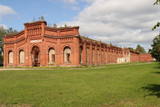 |
This building was erected in 1903 and 1904 to be used for military training, exercises and ceremonial events. An addition to the South of the building held a small church, but it is gone. The building was used for gymnastics performances and competitions for horseback riders. Official meals for the garrison’s sailors were held there, too – the hall could hold up to 3,000 people. Only the outer walls survive today, sad to say. You can view the exterior and interior of the hall at any time. This is the only building of its size and type in Latvia. The roof once had bands of glass tiles.
|
|


