
| No | Name | Description |
|---|---|---|
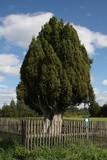 |
This is the thickest common juniper (Juniperus communis) in Latvia and the Baltic States. It stands in the middle of a field and looks wonderful. The tree is sometimes known as the Rieteklis juniper, because the Latvian poet Rieteklis (Jūlijs Eduars Balodis, 1856-1940) like to sit under it.
|
|
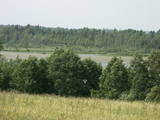 |
Dabas liegumā ietilpst divi aizauguši ezeri ar grūti pieejamiem krastiem - Lielais un Mazais Asūnes ezers, kas atrodas dienvidos no Asūnes ciema. Abus ezerus var vērot, atrodoties ārpus lieguma teritorijas - no blakus esošo pauguru augstākajām daļām, kas atrodas austrumos no abiem ezeriem. Ja līdzi būs paņemts tālskatis, iespējams, izdosies iztālēm novērot šeit esošās aizsargājamās putnu sugas, piemēram, melno zīriņu. |
|
 |
The pizzeria is situated in Kuldiga, not far from the city’s historical centre. Stender’s pizzeria with its nice comfortable setting offers special Stender’s pizzas which are baked according to the old traditions of pizza-making, incorporating the best of nowadays’ recognitions. Undoubtedly, it is impossible to do without pancakes and pots, as well as second-course dishes. |
|
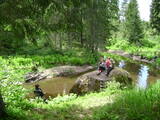 |
The trail tells about grey dunes which have survived thanks to the border restrictions and the presence of military. The trail starts from the parking place at the mouth of the Užava river. It is one of the few natural rivermouths in Europe. One can also see the „tacis”, an industrial installation for lamprey (Lampetra fluviatilis) fishing during their spawning migration period. The 3km long trail is circular. It winds for 1.5km from the Užava rivermouth to the North, along the coastline (the beach is covered with sand and pebbles), and returns to the starting point by a gravel road through grey dunes. Along the trail, one can observe a distinct white dune with rare plant species Linaria loeselii, Lathyrus maritimus, Anthyllis arenaria, Tragopogon heterospermus. About 1km from the rivermouth, in the sea, one can see a wrack of a sailing ship (parts of frame). The visibility depends on the flow of sand in the sea. The way back opens a beautiful view of the range of grey dunes. Unfortunately, Scots Pine starts taking over the area. There are three important biotopes of EU significance: „Fixed dunes with herbaceous vegetation 2130”, „Decalcified fixed dunes with Empetrum nigrum 2140” and „Dunes with Salix arenaria 2170”, forming a unique mosaic. Typical species here: mountain Alison ‘(Alyssum gmelinii), Pasqueflower (Pulsatilla pratensis), Sand Pink (Dianthus arenarius), Rosemary Leaved Willow (Salix rosmarinifolia), Dark Red Helleborine (Epipactis atrorubens), Kinnikinnick (Arctostaphylus uva-ursi). As a former military site, some military constructions can be seen here like horseshoe-shaped sand ramparts by the road in gray dunes. They were built to disguise military vehicles in case of sea attack. By the Kangroti graveyard, towards the Užava river, there is an underground pillbox. It is a one-man fortification to fire along the coastal perimeter. The Mouth of River Užava walking route is in the nature reserve „Užava” |
|
|
|
Ap 400m garš un līdz 16m augusts atsegums upes kreisajā krastā.
|
|
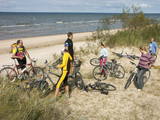 |
The Slītere National Park (established in 2000) is known, with good reason, as an open-air museum which shows the historical development of the Baltic Sea. Nowadays evidence of geological events is seen in the Blue Hills of Slītere, which stand 20 to 30 metres high above what was the shore of the Baltic lake of ice 10,000 years ago. The Stiebri hills were former 8,000 or 9,000 years ago, while the Littorina Sea formed Europe’s largest set of dune ramparts and damp hollows between those ramparts. This occurred between 4,000 and 7,000 years ago. The gentle climate of Northern Kurzeme is the reason why so many rare plants are found in the park – some 860 in all including Common Yew (Taxus baccata) and Baltic Ivy (Hedera helix var. baltica). Of certain value in the preservation of these treasures was the Soviet military machine, which has left behind army bases and other military objects in the area. The presence of the military meant that the area of what is now the Slītere National Park remained largely undisturbed for 50 years. The park includes one of the most popular tourist destinations in Latvia – the Cape of Kolka, which is visited by more than 50,000 travellers each year. During the spring migration of birds, more than 60,000 birds cross the cape each hour. Along the shore of the Baltic Sea is the so-called Livonian coast, which stretches from Kolka to Sīkrags and Ovīši. Fishing villages and other cultural objects established by the world’s smallest ethnic minority, the Livonians, can be found here. Tourists will enjoy interesting four nature trails, bicycling routes, viewing tower, etc. The visitors centre is located at the Slītere lighthouse. Administration of National park is organising environmental education events on regular basis open to everyone. |
|
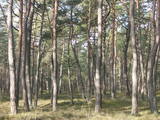 |
Ap 100 gadus veca priežu audze, ko iesēja pagājušā gadsimta sākumā. Sēklu materiāls bija nācis no kādas Vācijas (Darmštatē) sēklu tirdzniecības firmas. Mūsu klimatiskajos apstākļos priežu stumbri izauga līki un kroplīgi. Savdabīgā audze labi redzama no šosejas malas.
|
|
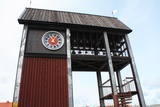 |
Tāpat kā Ventspils Rātslaukums, arī Tirgus laukums ir uzskatāms par pilsētas vēsturiskā centra nozīmīgu daļu, kura apkaimē ir saglabājies senais ielu plānojums. Kādreizējā Rātsnama vietā tagad slejas kariljonu zvana pulksteņu tornis. Tas zvana katru stundu, bet 12:33:44 un 00:33:44 ar īpašu melodiju ieskandina astronomisko Ventspils laiku. Tirgus laukumā ir aka, kas saulainā laikā darbojas arī kā Saules pulkstenis. Monētu automātā var izkalt īpašu piemiņas monētu. |
|
 |
This garden on the banks of the Bērze River is known as a rock fairy tale and a miraculous garden. The garden has rocks of various forms and sizes, including milling stones, distance markers and border posts related to parishes. The exhibition is supplemented by decorative plants and compositions of plants that are the responsibility of the lady of the house. |
|
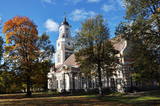 |
The church was built during the rule of Baron Otto Hermann von Fittinghof and built between 1781 and 1788 by the architect Christoph Haberland. Built in the style of Classicism, the church has elements of the Baroque style and a set of colourful rocks in a mosaic on the façade. The organ was built in 1855 by August Martin, and the bell was evacuated to Russia during World War I. The congregation replaced it with a much older bell (1530). The altar painting, “Baptism of Christ” was pained by an unknown artist and was restored in 2000. During the mid-19th century, there were many Estonians in the congregation, so worship services were held in Estonian, too. The church was restored in 1934, and now it dominates the city with its 55.5 m high tower. |
|
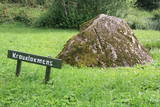 |
Rīgas – Daugavpils šosejas (A 6) malā (vietā, kur no Zemkopības institūta nogriežas ceļš uz Skrīveriem) redzama zema ieplaka ar Kraukļu akmeni, kas ir sena kulta vieta. Pie akmens veikti arheoloģiskie izrakumi, kuru laikā atrastas senlietas. Vecākā ir no 12. gadsimta. Akmens aprakstīts slavenajā Andreja Upīša (1877. – 1970.) darbā „Sūnu ciema zēni”. |
|
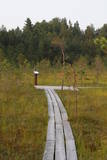 |
The small Andrupene swamp is found to the North of the Andrupene Farm Museum in a deep area between hillocks. It is a high-type swamp with an open central part, and it is 130 m long and 120 m wide. There are stands of white alder alongside the swamp. In 2009, the administrators of the Rāzna National Park restored a wooden educational pathway that had been established originally by the Andrupene Elementary School. Today there are stairs, a viewing platform, wooden pathways, and information stands. |
|
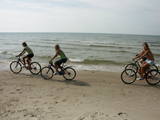 |
The “Nida-Pērkone” protected marine territory is one of the most biologically diverse marine territories along the shore of the open part of the Baltic Sea, and it is enormously important for environmental protection. The most important reef territories are found here. During migration season, most species of migrating birds that are found in Latvia cross the area. The territory is particularly important to protect the goosander and the little gull. The territory is opposite the Rucava and Nīca administrative districts and covers 36,703 hectares. It overlaps the marine section of the Pape Nature Park and the Bernāti Nature Park.
|
|
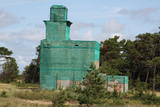 |
This is a closed and guarded territory on the banks of Lake Būšnieks in Staldzene. The former project building is on the shore of the sea.
|
|
 5 days
|
From Riga the tour goes through historic sea resort Jurmala to Pure Chocolate museum where you could see production and taste some. Then the tour goes to Sabile where there is small Wine Hill which history dates back to 16th century. You visit local wine producer who will show his gardens and talk about grape growing in the Latvian climate nowadays. Afterwards tasting of the seasonally available drinks. Then you visit small picturesque town Kuldiga and have some wine tasting there. Next day there are eco wine tasting at Aizpute and Durbe and then go to the city of Liepaja with lovely sandy beach, arty atmosphere and significant military heritage at Karaosta suburb. Then the route follows up the coast line. At Pavilosta you have a trip in traditional fishermen boat and at Alsunga singing and demonstration of local traditions by Suiti women. Culturally colourful community which heritage is listed in UNESCO. Then walk along the steep sea cost at Jurkalne and enjoy the best maintained port town of Ventspils. Next day there is a visit to local fishermen and see fish smoking process, then walk along Cape Kolka where the open sea meets the Riga Bay. Turning back to Riga you have a visit and tasting at wine maker in Talsi. |
|
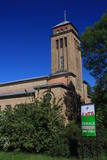 |
The Aknīste Catholic Church was built between 1937 and 1940, and its design is based on the Kaunas Church of the Resurrection in Lithuanian. The building features the rectangular and geometric forms that were typical of the age of Functionalism. Inside is a large wooden altar, along with a pulpit and two side altars (from the early 19th century) which were once found at the Rokišķi church. They were brought to the Aknīste church when the one in Rokišķi was redesigned. In 1997 the church was granted the Blue Flag of European cultural heritage. Alongside the church are the red brick gates of an old Catholic church, which date back to the latter half of the 19th century. Also there is the Selonian Park. |
|
 |
The bakery offers more than 50 different types of bread products. The “Arona” rye bread has been awarded the “Zaļā karotīte” certificate of conformity. Products awarded with the “Bordo karotīte” certificate: Rye bread, Sweet and sour bread, Latgale tin loaf, Scored white bread, Hearth rye bread, Cesvaine hearth bread, Madona sweet and sour bread, Biržu sweet and sour bread. Several medals were received at the Riga Food exhibition. |
|
 |
The cafeteria is in the centre of Krāslava next to A6 highway. It has been recognized as one of the environment friendly enterprises in Latvia. Contact the cafeteria in advance to be served Lettigalian dishes in clay dishes. The cafeteria also has a bakery. |
|
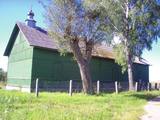 |
Kampišķi Old-Believers Prayer House was reconstructed in 1931
by architect V. Šervinskis. The building is very high and spacious; has two cells and a rectangular belltower with the cross on the top.
|
|
 1 day
|
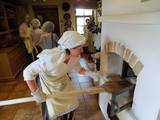
Since ancient times bread has been our staple food, and formed part of breakfast, lunch and our evening meal. We bake bread from rye, wheat, buckwheat and barley. Both fine-ground and wholemeal flour is used. Bread baking is one of the most honoured traditional skills in Latvia. Caunītes country house keeps Latvian traditions alive and demonstrates them to visitors. The house is designed and decorated in the traditional Latvian style and exudes an authentic ambience while having modern facilities. Under the guidance of the hostess, visitors will bake their own loaf of sweet-and-sour bread in a wood-fired bread oven. In Latvian families it was traditionally one of the main duties of the lady of the house to bake a week’s supply of bread for the whole family every Saturday morning. Every woman was proud of her own unique recipe and passed it down to her daughters and granddaughters through the generations. There are many traditional beliefs, sayings and riddles linked with bread in Latvian folklore. Today, there is great interest in the old recipes, bread-baking methods and the use of organic ingredients as many families are opting for a healthy lifestyle. |
|


