
| No | Name | Description |
|---|---|---|
 |
Your visit to the Sēlija tree farm will include an exciting story from the owner, Mendriķis, about apple trees. You can tour the orchard, warehouses and processing facilities, enjoying a glass of apple juice or listening to the story about winemakers while sipping a glass of apple wine. |
|
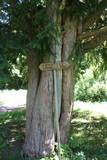 |
This is the thickest and tallest common ivy in Latvia. It is in the park of the Zentene Estate, opposite the mansion (which is now a school).
|
|
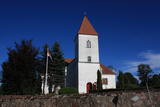 |
Built around 1625. For several centuries it was the main worship place for the Suiti community, supporting the community's spirituality and identity. In 1882 the church was expanded into the form of a cross that is seen today. Inside the church you can see work done by the Dutch wood carver Johann Mertens around 1715. The organ was built by F. Weisenborn in Jēkabpils in 1893, and the altar painting dates back to 1910. The bricked graveyard of the Schwerin dynasty is under the church. Contact it in advance if you wish to see its interior. |
|
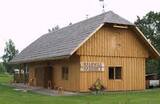 |
The carpenter’s workshop offers special excursions and events for grown-ups and children; there are some thematical programmes available. Under the guidance of a craftsman it is possible to work with traditional wood-working tools and get to know ancient games. In the end you will have a chance to try special „strengthening” tea and have a picnic in a romantic Bonfire house. It is possible to buy wooden souvenirs as well as order them. |
|
 |
"Sabiles laivas" Talsu novadā piedāvā laivu nomu, laivu un laivotāju transportu. |
|
 7 days
|
Our tour leader will meet you at the Riga airport. Depending of the flight time we' ll have an excursion of Riga Old Town and the Central Market listed in UNESCO World Heritage list. Next day we visit potatoes grower near Iecava and successful local multi-sectoral agricultural enterprise at Tervete which combines horse breeding, brewery, crop growing, dairy farm and bio energy production. Also we will visit one of the biggest medical herb growers and producers of the herbal teas. After full day of professional visits, we' ll taste Latvian traditional food and beer in a traditional tavern in Riga. Then we will visit two cattle growers at Sigulda and Cesis area, climb up the tower of Turaida Castle for a great panoramic view and walk charming streets of Cesis Old Town. Afterwards we will visit ecological sheep farm near Valka and stay overnight at the Koni Mill where wool is still processed traditional way, warm blankets and beautiful bed linen made. |
|
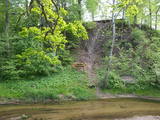 |
The Vilce Nature Park is small in size and exists alongside the deep valleys of the Vilce River and its tributaries. Biotopes include visible sandstone cliffs, rapids on the rivers, forests typical of such areas, and the plants and animals that are found therein. The well-appointed Vilce castle hill is next to the Zaķu meadow, which is a nicely appointed and popular place for recreation. |
|
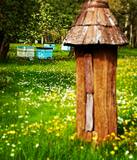 |
This is a beautiful farm that is friendly to the environment and has some 300 hives of bees. There is a shop along with a tasting hall where you can enjoy honey made of various flowers, pollen (including pollen in honey), propolis (also in honey) bee bread, wax and souvenirs. Taste beekeeping products (including honey wine) and take a tour of the farm, as well. This farm uses traditional hives to extract honey, and it offers a look at hives that were used in the past. The owners are happy to talk about the development of beekeeping in Latvia and their experience in this regard. New! BeeHive bee healing therapy! |
|
 |
Z/s "Kaupēni" ir ieguvusi bioloģiskās saimniecības statusu. Kaupēnu saimnieks Valdis Apalups ir pievērsies kazu audzēšanai, gaļai - saimniecībā uz vietas notiek arī gaļas pārstrāde. |
|
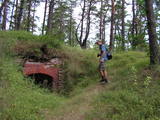 |
Forts were built and rebuilt at this location for many centuries by Germans, Swedes and Russians. In 1912, several forts were erected at Mangaļsala and Bolderāja. There were two forts with 254-mm cannons, six with 152-mm cannons, and three with 138-mm cannons. Each fort had two cannons.
|
|
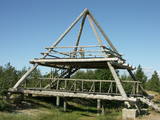 |
This is the only viewing platform of its kind. It is north of Pāvilosta, between the sea and Latvia’s largest gray dune. The second level of the platform offers a good view of the habitats which surround the dune, as well as the seashore and the largest seashore rock on the shores of the Baltic Sea – the Pāvilosta sea rock. You can also see the northern part of Pāvilosta. When it is windy outside, you’ll see kiteboard riders showing their tricks.
|
|
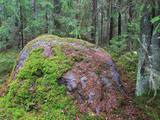 |
The Grandboulder of Komultēni is situated in Sakstagals rural municipality in the forests; around 700
m from Jēkabpils – Rezekne road to the NE of Komultēni. The flat top and the sides are cracked. Boulder consists
of the magmatized gneiss. The circuit of the boulder is 15 m, length 5 m, width 3 m, height 1.8 m,
capacity about 20 m3.
|
|
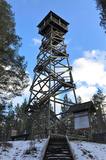 |
This recently built 26-metre wooden tower is on Ūdri Hill (58 metres above sea level). It is on the north-eastern shore of Lake Usma, less than one kilometre from the lake. The tower offers an excellent view of Lake Usma, its islands, and the vast forests which surround it.
|
|
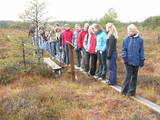 |
The tower is locatede in the Niedrāji-Pilka swamp. Access it via the old Ainaži-Valmiera-Smiltene narrow gauge rail line, which dates back to 1912, and then take the wooden footpaths which are approximately one kilometre long. This is a high-type swamp with small lakes at the foot of the tower. It is in the ZBR. |
|
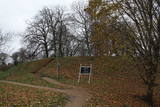 |
This ancient Courlandian castle hill has remnants of an ancient city. Historical sources indicate that in 1263, the Courlandians handed the castle over to the Livonian Order without a battle and that the castle was then burned down. The name of the place, Skābaržkalns, has to do with the name of the city, because hornbeam trees in the area were once known as grobi. |
|
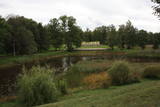 |
Dundagas pili ieskauj parks, kura pirmsākumi ir meklējami jau 17. gs. Tam cauri tek Pāces upīte, kuras uzdambējums veido Dundagas dīķi. Tajā atrodas senatnē (vēl pirms pils būvniecības) mākslīgi veidota sala - Kalnadārza pilskalns. Tam iepretim (dīķa austrumu krastā) atrodas Dundagas pilskalns. Parkā joprojām zaļo (daži lielākie zari ir nolūzuši) t.s. “Rubļa ozols”, kura attēls bija uz 1919. g. izdotās Latvijas simts rubļu naudaszīmes. Parkā uzcelta estrāde. |
|
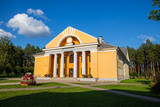 |
Seda is one of the most unusual towns in Latvia. It began its life as a housing area for people from the local peat moss factory, and that happened in the 1950s and 1960s. This is a “vivid” example of Soviet architecture, with a central square (complete with a monument to the Leader) and streets radiating from it. Worth a visit is the cultural centre at the end of Uzvaras Street. It is a great example of so-called Stalinist Classicism architecture. |
|
 |
Jelgavas pils dienvidaustrumu spārna cokolstāvā ir iepazīstamas Kurzemes un Zemgales valdnieku - Ketleru un Bīronu dzimtas kapenes (laika posms no 1569. – 1791. g.), kur apskatāmi 18 restaurētie sarkofāgi. Šī ir Baltijas mērogā nozīmīga vieta, kas noteikti jāapmeklē ikvienam vēstures interesentam. |
|
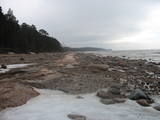 |
This is an important territory to protect the little gull during spring migration. It is opposite the Salacgrīva, Limbaži, Saulkrasti and Carnikava administrative districts, with a total area of 58,600 hectares.
|
|
 |
The “Ieviņa” café and bakery is in the centre of town and near Market Square. It sells cookies, pastries, tortes, carrot buns, pierogi, etc. |
|


