
| No | Name | Description |
|---|---|---|
 |
Saimnieks nodarbojas ar biškopību un apmeklētājiem piedāvā ekskursiju pa saimniecību, stāstījumu par bitēm, medus degustācijas. Iespēja iegādāties pašdarinātas vaska sveces un citus biškopības produktus. |
|
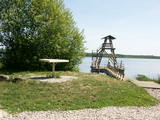 |
Viewing tower on pontoons, and there is a footpath to get to it. The tower offers a view of nearly all of Lake Sloka, all the way to Kauguri. Particularly visible is the northern part of the lake. There is also a sulphur spring. The site is good for bird-watching throughout the year, including the winter, because parts of the lake do not freeze over. |
|
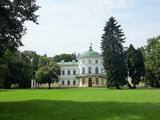 |
The Baisogalo Estate is one of the oldest ones in Lithuania and is known as a royal castle because it once belonged to the local lord. The ornate late-Classicism buildings were built in the mid-19th century and have survived. The 12 ha landscape park dates back to the early part of the 19th century, with an alley of chestnut trees leading to the estate from the local village. The central alley that starts at the gate weaves through two curvy bodies of water with a bridge and statues of lions. Various trees behind the estate are alongside curvy and narrow pathways. On both sides of the alleys are bodies of water, and deep in the park is a pond with an island. |
|
 3 days
|
The first half of this section leads through magnificent coniferous forests, especially in the Järvevälja landscape reserve, where the trail is surrounded by beautiful dunes in the north and a raised bog in the south. It is well worth visiting the kiosk at Rannapungerja to buy smoked fish – the Lake Peipus vendace (rääbis) and some local farm produce. In the second part, the Forest Trail winds along the coast of the beautiful Lake Peipus. During the summer, when the water level in the lake is lower, beautiful, sandy beaches with wide shallows appear. Past Alajõe, the highest dunes of Lake Peipus (up to 20 m) rise on the landscape, providing a distant view of Lake Peipus, one of the largest lakes in Europe. |
|
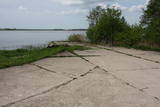 |
The hydroplane airfield is on the eastern shore of Lake Durbe, not far from Līguti. It was built between 1939 and 1941. During the Soviet era, the 43rd aviation escadrille was located here, and it had 13 MBR-2 hydroplanes. All that’s left today are the cement sheets on the shore of the lake. You can look at the site itself.
|
|
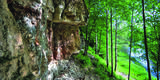 |
1,2 km garā taka atrodas netālu no vietas, kur Gauju šķērso Vidzemes šoseja (A 2). Izejot taku, var iepazīt vienu no Latvijas augstākajiem dolomītiežu atsegumiem – Randātu klintis, kas paceļas 25 m virs Gaujas. Taka ir apļaveida un tās apskatei nepieciešamas ~ 45 minūtes. |
|
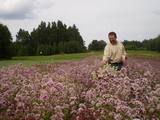 |
The farm grows and collects more than 80 types of medicinal plants, including peppermint, marigold, chamomile, oregano, St John’s wort, wormwood, oats, creeping thyme, broadleaf plantain, field penny-cress, meadowsweet, etc. You can take a tour and learn all about medicinal plants and how they are used. During autumns, you can purchase medicinal teas. |
|
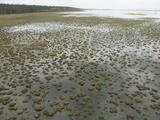 |
The tower on the eastern shore of Lake Engure (next to the meadow for wild cattle, accessible from the side of Bērzciems) offers a view of the reeds, small islands, Great Island, cows and horses of the north-eastern part of the lake. The tower on the northern shore of the lake (accessible from the side of Mērsrags) offers a look at the boating facility and the very overgrown northern part of the lake. The tower at the north-western shore of the lake (accessible from the side of Ķūļciems) shows the Apaļrova island (a footpath), stands of juniper, the boating facility, and the mosaic-like landscape of the lake itself.
|
|
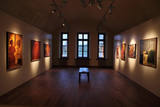 |
The Daugavpils Mark Rothko Art Centre is a multi-functional institution of culture, arts and education, located inside of the fortress' Arsenal building. It is a unique place in the Eastern Europe, where are located the original paintings of Mark Rothko – a great artist of the XX cent., a founder of the abstract expressionism movement, best known for his enigmatic color field paintings. |
|
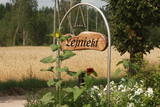 |
This is a new farm that produces cheese and waits for groups of visitors. People can help to make cheese and taste and buy it. Lejnieki won a prize as the most orderly working farm in the Valka Administrative District. |
|
 |
Tas atrodas pie „Burtnieku” mājām Īlē, kur viņš dzīvojis no 1837. – 1845. gadam. Tēvs Juris Barons apglabāts Īles kapsētā. Savu vārdu nemirstīgu Krišjānis Barons darījis, vācot, sistematizējot un sastādot Latvju Dainu krājumu. Tautasdziesmas jeb dainas ir mazi, ritmiski dzejolīši, parasti četrrindes. Pie Latvju dainu vākšanas Barons pavadījis sava mūža lielāko daļu – apmēram 25 gadus gandrīz dienu pie dienas. |
|
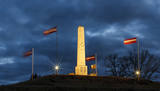 |
The monument is on a hillock along the lovely shores of Lake Alūksne and alongside Pleskavas Street (P 40). The monument was unveiled on June 20, 1923, by Latvian President Jānis Čakste and was designed by the sculptor Jūlijs Miesnieks. It features a shield with crossed words, and the text reads “For fallen soldiers from the 7th Sigulda regiment, 1919-1920), and on the other side there is a text “Better to take my head than our fatherland.” The monument was torn down during the Soviet occupation (1953) and restored in 2009. |
|
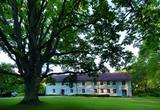 |
The first mention of Pēterupe Rectory goes back to the late 17th century. The Manor Park and the buildings have partially survived to the present day, including a linden alley at the end of Smilšu Street, planted by the pastor Jānis Neilands in 1879 and the grand oak planted by Johann Wilhelm Knierim in 1869. After the fire of 1908, the Rectory was restored and partially rebuilt. In Soviet times, the property was removed from the parish and the house was named “Līgotnes”. During German times the Rectory was occupied by legionnaires. After the war, the building of the Rectory was turned into a hospital, then into a secondary school and later it was transformed into a block of flats for teachers. Now the building again belongs to the parish and it is inhabited by a priest of the parish and his family. |
|
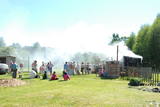 |
Visitors can help to smoke fish, including plaice, bream and garfish, taste the resulting food and listen to stories about seashore fishing traditions. The homestead also features some 20 type of shoreline fencing that are typical of the so-called Liv Shore. |
|
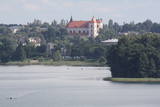 |
Pareizticība Traķu apkārtnē „ienāca” jau Lietuvas dižkunigaiša Ģedimina (Gediminas) valdīšanas laikā (1316. – 1341.). Līdz 18. gs. beigām no astoņām pareizticīgo baznīcām Traķos nebija saglabājusies neviena, tādēļ pareizticīgo draudze 1863. g. uzcēla jaunu baznīcu, kas saglabājusies līdz mūsdienām un apskatāma Vitauta ielā (Vytauto gatve) 32. |
|
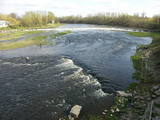 |
Above and below the town of Kuldīga, the Venta River is distinguished by a variety of biotopes – hillside forests, sandstone and dolomite cliffs, meadows, protected plants and animals, and diverse landscapes. There are popular tourism objects in this part of Kurzeme – the Venta dam, the stone bridge of Kuldīga, the Veckuldīga castle hill, etc. An ecological tourism trail runs along the banks of the Venta, and a bicycling trail has been installed on its left bank. |
|
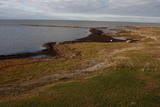 |
Puises ragā (Puise nina) ir uzcelts divstāvīgs atpūtas nams, kas apvienots ar putnu vērošanas torni. No tā paveras skats uz piekrasti, kas ir iecienīta migrējošo zosu atpūtas vieta. Šī ir privāta teritorija, kuras apskati vēlams saskaņot ar īpašnieku. |
|
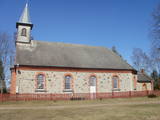 |
The Kaltene Lutheran Church dates back to 1567, when Duke Gotthard Kettler of Courland ordered the construction of new churches in Kurzeme. One of them was in Kaltene, and was known as the Church of St Catherine. In 1848, a clay church was built in place of the old wooden church. A sacristy was added in 1880, and the church was rebuilt and expanded in 1896. It suffered much damage during World War I because a Russian mine ship attacked it. The church was restored during the first half of the 1920s. The altar painting, “Christ and St Peter on the Sea” was painted in 1898 by M Pohl after a panting by R. Richter. The pulpit and organ date back to the 18th century and are cultural monuments of national importance. The organ was built by August Martin in 1843, and it was initially in a church in Gulbene. The instrument was brought to Kaltene in 1943 and is the oldest surviving instrument by Martin. The bell was manufactured in 2006 by the Liepājas Metalurgs company, and a new building for the congregation was built in 2012 and 2013. The first scenes of the feature film “Long Road to the Dunes” and the film “Forest of Bulrush” were filmed outside the gates of the church. Nearby is the Putniņi homestead. In 1921, Culture Minister Rainis visited the homestead. At that time there was a store there. The Germans burned down the homestead during World War II. (Source: Roja TIC) |
|
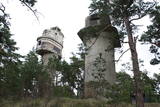 |
This battery is easiest to find if you walk on the beach, because one of its four positions is right there, rinsed by the waves of the sea. Other positions, including a telescope tower, are in the pine forest not far from the coast. The battery was installed in the 1940s, and you can see the Northern Forts from here.
|
|
|
|
The restricted area was set up to protect Nesaule Hill, which is a forested hillock in the area and features boreal and damp forests.
|
|


