
| No | Name | Description |
|---|---|---|
 |
Ķesteri – the home where the Liv cultural activist and organist Kārlis Stalte
(1870-1947) was born.
|
|
 |
The café is along the Rīga-Ventspils highway (A10). A summer terrace is available during the season. Latvian cuisine: Beef tongue salad, chilled soup, stock with dumplings, “little farmer,” pork ribs, potato pancakes and crepes, whipped fool. Special foods: Kharcho a la “Pie Jānis”. |
|
 3 days
|
The tour starts at Jaunmokas Castle estate, where you will also find the Forest Museum. The pride of the castle is its unique painted tile stove (beginning of the 20th century) made of 130 painted tiles featuring 50 different views of the cities Rīga and Jūrmala. The Forest Trails runs along smaller tracks through the Austrumkursa Uplands, the valley of the river Slocene, along Lake Sekļa and Lake Jumprava to finally reach the town of Tukums. Well, the town takes pride in its pots, planters and flower beds with blooming roses along its streets. Next, the route meanders through forests to the demanding hillock of Milzkalns and Lake Valguma, where you will find the barefoot trail and a secluded art space within the woods. The Forest Trail continues to make a stopover at the Ķemeri National Park. The park is dedicated to protection of wetlands, since it is home to one of the largest marshlands of Latvia – the Great Ķemeri bog. As to the town – Ķemeri – it is the former balneological and sulphur springs resort. The tour ends in the village of Bigauņciems, where the Forest Trail joins with the Baltic Coastal Hiking Route (E9 European long distance path). Optionally, one can take a detour along the Lake Sloka trail with its bird-watching tower or pay a visit to the “Forest House” – the visitor’s centre of the Ķemeri National Park. |
|
 1 day
|
After passing through Sigulda, the Forest Trail follows the River Vējupīte to Paradīzes Hill, where a steep staircase leads down into the ancient valley of the River Gauja and the ravine of the River Vējupīte. It continues to wind down smaller paths through meadows, crossing small rivers whose banks reveal sandstone outcrops. The last six kilometres of this section follow a smaller path down the Līgatne Nature Trails. You can see local wildlife animals and birds on this 5.5 km long trail. Further on the Forest Trail moves up the hills of the ancient valley of the River Gauja, before descending back down into the deep ravine of the River Līgatne, where the village of the former Līgatne paper mill is located. You can explore this attractive small village, visit the Līgatne spoon factory, winery and Līgatne caves. There is also the Līgatne Net Park with 4-7 m high net labyrinths among the treetops. This part of the Forest Trail and Gauja National Park is characterised by a gradual transition from diverse, deciduous forests (ash, grey alder, oak, birch, linden) to coniferous stands. |
|
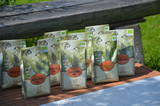 |
This is a family company in the Madona Administrative District, which offers natural herbal teas and spices. All of the ingredients come from
|
|
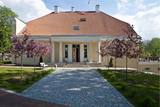 |
The restoration of Kau Manor, which was originally constructed before 1241, was inspired by the colourful history of the manor, and the imagination makes it stand out from the other manors. Kau Manor has won the 2016 World Boutique Hotel Award in the category of the World’s Most Inspired Design Hotel. |
|
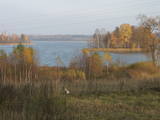 |
Ārkārtīgi ainaviska teritorija Augšzemes augstienes centrālajā daļā ar vairākiem ezeriem - Medumu, Lielo un Mazo Ilgas, Šķirsteņu un dažām mazākām ūdenstilpēm. Medumu ezera salām ir dabas lieguma statuss. Teritoriju šķērso vairāki grantēti ceļi, no kuriem dažviet paveras brīnišķīgas, bet nelabiekārtotas skatu vietas. Teritorijā atrodas Medumu katoļu baznīca. Piemērota teritorija dažādu aktīvā tūrisma veidu attīstībai. Dabas parks ietilpst Augšzemes aizsargājamo ainavu apvidū. |
|
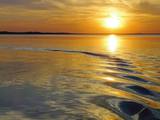 |
Lake Rāzna (57,8 m2) is often called the sea of Latgale. It is the biggest lake in Latvia. Rāzna is situated
on the hill Rāznava. You should see beautiful landscapes, high peaks and Latgalian castle hills. Enjoy the
recreation places beside the lake, the National park of Rāzna and its surroundings. The place is included in
the European Union network of protected areas NATURA 2000. The lake has 10 islands and two gulfs. The
level of the water reaches 163.8m.
|
|
 |
This is a brewery in a lovely part of Lithuania known as Little Switzerland, surrounded by forests, lakes and castle hills. "Čizo" beer is light, unfiltered and alive, and it is produced on the basis of ancient traditions with forest bee honey. The brewer has not just a recipe, but also equipment so that he can offer a look at ancient methods of beer brewing. |
|
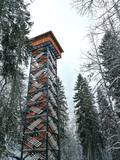 |
Dabas liegumā "Lielie Kangari" atrodas 33 metrus augsts skatu tornis, kura virsotnē atrodas platforma, no kuras paveras skats uz Kangaru ezeru un Lielkangaru purvu. Dabas liegumā izbūvēta arī nepilnu divu kilometru gara pastaigu taka ar tiltiņiem un skatu platformu pie ezera. Takas sākumā izvietotais veselības maršruts ikvienu apmeklētāju aicina kārtīgi izvingroties un izkustēties. Apmeklētāju informēšanai un izglītošanai visas takas garumā izvietoti arī informatīvie stendi ar fotogrāfijām, kas apvieno varenu stāstu un teiku kopumu par notikumiem, vietām, tēliem un parādībām dažādās apkārtnes vietās. |
|
|
|
Einer der ausgeprägten Kaps der lettischen Küste mit Niederungsauen und einem in 1875 gebauten Leuchtturm. |
|
 10 days
|
During this trip you will visit the workshops of craftspeople, farms that breed horses, as well as various destinations where you can enjoy country goodies. Ancient skills are now a modern application. First you will stop in Ikšķile, and at the very beginning of the trip, you will visit a cellar that stores birch juice wine and taste sparkling wine. In Skrīveri, you will be surprised by the transformation of milk. A cosy café on the main street of the small town offers outstanding homemade ice cream featuring strawberry, anchovy and horseradish flavours. In Koknese, you can supplement your wardrobe with a new leather belt, bag or stylish leather jewellery. A farm that grows hemp will offer a small tour, as well as hemp delicacies. The work of black ceramics masters in Latgale fits into modern interiors. The Aglona Bread Museum offers a chance for visitors to bake their own loaf of bread. The visit to the next farm will allow you to add tasty cheese that has been made from milk from Latvian brown cows. The last stop in Latvia will be Daugavpils, which features an art centre featuring the work of the globally known abstractionist Mark Rothko, as well as the Daugavpils fortress, that was built in the 19th century and is an impressive military building. This is one of the most popular tourist destinations. From there you will travel to Lithuania, where you will visit several traditional farms. The Ilzenbergo Dvaras estate has a bio-dynamic farm. You will taste Lithuania's national sweets which are called šakotis. You will visit the town of Anykščiai, which offers a hike along a trail that is above the trees. A horse museum offers a look at old farm equipment. Next you will visit farms that will inform you about traditional Lithuanian cuisine and the work of potters. The Dubingiu horse farm offers horseback rides. At the conclusion of the tour you will visit the unique Trakai lake castle (14th and 15th century), as well as Vilnius. |
|
 |
Находится~ в 4 км, не доезжая до Априки (установлен указатель) – Гибортское кладбище. Слепой Индрикис (1783 – 1828) был латышом, опубликовавшим первое собрание стихов на латышском языке (1806 г.). Индрикис был слепым с 5-летнего возраста и был необразован. Его стихи записал и издал в упомянутом году священник Априкского прихода K. Г. Элверфелдс. На кладбище установлен памятный камень (1935 г.) и созданное Вилнисом Титансом «Аустрас кокс» с надписью шрифтом Брайля. |
|
 5 days
|
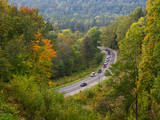
The Baltic Way was a unique demonstration at the Baltic, European and global level. Never before had the residents of three countries joined hands in a single chain to link the capital cities of the three nations – Vilnius, Rīga and Tallinn. The historical event occurred on the evening of August 23, 1989 and involved some two million people to recall events that had happened 50 years before – the conclusion of the Molotov-Ribbentrop Pact that allowed the two superpowers of the day, Germany and the USSR, to divide up spheres of influence in Europe before the new world war. The Baltic States lost their independence as a result of the pact. The chain of demonstrators was some 600 km long, marking out the Baltic Way from Bauska to Rīga and then on to Sigulda, Cēsis, Valmiera and Rūjiena. The route was known and used in the 14th and 15th century, or even earlier. Testimony to this is given by the mighty castle hill at Mežotne and the ancient port alongside it. The Bauska Castle was an important fort during the age of Livonia and, later, one of the residencies of the dukes of Courland. Sigulda was well fortified on the banks of the Gauja River, with three stone castles nearby. It was also a health spa. Līgatne is important in industrial terms because of the paper factory that is there. Āraiši is another ancient trade crossroad with a lake castle, ancient church, castle ruins and a famous windmill. Cēsis is one of the historical diamonds of Vidzeme with its old town, the old and new castle, and the majestic views of the ancient Gauja River valley at the cliffs of Ērgļi. Valmiera boasts of his St Simon’s Church, the Dāliņš stadium, its own theatre and the youthfulness of its own university college. In Rūjiena, there is a monument to the Bugler of Tālava, which was carved by Kārlis Zemdega and installed in 1937 to commemorate the liberation of Rūjiena. The monument survived all of the years after the war. The engraving, “the bugler had to die, but the Latvians heard his call,” is very much in line with the Baltic Way on August 23, 1989. |
|
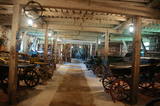 |
The museum is located in Pilkuse manor farm, exhibits on display are carts, carriages and sleighs along with accessories from horse collars to lap robes. Military, emergency and fire brigade carts are extraordinary and rare while a coach and a calash (barouche) are exhibits to be really proud of. Numerous agricultural tools and equipment also ensure hours of excitement and discovery in the museum. |
|
 |
Based on the tower of a former Soviet army radar installation, there is an 18-metre viewing tower at the Southern breakwater of Ventspils (Medņu Street) today. The tower offers a good view of the port territory, with the sea gate at the mouth of the Venta River and the city beach. Binoculars are available at the tower. It is worth walking down the Southern breakwater to get a better look at the sea.
|
|
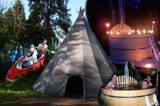 |
The Centre promotes sustainable lifestyle and the great outdoors, there you can plant trees and make and install nest boxes. Canoeing, bog walks, bow and crossbow shooting ranges are available for the more adventurous. There is a log house for functions and accommodation and a sauna with a hot tub. |
|
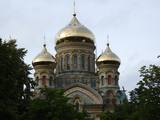 |
This church was built between 1900 and 1903 in the Byzantine style, and was meant for the local military garrison. The church, which was built to honour St Nicholas, patron saint of all seamen, and it was consecrated in the presence of Tsar Nicholas II. The ornate building was sacked by the Germans during World War I. During Latvia’s period of independence, the cathedral was used by the local military garrison. The Soviet military, in turn, turned into a sports hall, a cinema for sailors, and a warehouse. There are stories to say that Soviet soldiers broke off bits of the golden mosaic of the icons in the church. The building has now been returned to an Orthodox congregation. The builders of the cathedral used a unique way of pouring cement, which is why there are no supporting columns in the church. Instead, its weight is bolstered by its walls, with four arched vaults supporting them. It is the tallest Orthodox cathedral in Latvia at this time.
|
|
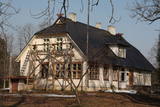 |
Several of the buildings of the Šlītere Semi-Estate have survived to the present day – the servants' house (late 19th century), the pump house (mid-19th century), the smokehouse (mid-19th century), the cattle barn, etc. A forestry building was built here in 1936 and renovated in 2010. Since the end of 2009, the administration of the Slītere National Park has been housed here. Today the building also houses the Kurzeme regional branch of the Environmental Protection Board. Opposite the building are two yews, and there is a productive ivy which has covered the northern side of the servants' house. The common yew and the Baltic ivy are symbols of Šlītere, and you can see and photograph them here without "bothering" them in their natural environment. The pump house contains a well that is unique in Latvia – it is 34 m deep, which is nearly the height of the Blue Hills of Šlītere. It reportedly was active until the 1970s and delivered water to the forestry system. A fragment of the stone well can be seen as a part of the wall of the pump house. The semi-estate is surrounded by small elements of a park, including an impressive alley of elm trees. Locals says that pre-war Latvian President Kārlis Ulmanis spent the night at the building once while on a hunt. |
|
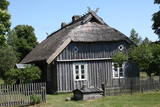 |
Koņuciems of Pape is one of the few seashore fishing villages in Latvia to have preserved an authentic environment to the present day. The Latvian Open-Air Ethnographic Museum has a branch here, “Vītolnieki”, and this is an authentic and ancient fisherman’s farm. +371-2926-2283. The sad fact is that some people have built modern buildings in the village, and it has now lost its earlier untouched charm. |
|


