
| No | Name | Description |
|---|---|---|
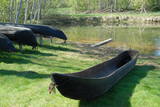 |
The Vienkoči Park features one-log objects manufactured by its originator. You can examine mock-ups of the Nurmiži Castle and other buildings including the Sand House, and you can also take part in thematic events. Men can produce equipment to drain birch juice from trees, wile women can try their hand at jewellery making from natural materials. People manufactured one-log objects during the Mesolithic Era, and one-log boats have been used since the 9th century (several of them can be seen at the park). |
|
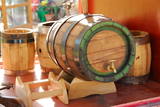 |
The craftsman manufactures barrels, hot tubs, furniture, stairs, doors and other useful objects. You can take a tour, learn about the relevant skills and experience, and help in manufacturing something that will be of use in the household. You can watch how barrels are made from start to finish, and also try your own hand at the craftsmanship. |
|
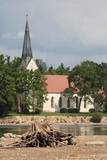 |
Atrodas Pļaviņu HES ūdenskrātuves krastā (R. Blaumaņa ielas galā) iepretim salai, uz kuras top Likteņdārzs. Baznīca (celta 1687. g.) ir vairākkārt atjaunota (1731., 1887.). Tagad redzamais tornis tapis par Stukmaņu muižas īpašnieku atvēlētajiem līdzekļiem. Baznīcā par mācītāju kalpojis Ernests Gliks. Padomju laikos ēkā atradies Stučkas vēstures un mākslas muzejs. Apmeklētāji var uzkāpt dievnama tornī (čuguna zvans!), kā arī aplūkot mākslinieka A. Dobenberga gleznas. Baznīca ir atvērta un apskatāma arī no iekšpuses. |
|
 |
The café Bastions is located in the historic centre of Valmiera on former medieval fortifications. Their menu offers Latvian cuisine and an extensive variety of breakfast, lunch and dinner meals. The café collaborates with local farmers and producers. During summer, enjoy your meal on the beautiful outside terrace overlooking Lake Dzirnavu. |
|
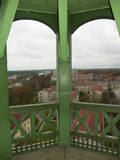 |
From the tower of St Simon’s Lutheran Church, you can see the central part of Valmiera and the banks of the Gauja River. During clear weather, you can see Zilaiskalns Hill. The church contains some cultural and historical treasures, as well as one of Latvia’s most resonant pipe organs.
|
|
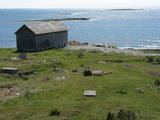 |
No Vilsandi bākas un tai tuvākās apkaimes ir labi saskatāmas leģendārās Vaikas salas. Tām ir piešķirts rezervāta statuss, tādēļ salas var apskatīt tikai no attāluma. Mazākā no saliņām - Kullipank ir tikai pārdesmit metrus diametrā. Tā ir jūras ūdeņu izrobots zemas un asas dolomīta klints fragments, kas klāts ar oļiem, nelieliem laukakmeņiem un kādu atsevišķi stāvošu lakstaugu. Domājams, ka vētru laikā tā pazūd zem jūras ūdens. Savukārt, Alumine Vaigas – Apakšējā Vaikas sala ir lielākā no sešām salām. Šīs salas diametrs ir ~ 150 m un tā paceļas vismaz kādus divus metrus virs jūras līmeņa. Uz salas ir bagātīga veģetācija un pat kāds zems krūms salas centrā. Redzami arī metru augsti atsegumi. Uz salas vēl joprojām atrodas 20. gs. sākumā celto „putnu māju” paliekas, kas bija domātas ligzdojošo putnu piesaistīšanai. |
|
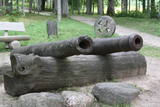 |
Established in 1900 at the place where the Pērse River flows into the Daugava (now the reservoir of the Pļaviņas hydroelectric power plant), the park offers a look at 17th century Swedish cannons and monuments from Medieval graves. Next to the high school in the park is a restored fountain, “Head of a Faun,” which was near the legendary Pērse waterfall during the 1930s. The waterfall is now underwater, but its location is indicated by a stone sculpture, “Girl of Pērse,” which was created by the sculptor Juris Zihmanis. A path leads to an 11 metre high wooden sculpture, “For Eternity,” by the sculptor Ģirts Burvis, and another sculpture, “Little Owl,” which is the work of the Rurāns brothers, both of whom are sculptors of wooden sculptures.
|
|
 12 days
|
This tour offers seeing the capital cities and most attractive towns of Lithuania, Latvia and Estonia through the freedom of independent travel and using public train and bus services. Getting around in cities and towns is easy, either by walking, or by using local public transport or taxis. The Old Town of Vilnius is in the UNESCO World's Cultural Heritage list. Daugavpils Fortress and the museum of Mark Rothko, the world famous abstractionist, are two highlights of Daugavpils city, Rēzekne city is known as the heart of Latgale region. Riga, the capital city of Latvia, offers a variety of cultural experiences and entertainment. Sigulda is famous for its landscapes and medieval castles. Cēsis is one of the most charming towns in Latvia with many attractions ranging from medieval heritage to nice restaurants, exhibitions and festivals. Valmiera offers art galleries, museums, nature trails and Valmiermuža beer from the famous local brewery. Tartu in Estonia is a university town, with some very popular tourist attractions such as the interactive AHHAA science centre, the largest in Baltic countries. Narva is a border town overlooking the Ivangorod fortress in Russia across the river Narva. Finish the tour in Tallinn – the capital city of Estonia. Tourist information centres in cities and towns will help you with maps, information on sights, attractions and guided tours, food, shopping and public transport. |
|
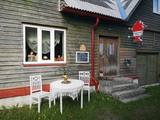 |
The Samovar House is a small samovar museum located in the Old Believers’ village near Lake Peipus, which has a private collection with more than 100 different and very special samovars and objects related to samovars.
|
|
 |
A family shop in Ikšķile that offers the produce of small Latvian producers and craftsmen. The store is a favourite, not only of the residents of Ikšķile and the surrounding area, but also for shoppers from Riga, Ķekava, Ogre and other cities. An online store is also available. |
|
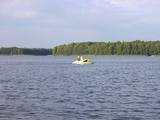 |
This nature park protects the landscapes of the Latgale highlands. Of importance here are Lake Ruskulis and Lake Cīrītis with its eight islands, along with the forests of the area. An ancient castle hill is on one of the islands in Lake Cīrītis – the Upursala island. There and on the Oši island, specialists have found more than 250 species of plants. |
|
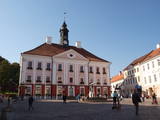 |
Formed on the left side of river Emajõgi, in the valley of Doma Hill. The centre of The Old Town of Tartu is Town Hall Square with Town Hall and the fountain "The Kiss of the Students" (symbol of the city). |
|
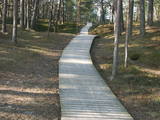 |
The nature reserve “Plieņciema kāpa” is founded in 1987 and covers 60.6 hectares of land. Since 2005 it is a Natura2000 site. The nature reserve protects a 150-200m wide and 3.5km long part of a distinct, continuous dune rampart. The dunes shelter Plieņciems village protecting from sea winds. The key natural values here are rare and protected biotopes of national and European significance: “Wooded dunes of the coast 2180” in the area of 61.8 ha, “Fixed dunes with herbaceous vegetation, 2130 (grey dunes)” in the area of 8.27 ha, “Shifting dunes along the shoreline with Ammophila arenaria (white dunes) 2120 in the area of 3.20 ha”, “Black alder swamp forests 9080”, ) in the area of 2,68 ha, as well as rare and protected species of Latvian and European significance including eastern pasqueflower (pulsatilla patens), Rolling Hen-and-chicks(Jovibarba sobolifera), Nothorhina muricata, Wryneck (Jynx torquilla), Woodlark (Lullula arborea). In the nature reserve, there is a “Vabu square” – a deflation in the dune where for centuries local fishermen have been drying nets. In the 18th and 19th centuries ships were built here. Nine ships have been built here in 1882 - 1925. The four-masted gaff-rigged schooner with hoisting engine “Eurasia” was completed in 1925, the largest ship built by the Kurzeme fishermen. It was one of the works of Martin Morgenstern (1866-1945), a famous shipbuilding master. Thanks to dunes, Plieņciems village was a popular holiday resort and has been mentioned in written sources already in 1738. Clergymen and landlords with their families used to stay here. In 1808, a merchant from Riga bought the local pub and replaced it with a massive two-storey building with a large ball-room and dining hall. On July 15, 1810, a sea bathing facility was opened for health treatment. For arrival of the empress Elisabeth Alexeievna, the wife of emperor Alexander I of Russia, who was a grandson of Catherine the Great, the road from Tukums town was repaired, the two highest hills were levelled, a road passage was dug across the Plieņciems dune, and a lime-tree alley was planted to facilitate access to the beach and bathing spot. Later, in 1920ies, the resort circles consisted mainly of the Kurzeme region landlords. There was a dance-floor in the park of Plieņciems village, and a special orchestra played music for resort guests three times a day. |
|
 11 days
|
This tour of the Forest Trail covers the national parks of Dzūkija and Žemaitija and the Nemunas Loops Regional Park in Lithuania. The starting point of the route is Druskininkai, a popular SPA and mineral water resort on the banks of the river Nemunas. Here, we recommend dipping yourself in mineral water baths, enjoying the trip with the cable car over the river Nemunas, visiting the musical fountain, and walking along the river promenade. For the next two days from Druskininkai, the Forest Trail passes through the Dzūkija National Park to the town of Merkinė. In this most forested and unpopulated region in Lithuania you can enjoy hiking along solitary forest roads, visit ancient mounds and ethnographic villages, where the traditions of bee-keeping, crafts, mushrooms and berry harvesting are still kept alive. You will then head to Birštonas, one of the key resorts in Lithuania with its valuable mineral waters. The town finds itself in the Nemunas Loops Regional Park, which includes four large and one smaller loops of the river. The Forest Trail stretches from Birštonas through the entire Nemunas Loops Regional Park up till the town of Prienai. Next, hikers will get to Kaunas, the second largest city in Lithuania and its former capital city. Kaunas is notable for its modernist architecture. The catchment area of the river Nemunas and the river Neris is situated here. Heading on, from Lampėdžiai to Vilkija, the Forest Trail runs for two days along trails and small countryside gravel roads next to the right bank of the river Nemunas, also crossing resort territory of Kulautuva. This section is characteristic of beautiful riverscapes, waterfront meadows and small villages. For the final section, first you must get to the Žemaitija National Park, where the Forest Trail runs around the Lake Plateliai, which is the largest lake in the historic Samogitian region. Old pine and fir forests and mixed forests are among the most precious natural values of |
|
 |
The Mazburkas farm is in a lovely location between the Rīga-Ventspils (A 10) highway and Tukums, with a beautiful and hillocky landscape all around it. There are fields grapes on the southern slopes of the hillocks, and some 60 different kinds of grapes are grown there. Visitors can pick their own grapes or buy some that have already been picked. The lady of the farm produces outstanding wines that have received prestigious prizes, including international ones. Another specialisation is sheep breeding. Visitors can look at the herd and purchase mutton if they contact the farm in advance for that purpose. There is a large wooden platform at the farm for visitors. Owner Gunta Niedra is happy to share in her experiences and provide consultations to those who wish to engage in sheep breeding. |
|
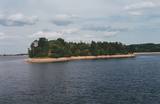 |
Before its flooding, the canyon of the Daugava River between Pļaviņas and Koknese was one of the most outstanding and beautiful parts of the Baltic terrain, and Oliņkalns hill was one of the largest castle hills in Latvia. The Andrejs cliff as up to 20 metres high, and it was part of the Daugava canyon. Before the area was flooded because of the construction of the Pļaviņas hydroelectric power plant, there were rapids near the hill that made it hard for rafters to sail down the river. Today it is a small island in the reservoir of the plant (it can be seen from the side of the Rīga-Daugavpils highway (A6) opposite Stukmaņi). It is separated from the shore by 300 metres of river, under which the Dūņas valley is now resting. A small part of the ramparts of the castle hill can still be seen on the island along with the ruins of an open-air stage and a few metres of the dolomite cliff that have remained above water. It is thought that the Alene castle was on the hill in the 13th century. Latvian mountain climbers installed a memorial stone in 1998 opposite Oliņkalns hill. |
|
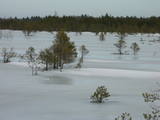 |
A comparatively large swamp to the North of the Zaļā dune, this is an important place for sulphurous waters, just as is the case with Zaļais swamp. The swamp is cut in two by the 3.5 km Ķemeri-Antiņciems road, from which interesting landscapes can be seen. The road is not appropriate for cars, however. To the East of Raganu swamp is Lake Putnezers, which is difficult to access. There is a small car park with an information stand on the shore of Lake Melnezers alongside the Ķemeri-Jaunķemeri road. The historical and overgrown Old Ķemeri road can be used to get to the seashore from this location. |
|
 7 days
|
This tour leads to the popular seaside resort towns in Lithuania and Latvia, from Nida on the Curonian Spit to Jūrmala on the Gulf of Riga. The first stage of the route runs through the Curonian Spit to the city of Klaipėda with its symbol – the wooden sailing ship – and its old town resembling German towns in terms of architecture. You will then visit the Lithuanian summer beach capital Palanga with some of its top sights being the Botanical Park, the Amber Museum, the pedestrian street of J. Basanavičius and the Sea Pier. Next, the route will take you to the former fishermen village of Šventoji, now a resort town, near which the Žemaičių alkas (Samogitian Sanctuary) is located – an ancient pagan sanctuary. After crossing the border of Lithuania/Latvia you will reach Liepāja – known as the windiest city in Latvia. Should you be interested in military heritage, you will find that in the former military port of Karosta. The tour continues to reach Ventspils, another seaside city. Here, you can go on a voyage on a small vessel on the river Venta river and out to the sea, walk along the riverside, go for a ride on the narrow-gauge train called “Mazbānītis”, marvel at greenery in the form of clocks made of flowers, spot the iconic cows of Ventspils – multiple sculptures scattered around the city streets. At the end of the tour, you will drive to Jūrmala and walk on the Baltic Coastal Hiking Route through the longest Latvian resort cities boasting with its widest sandy beaches. |
|
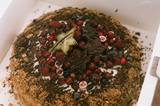 |
Contact her in advance, and the landlady here will bake various cakes, pastries, carrot buns and pierogi with various fillings. You can also order smoked fish. |
|
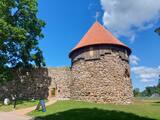 |
The Livonian Order built a fortified castle on the largest island in Lake Alūksne – Marijas Island (Pilssala Island) in 1342. It was linked to the land by a 120 m drawbridge. The castle had several forecastles, and it was regularly modernised and expanded until the end of the 17th century. It was one of the largest Livonian Order Castles, with similar ones found in Vastelina and Izborsk. Defensive barriers were put up around the castle, which survived until the Great Northern War. Its central part was blown up by the defeated Swedish military in 1702, after which Russians completely sacked it. All that is left are the castle ruins on the island, which is now linked to Alūksne and Temple Hill by two wooden bridges. An open-air stage alongside the castle ruins is used for various public events. |
|


