
| No | Name | Description |
|---|---|---|
 3 days
|
This is the most challenging Forest Trail section, especially on the second day. Here, on the coast of the Gulf of Finland, rises the North-Estonian Klint – a steep, rocky and forest-covered cliff that stretches non-continuously to Tallinn and further to the islands of West-Estonia. The Forest Trail runs on top of the cliff and occasionally descends into valleys. It crosses the deep and vast Pühajõgi valley in Toila-Oru park and comes to Toila, a popular coastal resort. One of the most unusual sections of the Forest Trail in Northern Estonia, which leads along the foot of the impressive North-Estonian Klint in good weather, then climbs to the top of the klint in the villages of Valaste and Saka, revealing breathtaking views of the Gulf of Finland. |
|
 |
The tree farm focuses on decorative plants, including summer and perennial flowers, fern and collections of peonies. Flower containers and pyramids are made on order. The farm delivers and installs vertical “green walls”. The farm also offers Christmas products and materials for floral design. |
|
 |
This institution offers a look at characteristic rituals that relate to environmental transformation, as well as at ancient Baltic faiths. Family and calendar celebrations are held here, including weddings, hen parties, consecration, mid-winter activities, etc. Some of these are pagan festivals. The educational programmes are meant for adults. |
|
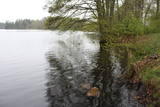 |
It is rare type of lake in Latvia and there are only of few this type of lakes in Kurzeme region. The lake is characterized by high water limpidness (very attractive for tourists) and very rare plant species for Latvia. Nature park includes the lake, costal area and forest on the East from the lake, few smaller lakes and Sarlote Pond. There are several tourist accommodations located around the lake.
|
|
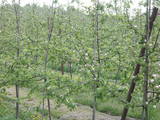 |
One of the loveliest apple orchards in Latvia (~10 ha, 30 types of apples) is on the sides of impressive hillocks. During clear weather, you can see the Bay of Rīga from atop the hillocks. The farm is particularly beautiful when apple trees are in bloom. Apples are available for tastings and purchase. |
|
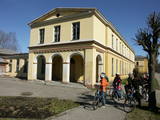 |
Kemeri (Kemmer) are mentioned in the literature sources for the first time in 1561. In the second half of the 18th century and in the beginning of the 19th century the curative properties of Kemeri sulphur spring waters and swamp mud are well known, therefore here representatives of the highest Kurzeme social circles arrive for treatment. The local foresters welcome the guests. During this time the first mud baths are organised. For some time the development of Jurmala and Kemeri beach is terminated by the Fatherland War of 1812. Two decades later – from 1833 until 1835 the benefits of Kemeri were enjoyed by General Governor of the Baltics Graf K. M. Palen, who addresses the Tsar of Russia Nicholas I for supporting further development of the health resort. Plead is supported and in 1836 Tsar allocates 700 ha of state land and grants 100 000 roubles for the construction of sanatorium and paving of the road from Kemeri till Sloka-Tukums high-way. Two years later (in 1938) the first state bath institution is opened. This is also considered the year of founding the health resort. In several stages the formation of Kemeri Landscape Park is begun, which is an important part of the health resort. In the middle and second half of the 19th century further development of the health resort is promoted by steamboat, as well as railroad traffic that are opened in 1877 from Riga till Tukums. In 1912 direct railroad line Kemeri-Moscow is opened. Early before World War I the number of patients reaches 8300 per year. The 1st battlefront of World War I is held in Kemeri swamp for several years and the health resort is significantly destroyed. Despite this fact after the war it develops rapidly and Kemeri becomes a beloved recreation place for the residents of Riga and one of the most modern health resorts in Europe. In 1924 a new bath institution with mud-baths is built in Kemeri, which at the time is one of the most modern in Europe, but in 1936 State President Kārlis Ulmanis opens one of the most prominent buildings of the first independent state of Latvia period – hotel "Ķemeri". Also after World War II – during the Soviet times the health resort is significantly expanded and almost 10 sanatoriums are established within its territory, in which about 100 doctors are employed. In 1971 Kemeri is awarded the status of All-Union health resort. From 1975 until 1985 the largest of sanatoriums is constructed in Kemeri – Līva (initially – Latvija), which has two blocks of eleven storeys. Up to 1200 patients at the same time could receive treatment at Līva, but within a year – up to 140 000 patients. The sanatorium is closed in the beginning of the 90ies of the 20th century as unprofitable. Up to 1994 five sanatoriums operate in Kemeri: "Čaika", "Daugava", "Dzimtene", "Ķemeri" and "Līva" (Latvija) and resort policlinic "Ķemeri". The latter period may be considered the declining fame period of Kemeri as a large-scale health resort. |
|
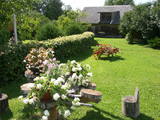 |
The farm produces dairy products and strawberries. You can learn to bake rye bread, make cheese and ice cream, and look at sheep, goats, pigs, calves, cows, horses, chickens, rabbits, guinea pigs, etc. If you like, you can help with the farm work and taste and purchase the products. |
|
 2 days
|
The Ķemeri National Park (est. 1997) covers wetlands, the shallow waters of the Bay of Rīga, overgrown seaside lakes, swamps, damp forests and wetland meadows. There are many important plants (including some 25% of those that are declared to be rare) and animals, including an area where the locations of nesting and migrating birds are protected. The park includes one of the largest swamps in Latvia – the Great Ķemeri Swamp. This is an important location for sulphurous waters and medicinal dunes, and back in history, that was the reason for the establishment of popular spas in Ķemeri. Visitors to the park are interested by educational nature trails, bike and hiking routes and bird watching towers. Route information from Latvijas Lauku forums |
|
 10 days
|
From Riga the tour goes to Sigulda where you can see the Olympic Bobsled truck, visit Sigulda medieval castle and take a cable car across to Turaida medieval Castle with beautiful views across the Gaujas Valley. Kids would love activities at the adventure centre Tarzans. At Ligatne walk Nature trails to see the local wild animals at their enclosed territories and wonder around the historic village originally formed around the Paper Mill. Further on visit impressive medieval castle ruins at Cesis town and the picturesque Devonian Zvarte outcrop at Karli. Then the route goes along the coast with sandy beaches great for walking, playing and swimming. There visit museum of the biggest liar in the world - Munhauzen and listen to his fantastic adventure stories. Then the route goes to the Western part of Latvia and focuses on the sea and coastal life. From Riga visit the sea resort Jurmala, stop at Pure Chocolate Museum and then continues to Cape Kolka where open sea meets Riga Bay. There explore trails at Sliteres National Park, visit villages of Livs which is one of the smallest ethnic nations in the world, enjoy freshly smoked fish. At Ventspils enjoy endless facilities for children - kids town, narrow gauge train, aqua parks, well equipped beach and adventure park. On the way to Riga visit charming Kuldiga with well preserved wooden architecture and stop at the farm where kids could enjoy different farm animals |
|
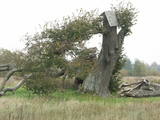 |
Before a great storm in 2005, this was one of the tallest and most noble lime trees in Latvia. Now only one branch is still alive.
|
|
 |
Ainavisks, ap 340 m garš un līdz 15 m augsts atsegums, kas atrodas nepilnu kilometru lejpus Raunas ietekas Gaujā, kreisajā pamatkrastā. To veido sarkandzeltenīgi Gaujas svītas smilšakmeņi. Gar Kazu ieža austrumu daļas pakāji izkaisīiti vairāki lieli laukakmeņi, kas ērti iekārtojušies uz smilšakmeņos izskalotas pamatnes. |
|
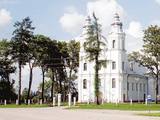 |
St. Anna Roman Catholic Church of Bērzgale. The Church was
built in 1770 and sanctified in 1776. The building is an example of Baroque style with a woodcarved altar
and two pictures of Virgin Mary. The church resembles Aglona Basilica.
|
|
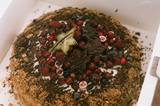 |
Contact her in advance, and the landlady here will bake various cakes, pastries, carrot buns and pierogi with various fillings. You can also order smoked fish. |
|
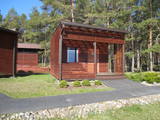 |
The campsite is located 77 km from Riga, surrounded by beautiful forest and sea. The range of offers is wide - beach volleyball court, basketball court, windsurfing, table tennis and more. There are tent sites as well as double or quadruple camping houses. There are facilities for people with reduced mobility. The campsite is open from 1 May until 31 October. Large WC and shower room (shared). |
|
 |
The café is in the Oga shopping centre, offering cheeses that are the “business card” of the city. |
|
 |
The café is in the historical centre of Tukums and offers various Latvian baked goods and pastries. |
|
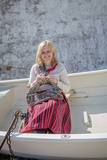 |
Elly offers home-made ice-cream, accommodation and a delicious breakfast in the morning.
|
|
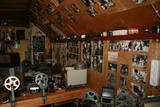 |
This is a collection of cinema and photography items collected by the owner of the Ziķu homestead in the Zirņi Parish, which is in the Saldus Administrative District. The collection includes antique film cameras and objects that demonstrate the process of taking pictures and films. The exhibition is in a log building that the owner built – one that resembles bee cells. Please contact the owner in advance for a tour. |
|
 |
Atrodas uz nelielās Mīlestības saliņas, ko ieskauj Buļļupes un Daugavas ūdeņi. Saliņa sasniedzama tikai ar laivu. No torņa labi pārskatāma Daugava, Daugavas vārti (ieteka jūrā), Bolderājas, Mangaļsalas un Ziemeļblāzmas apkaime, kā arī apkaimes mitrāji (niedru audzes, ūdeņi). |
|
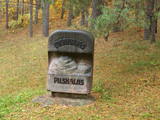 |
From the Markova castle hill, which you will access from the local information trial, you will see a view of the Daugavsargi curve of the Daugava. Further along, you will reach the open shore of the Daugava to see one of the most unique landscapes of Latvia’s river valleys. The Slutišķi village of Old Believers and the mighty Slutišķi cliff will be in the background.
|
|


