
| No | Name | Description |
|---|---|---|
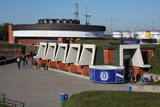 |
Das Museum befindet sich in der Festung von Kopgalis. Im Aquarium des Museums sind Fische und Tiere der Ostsee und anderer Meere und Ozeane zu sehen. Eine Ausstellung. Pinguine und Seehunde. In den Pulverkellern der Festung ist eine Ausstellung der Seefhrt Litauens, aber auf den Bollwerken eine Ausstellung der Gewehr eingerichtet. Das einzige Delfinarium im Baltikum. |
|
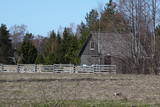 |
This village appears in historical documents from 1310. A census in 1582 and 1583 recorded eight farms in the village, while a 1731 census conducted by the Dundaga Estate found only three. In 1826, each farm had 16 or 17 people, with some 60 in total. A census in 1935 showed that all 49 Livonians in Saunags spoke the Lithuanian language, but only 11 of them spoke the language at home. There was a store that was owned by Kārlis Tilmanis, who also owned a factory where sprats were salted. Also born in Saunags was the seafaring captain Arvīds Ludeviks (1912-1996). In May 1945, he captained a tugboat, the Rota, in an attempt to bring Latvian refugees to Sweden. The ship was detained, and the captain was sent to Siberia. Another seafaring captain from Saunags was Visvaldis Feldmanis (1938-2017). |
|
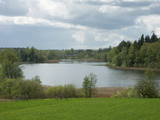 |
This restricted area protects the eutrophic Lake Istra and the biotopes that are alongside it – various kinds of forests and meadows. This is a particularly lovely part of the Latgale region. Interestingly, the so-called system of “rope farms” can still be seen in the nature park.
|
|
 8 days
|
This trip will allow you to see seaside landscapes, learn interesting facts about the ancient process of fishing, and enjoy traditional seafood dishes. Your first stop after leaving Rīga will be Ragaciems, where you will find a popular fish market that always offers a wide range of smoked fish from the sea. On the shores of the sea, you can look at a restored fishing boat pier and huts for nets. Further along, groups of 15 people or more can enjoy the "Fisherman's Banquet" programme in Roja. There you will hear stories about the lives, songs, dances and games of fishermen and, of course, enjoy an elegant banquet. Next you will visit Cape Kolka and the Slītere National Park, where men still go fishing in the sea. The aroma of smokehouses will be evident. Travellers can purchase freshly smoked fish there. Along the way to Ventspils, it is worth stopping at the Irbene radio telescope, which has a military history, but is used for scientific purposes today. Next you will drive toward Liepāja and stop at the charming town of Pāvilosta, which is popular among surfers, as well as the steep shores of Jūrkalne, where you will be able to taste fresh baked bread that has been kneaded by hand at a farm. Then you will get to Liepāja, which is the birthplace of Kristaps Porziņģis, a basketball player who plays for the New York Knicks in the NBA. A special treat in Liepāja ir smoked cod with potatoes and sweet cream. You can visit a windmill that was built in 1885 and is still operational, as well as the Pape Nature Park and the ethnographic Ķoņi village. Once you get to Lithuania, you will spend a day at the popular seaside sea town Palanga, and then continue the route to Cape Vente and the Rusne Island, both of which are famous because of fishing and fish smoking traditions. Visit the village of Minija, which is known as the "Venice of Lithuania." Finally, visit the Kurši dunes, the Sea Museum and dolphinarium, as well as the port city of Klaipeda. |
|
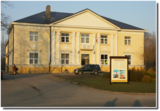 |
Although out of 104 village houses 97 were destroyed during World War I, at the end of the 30ies of the 20th century Lapmezciems "recovered" fast, and one of the most powerful coastal fishermen cooperatives in Latvia were operating in it. During the Soviet times here one of the largest fishery collective farms – "Selga" was founded here, the blocks of which can be seen at the mouth of the Siliņupe River. Today Lapmezciems is a popular area for summer cottages, a recreation and bathing place. As an interesting history monument of fishery the sedum of Lapmezciems is available for viewing – it is the former wharf of fishing boats, where fishermen built nest cabins and stored their equipment. Between Pīlādži Street and the left bank of the Siliņupe River in the 3rd and 2nd millennium BC settlement of fishermen and hunters were located, where a memorial stone is erected. This is the most ancient known location populated by humans within the territory of Kemeri National Park. Part of the findings is displayed at Lapmezciems museum, where local history research exposition is formed and materials about Finnish Jeager fights within the territory of Klapkalnciems are gathered. |
|
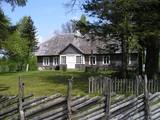 |
This museum was opened in 1991 at the birthplace of the aviator Stepon Darius. The house and granary have been restored, with exhibitions in both buildings. One speaks to the history of aviation in Lithuania and Darius' life, while the other shows ancient household objects. There is a campsite nearby where you can spend a longer period of time. |
|
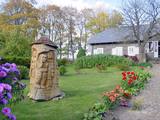 |
This museum is at the Griežioneliu farm in the Anīkšču region. It was opened in 1968 as an authentic farm with plants that come from that time. The history of the farm is related to biological heritage. |
|
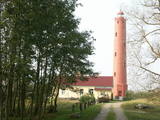 |
This was Coastal Defence Battery No. 500 at one time, and it was dismantled in 1955. There were four 130 mm cannons, and their foundations can still be spotted in the forest northeast from the lighthouse. They are mostly covered by moss and can be very hard to find. Those who are not familiar with the region will probably have the most trouble of all.
|
|
 |
Das Gedenkzeichen in Ošvalki, das den lettischen Flüchtlingen (1944 – 1945) gewidmet ist, die über die Ostsee in Fischerbooten nach Schweden geflüchtet sind. |
|
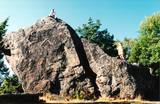 |
The Rock of Jana - Toma is claiming itself to be the highest (almost 8 m) rock in The Baltic. It is located in Kasispea village. |
|
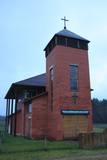 |
Atrodas 2,5 km no Bārtas centra, Bārtas upes labajā krastā. Mūsdienīgais dievnams tapis 2002. gadā (arhitekte: A. Siliņa). |
|
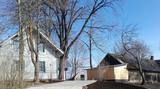 |
Guesthouse "Stikāni" is located in Rezekne district. The guesthouse has four comfortable rooms for two people and a dining room with an exit to the garden terrace. A knowledgeable guide will take you to the nature trail where you can learn about typical trees and bushes, popular and less known medicinal plants, nesting birds (during the summer) and impressive bird migration during the spring and autumn. |
|
 2 days
|
Путешествие для гурманов и любителей путешествий, в котором будет возможность попробовать не только традиционные курземские блюда, как скландраусис и копчушка, но и блины, приготовленные из свежемолотой муки, крестьянский сыр, домашнее вино и другие дары села. Кроме дегустации даров села, будет возможность пройтись по природным тропам и познакомиться с культурно-историческим наследием. Информация о маршруте от Latvijas Lauku forums |
|
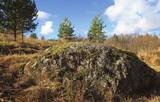 |
Horse's Footstone has a curvy that recalls a horse's footprint.
|
|
 |
In the Alatskivi historical ice cellar wine, herbal teas, various snacks, spicy vinegars and jams are made from fruits of local meadows and forests. In the cosy boutique you can taste and buy wines, teas and other local food souvenirs. If the group is bigger or you want to visit us outside of working hours, it is desirable to notify us about your arrival in advance. |
|
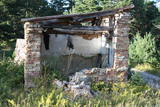 |
A coast guard facility was located near the village of Užava during Soviet times. There is a lack of information about the use of the facility at this time.
|
|
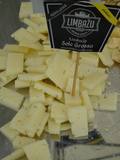 |
The Limbažu Cheese factory has more than 90 years of experience with dairy processing. It only uses milk from local farmers in Vidzeme, while the dairy processing technologies have been brought in from Switzerland. Limbažu Cheese exports 95% of its output. Alongside the company and on the other side of the street from the ruins of the Limbaži castle is a little store where the company’s products can be bought. |
|
 |
The Kaigari farm is in the Mežotne Parish of the Bauska Administrative District and specialises in grain farming. The farm makes active use of EU funding, some of which has been used to buy modern agricultural equipment. The farm has some 400 ha of land, and the apple orchard offers a very beautiful landscape, including the Lielupe River valley. |
|
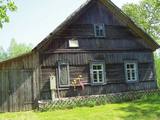 |
The House-Museum of the writer Michael Narics. Reveal the history of political repressions in the
USSR and Soviet Latvia; see creative works of the winners of competition organized by M. Narics Educational
Center.
Working hours: on request |
|
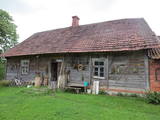 |
The master craftsman produces wooden spoons of linden and birch, as well as sauna switches with apples. You can watch him at work, try your own hand at making a spoon, purchase finished products, tour a collection of spoons, and also visit the old farm buildings. |
|


