
| No | Name | Description |
|---|---|---|
 |
Pareizticība Traķu apkārtnē „ienāca” jau Lietuvas dižkunigaiša Ģedimina (Gediminas) valdīšanas laikā (1316. – 1341.). Līdz 18. gs. beigām no astoņām pareizticīgo baznīcām Traķos nebija saglabājusies neviena, tādēļ pareizticīgo draudze 1863. g. uzcēla jaunu baznīcu, kas saglabājusies līdz mūsdienām un apskatāma Vitauta ielā (Vytauto gatve) 32. |
|
 |
The fisherman’s homestead that is alongside the Kolka Lutheran Church offers a look at how fish are smoked and prepared. You can taste the fish and purchase fish that were caught in the sea (mostly plaice). |
|
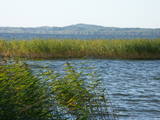 |
The eastern, southern and western shores of Lake Rāzna have roads which offer many lovely and unusual views of Latvia’s second largest lake and its surrounding landscape. Particularly lovely is the road between Foļvarkova and Vilkakrogs, which is part of the Rēzekne-Ezernieki road.
|
|
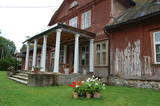 |
The mansion of Uue-Varbla Manor houses the local history museum which presents local life from the early 20th C and history of Varbla municipality. There is a handicraft workshop in the museum, while old tools and machinery are exhibited in the granary. The mansion in early Classicist style from 1797 is an attraction in itself. Traditional handicraft fairs are held in the grounds in July every summer. |
|
 |
Piemājas saimniecība nodarbojas ar augļkopību un biškopību! |
|
 5 days
|
Duke Jacob of Courland was a ruler of the Duchy of Courland and Zemgale for 40 years (1642-1682). There were great changes during his rule, with the ship building industry developing rapidly, the first factories appearing, and agricultural output improving. The duke had a large fleet that brought grain, meat, butter, wool, timber and all that was manufactured at baronial estates in Zemgale and Courland to Western Europe. The fleet was so big and strong that its ships sailed not just to Europe, but also all the way to Tobago and Gambia, where colonies were established to bring sugar, coffee and spices to Europe. The duchy built ships, manufactured paper and saltpetre and wove textiles, brocade and tapestries. Iron manufacturing was highly developed, and ore was imported from Sweden. This made it possible to forge nails, anchors, bells, cannons and other firearms. The duchy produced vodka, vinegar and gunpowder for which there was great demand in Europe, because there were attacks and defences that required it. As much as 25 tonnes of gunpowder were produced each year. One of the gunpowder towers is still in Kandava, though it has been rebuilt many times. The duchy manufactured sails and ropes, as well as hemp ropes. It was said that the fleet of the Queen of England would not have existed without those ropes. The duke also thought about selection of grain, bred livestock, improved land with land reclamation and tried to expand output from his fields. Jacob did not manage to do everything that he wanted to do. A canal to avoid the Venta rapids was not finished, and plans such as the colonisation of Australia were not finished. Yet the era of Duke Jacob was a period of great change in the territory of Latvia, and it has not gone unnoticed that the great achievements of the duke occurred on a small plot of European land. That proves that wise management can ensure lots of progress. |
|
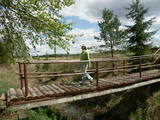 |
A small and forested territory with sulphurous springs, among which the most popular one is the Ellīte sulphur spring. It has sulphurous water with a low level of minerals, and the water supposedly has medicinal properties. The area around the stream is well-appointed, and a pathway leads to it. The stream is considered to be the source of the Iecava River. The restricted area is there to protect biotopes and protected plants which are in the area.
|
|
 |
Ideja par "DA'ZIEPE" radās iedvesmojoties no Amatas novada dabas un idejas par pilnvērtīgu pieejamo resursu izmantošanu. Ziepes tiek gatavotas no liellopu vai briežu taukiem, augu eļļām un ziepju zālēm, kā arī papildinātas ar dažādām ēteriskajām eļļām un dabīgajiem aromātiem. |
|
 |
This is the only dairy processing company in Latvia to prepare “Tea” cheese from fresh milk and with various flavours. The company offers smoked cheese sausage, cheese salad, and the “Gardumiņš” grand of sweet cottage cheese treats, as well as other types of dairy products. These can be bought at the Daugavpils market, the Central Market in Rīga, and all Latgales Dairy retail locations in Latvia. |
|
 3 days
|
This three-day route will allow you to visit one of the most unusual landscapes in the Baltic States - the Curlandian dunes. You will also visit interesting territories here in Latvia - the Pape Nature Park and the Liepāja Naval Port. The port is worth visiting while it still retains some of its Soviet-era "charm". New and unprecedented impressions will also be assured by two unique manmade objects - the "Town of Rock" and the "Town of the Absurd", which are both unique not only at the Baltic level, but in a far more extensive sense. |
|
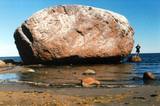 |
This is the largest rock in the Baltic States and, according to some sources, in all of the segment of Northern Europe which was affected by the last Ice Age. Its size is 930 m3! The rock is 7.5 m high, 16.5 m long and 14 m high, with a circumference of 48.5 m. The rock resembles a huge pebble from a distance, and it is on the sandy and rocky beach. Depending on the season, it can be out in the water. The Ice Age carried the rock to its current location from the southern shore of Finland. It is made of pegmatite.
|
|
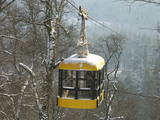 |
The aerial tram across the Gauja is the only vehicle of its type in the Baltic States. It was installed in 1969 with the help of engineers from Georgia. The crossing is 1060 m long, and the cable which crosses the river is just one cable without any supports. The tram rides about 40 metres above the river, and it offers an outstanding look at the local landscapes. During the evening, the tram is used by Bungee jumpers. |
|
 8 Tagen
|
Die Reiseroute von Riga nach Tallinn verbindet Natur-, Kultur- und kulinarische Aspekte und umfasst 15 Naturpfade, Moore, Wiesen und Wälder entlang der Ostseeküsten Lettlands und Estlands. Sie führt Sie direkt dorthin, wo regionale Spezialitäten hergestellt werden, damit Sie sie frisch und unverfälscht genießen können. Sie werden erleben, wie Neunaugen auf einem Grill für Sie zubereitet werden, leckeres hausgemachtes Eis probieren, geräuchertes Fleisch auf Bauernhöfen und vieles andere mehr verkosten. Am Ende der Reise werden Sie ein echter Experte der traditionellen und der modernen lettischen und estnischen Küche sein! Da sich die Bauernhöfe, die Lebensmittel produzieren, oft in wunderschönen Naturlandschaften befinden, kombinieren Sie auf dieser Tour Kulinarisches auch gleich mit Erholung. Es gibt viele Naturpfade, an denen Aussichtstürme zur Vogelbeobachtung stehen. Auf den Randu-Wiesen bei Ainaži findet sich ein Drittel der gesamten in Lettland vorkommenden Pflanzenarten. Ein Holzweg führt durch Schilf zu einer Aussichtsplattform mit Blick auf Wiesen und Ostsee. Flora und Fauna der Insel Saaremaa unterscheiden sich sehr von jenen auf dem Festland. Den Besucher erwarten hier eine Kalkstein-Steilküste, ausgedehnte Wacholderheiden, Meteoritenkrater und Orchideenwiesen. Die Tour führt vorbei an Bauernhöfen und durch Dörfer, wie sie typisch für die Küstengebiete Estlands sind. Die Insel Hiiumaa ist ein besonders ruhiger Ort; eine typisch estnische, ländliche Atmosphäre hat sich hier bewahrt. Ausflugsziele sind die bedeutenden Vogelschutzgebiete an den Boddengewässern von Käina, die Landzunge Sääre Tirp und die vielen kleinen Inseln vor der Südostküste. Auf dem estnischen Festland gewährt die Pakri-Halbinsel bei Paldiski mit ihrer ehemaligen sowjetischen Marine-Militärbasis einen Einblick in die jüngere Geschichte des Landes. |
|
 |
33,5 m augstais tornis tikai nedaudz paceļas virs priežu galotnēm. Tas meklējams Dzintaru mežaparkā, kas ir ģimenēm ar bērniem draudzīga vieta. No torņa redzami Jūrmalas meži, augstākās ēkas (sanatorijas, viesnīcas) un Rīgas jūras līča ūdeņi. |
|
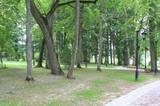 |
Der als Naturdenkmal geschützte dendrologische Park Varkava befindet sich in der Gemeinde Upmala und nimmt eine Fläche von 2,7 ha ein. Seit 2001 unter Schutz stehend wird der Park von der Bezirksverwaltung Varkava betrieben. Den vorhandenen großen Eichen (etwa 200 Jahre) zufolge, wurde der Park zu Beginn des 19. Jh. angelegt. Weitere Jungbäume wurden zum Ende des 19. Jh. gepflanzt. Im Park stehen vor allem heimische Bäume und Sträucher: Ahorn, Eschen, Fichten, Zitterpappeln, Eichen, Bruch-Weide, Linde, Ulme, Haselnuss, Pfaffenhütchen, Ahlkirsche u.a. Daneben gibt es auch mindestens 10 exotische Arten, darunter Eschen-Ahorn, Zucker-Ahorn, Weichhaariger Pfeifenstrauch, Populus suaveolens, Silber-Weide, Ungarischer Flieder, Krim-Linde, Sommer-Linde. |
|
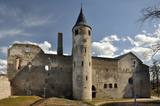 |
Mittelalterliche Bischofsburg in Haapsalu ist eine der besterhaltenen Burgen in Estland. Besuchen sie den Museumskomplex im Kloster, die Ausstellungssäle und geheimnisvolle Gewölbekeller. Im Wallgraben gibt es einen mittelalterlichen Spielplatz für Kinder mit Spielattraktionen wie aus dem Mittelalter. |
|
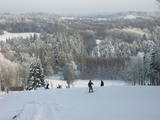 |
Der Gaiziņkalns ist der höchste Berg in Lettland und ist ein typisches Beispiel für die Hügel des Vidzemer Hochlandes. Dies ist ein Platz mit einer wunderschönen Landschaft, wenn es dort auch nicht so viele schöne Aussichtsplätze gibt. Im Zentrum des Parks befindet sich der Gaiziņkalns-Berg – die höchste Erhebung Lettlands und die zweithöchste der Baltischen Staaten (311,6 m über dem Meeresspiegel). Der Aussichtsturm ist wegen seines schlechten Zustandes leider nicht freigegeben für die Öffentlichkeit. Es gibt einen gut markierten Wanderweg um den Gaiziņkalns herum und während des Winters sind der Berg und seine Umgebung beliebt als Abfahrts- und Langlauf - Skigebiet. Der See Viešūrs (See Kaķītis) ist bei amtlich zugelassenen Fischern beliebt. Dieses Gebiet ist Teil einer Region geschützter Landschaften um Vestiena herum.
|
|
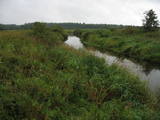 |
Palieņu pļavas starp Rūjienu un Rūjas ieteku Burtnieku ezerā, kurām raksturīga liela augu un putnu sugu daudzveidība. Tās robežojas ar bijušiem Rūjas zivju dīķiem, kas šobrīd aizaug ar mežu. Rūjas palienes var vērot gan braucot ar laivu pa Rūju, gan arī no ceļa, kas ved uz minētajiem dīķiem. Tur izvietots informācijas stends.
|
|
 |
Auf dem Hof wird Hanf angebaut und es wird angeboten, sich mit der Geschichte und den vielfältigen Verwendungsmöglichkeiten bei der Ernährung und in der Sauna bekannt zu machen. Zu den Erzeugnissen des Hofs gehören Hanfbutter und Hanfmilch. Es gibt Führungen und man kann die Produkte des Hofs kaufen. |
|
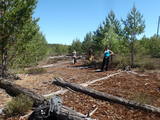 |
Das Bažu Moor – ist das größte Moor im Nationalpark Slītere. Es befindet sich
in der strengen Zone vom Naturverbot und ist für Besucher gesperrt.
|
|


