
| No | Name | Description |
|---|---|---|
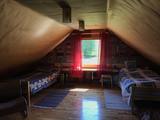 |
Bed & breakfast "Upes", in the centre of Livonian village Pitrags. Natural toilet. Local products. Lunch boxes, transfer service on request. |
|
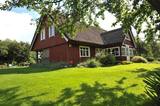 |
This guesthouse is on Rusen Island near the shore of the Pakalne River. The owners collect plants, process them in accordance with folk recipes, and then offer various teas, infusions and other beverages that have medicinal properties to improve people's moods and their tonus. |
|
 |
This is a cemetery that was originated in the Middle Ages and used until the beginning of the 20th century. A mossy stone fence surrounds the cemetery. Interesting elements in the cemetery include the grave of Heinrihs Jakobsons (1832-1911), who was the first schoolteacher in Mazirbe (the old metal cross is to the left of the main gate), a pine tree of national importance and has a circumference of 3.17 metres (during the Soviet Union someone drilled a hole in the trunk of the tree to access honey), the grave of Niks Freimanis (1845-1908), who is said to have been the prototype for a character in a story and play by Marģers Zariņš, and the Werewolf Grave, which relates to countless ghost stories, including the claim that it is the only known gravesite of a werewolf in Latvia. |
|
 |
The "Veju paradise" café is located alongside the grey dune in the historical part of Pāvilosta. The building has a modern design, but bricks from the historical Liepāja military port were used in its construction. The café features large windows and a summer terrace. It partners with home-based manufacturers of foodstuffs. Latvian cuisine: Marinated herring, fish soup cooked on a campfire, chilled soup, vegetable soup, baked flounder and cod, smoked perch and bream, crepes. Special foods: Baked turbot. |
|
 |
Ķurmrags is one of the most distinct capes along the Vidzeme shore of the
|
|
 |
Atrodas Ķekavā, autoceļa Rīga – Grenctāle (A 7) malā. Iekārtots vēsturiskā ēkā ar atbilstošu koka interjeru. Piedāvā maltītes visām ēdienreizēm, organizē muzikālus vakarus. |
|
 1 day
|
The Baltic Coastal Hiking Route starts at the center of Mazirbe village where you can see the Livonian National House. Continuing through small forest and country roads past the former Mazirbe Naval school, it winds through small coastal Livonian villages: Košrags, Pitrags and then Saunags. The Livonian coast is the only place where you can get to know the cultural history heritage of one of the smallest peoples in the world, the Livonians. In this section, the indicating signs are in both the Latvian and Livonian language. At the end of route you will see Cape Kolka, the point where the Great Wave Sea meets the Little Wave Sea. It is one of the most popular bird-watching sites on the Baltic seacoast. |
|
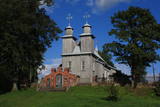 |
Одна из самых красивых деревянных церквей Южной Латгалии. Построенный из бревен и обшитый досками храм строился в период с 1750 по 1751 гг. Сохранился алтарь работы XVIII века (резьба по дереву, барокко) и проспект органа, а также более 30 предметов, имеющих художественную ценность. Во дворе церкви в XIX веке построена колокольня. В направлении озера Рушонс построен деревянный пасторат. |
|
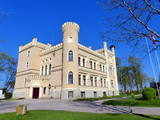 |
The mansion of the Gārsene Estate is built in the Neo-Gothic style, and its design was based on a villa in Germany. The building was erected between 1856 and 1860, and from then until 1920, the baronial dynasty of the Budbergs and Beningshausens owned it. The castle was expanded with another wing in 1885. Between 1939 and 1940, the building was rebuilt to become a school, and President Kārlis Ulmanis attended its opening on June 2, 1940, when he was taking his last official trip as the country’s president. There are other buildings and a park on the estate. The mansion today is home to the Gārsene Elementary School, but there is also an exhibition featuring the baronial dynasty, the history of the school, and the town itself. Just wait until you see the pot-bellied stoves! Outside the mansion are the Gārsene nature trails – the cultural and historical trail, the baronial strolling trail, etc. Before setting off, buy a ticket at the mansion. In front of the mansion is a memorial stone to Professor Pēteris Kulitāns (1878-1951), who was an agro-chemist. |
|
 |
The Cemetery of the Brethren of
Lāčukrogs offers a final resting place to
men who fell during World War I.
|
|
 |
The statue of Virgin Mary, also called „the statue of Madonna” was
repeatedly erected in Lūznava Manor park in 1991.
|
|
 |
Small farm with a special lifestyle on Saaremaa that grows, manufactures, processes and sells medicinal plants and herbs. Guests can take a walk in the garden, pick the plants themselves and take part in training workshops. |
|
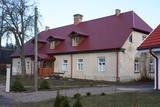 |
The estate owned by the dynasty of Baron Osten-Zaken was rebuilt in 1856 and 1857, because the old estate was sacked during the Crimean War (1853-1856). At the beginning of the war, British warships bombarded Latvia's shoreline and ships with the purpose of scaring the Russian tsar. Some of the gunfire hit Kolka, which was part of the Russian Empire at that time. After the estate was destroyed, the so-called White House was built there with a series of ancillary buildings. A mantel chimney was installed on the second floor, and it was used to smoke wild game (the chimney is still there). The estate belonged to the aristocrats until 1919, when its last owner, Christian von Osten-Zaken, was shot in Tukums. An elementary school, known as the Kolka School, was installed in the White House in 1929. It remained open until 1961, when a new school was built. Crafts lessons were offered at the building until 1989, at which time it was known as the Old School or the Small School. In 1991, the Old School was taken over by the Faculty of Biology of the University of Latvia, and it has been used for summer internships for students ever since 1994. |
|
 |
Boutique Hotel Altenburg mājo vairāk nekā divus gadsimtus senā koka ēkā, kas ir viena no ievērojamākajām Talsu vecpilsētas arhitektūras pērlēm. Kādreiz gandrīz pamesta un nolaista, šī ēka piedzīvojusi rūpīgu restaurāciju, atgūstot savu šarmu un vēsturisko stāju. Viesnīcas interjers ir harmonisks līdzsvars starp wabi-sabi pieeju, rustikālu eleganci un dabiskām faktūrām — te dominē koks, akmens un lins. Katrā telpas detaļā jūtama pārdomāta izvēle un cilvēciska piesaiste. Dizaina koncepciju radījis Roalds Cinis, bet apdari papildina vietējo meistaru roku darbs: “Ciparnīcas” keramikas trauki, darināti pledi un Latvijas tējas. Viesiem piedāvāti seši divvietīgi numuri, koplietošanas virtuve un mājīgs salons, kā arī klusas lasīšanas vietas ar grāmatām un mazs vīna pagrabiņš. Boutique Hotel Altenburg atspoguļo lēnās dzīves filozofiju — tā ir vieta nesteidzīgai atpūtai, klusumam un pievēršanās sev. |
|
 |
A restaurant and a three-star hotel that is located in the former beer brewery of Kalnamuiža, in the valley of the River Abuls, in the territory of Smiltene Park. The restaurant offers Latvian cuisine and caters for seminars. |
|
|
|
The No. 14 Border Guard facility at Akmeņrags was a naval observatory. The facility belongs to the regional local government and is not used for any purpose at this time.
|
|
 |
One of the most popular places on Latvian seashore to buy smoked fish or fish cooked in some other way. The fish is being smoked by local undertakers so quite often it is possible to feel a nice fish smell in tte village! |
|
 |
Located on the shores of Lake Usma, it provides diverse water- and land-based recreational opportunities, a free picnic area and outdoor fireplace, as well as catering services. |
|
 12 days
|
The duration of this route is 9 days with an option to extend it for 12 days. The target audience for this route - independent travellers with transportation like bicycle and canoe boat. The total length sums up to ~ 446 km cycling and ~ 7 km canoeing. Itinerary: Rīga - Gauja National Park - Otepaa - River Ahja - Tartu - Lahemaa National Park - Tallinn. |
|
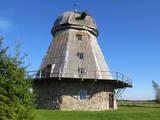 |
The owners have maintained a historical windmill (built in 1885) and its mechanisms. You can go on a tour of the structure, look at the mechanisms of the mill and taste local baked goods and country bread. |
|


