
| Nr | Name | Beschreibung |
|---|---|---|
 |
Here you will find some 30 types of birds and animals, including cranes, pheasants, swans, pygmy sheep, pygmy pigs, kangaroos, squirrels, etc. You can take a tour and learn about the animals, or walk through the garden on your own. You can also purchase rare and exotic plants from the farm’s garden. |
|
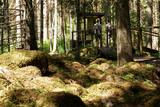 |
Im Wald von Kaltene ist ein sagenumwobenes Naturwunder – Kalvas von Kaltene bzw. von Valna zu besichtigen. Das Entstehen dieser Anhäufung im Wald, 2 – 3 km von der Küste entfernt ist mit den Küstenbildungen des Baltischen Eissees verbunden. Die größte Anhäufung ist Velna kalva (Teufels-Kalva). Seinerzeit war Velna kalva eine schöne Anhäufung, so große, dass “sich bis Gipfeln der Bäume streckte”. Auf den früheren Karten wurde die absolute Höhe dieser Anhäufung angegeben – 20 m. Diese Anhäufung bestand aus Steinen verschiedener Formen. Die Steine waren sowohl voll kugelförmig als auch in einer Tellerform. Diese Anhäufung wurde fast vollständig in den 1960er – 1970er Jahren vernichtet, da daraus die Schotter für Straßenbau gewonnen wurde. Heutzutage ist nur ein ziemlich kleines Fragment des Unterteils von Kalva erhalten geblieben. Die Länge dieses Fragments beträgt ca. 300 m, aber die Höhe – 2 m. Die Wissenschaftler äußern eine Meinung, dass diese Anhäufungen im Altertum Sakralorte sein könnten, da viele Sagen und Legenden sind darüber geblieben. Um die Anhäufung zu besichtigen, wurde einen Naturpfad mit den Informationsständen und einem nicht großen Parkplatz errichtet. (Die Quelle: Roja TIZ) |
|
 |
The mouth of the most beautiful river of Vidzeme. On the seashore between the mouths of River Gauja and River Daugava, one of the largest dune ranges in Latvia with distinctive parabolic dunes overgrown with forest (wooded dunes) is situated. The Mouth of River Gauja is unique as it is one of the few major rivers in Latvia and in EU countries to flow into the sea naturally. There is no harbour or other hydro-engineering construction. It is a popular recreation area in the vicinity of Riga and Saulkrasti while, unfortunately, the lack of infrastructure makes it suffer from anthropogenic load. Not far from the rivermouth, hidden in dunes, there are pillboxes which were built in 1920 or 30ies as anti-airborne barriers. There was a whole range of them along the coastline from the mouth of the River Lielupe to the mouth of the River Gauja forming a part of the Daugavgrīva Fortress fortifications. The pillbox is made of concrete, ca 1.5m thick. Every year, on the 3rd Sunday in August, a lamprey festival takes place in Carnikava town by the Gauja rivermouth. Carnikava is called the Lamprey Capital as it is famous for its lamprey fishing tradition and generous catches. The Mouth of the River Gauja is a good bird-watching area, especially in spring and autumn when one can observe the highest variety of species. Just few of the many bird species that can be observed near the Gauja rivermouth |
|
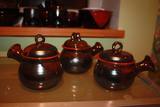 |
The craftswoman is prepared to offer practical activities which allow you to learn about clay, use a potter’s wheel, and release your inner creative abilities. After the firing of the products in a kiln, you will be able to take them along as a fine souvenir which confirms our newly discovered skills. The craftswoman also grows herbs and teas which you can sample. |
|
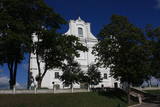 |
The first wooden Catholic church in Dagda was built in 1705, while the church that is seen today was built in the Baroque style during the latter half of the 18th century, the work financed by a local nobleman. Important interior elements include the altar, the pulpit, the organ, a monument to the Hilsen dynasty, etc. To the North of the church is historical Dagda itself, with typical red brick buildings from the early 20th century that are known as the former homes of Jewish merchants.
|
|
 |
Das Gebäude ist im zentralen Teil der Stadt Jēkabpils, in der A. Pormaļa Straße 11 zu suchen. Es ist im Jahr 1931 im Stil Klassizismus gebaut worden. Bis heute hat sich die originale Innenausstattung der Bank erhalten. Heute befindet sich hier die Niederlassung der Bank SEB banka. |
|
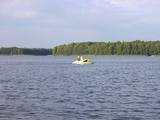 |
Dieser Naturpark schützt die Landschaften des Latgale-Hochlandes. Von Bedeutung sind die Seen Ruskulis und Cīrītis mit ihren acht Inseln, zusammen mit den Wäldern dieses Gebietes. Ein alter Burgberg befindet sich auf einer der Inseln im See Cīrītis – die Upursala-Insel. Dort und auf der Oši – Insel haben Spezialisten mehr als 250 Pflanzenarten gefunden.
|
|
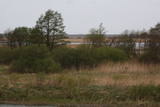 |
Im Zentrum dieses Schutzgebietes befindet sich der eutrophische See Tosmare, eine ehemalige Lagune des Litorina – Meeres. Der See und seine Umgebung bietet vielen Pflanzen und Vögeln Schutz. Am südlichen Ende des Sees kann man Überreste des ehemaligen Befestigungssystems von Liepāja entdecken, nach Westen hin befindet sich einer der wichtigsten Teile des Systems – der Festungskanal.
|
|
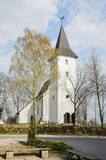 |
The Priekule Lutheran Church was built around 1680 and rebuilt a century later, in 1892. In 2005, the church tower was improved, and visitors to the church can now use it as a viewing platform. They can see the place where Icarus of Priekule supposedly made his first “flight.” |
|
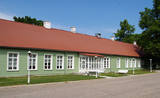 |
Im Hauptgebäude des Kreismuseums (ganzjährig geöffnet) und in den Filialen (geöffnet in der Sommersaison) bekommen sie einen guten Überblick über die Geschichte der Insel Hiiumaa und der See, Geschichte der Landwirtschaft und Gutshöfe, zaristische Zeit und Estnische Republik, über die Geschichte der Dago-Kertelsche Tuchfabrik, über die Sowjetzeit, u.a. Im Langen Haus finden Workshops für Kulturerbe statt. |
|
 |
Das Café befindet sich am Rande der Straße Riga – Liepaja (A9). Weite Räume, Innenausstattung aus Holz. Lettische Küche: Quark mit Hering und Sauerrahm, Bauernfrühstück, Steinpilzsuppe, in Zwiebeln gebratenes Schweinefleisch, geschmorte Leber, hausgemachte Frikadellen, gebratene Schweinerippen, Kartoffelpfannkuchen, gefüllte Pfannkuchen. Das besondere Gericht: Schinkentopf Jumis. |
|
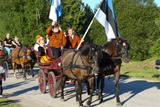 |
Reiterhof Tihuse bietet Reiten (von der Kutschefahrt bis zu Ausritte) und Beherbergung an. |
|
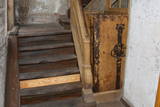 |
Находится на ул. Базницас, д. 17. Здание построено в XVII веке, как жилой дом кулдигского бургомистра. В 1701 году здесь гостил король Швеции Карл XII, который в передней оставил огромный сундук (2 х 2,5 м), на который после реставрации можно взглянуть и сегодня. |
|
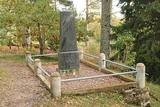 |
Das Denkmal vom alten Taizelis – das Grab vom Fischer Niks Freimanis (1845-
1908) – der vom Schriftsteller M. Zariņš als Prototyp in einer Geschichte und einem
Theaterstück benutzt wurde.
|
|
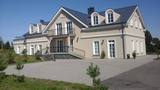 |
Agrotūrisma saimniecība aicina cilvēkus pavadīt brīvo laiku dabā. Kopš 2004. gada 45 ha lielajā bioloģiskajā saimniecībā tiek audzēta labība un aitas. Saimniecība pielāgota atpūtai un svinību rīkošanai. Visapkārt paveras plaša ainava ar rudzu laukiem, aitu ganībām, zirgu stalli, kas ļauj izzināt jāšanas pasauli un bioloģiskās saimniekošanas principus. 2 svinību zāles un 13 guļamistabas 40 viesu izguldināšanai klasicisma stila ēkā. Plaša apsargātā teritorijā, asfaltēts ceļš ērtai piekļuvei, bērnu rotaļu un volejbola laukumi, smilšu pludmale, klusa atpūta bibliotēka, makšķerēšana, putnu vērošana un dažāda garuma pastaigas un izjādes maršruti mežā. Pieredzējuši treneri mācīs iesācējiem jāt, un profesionāliem jātniekiem iespēja uzlabot savas prasmes. Iegādei laukos audzēti ekoloģiski tīri dārzeņi, augļi, un ne tikai.
|
|
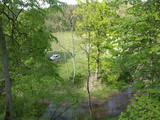 |
The viewing area is near the top of the Vilce castle hill, with a view of the Rukūze River valley, Zaķi meadow, and surrounding forests. This is an unusual landscape for the region of Zemgale. The Vilce baronial estate is nearby.
|
|
 |
Saimnieks nodarbojas ar biškopību un apmeklētājiem piedāvā ekskursiju pa saimniecību, stāstījumu par bitēm, medus degustācijas. Iespēja iegādāties pašdarinātas vaska sveces un citus biškopības produktus. |
|
|
|
Cēsu centrālais laukums – Vienības laukums (20.gs.sākumā – Konventa laukums) – atgādina par Cēsu kauju notikumumiem, kuru nozīme un ikviena dalībnieka ieguldījums aprakstīti devīzē uz pieminekļa “No zobena saule lēca”. Cēsu kaujas 1019.gada jūnijā bija svarīgs Latvijas valstiskuma vēstures pagrieziena punkts, kad apvienotais latviešu un igauņu karaspēks sakāva vācu landesvēru, kas apdraudēja Baltijas valstu pastāvēšanu. Vienības laukums turpina būt par nozīmīgu notikumu liecinieku. 1989.gada 23.augustā daudzu cēsnieku ceļi veda uz Vienības laukumu, kuram cauri vijās Baltijas ceļš. |
|
 |
Četrus kilometrus gara marķēta lokveida taka, kas ved pa lielāku meža masīvu, iepazīstina ne tikai ar augiem un dzīvniekiem, bet arī mežsaimniecības tradīcijām. Takas sākums atrodas pie nelielā Perejerves ciema, uz kuru paveras labs skats no tuvējā paugura. Pie autostāvlaukuma izveidota atpūtas un piknika vieta. |
|
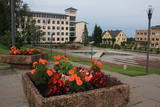 |
Madonas centrālais laukums, kas vēl 20. gs. sākumā bija tirgus laukums. Pēc apjomīgās restaurācijas tas ir kļuvis par ievērības cienīgu pilsētvides objektu. Laukuma ziemeļu pusē atrodas pilsētas un novada pašvaldība un Madonas novada TIC. |
|


