
| No | Name | Description |
|---|---|---|
 2 days
|
The Zemgale region is a fertile flatland. There are many modern farms, including some that will allow you to learn about life in the countryside and the heritage of agricultural history. You will start your trip and then take the "Milky Way" route to a dairy farm. Next you will visit Jelgava, the former capital of the Duchy of Courland from the 16th to the 18th century. The history of the town can be discovered via an interactive exhibition in the steeple of the St Trinity Church in Jelgava, from which you can also get a good view of the city from a 9th-floor platform. Next you will visit a farm where you will learn about Latvia traditions and bake bread together with the lady of the house. From there, the route will lead to a grain farm, where you will find a collection of dairy processing equipment and a playground for children. You can spent the night in a field of grain or a design hotel that has a traditional farm and a collection of restored old automobiles. Along the way, you will stop in Bauska to see its City Hall and its collection of ancient measuring equipment. Grain traditions will really be appreciated at a farm that uses its own grain and roughly ground flour to produce a wide range of traditional foods. Finally, you will visit a collection of tools, farm equipment and household items that are all typical of Latvia's countryside. |
|
 |
A small producer that grows strawberries on the farm, smokes and marinates fish Estonian style. Here, mead and house wine is also made, as well as various meat products. |
|
 |
In the studio it is possible to buy or order different craftsmanship items, as well as to learn about craftsmanship process. The studio specializes in creating folk costumes, weaving and all sorts of handicrafts, creating jewellery, patchwork, sewing and silk painting. It is possible to see the crafts’ exhibition and buy souvenirs. |
|
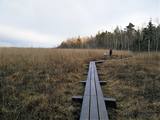 |
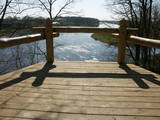
Taka atrodas Riekstusalas pussalā, netālu no putnu vērošanas torņa. Uz peldošiem pontoniem celtā laipa iepazīstina ar Kaņiera ezeru „tuvplānā”. Var iepazīt niedrājus, to putnus, labi redzamo ezera gultni ar zivju mazuļiem un kalcifilām augu sabiedrībām. Laipa aizved līdz salai, uz kuras aug kadiķi. |
|
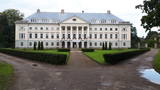 |
Work on the park began in end of 18th century, when it was a landscape park with trails for strolling and a system of pathways, benches and bridges. The 196-ha park is one of the largest estate parks in Latvia, and in dendrological terms it is one of the richest ones, with more than 200 varieties of trees and bushes, including 127 foreign ones. The park encircles the village of Kazdanga, including the Kazdanga Castle and the territory to its north, where you will find the burying grounds of the Manteuffel family. These were established at the very beginning of the 20th century, but the work was interrupted by World War I. The park features leisure areas and decorative elements. The castle was built around 1800 by the European-level architect Johann Gregor Berlitz after a design by architect Giacomo Quarenghi. The ensemble included a Cavalier House, a granary, a residential home, a stable, a bridge across the valley and other structures. An agricultural school was opened in the castle in 1924. Today it is the Kazdanga Museum, with the local Tourism Information Centre.. |
|
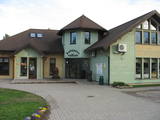 |
The café is on the banks of the Daugava River between Stukmaņi and Pļaviņas, offering a bakery, shop and café. There are dozens of types of bread, biscuits, tortes, cakes and other baked goods. Latvian cuisine: Dumpling or sorrel soup, farmer’s breakfast, eggs sunny side up, pork ribs, grey peas, potato pancakes with salmon, crepes, blackberry crème. Special foods: Liepkalni rye bread, bread kvass.
|
|
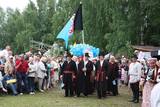 |
Mulgima or Mulgi is a cultural and historical region in the south of Estonia. The part of Viljandi county located south of the rivers Raudna and Tenasilma was considered to be region of Mulgimaa. In ancient times, Mulgi farmers were famous for their sharp minds and determination, which helped to buy land from German-Baltic nobles and become rich farmers. The icons of Mulgi culture - the dialect, the well-known men's long black jacket and the traditional Mulgi porridge - have survived to this day. |
|
 |
The Mežotne castle hill is on the left bank of the Lielupe River and opposite the Mežotne Castle. This was one of the largest Semigalian fortified castle hills during the 9th to the 13th century, and an ancient town alongside the hill covered 13 ha of land. The castle hill has been improved. A pontoon bridge across the Lielupe allows hikers and bikers to reach the castle (between May and October). Vīna Hill is approximately 500 m to the South of the castle hill, and a wooden pathway leads to it. |
|
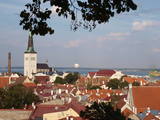 |
The capital of Estonia. The Old Town of Tallinn - excellent medieval (14.-15th century) building monument. The former city of Hanza. |
|
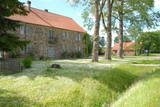 |
On the way to Turaida you must definitely stop at Gutmana cave. It is the widest (12 m) high (10 m) and in terms of volume - one of the biggest Latvian caves (cave like niche), which is also an important cultural and historical site, place rich with stories (most popular of Turaida Rose), surrounded by ancient walls and ceiling inscriptions (oldest from the end of 17th century). A spring originates from the cave; it is believed that it has healing properties. Turaida Museum reserve with Batlic scale outstanding monuments whose history stretches over 1000 years in the distant past is located at the point where the right mainland of Gauja valley is split by deep ravines of several small streams. Their exploration can be started with Turaida manor (first mentioned in 16th century), which is an outstanding example of Vidzeme manors. 21 buildings, built between the 18th century until the beginning 20th century are preserved until now. Visitors can see the manor stables, coach house, sauna, forge, fish cellar, barn, foreman house, the old residential buildings of landlord, and residential building of manor servants, oust house, etc. While walking in Turaida direction, we will reach the grave of Turaida Rose, which relates with the legend of Turaida Maija, who sacrificed her life for love. Near the grave grows a great linden tree (poor condition), wich is believed to be planted on the grave of Maija. Turaida Lutheran Church that lies further is the third church in a row and one of the oldest (1750) Latvian wooden churches – single volume wood log building with a baroque tower. Here you can see the altar and pulpit (Middle of the 18th century), altarpiece "Golgotha" (end of the 17th century – beginning of the 18th century) and historical exposition. Tautasdziesmu (folksongs) Park stretches at the Dainu Hill, the development of which started in 1985, noting the 150th anniversary of father of Latvian folk songs – Krisjanis Barons. More than 26 stone sculptures created by the sculptor I. Ranka are exhibited here. This is also a place of annual folklore events. Before the construction of Turaida stone castle (started in 1214), wooden Liv castle stood here. Turaida castle belonged to the Bishop. It existed for a long time - until to the 1776 when it was burned down. In 1953 an extensive restoration works was started here; upper storey of main tower, barn building (exposition on Sigulda district), semi-circular tower and castle complex in the southern enclosure was restored. Now the museum exhibition is established at the castle premises, which tells about the historical events in the surroundings. |
|
 4 days
|
This professional tour will look at fruit farms that selection, breed and grow breeds that are appropriate for Latvia’s weather conditions. During the introductory day, participants will tour Rīga, which is part of the UNESCO List of World Heritage, and also visit a health food store. On the second day, it is off to Kurzeme, where we will visit a farm that has developed a special technology for the processing of sea buckthorn in a way that preserves all of the vitamins and minerals that are in the berries. We will visit Wine Hill in Sabile, where grapes have been grown since the 16th or 17th century. Some 15 types of grapes that have been adapted to Latvia’s climate are grown here now. Next we will visit the Kukši Estate, which offers a look at the cultural environment of baronial estates in the 18th and 19th century. We will return to Rīga via the Jūrmala spa and have dinner at a Latvian saloon. The next morning we will travel to Vidzeme to look at a former peat swamp where large cranberries are grown now. The farm has its own processing technologies to manufacture candies, syrups, juices and teas. Next we will visit Latvia’s first blueberry farm for a tour and tastings. At the end of the day, we will visit a farm that grows cranberries and blackberries, emphasising successful and healthy food products and their marketing. On the morning of the fourth day, we will visit the Medieval Cēsis castle, which was the residence of the masters of the Livonian Order and one of the most fortified fortresses in the territory of the Baltic States. We will visit an agricultural technical school in Priekuļi to meet with faculty members. At the conclusion of the day, we will go to Ungurmuiža Estate, which is one of the most outstanding examples of 18th century Baroque wood construction in Latvia. The mansion (1732) is the only early 18th century wooden building of this type that has been preserved to this very day. |
|
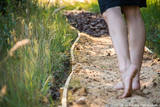 |
Enjoy nature with all of your senses in the Survilai village tourism farm, which is a Swiss village in the Jonavos district. Walk down paths barefoot! The paths are covered with pine cones, puddles, peat, clay, granite, smooth glass, pine needles, hay, an obstacle course, etc. The path is more than a kilometre long, and you will feel unbelievable and positive emotions, as well as an inflow of energy. |
|
 |
The museum set up in 1982 presents life and activity of the region from the late 19th C to the recent past. Temporary exhibitions are held in the barn and more than 200 species of trees and shrubs can be viewed in the parkland extending over 17 ha. Themed events include baking bread, celebrations of folk holidays are frequently arranged. From the museum visitors can access Velise cultural and natural heritage trail. |
|
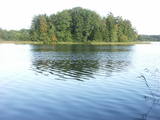 |
This restricted area protects Lake Jumurda, which is in the central part of the Vidzeme highlands, along with its three islands, the local broadleaf forests, and the surrounding landscapes.
|
|
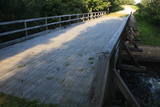 |
This fairly large wooden bridge across the Rīva River is a fairly unique phenomenon in Latvia, but it is one of few, if not the only bridge of its type. The bridge is in a convenient and easily accessed place, and of interest is the fact that it was once part of the Liepāja-Ventspils railroad that was installed during the first half of the 20th century. |
|
 |
This guesthouse offers country tourism services and is in a lovely part of Žemaitija next to the little Virvīte River. Guests can enjoy swimming, kayaking, biking, fishing in the ancient river, and tours of historical locations in the region. The guesthouse also has a museum of antique motorcycles. |
|
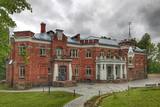 |
The construction of the state began in the early 20th century. The mansion was built of bricks and fieldstones between 1905 and 1911 in the styles of Historicism and Art Nouveau. The estate was owned by engineer and professor Stanislav Kerbedz from St Petersburg, the first Russian engineer to develop principles for the architectonic aspects of bridges. These were used during the latter half of the 19th century, and Kerbedz led the construction of the Nikolayev bridge across the Neva River in St Petersburg. Kerbedz’s wife, Yevgenia, was well known as a lover of art, and she brought various art objects to the estate from Italy. The Lūznava Estate was a popular place for gatherings of artists during the summers. Among those to visit was the distinguished Lithuanian painter and composer Mikalojus Čiurlionis. The estate is surrounded by a 23.7 ha landscape park with a system of ponds. Near the estate is a statue of the Madonna, which was carved by an unknown Italian artist. The statue was damaged and thrown into a pond during World War II, but it was restored in 1991. Reconstruction of the main building of the estate was complete in 2015, and today it is a modern and international centre for environmental education and the arts. |
|
 7 days
|
This tour leads to the popular seaside resort towns in Lithuania and Latvia, from Nida on the Curonian Spit to Jūrmala on the Gulf of Riga. The first stage of the route runs through the Curonian Spit to the city of Klaipėda with its symbol – the wooden sailing ship – and its old town resembling German towns in terms of architecture. You will then visit the Lithuanian summer beach capital Palanga with some of its top sights being the Botanical Park, the Amber Museum, the pedestrian street of J. Basanavičius and the Sea Pier. Next, the route will take you to the former fishermen village of Šventoji, now a resort town, near which the Žemaičių alkas (Samogitian Sanctuary) is located – an ancient pagan sanctuary. After crossing the border of Lithuania/Latvia you will reach Liepāja – known as the windiest city in Latvia. Should you be interested in military heritage, you will find that in the former military port of Karosta. The tour continues to reach Ventspils, another seaside city. Here, you can go on a voyage on a small vessel on the river Venta river and out to the sea, walk along the riverside, go for a ride on the narrow-gauge train called “Mazbānītis”, marvel at greenery in the form of clocks made of flowers, spot the iconic cows of Ventspils – multiple sculptures scattered around the city streets. At the end of the tour, you will drive to Jūrmala and walk on the Baltic Coastal Hiking Route through the longest Latvian resort cities boasting with its widest sandy beaches. |
|
 |
This former training route runs through the shoreline forests from the northern part of Ventspils (there was once a tank division in Ziemeļu Street there) all the way to Ovīši. Today it is a wide, sandy and overgrown track.
|
|
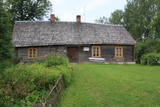 |
The distinguished Latvian author an painter Jānis Jaunsudrabiņš (1877-1962) spent six years of his childhood at Riekstiņi in Nereta. He was born into a servant family and moved to Riekstiņi together with his mother after his father passed away. The household inspired him for his "White Book." In honour of Jaunsudrabiņš, a museum was opened at Riekstiņi in 1967, and it is in an authentic Selonian farm with its spirit and aromas. You can tour the residential building and the homestead's granary and wheelhouse, also houshold building from 1820. The apple orchard has trees that are 100 years old and older. Nearby is the Ķišķi cemetery (on the side of the Vecumnieki-Ilūkste road), where members of the Jaunsudrabiņš family were interred and Jānis Jaunsudrabiņš was reburied in 1997. The Nereta Administrative District still has many single family farms and place names which Jaunsudrabiņš mentioned in his books. |
|


