
| No | Name | Description |
|---|---|---|
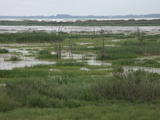 |
The Lake Lubāns depressions which are alongside the lake’s western and south-western parts feature little-changed forests and swamps, where many rare and protected birds nest. Many uncommon and protected habitats are in the region.
|
|
 |
Biškopības produkti bioloģiskajā saimniecībā, informācija par biškopību un dabas aizsardzību. |
|
 |
The ship "Baltā Kaza" transports tourists along the Daugava and also acts as a ferry from Jaunjelgava to Skriveri. In the summer season it runs at regular times. Excursions and trips to the Love Island, Aizkraukle castle ruins, Ķegums HPP, etc. are also possible. Other routes are possible. 25 passenger seats. During the trips you can get acquainted with the narration of cultural-historical, historical and biological objects on both banks of the Daugava. The owner organizes events and concerts both on the Daugava and on the bank of the Daugava. Possibility to rent SUP boards, rowing and canoe boats, catamarans at the berth. |
|
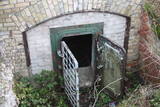 |
The so-called Comet Fort was built on the Left Bank of the Daugava at its mouth, not far from the present Daugavgrīva lighthouse. It was built around the same time as the other forts of Mangaļsala (around 1808, although some sources say 1788). There were four Kane-type 152-mm cannons. The defensive batteries at Komētforts and Mangaļsala repelled a British naval attack in the Daugava estuary in 1855. It has to be added that Komētforts is a cultural monument of local importance. If we go along the shore of the sea from the Daugavgrīva nature reserve toward the Daugavgrīva lighthouse and scale the frontal dunes (without going past the sign which says “Closed Territory. Border Zone.”), then we can see the positions of the cannons, as well as underground cellars where munitions were once stored. The territory starts approximately 500 metres before the Daugavgrīva lighthouse and stretches to the lighthouse itself. During Soviet times, the territory was closed to civilians, because many secret military objects were in this area and in Bolderāja.
|
|
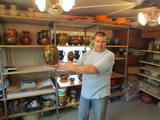 |
This potter upholds pottery traditions from the village of Silajāņi. He produces glazed and unglazed products such as dishware, candelabras, etc. You will hear attractive stories about pottery, be allowed to knead some clay and work on the potter’s wheel, and be able to tour an exhibition hall with samples of the master’s work, as produced over the course of the years. You can also commission and purchase products. |
|
 17 days
|
The tour introduces modern day life in rural Latvia, Estonia and Lithuania and includes visits to small farms raising livestock and producing delicious foods, and to ethnographic villages preserving the traditional lifestyle in a contemporary environment. The tour also involves sites of historical and cultural interest. The tour gives a look beyond the usual tourism sites to get to know the three Baltic states more deeply. It starts in the historic Latvian capital, Riga, followed by the Gauja National Park with its castles, manors and walking trails. Climb the tower of medieval Turaida Castle for amazing views over the valley and visit the ancient jewellery master in the castle of the charming town of Cesis. Across the border in Estonia, walk streets with elegant villas at Parnu sea resort before catching a ferry to Saaremma island. Ethnographic Koguva village, ancient churches and windmills are typical of the island, as is an embroidering tradition. Then it's off to Tallinn with its medieval Old Town and to the rocky landscapes of Lahemaa National Park with fishing villages and manors. Try Estonian national dishes at the pub in Altja. Driving back, stop at the university town of Tartu. In Latvia again, visit goat farms and a traditional black bread bakery. Then the tour heads towards the west coast with the cities of Liepaja and, across the border in Lithunaia, Klaipeda. Next is the incredible Curonian Spit. Before Vilnius, take a detour to Grutas Park with its bizarre Soviet statuary. Finish the journey at picturesque Trakai Castle in Lithuania and Rundale Palace in Latvia. |
|
 |
The bar is in Tirgus Square in the historical centre of Dobele, offering Latvian cuisine and Tērvete beer, which is brewed from Latvian ingredients. A summer terrace is open during the season. Latvian cuisine: Cold soup, grey peas with bacon, Tērvete steak haché, Tērvete leg of pork. Special foods: Tērvete cheesecake. |
|
 |
"Ziedlejas" offers sauna treatments and events in the contemporary design Glass Sauna, Smīma Spruce Smoke Sauna and Black Sauna, which is located in an unspoilt corner of the forest. The ritual sauna treatment includes heating, herbal compresses, herbal scrub, big beating, swimming in the pond, massage with healing oil and honey, vibrating with sound, tea, home-baked bread. The sauna treatment lasts four to five hours and is led by a sauna master. Various master classes are possible in connection with sauna rituals and the use of plants in healing and beauty care and the preparation of appropriate preparations. Bicycle rental is available, which includes access to the Ziedleju xc / enduro trails, bicycle training and bicycle guide services. It is also possible to organize and lead team building events, as well as team communication trainings. |
|
 3 days
|
From Riga the route goes to the historic Estonian sea resort and then by ferry to Muhu island. On the way there is ethnographic village of Koguva, the Liiva church and the elegant Padaste Manor. Overnight at Muhu island. 28 km cycling there juniper fields, its small fishing villages, and the magnificent Juigu cliffs, which open up a view of the other small islands in the Monzunda archipelago. Then drive to Saaremaa and stay in Kuressare, the island's capital. There the rooute covers such attractions as Kaali meteorite crater, impressive Valjala church and castle mound, Piretikivi rock and Poide church. Cycle along the Tagameisa Peninsula, up to 30 km. Driving to the ferry take a loop along Viidumae National Park with its viewing tower, Kihelkonna Church, the Odaletsi streams and nature trail and the dolomite Panga cliffs. |
|
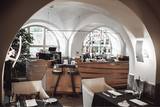 |
Situated in a building with a rich history. Historically a fish market was located here, which has influenced the activities of the restaurant. The restaurant offers a vast selection of fish dishes and seafood, as well as exquisite meat dishes. We also offer a children’s and vegetarian menu. |
|
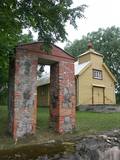 |
The building was built in 1800 and rebuilt in 1825. Zosna Catholic Church is one of the smallest wooden churches in Latgale and the oldest church of the Rāzna National Park. The building is famous for the altarpiece "Madonna with a child". Noteworthy is also the gate, fence (built from red bricks and boulders) and the bell tower. Not far from the church there lives a manager with whom you can agree on seeing the church from the inside. |
|
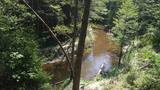 |
Nature trail "Curves of Riva" starts at Ulmale-Labraga Lutheran Church and continues 3 kilometres down the picturesque downstream of river Riva. Rīva here flows in a canyon-type ravine which reaches 12 meter rise at some points. The trail reveals countless river twists and turns and steep coastal cliffs. The trail is partly accessible with an assistant and is marked with green paint. |
|
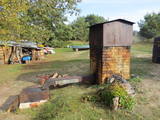 |
On the second Saturday of each month (or at other times that are arranged in advance), the owner will allow you to test your skills at smoking fish, after which you will be able to taste what you have produced. |
|
 |
The farm offers various goodies, including cheese, butter, cream, cottage cheese and fresh eggs. |
|
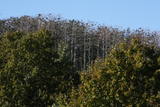 |
Aiz Jodkrantes (Nidas virziens) ceļa labajā pusē ir izveidots autostāvlaukums un labiekārtota vieta, no kuras apskatāma Lietuvas (atrodamas ziņas, ka arī Eiropas) lielākā zivju gārņu Ardea cinerea un jūras kraukļu Phalacrocorax carbo kolonija, kur kopā varētu būt ~ 3000 putnu. Neaizmirstiet līdzi paņemt tālskati! |
|
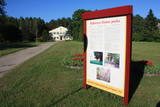 |
The Rubeņu (Rubenes) park dates back to the mid-1950s and is toward the north of Rubeņi, on the banks of the little Dzirnavupīte River. There are beautiful ponds, a stage, a rock garden and a playground for the kids. The cultural centre that is alongside the park features a monument to the poet Rainis which was unveiled during Poetry Days in 1969 and was produced by the sculptor Kārlis Baumanis. |
|
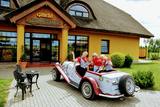 |
Older residents say that the guesthouse is located in the centre of the Domanti village. The guesthouse has four buildings built in accordance with ethnic architectural traditions, including a granary, a sauna and a traditional residence with two ends. |
|
 |
Saimniecības pamatnodarbošanās ir diļļu audzēšana un to pārstrāde. Siltumnīcā audzē arī Itālijas dienvidos zināmu melones un gurķa krustojumu "Carosello", kas latviski nodēvēts par "pūkaino gurķi". Iespējamas degustācijas, kā arī saimniecības produkcijas iegāde. |
|
 |
Торговый канал, протяженностью неполных 3 км, в советское время являлся закрытой зоной со статусом режима приграничного района. Лиепайский порт был известен еще в XIV столетии. В конце XVII века здесь выкопали канал, который соединил море с Лиепайским озером - теперешний Торговый канал. Заканчивается он Зимним портом и двумя молами, из которых Южный мол служит излюбленным местом для прогулок и рыбалки. В южной части Торгового канала тянется Променад, на котором установлены Янтарные часы. |
|
 |
This is one of two sanatoriums in Jūrmala where mud from the surrounding area is used for medical procedures. The Jūrmala Spa Museum of History was opened here in 2009, and it offers interesting information about the history of the spa and the sanatorium. You will see historical photographs and medical equipment from the 1970s and 1980s. Guides will tell you all kinds of interesting information. |
|


