
| No | Name | Description |
|---|---|---|
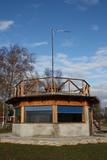 |
Pirmā ir uzcelta uz vienstāvīgā apmeklētāju centra jumta. No tās paveras plašs skats uz Kīdevas ciemu, ostu un niedrēm apaugušo Matsalu līča ziemeļdaļu. Austrumos no šīs atrodas vēl viena - divstāvīga putnu vērošanas platforma. No Kīdevas līdz Puisei gar Matsalu līča var doties pārgājienā pa 5 km garo dabas taku. To izejot, novēroto putnu sugu klāsts noteikti būs lielāks! |
|
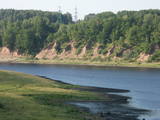 |
In Aizkraukle, drive down Enerģētiķu Street to the Selonian side (there will be small “pockets” at the side of the road) to see one of the best views of the Daugava River valley, reminding us of what this fateful river was like before the power plant was built. You will see that the river has eroded the steep cliffs on the right bank. The further part of the valley is part of the Daugava Nature Park.
|
|
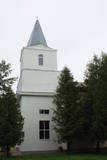 |
The first church was here in the early 18th century, followed by the second and third one (1847-1848), and then the one that is there now. The church was damaged during World War I and then during the Soviet era, when wool was stored there between 1969 and 1993. In the 1990s, the building was in terrible shape, but it is gradually recovering its appearance. Between 1826 and 1856, the sexton and organist at the church was the Latvian poet and translator Ansis Līventāls (1803-1878). His grave and monument are alongside the church. At the same place are the graves of German and Russian soldiers who died during World War I, as well as the grave monument of the pastor and writer Jacob Florentin Lundberg (1782-1858). |
|
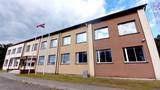 |
Located in Aizpute, within 200 metres of Exotic garden of Māris Linde and less than 1 km of Castle tavern, Hostelis R27 provides accommodation with a shared lounge and as well as free private parking for guests who drive. The property is situated 1.1 km from Art gallery Mētras Māja, 1.1 km from Aizpute Local History Museum and 1.1 km from Aizpute winery. The property is set 1.4 km from Aizpute Baptist Parish and less than 1 km from Livonian Order castle ruins. At the hostel, all rooms have a wardrobe. The shared bathroom is equipped with a shower and a hairdryer. At Hostelis R27 each room has bed linen and towels. Popular points of interest near the accommodation include Stone bridge, Manor Brewery and Aizpute old town. The nearest airport is Liepāja International Airport, 37 km from Hostelis R27. |
|
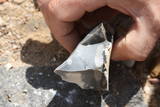 |
Neliela apdzīvota un ainaviska vieta plašajā Skrobļa (Skroblus) strauta ielejā. Ciema austrumu pusē atrodas Lietuvas mērogā unikāls objekts – klēts - rija, kur no 1929. g. vietējie cilvēki uzveda un skatījās lauku teātra izrādes. Netālu no tās (uz abiem objektiem ir norādes) atrodas Skrobļa avoti (Skroblaus versmės), kas iztek no dziļas starppauguru ieplakas. Avotu gan ir appludinājis bebru uzceltais dambis. Dienvidos no ciema atrodas vecs grants karjers, kas ir viena no retajām vietām Baltijā, kur dabā ir atrodami krama ieža gabali, kas atnesti ar ledāju. |
|
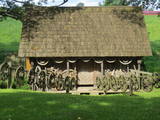 |
Saimnieks Valentīns Kuklis savā viensētā izveidojis no koka un citiem materiāliem un vēsturiskiem priekšmetiem veidotu brīvdabas kolekciju, kas savākta g.k. no Latgales lauku sētām. Daļa no vēsturiskajiem priekšmetiem ir izvietota saimnieka veidotā muzejā. Piedāvā ekskursiju un stāstījumu par savāktajiem darbarīkiem un sadzīves priekšmetiem. |
|
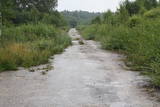 |
One of the largest tank bases in the Baltic War District was located during Soviet times just South of Gardene. The territory has largely been abandoned, and there are just a few remnants of the buildings that were once there. If you drive down the Dobele-Annenieki road, you will find a paved military road splitting off from it. It is still used today. The buildings and urban planning of Gardene are also of interest – during the Soviet era, soldiers and their families lived there.
|
|
 7 days
|
This tour leads to the popular seaside resort towns in Lithuania and Latvia, from Nida on the Curonian Spit to Jūrmala on the Gulf of Riga. The first stage of the route runs through the Curonian Spit to the city of Klaipėda with its symbol – the wooden sailing ship – and its old town resembling German towns in terms of architecture. You will then visit the Lithuanian summer beach capital Palanga with some of its top sights being the Botanical Park, the Amber Museum, the pedestrian street of J. Basanavičius and the Sea Pier. Next, the route will take you to the former fishermen village of Šventoji, now a resort town, near which the Žemaičių alkas (Samogitian Sanctuary) is located – an ancient pagan sanctuary. After crossing the border of Lithuania/Latvia you will reach Liepāja – known as the windiest city in Latvia. Should you be interested in military heritage, you will find that in the former military port of Karosta. The tour continues to reach Ventspils, another seaside city. Here, you can go on a voyage on a small vessel on the river Venta river and out to the sea, walk along the riverside, go for a ride on the narrow-gauge train called “Mazbānītis”, marvel at greenery in the form of clocks made of flowers, spot the iconic cows of Ventspils – multiple sculptures scattered around the city streets. At the end of the tour, you will drive to Jūrmala and walk on the Baltic Coastal Hiking Route through the longest Latvian resort cities boasting with its widest sandy beaches. |
|
 |
The breeding of Californian red snails and production of bio-humus. You are offered a short excursion around the production, information about breeding snails and the production of bio-humus. |
|
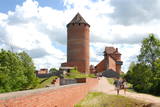 |
Before the stone Turaida Castle was built beginning in 1214, there was a wooden castle there that had been built by the Livs. The Turaida Castle was owned by the bishop of Rīga. It remained in place until 1776, when it burned down. The initial entrance to the castle's main tower was 9 m above ground, and in 1936, a viewing platform was installed at a height of 27 metres. There is no other view in Latvia that is like the one from the Turaida Castle! Restoration work at the castle began in 1953, when the upper level of the tower was restored and a roof was installed. Also restored was the former granary, which was home to an exhibition about the Sigulda region, along with the semi-circular tower and the southern segment of the castle complex, complete with the full reconstruction of its historical interior. Archaeological work was done around the castle between 1976 and 2001, and this led to the restoration of a large part of the complex. The castle now contains a museum exhibition related to the historical events of the surrounding area. The Turaida Castle is in the Turaida Museum Reserve (see above). |
|
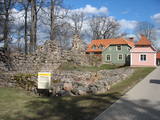 |
For the first time Valmiera is mentioned in the historical sources in 1323. Until the 13th century this place was in the composition of Talava, inhabited by Latgalians. Construction of Valmiera medieval castle began in the beginning of the 13th century, but in 1283, between the Gauja River and Rate River towered church. Location near to the Tartu-Pskov and Novgorod trade routes greatly facilitated the economic development of the populated area. During the 14th-16th century Valmiera was a part of the Hanseatic League. It suffered greatly from wars, epidemics and fires in 16th to 18th century. In the second half of the 19th century the economic boom started again. It was also facilitated by the building of wooden bridge across the Gauja in 1866 and Riga-Pskov railway opened in 1899. Historic centre is destroyed in 1944. During post-war years, large industrial companies such as - Valmiera glass fiber factory (to this day) are opeating in the town. Today, Valmiera is economic, educational and sports centre of Vidzeme. |
|
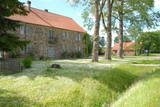 |
On the way to Turaida you must definitely stop at Gutmana cave. It is the widest (12 m) high (10 m) and in terms of volume - one of the biggest Latvian caves (cave like niche), which is also an important cultural and historical site, place rich with stories (most popular of Turaida Rose), surrounded by ancient walls and ceiling inscriptions (oldest from the end of 17th century). A spring originates from the cave; it is believed that it has healing properties. Turaida Museum reserve with Batlic scale outstanding monuments whose history stretches over 1000 years in the distant past is located at the point where the right mainland of Gauja valley is split by deep ravines of several small streams. Their exploration can be started with Turaida manor (first mentioned in 16th century), which is an outstanding example of Vidzeme manors. 21 buildings, built between the 18th century until the beginning 20th century are preserved until now. Visitors can see the manor stables, coach house, sauna, forge, fish cellar, barn, foreman house, the old residential buildings of landlord, and residential building of manor servants, oust house, etc. While walking in Turaida direction, we will reach the grave of Turaida Rose, which relates with the legend of Turaida Maija, who sacrificed her life for love. Near the grave grows a great linden tree (poor condition), wich is believed to be planted on the grave of Maija. Turaida Lutheran Church that lies further is the third church in a row and one of the oldest (1750) Latvian wooden churches – single volume wood log building with a baroque tower. Here you can see the altar and pulpit (Middle of the 18th century), altarpiece "Golgotha" (end of the 17th century – beginning of the 18th century) and historical exposition. Tautasdziesmu (folksongs) Park stretches at the Dainu Hill, the development of which started in 1985, noting the 150th anniversary of father of Latvian folk songs – Krisjanis Barons. More than 26 stone sculptures created by the sculptor I. Ranka are exhibited here. This is also a place of annual folklore events. Before the construction of Turaida stone castle (started in 1214), wooden Liv castle stood here. Turaida castle belonged to the Bishop. It existed for a long time - until to the 1776 when it was burned down. In 1953 an extensive restoration works was started here; upper storey of main tower, barn building (exposition on Sigulda district), semi-circular tower and castle complex in the southern enclosure was restored. Now the museum exhibition is established at the castle premises, which tells about the historical events in the surroundings. |
|
 |
This is a brewery in a lovely part of Lithuania known as Little Switzerland, surrounded by forests, lakes and castle hills. "Čizo" beer is light, unfiltered and alive, and it is produced on the basis of ancient traditions with forest bee honey. The brewer has not just a recipe, but also equipment so that he can offer a look at ancient methods of beer brewing. |
|
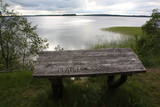 |
Nacionālā parka galvenā ainavas dominante. Ezers ir ~ 8,4 km garš un līdz 3,3 km plats. Tā austrumu krasti pārsvarā ir ar mežiem apauguši, ziemeļrietumu krasts – purvains, bet rietumu krastā parādās apdzīvotas sētas un simpātiskā Plateļu (Plateliai) pilsētiņa, kur meklējamas skaistākās skatu vietas. Ezera krastos ir labi attīstīta infrastruktūra - tūristu mītnes, ēdināšanas uzņēmumi (Plateļos), ūdenssporta un atpūtas inventāra noma. Ūdens dzidruma dēļ, Plateļu ezeru ir iecienījuši zemūdens niršanas entuziasti. Ezerā ir vairākas salas, no kurām interesanta ir Pils salas (Pilies sala), uz kuras no 15. – 16. gs. atradās muiža. Pastāv uzskats, ka senie Plateļu apkārtnes iedzīvotāji sākotnēji ir dzīvojuši uz salas, kuru ar krastu savienojis uz pāļiem celts tilts. Jāpiemin, ka 15 gs. pirmoreiz pieminētā Plateļu pilsētiņa atradusies uz Šventorkalņa (Šventorkalnis) kalna. Apkārt Plateļu ezeram ir izveidots ~ 24 km garš velomaršruts. Tā ir ļoti laba iespēja iepazīt parku videi un ceļotāja veselībai draudzīgā veidā. |
|
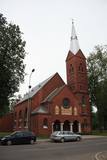 |
The church was built between 1932 and 1938 to replace an old Neo-Gothic wooden church. It was designed by J. Cīrulis. Until 1994, the building housed a venue that rented out films. Today it houses an exhibition, “From Foundations to the Steeple: Photographs of Ancient Lettigalian Construction Jobs.” This documents the construction of the church. The 37 metre steeple offers a good look at Rēzekne. |
|
 |
Eine Floßhauptstadt Lettlands mit dem jährlichen Flößerfest im Mai. |
|
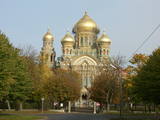 |
The city of wind, amber and musicians. In the literature sources Liepaja was mentioned for the first time in 1253. The city strived as a trade harbour already at the end of the 16th century. Especially important was the ruling period of Kurzeme Dukes Jacob and Friedrich, when the export and import of Lithuania and Kurzeme goods was provided through Liepaja harbour. Instead of the Līva River that was filled with dune sand a channel was excavated and wharf was formed. The growth of the city continued in the 18th century also after the Northern War and the plague epidemic. When in 1795 Kurzeme was added to the Russian Empire, as one of the most important western harbours of the Empire the harbour of Liepaja developed even more rapidly. From the end of the 18th century until the 19th century Liepaja also became a popular recreation place for the aristocrats of Petersburg. At the end of the 19th century the construction works of War Port and fortress begun. The city became a military strategic place. It suffered hard during World War II. In 1967 the sea trade harbour terminated its operation in Liepaja and Liepaja became a closed city where the War Port was "a city within a city". Today the War Port and its offer is one of the top tourism spots in Latvia. |
|
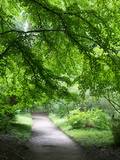 |
Established: 1931. The arboretum was set up at the suggestion of Latvia’s distinguished author Anna Brigadere. After her death and until 1935, the arboretum was supported and expanded by book publisher Jānis Rapa. There are some 180 foreign trees and shrubs of various kinds here. Some of the plants are outside the arboretum itself.
Unique plants: The Bunge’s Ash (Fraxinus chinensis), the Eastern Black Walnut (Juglans nigra), the American Buckeye (Aesculus glabra), the Smoketree (Cotinus coggyria), the White Mulberry (Morus Alba), and the Kentucky Yellowwood (Cladrastis kentukea).
|
|
 |
The farm boasts one of the most attractive gardens in Viljandi County and is a feast for the eye for both seasoned gardeners and nature lovers. A footpath takes visitors from the garden to the edge of Paistu primeval valley. |
|
 |
One of the buildings of the Kalnmuiža Estate has an oven in which the owner bakes rye bread with seeds, sourdough bread, and bread with dried fruit. Informational tours are available, and you can take part in the baking process. You can taste the bread and buy loaves to take home with you. |
|


