
| No | Name | Description |
|---|---|---|
 5 days
|
The Baltic Way was a unique demonstration at the Baltic, European and global level. Never before had the residents of three countries joined hands in a single chain to link the capital cities of the three nations – Vilnius, Rīga and Tallinn. The historical event occurred on the evening of August 23, 1989 and involved some two million people to recall events that had happened 50 years before – the conclusion of the Molotov-Ribbentrop Pact that allowed the two superpowers of the day, Germany and the USSR, to divide up spheres of influence in Europe before the new world war. The Baltic States lost their independence as a result of the pact. The chain of demonstrators was some 600 km long, marking out the Baltic Way from Bauska to Rīga and then on to Sigulda, Cēsis, Valmiera and Rūjiena. The route was known and used in the 14th and 15th century, or even earlier. Testimony to this is given by the mighty castle hill at Mežotne and the ancient port alongside it. The Bauska Castle was an important fort during the age of Livonia and, later, one of the residencies of the dukes of Courland. Sigulda was well fortified on the banks of the Gauja River, with three stone castles nearby. It was also a health spa. Līgatne is important in industrial terms because of the paper factory that is there. Āraiši is another ancient trade crossroad with a lake castle, ancient church, castle ruins and a famous windmill. Cēsis is one of the historical diamonds of Vidzeme with its old town, the old and new castle, and the majestic views of the ancient Gauja River valley at the cliffs of Ērgļi. Valmiera boasts of his St Simon’s Church, the Dāliņš stadium, its own theatre and the youthfulness of its own university college. In Rūjiena, there is a monument to the Bugler of Tālava, which was carved by Kārlis Zemdega and installed in 1937 to commemorate the liberation of Rūjiena. The monument survived all of the years after the war. The engraving, “the bugler had to die, but the Latvians heard his call,” is very much in line with the Baltic Way on August 23, 1989. |
|
 |
The bakery offers baked goods made of natural ingredients. It also offers salads, pizzas, cakes, ice cream and other treats. |
|
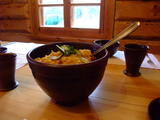 |
In Seto Tsäimaja, belonging to Setos Museum, you can enjoy dishes from earthenware made according to Setos traditions, listen to Setos songs and music instruments. |
|
 |
The "Pastnieka maja" restaurant is an old restored building in Old Liepāja. Legend has it that a postal carrier named Arvīds used to live there, and the building has been praised for its interior design. The menu offers an attractive look at the life of Arvīds, and it is up to you to believe or disbelieve those stories. Latvian cuisine: Cold soup, sorrel soup, oven-baked cod, catfish and plaice filet, grilled pork ribs, porridge with a bacon and onion sauce, potato pancakes, crepes, stacked rye bread. Special foods: Smoked cod with potatoes, onions and dill in a ceramic ramekin. |
|
 7 days
|
First the route goes to the birch juice and wine maker where you can taste this traditional and refreshing drink, then a goats farm where to taste various diary products and see the animals. Further on head to Sigulda with the Olympic Bobsled Track and three medieval castles located on the banks of the river Gauja - Sigulda, Turaida and Krimulda. There is also a good network of picturesque walking trails. Then explore historic village of Ligatne established around the Paper Mill and visit local craftmen located in one of the caves typical for the area. Cesis is charming town with mighty medieval castle ruins and New Castle. Visit hemp grower and try the hemp prepared traditional way. Enjoy Koni Mill where wool is processed with old fashioned machines and warm blankets are hand-made. Visit crafts studio at Staicele and try to spot the stork colony with more that 30 nests along the road. At Mazsalaca where there is a nature park with trails featuring beautiful steep sandbanks of the river Salaca. The river is also famous for its lampreys and further on the route you could see the weirs for traditional lamprey catching. At Saulkrasti walk the Dune trail and enjoy the beach. Further on visit cranberry swamps where you can taste healthy berry in some form depending of the season. Visit elegant Birini Manor with huge park and great restaurant and return to Riga. |
|
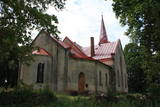 |
A bit less than one kilometre from the Aizkraukle castle hill, the church can be seen from the Rīga-Daugavpils highway (A6). The church was built in 1688 on the steep banks of the
|
|
 |
Saimniecība nodarbojas ar tīršķirnes trušu audzēšanu, papildus tam audzē arī dažādu šķirņu mājputnus. Saimniecībā var apskatīt trušus, mājputnus, eksotiskos putnus, murkšķus, aitas, kazas, pudurkzas un punduraitas. Visi dzīvnieki izvietoti divos norobežotos voljēros, kur nesteidzīgi var apskatīt dzīvniekus, uzdot interesējošos jautājumus saimniekam. Pēc pastaigas ir iespēja sarūpēt sev maltīti ugunskura vietā un atpūsties lapenē. |
|
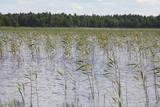 |
There is picnic area and information stand at the end of the forest path leading from Muiznieki to Klanu Bog. Klanu Lake was formed in the place of Littorina marine lagoon. Nature restricted area was established to protect biotopes in the area of Klanu, Dziru and Stavu Lakes. There is wide information about the area available on the information stand.
|
|
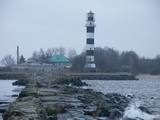 |
The Western breakwater was finished in 1885 and stretches 860 metres into the sea. Together with the Eastern breakwater it regulates the flow of water from the Daugava River into the sea, also reducing silt levels in the river. The structure of the breakwater is based on piles that are strengthened with rocks. The breakwater has been reconstructed and strengthened several times. During the 19th century, it held a prison for offenders. Approximately ½ of the breakwater has been restored with cement, but the rest of it is in fairly sad shape. Polish King Stefan Báthory ordered the construction of a lighthouse alongside the Daugava in 1528, and the first map to show a lighthouse was produced in 1536. A 1721 list of lighthouses in the Russian Empire notes a pile of rocks at the location upon which a fire was lit. Later there were wooden and stone towers that were destroyed during wars. The current Daugavgrīva lighthouse was built in 1957 and is 35 m high. Its light can be seen at a distance of 18 nautical miles. |
|
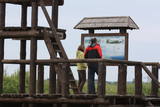 |
Reškutenu (Reškutėnai) ciema apkārtnē ir atjaunots neliels mitrājs, kura malā uzcelts putnu vērošanas tornis. Ja paveicas, pavasaros te var dzirdēt vai redzēt tādas retas un aizsargājamas putnu sugas kā ķikutu Gallinago media, ormanīti Porzana porzana, melnkakla dūkuri Podiceps nigricollis, griezi Crex crex u.c. Ciema ainava īpaši pievilcīga ir pieneņu un ābeļu ziedēšanas laikā. No putnu vērošanas torņa var redzēt vietas, kur akmens laikmetā dzīvojuši cilvēki. Blakus esošajā purvainajā pļavā bijis ezera līcis, kur tika būvēti ciemati līdzīgi kā Āraišu ezerpils gadījumā. |
|
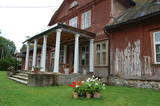 |
The mansion of Uue-Varbla Manor houses the local history museum which presents local life from the early 20th C and history of Varbla municipality. There is a handicraft workshop in the museum, while old tools and machinery are exhibited in the granary. The mansion in early Classicist style from 1797 is an attraction in itself. Traditional handicraft fairs are held in the grounds in July every summer. |
|
 |
This site features a folklore trail to explain the content of ancient writings, symbols and folk songs. Visitors can learn about the importance of plants in human health, sing songs and play games. On offer are various lifetime rituals, including baptism and so on). There are fire and sauna rituals and annual festivals. Register in advance for a traditional meal. |
|
 |
Angla Tuulikumägi (Windmill Hill) is the only site in Saaremaa which has retained its historical mill scenery with four post mills characteristic of the area and one Dutch-type mill. All windmills are open to visitors. |
|
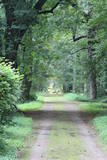 |
This is the oldest arboretum in Latvia. It was planned by the owner of the Skrīveri Estate, Maximmilian von Sievers (1857-1919). It has to be said that before World War I, there were two times more species of plants in the park than is the case now. The plants are grouped in accordance with the geo-botanic regions of the world. There are trails in the park, and signs showing the Latvian and Latin name of each plant are there, as well. There’s a fountain which is operated from every hour on the hour from 11:00 AM until 11:00 PM from Tuesday until Sunday. On the other side of the Rīga-Daugavpils highway is the Skrīveri Forest Park with hiking trails.
|
|
 5 days
|
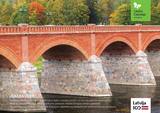
Duke Jacob of Courland was a ruler of the Duchy of Courland and Zemgale for 40 years (1642-1682). There were great changes during his rule, with the ship building industry developing rapidly, the first factories appearing, and agricultural output improving. The duke had a large fleet that brought grain, meat, butter, wool, timber and all that was manufactured at baronial estates in Zemgale and Courland to Western Europe. The fleet was so big and strong that its ships sailed not just to Europe, but also all the way to Tobago and Gambia, where colonies were established to bring sugar, coffee and spices to Europe. The duchy built ships, manufactured paper and saltpetre and wove textiles, brocade and tapestries. Iron manufacturing was highly developed, and ore was imported from Sweden. This made it possible to forge nails, anchors, bells, cannons and other firearms. The duchy produced vodka, vinegar and gunpowder for which there was great demand in Europe, because there were attacks and defences that required it. As much as 25 tonnes of gunpowder were produced each year. One of the gunpowder towers is still in Kandava, though it has been rebuilt many times. The duchy manufactured sails and ropes, as well as hemp ropes. It was said that the fleet of the Queen of England would not have existed without those ropes. The duke also thought about selection of grain, bred livestock, improved land with land reclamation and tried to expand output from his fields. Jacob did not manage to do everything that he wanted to do. A canal to avoid the Venta rapids was not finished, and plans such as the colonisation of Australia were not finished. Yet the era of Duke Jacob was a period of great change in the territory of Latvia, and it has not gone unnoticed that the great achievements of the duke occurred on a small plot of European land. That proves that wise management can ensure lots of progress. |
|
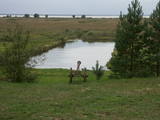 |
Along with the Nagļu ponds, these are Latvia’s largest fishing ponds. They were established on the flood-land peat areas of Lake Lubāns in the 1970s, when the hydrotechnical system of the lake was first established. The Lubāna-Gaigalava road bisects the Kvāpāni-Īdeņa ponds. There are three bird-watching towers on the dams of the ponds. The ponds are a major location for water bird nests, as well as places for migrating birds to rest. There are extensive bird-watching opportunities in the area.
|
|
 6 days
|
The Baltic Sea littoral on the West coast of Kurzeme is called the Great Wave Sea. The seacoast is mainly sandy. While the Great Wave Sea section is the least populated coastal area in Latvia, at the same time, the third biggest city in Latvia, Liepāja, is also located there. Steep bluffs rise before your eyes on the seacoast between Pāvilosta and Sārnate. The villages are quiet and sparsely populated. At the beginning of the route, you can see the Soviet military heritage in Liepāja Karosta Prison, taste smoked local fish in Pāvilosta and then enjoy one of the most beautiful views of the entire route to the seacoast from Užava lighthouse. The route closes in the port city of Ventspils, where there are various entertainment and sightseeing places, especially for families with children. |
|
 2 days
|
Это один из 6 маршрутов путешествий в серии «Насладитесь деревней!», который приглашает посетить «Дары села» – хозяйства и предприятия всевозможных видов и отраслей, которые открыты для посетителей и предлагают экскурсии, попробовать, осмотреть и приобрести свои изделия. Там можно увидеть домашних животных, современные сельские хозяйства, мастерские ремесленников, приобрести сельскохозяйственные продукты – хлеб, мед, домашнее вино и пиво, сыр, ягоды, фрукты, рыбу, мясо, овощи, чаи и другие, выращенные в деревне дары. По дороге можно отобедать в сельских корчмах. Примерное время прохождения маршрута: три - четыре дней, в зависимости от количества выбранных достопримечательностей и времени, отведенного для их осмотра. |
|
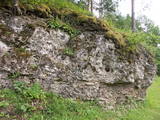 |
This is a segment of the Gauja River which is full of rapids in some places. It stretches from Vidaga and the place where the Vecpalsa River flows into the Gauja. Along the Gauja and its tributaries, dolomite outcrops can be seen on the shores, and the largest of these are the Randati cliffs. The restricted area was established mostly to protect various kinds of forests, meadows, outcrops and their habitats. This is an interesting part of the central section of the Gauja for people who enjoy beautiful landscapes and for those who are water tourists.
|
|
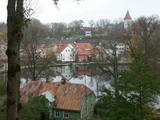 |
The historical centre of Talsi, which is known as the town of nine hillocks. The historical construction around Baznīckalns hill, Lake Talsi and Lake Vilkmuiža mostly dates back to the 19th century. Lielā Street is particularly beautiful with its low-rise buildings (two or three floors and ridged roofs). There are beautiful views from the area around Lake Talsi and Ķēniņkalns hill. |
|


