
| No | Name | Description |
|---|---|---|
 |
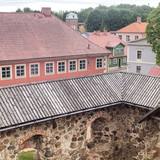
Die Ruinen der um 1500 gebauten eindrucksvollen Kirche, die man besichtigen kann. Das Gebäude wurde nach dem Luftangriff 1942 beschädigt. |
|
 |
It is believed that at the Kezberkalnins of Limbazi has been Lemisele castle of Metsepole Liv district. It is also found in the reports that merchants travelled to this place from the sea by Svētupe and Dunezers until the 16th century. In 1223 Bishop Albert built a stone castle in Limbazi. Like Valmiera, Limbazi became the member of Hanseatic League. At the beginning of 16th century it economic role declined significantly since Svētupe and Dunezers became unusable for shipping. Between the 16th and 18th centuries, the town and its people suffered from wars, diseases and fires. As a result, the population reached its utmost fall - eight people. In the turn of 19th and 20th century and in the beginning of 20th century the economic life of the town was renewed. |
|
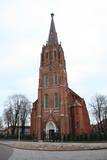 |
Находится в стороне от площади Куршу, ул. Э.Венденбаума, д. 1. Старейшая церковь города, сведения о которой сохранились с 1508 года. Первый храм на этом месте был построен из дерева. После неоднократных перестроек (последняя – в 1893 г. под руководством архитектора Лиепаи Пауля Макса Берчи) храм приобрел теперешний вид в неоготическом стиле с башней высотой около 60 м. Церковный интерьер славится одним из самых выдающихся шедевров времен барокко в Латвии – алтарем (резчик по дереву Николя Сефренс младший), который в 2012 году отметил свое 350-летие.Алтарь считается одной из самых выдающихся работ Восточной Европы того времени. Ретабло алтаря (5,8 x 9,7 м) известно тематическим циклом страданий Иисуса. В храме находится третий по величине орган Латвии, который построен по эскизам композитора и органиста Альфреда Калниньша. Церковь можно осмотреть изнутри и подняться на колокольню. |
|
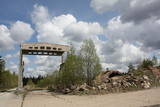 |
The ship and coast guard missile repair workshops in the forests around Bārta in the Liepāja District are very impressive in visual terms. The facility is owned by the regional local government and is being dismantled to obtain building materials.
|
|
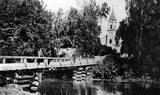 |
On the right bank of the River Pēterupe is one of the historical areas of Saulkrasti – Pēterupe Village. It is believed that the village began to form around a chapel during the so-called Swedish or Catholic times. The chapel was named after the Apostle St. Peter, and therefore the river and the village also carries his name. Pēterupe Village can be considered the oldest village in the Saulkrasti region. The oldest witnesses of the origin of Pēterupe Village are: Rectory, Pēterupe Evangelical Lutheran Church, Outpatient Clinic and the wooden buildings in the old village centre. |
|
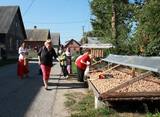 |
Kolkja, Kasepää and Varnja are another example of one-street villages of Old Believers who fled to Estonia from Russia in the 17th and 18th centuries. |
|
|
|
During the latter half of the 19th century, one of the largest ship building facilities was located here between the Dzeņi and Lielkalni homesteads. It was known as the Ķirbiži and then the Vitrupe shipyard, though nothing remains of it. 28 ships were built here between the 1860s and 1929. |
|
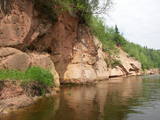 |
Eine der malerischen Sandsteinaufschüssen in Lettland. Die Länge beträgt ung. 500 m, die Höhe – 43 m. Gegenüber befindet sich die Ķūķu-Schnelle. |
|
|
|
Puderova Old-Believers Prayer House. The architectural monument of local importance was built in
the beginning of the 20th century.
|
|
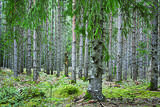 |
Kaziņmežs is a small area of forest to the East of the Cirste-Mazirbe road where
it intersects with the Kolka-Ventspils road. This is a fabled place. When we take the
Krustceļš route through Kaziņmežs, we arrive at the Kolka-Ventspils road (P 124).
|
|
 |
The farm offers educational programmes about the specifics of growing hemp, as well as about hemp products. During the programme, visitors are treated to products grown at the farm. |
|
 |
Baltijā lielākās HES celtniecību uzsāka 1961. g., bet pabeidza 1966. g. Tajā uzstādīto 10 hidroagregātu projektētā jauda bija 825 MW. Pļaviņu HES tiek uzskatīta par unikālu, jo pirmoreiz HES būvniecības praksē tā konstrukcija tika balstīta uz mālsmilts un smilšmālu gruntīm ar maksimālo spiedienaugstumu - 40 m! Pļaviņu HES ēka ir apvienota ar ūdens pārgāzi, zem kuras atrodas Latvijas garākais tunelis - Enerģētiķu iela. 20. gs. deviņdesmitajos gados Pļaviņu HES rekonstruēja un tagad tās jauda ir sasniegusi 870 MW. Apmeklētāji var iepazīt mašīnzāli, skatu laukumus un HES maketu. |
|
 |
Die dritlängste (in seiner Zeit auch eine der modernsten Brücken) Backsteinbrücke Europas (164 m), gebaut 1873 – 1874. |
|
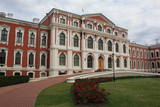 |
The Jelgava Castle stands between the Lielupe and Driksa rivers. The Baroque castle was designed by the well known Italian architect Francesco Bartolomeo Rastrelli, and this was the most important piece of early work that he did. The Latvian Agriculture University is housed in the castle today. A museum was established in 1968. +371-6300-5617. The socle story of the south-eastern wing has the graves of rulers from the Duchy of Courland – members of the Kettler and Byron dynasties, which ruled from 1569 to 1791. There are 18 restored sarcophagi here. |
|
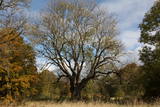 |
This is the thickest European Ash (Fraxius excelsior) in Latvia and the Baltic States. The homestead where the tree is found is the memorial museum of the painter Ģederts Eliass, and for that reason, the tree is sometimes also known as the Eliass ash tree.
|
|
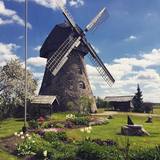 |
The windmill is on a hill and offers a lovely view. This is one of the few Dutch-type windmills (built in 1852) to still be in operational order, and guests can help to grind grain. On the last Sunday of every July, the windmill organises a celebration in honour of St Jacob and of bread baked from freshly harvested rye. Latvian cuisine: Miller’s lunch – wheat flour porridge with meat sauce, crepes, kefir, herbal teas. |
|
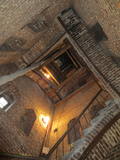 |
This is a unique example of industrial heritage – the only open munition factory in the Baltic States. It includes Europe’s oldest pellet pouring tower, and it is still used for that purpose today. Tours are available for those who contact the factory in advance, and a guide will lead groups through the factory, the tower and the museum. Today the factory manufactures nine types of bullets for smooth-barrel weapons, as well as bullets for pneumatic weapons. The products are exported to Germany and other countries. |
|
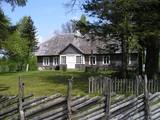 |
This museum was opened in 1991 at the birthplace of the aviator Stepon Darius. The house and granary have been restored, with exhibitions in both buildings. One speaks to the history of aviation in Lithuania and Darius' life, while the other shows ancient household objects. There is a campsite nearby where you can spend a longer period of time. |
|
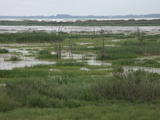 |
The Lake Lubāns depressions which are alongside the lake’s western and south-western parts feature little-changed forests and swamps, where many rare and protected birds nest. Many uncommon and protected habitats are in the region.
|
|
|
|
Biškopības produkti bioloģiskajā saimniecībā, informācija par biškopību un dabas aizsardzību. |
|


