
| No | Name | Description |
|---|---|---|
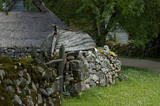 |
Koguva village on Muhu island is an outstanding example of peasant architecture in Estonia. Farmsteads with dry stone walls are protected as an architectural monument. The museum complex comprises a wealthy seaside farm Tooma (Juhan Smuul, an Estonian author, was born here) with all its outbuildings and tools, a former village school and a textile exhibition. |
|
 |
The restaurant is in the Grand Hall of the restored Liepupe Estate. Ancient cooking traditions are merged with modern culinary methods. The restaurant works with local farmers and grows greens and herbs in its own garden. Guests are welcome to help with preparing foods on a wood-fired stove in the antique kitchen. Latvian cuisine: Rye bread canapé, a plate of Latvian cheeses, country salad with greens, grilled seasonal vegetables, estate stock, local fish dishes, baked port chop, baked herb-crusted mutton. |
|
 |
The owner of the Russian farm (Vene talu) prepares delicious Russian national dishes according to her grandmother's recipes. Guests learn traditions and enjoy plenty of food. There is also a tea salon, and masterclasses for Russian cuisine. |
|
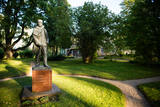 |
The memorial museum for Edvards Veidenbaums (1867-1892) was established at his homestead, “Kalači.” The great poet and translator lived there from the age of five and also died there. Alongside the museum is an exhibition hall that offers thematic exhibitions. A monument designed by the sculptor Laimonis Blumbergs is in the garden of the museum and was installed in 1961. There is also a granary in which Veidenbaums lived during the summer. The poet was buried in the local Liepa cemetery. |
|
 |
Rendā uz nelielās Abavas kreisā krasta pietekas Īvandes 200 m attālumā viens no otra izveidojušies divi ūdenskritumi jeb rumbas. Lielākais ir apmēram 2m, mazākais aptuveni 1,4 m augsts. Upītes krastos redzami nelieli dolomītu atsegumi.
|
|
 |
Aitu audzēšanas saimniecībā ir ap 300 aitām. Saimniecības un aitu apskate, konsultācijas aitu audzēšanā un ganāmpulka izkopšanā, praktiski padomi. Šķirnes aitu, gaļas jēru un vilnas iegāde. |
|
 7 days
|
From Riga airport the tour goes straight into countryside to Jaunmoku manor, surrounded by an attractive park. Next day, birding starts at Ķemeri National Park, including wet-forest areas and locations around Lake Kaņieris and Ķemeri village. Then the route follows the west coastof the Gulf of Riga with some small stops along the way and longer walks at Mērsrags. Next you spend some time at Cape Kolka and its surroundings which is a prime migration spot. Visitthebroad-leafforests of Slītere National Park around the ancient coast of the Baltic Ice Lake and drive through Užava floodplain fields, then stop at the westernmost point in the country, Akmeņrags. The tour continues to Liepaja and Pape Ornithological Station and lake where it is possible to spend a night watching the owl migration if it has started. Then we drive through Zvārte wooded area and make some stops at fish ponds on the way back to Riga. |
|
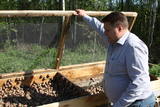 |
Here you will find an attractive and interesting story about Burgundy snails and how they are bred. You can tour the farm, receive valuable advice, taste Burgundy snails prepared on the basis of various recipes, and purchase semi-finished products. |
|
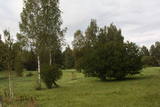 |
Work on the arboretum, which covers 15 hectares of land, began in 1968, and it was meant to be a landscape park. The first plants were planted in 1972. During the fierce winter of 1976, sadly, many of the plants froze. In 1987, the park was redesigned. At that time it had 234 types of deciduous trees, coniferous trees and bushes. There are signs showing the Latin and Latvian names of the various plants
|
|
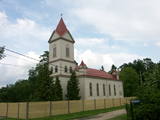 |
Located at 10 Sēravotu Street. The historicism style building is built from wood in 1889 and it is the newest of the three churches in Ķemeri. It is possible to see the church from the inside on the days of worship services. On other days-from the outside. |
|
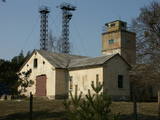 |
The Cape of Kolka is freely accessible to local residents and tourists today, but the border guard facility still serves its purposes and is not open to civilians.
|
|
 |
The workshop is in a farm, and the weaver produces blankets, carpeting, floor pathways, tablecloths, pillows, woven baskets, trays and souvenirs, as well as folk costumes on commission. She will be happy to show you her weaving and wicker-work skills. |
|
 |
The open-air pizzeria not far from Valmiera in Beverina district. It is an opportunity to spend time in the countryside, relax and take part in making real Italian pizza, where everyone has a chance to make a pizza according to one’s taste, baking it on open fire in a wooden stove. Available clear water and Italian wine, coffee and tea. Apart from pizzas, it is possible to buy tiramisu, having ordered it beforehand. |
|
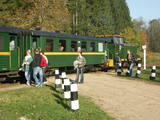 |
The narrow gauge rail line between Alūksne and Gulbene has tracks that are 750 mm wide and was once part of a rail line between Stukmaņi and Valka. Today it is the only passenger train on a narrow gauge railroad in Latvia, offering services every day. The Alūksne station was opened in 1903, and 33 km line with 10 stations and other stop scan be covered in approximately 90 minutes. A festival is held each year -- one that is very popular among fans of small trams. |
|
 12 days
|
The duration of this route is 9 days with an option to extend it for 12 days. The target audience for this route - independent travellers with transportation like bicycle and canoe boat. The total length sums up to ~ 446 km cycling and ~ 7 km canoeing. Itinerary: Rīga - Gauja National Park - Otepaa - River Ahja - Tartu - Lahemaa National Park - Tallinn. |
|
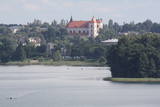 |
Pareizticība Traķu apkārtnē „ienāca” jau Lietuvas dižkunigaiša Ģedimina (Gediminas) valdīšanas laikā (1316. – 1341.). Līdz 18. gs. beigām no astoņām pareizticīgo baznīcām Traķos nebija saglabājusies neviena, tādēļ pareizticīgo draudze 1863. g. uzcēla jaunu baznīcu, kas saglabājusies līdz mūsdienām un apskatāma Vitauta ielā (Vytauto gatve) 32. |
|
 |
The owner of the farm was the first to grow bush blackberries in Latvia in 1996, and today he has whole fields of the berries. He sells berries and plants, offers tours with tastings and consultations, designs gardens, and prepares plans for greenery. |
|
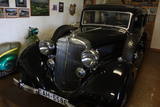 |
Pilsrundālē pa ceļam uz Rundāles pili var apmeklēt Retro auto kolekciju, kur apskatāmi 1939. g. automobiļi un dažādu laiku motocikli. Starp automobiļiem ir arī pasaulē šodien reti sastopami modeļi. Šī ir īstā vieta vēsturisko spēkratu cienītājiem! |
|
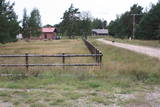 |
A long village stretching along both banks of the Lūžņa River. In 1937, there were 36 houses and two boat piers here. During the 1860s, ships were built here, but during the Soviet occupation, there were military bases there. During the 1930s, the village was visited several times by the Finnish linguist Lauri Ketunen and Estonian student Oskar Lorits. They were working on a Livonian dictionary. Another resident of Lūžņa was the first Livonian artist, Jānis Belte (1893-1946). The "Dēliņi" fisherman's homestead has been transferred to the Latvian Ethnographic Open-Air Museum and can be seen there. |
|
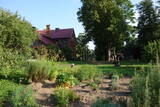 |
The village of Kaldabruņa in the Jēkabspils Adminitsration District has a former elementary school that is currently managed by the Ūdenszīmes organisation. The meadow museum exhibition is compared to a human life cycle, and visitors will see a Smilga exhibition, a childhood lighting objects, the Kadabruņa Māra belt in a hole in an oak tree, the Vārdnieki crown, the Pūra crown, and exhibitions of endangered and rare plants. The Kaldabruņa or Krievāni Māra belt is one of the greatest cultural and historical treasures in the administrative district because it is a unique ethnographic material. The belt is made of 52 ornaments, including 36 modified fire cross ornaments. Nothing of the sort can be seen in Latvian ethnography. The Stāmeriena wrap has 19 modifications of the fire cross, while the belt has blue and yellow ornaments, with red and green colours on its edges. At the end of the belt is a complicated weave of little pearls and fringes. Authentic copies of the belt have not been presented in public, and this unique material has also not been seen in the digital environment. The original belt was received by ethnographers in the late 19th century from Māra Krievāne from the Mačulāni homestead in Kaldabruņa. It is housed at the Latvian Museum of History, which also has the only known copy of the belt. Decoding of the ornaments can be found in a book about Latvian ornaments. The building that is managed by Ūdenszīmes also contains an unprecedented art venue -- the Šķūņa Art Gallery. Also of interest is a hay museum and the stories about the locations. |
|


