
| No | Name | Description |
|---|---|---|
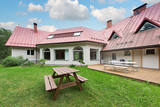 |
Conference and recreation center "Zvīguļi" is located in the territory of Gauja National Park, 10 km from Sigulda - with picturesque and untouched nature on one side and Sigulda highway (A2) on the other. From the inner courtyard there is a forest, from which, walking along a relief, nature-created and well-groomed path, you will reach the bank of the river Gauja in 15 minutes. It offers accommodation in rooms of different comfort or in a common room. There is a spacious and modern kitchen. The guest house also has a quadruple Finnish sauna. If necessary, catering will be provided by our partners. Active leisure opportunities nearby - toboggan run, bicycle rental, fishing, boating, quad and motorcycle track, horse riding. |
|
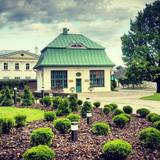 |
Located at Pils Street 25A in Alūksne, this is a building that was initially a trade pavilion and was built in the early 20th century. The Ernst Glück Bible Museum was established in 1990 as the only museum of its type in Latvia and the Baltic States. Glück (1652-1705) was a pastor and educator who was the first to translate the Bible into Latvian. The exhibition features various editions of the Bible from 1694 to the present day in 38 languages, along with books of sermons and other examples of Christian literature. |
|
 |
Here you will find some 30 types of birds and animals, including cranes, pheasants, swans, pygmy sheep, pygmy pigs, kangaroos, squirrels, etc. You can take a tour and learn about the animals, or walk through the garden on your own. You can also purchase rare and exotic plants from the farm’s garden. |
|
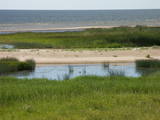 |
After a big storm in 2005, the nature trail of the Randu meadows was restored. It is about 4 km long, and there is a bird-watching tower which offers a fine view of unique shoreline meadows with small lagoons and areas of reeds. It is a fine place to watch migrating birds. This is part of the Northern Vidzeme Biosphere Reserve (ZBR).
|
|
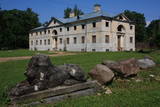 |
Muiža sāka veidoties 16. gs. beigās (īpašnieki - Tīzenhauzeni, vēlāk Bēri), bet no 1753. g. tā kļūst par Mēdemu dzimtas īpašumu. Tagad redzamo muižas pili (mūsdienās tikai atliekas) cēla 1806. - 1810. g. klasicisma stilā (Johana Georga Ādama Berlica projekts) pēc itāļu izcelsmes Pēterburgas galma arhitekta Džakomo Kvarengi meta. Muižas īpašnieks tajā laikā bija Johana Frīdriha Mēdema dēls - Kristofs Johans Frīdrihs (saukts par Žanno). Elejas pilī bija savākti daudzi nozīmīgi Eiropas mākslinieku darbi, kā arī iekārtots izcils interjers. 18 muižas kompleksa ēkas nodedzināja Pirmā pasaules kara laikā (1915. g.) un līdz mūsdienām ir saglabājušies tikai nelieli pils pirmā stāva drupu fragmenti ar kaltiem portika kolonu kapiteļiem, pārvaldnieka māja (apskatāma no ārpuses), atsevišķas saimniecības ēkas un parks. No pils drupām pa aleju var aiziet līdz Tējas namiņam (bēdīgā stāvoklī). 0,5 km ziemeļos no pils drupām atrodas 1912. g. izveidotā Mēdemu dzimtas kapsēta. Elejas pils mūra žoga arkādē iemūrēts dobumakmens. |
|
 1 day
|
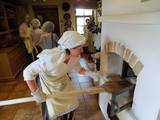
Since ancient times bread has been our staple food, and formed part of breakfast, lunch and our evening meal. We bake bread from rye, wheat, buckwheat and barley. Both fine-ground and wholemeal flour is used. Bread baking is one of the most honoured traditional skills in Latvia. Caunītes country house keeps Latvian traditions alive and demonstrates them to visitors. The house is designed and decorated in the traditional Latvian style and exudes an authentic ambience while having modern facilities. Under the guidance of the hostess, visitors will bake their own loaf of sweet-and-sour bread in a wood-fired bread oven. In Latvian families it was traditionally one of the main duties of the lady of the house to bake a week’s supply of bread for the whole family every Saturday morning. Every woman was proud of her own unique recipe and passed it down to her daughters and granddaughters through the generations. There are many traditional beliefs, sayings and riddles linked with bread in Latvian folklore. Today, there is great interest in the old recipes, bread-baking methods and the use of organic ingredients as many families are opting for a healthy lifestyle. |
|
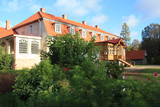 |
The oldest elements of the Oleri Estate date back to the 17th century. Initially there was a wooden mansion with an ancillary building. The new centre was built in the late 18th century in the style of Early Classicism. After agrarian reforms, the mansion housed an elementary school, and during the Soviet occupation and until the 1970s it was a school for children with mental disorders. The mansion suffered in a fire in 2000, after which it was restored. A local organisation was of great importance in this regard. The mansion is known for its Classicist paintings, with a unique “Painting Gallery.” The mansion is surrounded by a lovely park. The Oleri Estate is known for hosting chamber music concerts. The local Oleri swamp has a wooden pathway and a little viewing tower. |
|
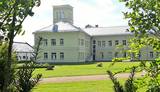 |
The Rietavas Park was once the largest landscape park in Lithuania. It was established between 1848 and 1855 in a naturally cleaned forest and reconstructed in 1904 and 1905. This is a very nice park with local bushes and trees, as well as several foreign plants. Various alleys of trees and fragments of the hedges have been preserved along with the white gate, the red gate and a guard's hut. The park has a complex system of bodies of water, including a few ponds, a curvy river and an island that is surrounded by the old river. |
|
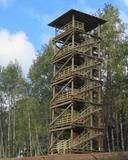 |
Atrodas Numerenes dabas parka teritorijā. 20 m augstais tornis uzbūvēts uz t.s. Numerenes vaļņa, no kura paveras plaša ainava un aizaugošām lauksaimniecības zemēm un nelielu mitrāju ar Kugreņa ezeru austrumu virzienā. Torņa apkaimē izveidota izziņas taka. |
|
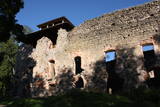 |
The ruins of the Rauna castle (which was built in 1262 and was a main residence of the Livonian archbishop) have a modern viewing tower which offers a view of the impressive castle walls, the place where the former Medieval city was located, and the centre of Rauna. The local government office has the keys to the tower.
|
|
 |
A unique theme park on the River Pirita evokes interest in ancient Vikings. Facilities include: stronghold, chamber of spells, smithy, Viking boat and dugout canoe trips, shows and battles with ancient weapons, a catapult, archery, axe throwing, cave and smoke saunas, trout fishing, accommodation, catering etc. |
|
 |
Farm is located ~1 km to the north of Puikule near to the former Limbazi railway, in the territory of North Vidzeme Biosphere Reserve. The farm breeds sheep of the Latvian dark-head breed from which wool, hats, scarves, souvenirs etc. are made by felting. They can be purchased in the farm. Sheep graze in nearby meadows, thus promoting plant diversity in the area. About the role of pets in maintaining biodiversity can also be read on the bench in the yard. In the barn house is a collection of household items. Visitors can take a guided tour and buy souvenirs. |
|
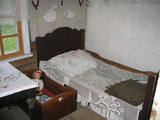 |
The main building of the museum features an early 19th C. threshing barn with a dirt floor, the living quarters were added in the late 19th C. The museum also exhibits a smoke sauna, summer kitchen, granary, cellar, coach house and a dining house (formerly a cattle shed). All buildings have a display of tools and everyday commodities, traditional farm food can be booked in advance and handicraft workshops are available. |
|
 |
One of the oldest towns in Latvia, about which data can be found already beginning from 1378. As a populated area it formed at the banks of the Tebra River (the side of Riga-Prussia road), where once the fortified wooden castle Beida of the Cours Land Bandava was located. In the medieval times Aizpute was the centre of Kurzeme bishopric. After joining Kurzeme to Russia in 1795, Jews settled for living in Aizpute. Today travellers in Aizpute are most attracted by the ancient city environment that is still alive here, as well as by the historical centre of the city and the castle ruins. |
|
 |
This medieval saloon is a true Middle Ages saloon situated on the premises of the Ventspils Castle of the Livonian Order, next to which the river Venta flows. The saloon is thoughtfully incorporated in the castle ensemble, the interior design and the foods that are served create a true feeling of the Middle Ages. Latvian cuisine: Mutton soup, roast mutton, plaice filet, herring en papillote, homemade wines. |
|
 |
The National Selection Station at Stende was established in 1922 and is in the Lībaga Parish of the Talsi District – the Dižstende farm. The station conducts scientific work related to grain selection, cattle farming and other conventional and biological types of farming. Visitors can taste grain products that are produced at the facility.
|
|
|
|
Находится в 2,5 км к северу от Круте. Небольшое здание из деревянных бревен с дощатой обшивкой первоначально было построено в 1642 году, а кирпичная башня восстановлена после Второй мировой войны. Интерьер церкви – алтарь (вторая половина XVII века), алтарная икона неизвестного автора «Иисус у креста» (XVII в.) и богато орнаментированная кафедра (1642 г.) являются важными памятниками времен маньеризма. |
|
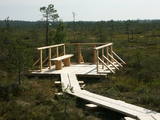 |
At the end of a wooden footpath in the Planči swamp is a viewing area and place for leisure. This is the place where you can enjoy landscapes of the high-type swamp and breathe the unusual air of the swamp. This is the only outdoor infrastructure object in Latvia with information posted in Braille. It is in the ZBR.
|
|
 1 day
|
Dodieties ekskursijā, lai gūtu ieskatu lauku profesijā un dzīvesveidā, kā arī iegūtu jaunus iespaidus un labu atpūtu visai klasei. Ekskursijas laikā apmeklējiet etnogrāfisku ciematu un muzeju, kurā var iepazīt vecticībnieku kultūrvidi un tradīcijas. Pēc tam apmeklējiet saimniecību, lai uzzinātu par dažādiem ārstniecības augiem un degustētu tējas. Ekskursijas noslēgumā dodieties uz zirgu sētu, kur var iepazīt saimniecību, tās galvenos iemītniekus - zirgus, kā arī izstaigāt dabas taku. |
|
 |
Piesta Kuusikaru farm is located in Vändra forest, Pärnumaa. We invite everyone who would like to know how this family decided to create their own farm in the countryside and started to make wonderfully delicious products from apples. At the farm you can taste all the products and buy all your favourites to take away. A great place to relax with your family. |
|


