
| No | Name | Description |
|---|---|---|
 |
The Ukri forest on the border of the Dobele district is what is known as a vast forest. It has oak trees (including many huge ones), linden trees, oak trees (large stands of oak are uncommon in Latvia), and other deciduous trees. A small area of the forest can be toured in the company of a guide to look at the animals of the area and their importance in the flow of nature. The restricted area protects forest habitats, plants and animals, including many that are typical of the southern areas of Latvia. |
|
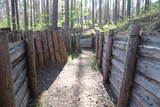 |
Ar Kara muzeja informatīvo atbalstu Garā kāpā pie Antiņiem ir rekonstruēta daļa latviešu strēlnieku nocietinājumu sistēmas. Aspkatāmas ierakumu pozīcijas un vairākas zemnīcas. Netālu atrodas bijusī un no dzelzsbetona veidotā medikamentu glabātuve. |
|
 |
Võrumaa’s first small beer brewery produces a delicious beer that has specially conquered the hearts of the people of Southern Estonia. Every now and then we are also preparing Yevgeny water. |
|
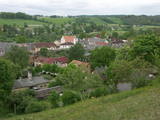 |
The Wine Hill of Sabile has been known since the age of the Duchy of Courland as the northernmost place where grapes were grown to produce more or less sour wine for the duchy. A wine festival has been held each year during the latter half of July in Sabile since 1999. The hill offers an excellent view of the small town that is on the banks of the ancient Abava River Valley. |
|
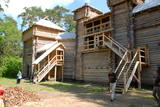 |
This is the largest exhibition in the Baltic States to feature the Semigalian material culture during the Iron Age. There is a wealth of ornamentations, weapons and household objects, including the largest collection of swords in the Baltic States. The exhibition is housed in the rebuilt defensive rooms of the wooden castle of Tērvete which existed here in the 12th century. During the second weekend of each August, there is an international Semigalian festival which is the largest Medieval festival in the Baltic States. |
|
 6 days
|
On this trip you will encounter a rich blend of wetland, woodland and coastal habitats, when almost all the species have arrived and some passage migrants still remain, with the possibility to see around 200 different species. Birdwatching starts in the Gauja National Park with beautiful rolling relief, then goes to the eastern edge of the Gulf of Riga and Lake Burtnieks where there is also the chance of night trekking on the flood plains. Seda bog with its reed beds and flood plains is rich in wildlife. Next day canoeing along the Gauja river will offer a different viewpoint to see the birds, plus with luck some beaver and other wild fauna. Then you pass through oak forest to Lake Lubans. Its wetlands and fish ponds form one of the prime birdwatching sites in the country. A local speciality - fish-soup - will keep you warm. The site is also one of the first known stone-age settlements in Latvian territory. On the way back to Riga there is a stop at Garkalne pine forest. |
|
 |
Die kleinste und eine der reichtesten Kirchen Nordeuropas im Sinne der Zierelemente. Seit dem Bau im 14. Jh ist äußerlich kaum verändert worden. |
|
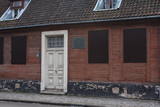 |
Находится на ул. Кунгу, д. 24.Одно из старейших зданий города - деревянный сруб с черепичной крышей, построенный во второй половине XVII века и прозванный в народе гостиницей мадам Хойер. Здесь в 1697 году во время путешествия «Великого посольства» в западную Европу останавливался (инкогнито) русский царь Петр I. Находящееся по соседству здание на ул. Кунгу, д. 26, является вторым старейшим жилым зданием Лиепаи (1699 г.) – жилой дом бургомистра города. Во время Северной войны здесь останавливался король Швеции Карл XII. Оба здания подлежат осмотру только снаружи. |
|
 |
The farmstead Riveni specializes in fruitgrowing and the products of reprocessing those – dried apples, apple juice. |
|
 |
A tea house in Alsunga that offers to taste delicious herbal teas and home-baked cakes, as well as enjoy cultural events and a truly unique traditional Latvian herbal tea ceremony. |
|
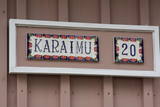 |
Die zentrale und auch schönste Straße in Trakai mit bunten Holzhäusern. Eins der seltenen Kenesa-Gebetshäuser der Welt – ein eingeschossiges Holzhaus mit einem bläulichen Dach. |
|
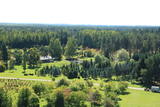 |
This arboretum is in a lovely location in the Vidzeme highlands. It covers 140 hectares of land and offers a look at interesting coniferous trees, lianas, lilacs, rhododendrons and peonies. The facility has a modern visitor information centres.
Unique species: The Tulip Tree (Liriodendron tulipifera), the Fringe Tree (Chionanthus virginicus), and the Kobushi Magnolia (Magnolia kobus).
|
|
|
|
Taka ap Ozolu Mazezeru. Purvaino krastu posmā, ap ezera rietumu galu, ierīkotas gājēju laipas. Novērojami purva, meža un ezera augi, dzīvnieki un biotopi. Jūlija beigās īpaši krāšņi zied ūdensrozes. Blakus atrodas Ozolmuiža ar parku.
|
|
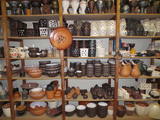 |
This old brickmaking kiln is used to prepare clay that is used by many ceramics artists. The owners also produce handmade household and design objects. Tours are available with attractive stories and creative workshops. Individual orders are also accepted. |
|
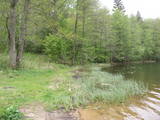 |
The most important aspect of the Sasaļi forest is the eutrophic Lake Sasalis, as well as the unusual Lake Melnezers. Also of importance are various types of forestland in the area. Lake Sasalis is a popular place for leisure and swimming.
|
|
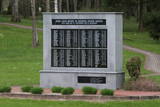 |
Late in September 1944, during World War II, the village of More was witness to some of the bloodiest and most merciless battles in Latvia – only those in the so-called “cauldron of Kurzeme” were worse. Members of the Latvian Legion who were fighting on the German side prevented the ability of the Red Army to break through to Rīga, and they also prevented the encirclement of the German military force. The result of the battle was enormously important to the more than 100,000 civilians who took the opportunity to become refugees and escape the Soviet repressions that were not far in the future. Commemorative events are held in the park each September, bringing together eyewitnesses to the battles and other. There’s a memorial wall with the engraved names of members of the Latvian Legion whose names are known, as well as a stone cross to commemorate unknown soldiers. Two kilometres to the East of the park is a museum, outside which is a Soviet army tank.
|
|
 1 day
|
Dodieties ekskursijā, lai gūtu ieskatu lauku profesijā un dzīvesveidā, kā arī iegūtu jaunus iespaidus un labu atpūtu visai klasei. Ekskursijas laikā apmeklējiet ekopoligonu, kas ir unikāls piemērs ekoloģiski saderīgu darbības virzienu ieviešanai. Pēc tam apmeklējiet saimniecību, kurā iespējams aplūkot Latvijas tumšgalves aitas, uzzināt par to audzēšanas specifiku, dzīves paradumiem un aitkopības nozari Latvijā, kā arī iespējams aplūkot dažādus putnus - tītarus, zosis, pīles, vistas un pērļu vistas. Saimniecībā atrodas arī observatorija, kur var noklausīties lekciju par zvaigznēm, planētām un citām tēmām. Ekskursijas noslēgumā dodieties uz kokapstrādes darbnīcu, lai meistaru vadībā darbotos ar tradicionālajiem kokapstrādes instrumentiem un apgūtu senās spēles. |
|
 |
Latvian blackhead sheep are in a clean environment at the Ances farm, which is in the Northern Vidzeme Biosphere Reserve near the border with Estonia. It is in the Naukšēni Parish, where chemical plant protection substances and mineral fertilisers have never been used intensively. The sheep roam freely during the winter and summer, with fencing to protect them against wolves and wild boar. The farm only uses female sheep born as twins or triplets, including animals for genetic resources. All of the sheep come from German blackhead sheep and are only mated with high-quality LT rams in January, February, August and September. |
|
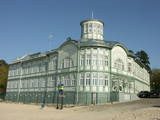 |
Jurmala town (the second largest in Latvia) was founded in 1959, by combining Kemeri and Sloka towns in the Riga city Jurmala district. It stretches 32 km along the coastal line of Gulf of Riga. Jurmala resort once was one of the most important objects of this type in the Northern Europe. This was facilitated by the development of local and interstate transport and traffic (coaches, steamers, train). The first guests was accommodated in Dubulti, where in 1834 the first hotel was built, but in 1847 - The first wellness centre. In the 19th the first medical institution launched. Starting from 1834 the rapid construction of summer cottages began. Development of the resort was ended by the World War I. After the war the number of resort vacationers boomed from 12 thousand (in 1920) to 32 thousand (in 1935). Kemeri resort developed along with Jurmala, which received a massive of vacationers' amount during the Soviet period. |
|
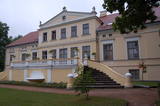 |
The residential building of the manor house was built in the 19th century. In 1932, so neglected manor house was bought by the Latvian press king A. Benjamiņš. Nowadays, the manor house is owned by the Benjamiņi family again and there is located a photo exposition of the private life and travels of A. Benjamiņš. |
|


