
| No | Name | Description |
|---|---|---|
 |
~6,000, including nearly 300 types of dahlias, 120 types of azaleas, and 100 types of outdoor rhododendrons.
The conservatories of the botanic gardens contain various exotic and tropical plants and fruit trees, including lemon, banana, pineapple, fig, olive, avocado and coffee bean plants. There is a broad collection of cacti, as well as the largest collection of palm trees in Latvia. Outdoors, there are lots of winter-resistant plants, medicinal plants, and poisonous plants. The plants are arranged in systematic groups – something which is typical only of the botanic gardens of universities. This is the only place in Latvia where you can see so many flowering magnolias in a single place in the spring.
Outdoors you will find the Sweet Chestnut (Castanea sativa), the Gingko (Ginkgo biloba), the Dawn Redwood (Metasequoia glyptostroboides), the White Mulberry (Morus alba), and the Common Walnut (Juglans regia). The conservatories include several types of the highland tamarin (Araucaria bidwillii and A. heterophylla), the Wollemia Pine (Wollemia nobilis), the Moreton Bay Fig (Ficus macrophlla), the Water Lily (Victoria regia), etc.
|
|
 |
The farm offers educational programmes about the specifics of growing hemp, as well as about hemp products. During the programme, visitors are treated to products grown at the farm. |
|
.JPG?size=160) |
The saloon is the Latvian Open-Air Ethnographic Museum. It is an historical saloon that was transported to the museum from Vecumnieki, preserving the smokestack, bread oven, etc. Dining can be accompanied with demonstration of crafts and performances by local musical groups. Latvian weddings are organised here, as well. Latvian cuisine: Sprat sandwiches, lampreys, stuffed pike, a dish of three types of onions, bull testicles in a creamy sauce, grilled piglet, homemade country bread, soup cooked on a campfire, pancakes. Special foods: Priede saloon roast in loganberry marinade. |
|
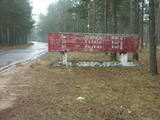 |
This facility is used for military and tactical training at this time. The facility can be used for automobile and motorcycle racing, testing drives, and security training, all of which must be arranged in advance. The surrounding nature reserve offers a chance to look at local plants and animals.
|
|
 |
The Livonian Order built a castle made of bricks and fieldstones in this location in 1253. The building measured 72 x 40 metres and had a three-story residential area and a gate tower at its centre. An entrance for soldiers was installed at the height of the second floor of the fortified wall during the 14th century, with barriers and four bastions installed during the 16th and 17th century. Legend has it that the daughter of a knight was bricked into the wall and that there was once a secret underground passage to the Lutheran church that is 200 metres away. The park includes the “Ancient Seashore” promenade, featuring plaques with quotes from Zenta Mauriņa and Jānis Rainis. |
|
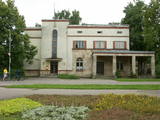 |
The building was erected during the first period of Latvian independence, and it maintained its functions for a long time. The building is located at Tukuma Street 30. Beginning in 1940, the post office had an automated telephone central. The Postal Service no longer uses it, and the building can only be viewed from the outside. |
|
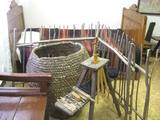 |
Local History Museum of Nautrēni. Permanent exposition of the
local history of the district, school and parish.
Working hours: on request |
|
 2 days
|
Here you will learn about home-based manufacturers, farms, companies and others in Kurzeme that produce various dairy products such as milk, yogurt, cottage cheese, cheese, ice cream, etc. Begin in Tukums, which offers lots of interesting foods and beverages. Then cross the ancient Abava River valley, which is one of the most beautiful river valleys in Latvia. The route leads to Wine Hill in Sabile and then Talsi, the “city of nine hillocks.” Further on you will find Dundaga and its legendary castle, pass through large and lonely forests on your way to Ventspils, and then continue along the shore of the Baltic sea to Medze. From there, travel back into the centre of Kurzeme, through Aizpute and Kazdanga, which is known for its own castle. Visit Latvia’s first shiitake mushroom farm at Garīkas, the Milk Estate and the Milk Museum. Further on will be Saldus with its tasty treats, then Džūkste, and then back to Tukums, where we started. |
|
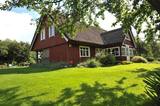 |
This guesthouse is on Rusen Island near the shore of the Pakalne River. The owners collect plants, process them in accordance with folk recipes, and then offer various teas, infusions and other beverages that have medicinal properties to improve people's moods and their tonus. |
|
 |
Izteiksmīgs zemesrags, kas klāts ar
dažāda lieluma laukakmeņiem.
|
|
 |
A place to enjoy the architecture of Cēsis and a northern-inspired meal. The chef's creative work includes popular Nordic products such as trout, elk and venison meat, chanterelles, wild berries, and smoked flavours, as well as dishes from international cuisine. |
|
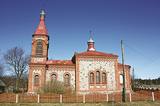 |
Was mentioned in 1387, where it was called Domesnes. That was the name until the early 20th century. A ledger at the Irbe-Ģipka church states that there were four farms in Kolka in 1770 -- Krogi, Ūši, Vecvagari and Kabriki. In 1844, a school for vergers was established, and Nika Polmanis worked there as a teacher. Kolka's first school was built in 1881, and Livonian Kārlis Bernšteins (1881-1951) worked there for nearly half a century as a teacher. The Dundaga riots that began in 1859 were led by Livonian Nika Šūbergs (1833-1884), the son of the owner of the Sārnasti farm. At the end of the 19th century, there were 392 residents in Kolka, and in 1935, 145 of the 343 residents were Livonians. During the mid-1980s, 13 Livonians spoke their language freely. Kolka is the only coastal Livonian village that continued to develop during the frontier regime of the Soviet Union, because it was the centre of a fishing kolkhoz. The number of residents increased rapidly in the 1950s and 1960s because new homes, a school, a people's centre, a kindergarten and several fish processing factories were built there. Today Kolka has 700 residents and is the largest village along the Livonian coastline. The "Līcis-93" fish processing factory is there, and local fishermen and smokers of fish work in the village. The Kūolka Livonian Centre and the Livonian ensemble Laula operate there, as well. The Ūši farm offers tastings of Livonian foods. |
|
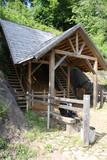 |
The park was established to protect the Venta River valley and the landscapes that are around its tributaries. On the west bank of the Venta, at Papilė, there is a cliff from the Jurassic period which is unique in the Baltic States, has been known since 1925, and has layers in which more than 300 forms of life have been identified over the course of time.
|
|
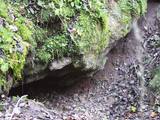 |
The castle hill of Rasnupļi (Opiņķi) is a significant place on the foot of the hill inhabited by ancient Latgalians.
You will notice Velna ala (Devil’s cave) also called small Staburags of Latgale (ancient cult place)
in the right side of the Vīce river. It is a small natural geologically unique formation (length – 3m, width –
2m, high – 0,6m). There are only two such caves in Latvia. There are 5 – 6 m long stalactites.
|
|
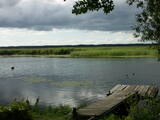 |
This is a large set of coastal meadows, ancient rivers and areas of reeds. It is found at a location where the Daugava River used to flow – between Vecmīlgrāvis and Vecāķi. There are inland dune meadows here, complete with the very rare silver grass. Vecdaugava is an important location for nesting birds and several uncommon plant species. On the southern end of the Vecdaugava peninsula, at a place called Skanstnieki, one can find remnants of medieval Swedish fortifications. The Vecdaugava Regional Research and Fishing Museum is here, as well.
|
|
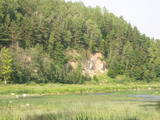 |
One of the most beautiful areas along the Venta River and its tributary, the Šķērvelis River. The river valleys and gullies along them are quite deep, and dolomite and sandstone cliffs can be spotted here and there. There are also rapids on the river. The largest cliffs in Kurzeme – the Ātraiskalns and Gobdziņi cliffs – can be seen on the banks of the Venta. The Lēni Catholic Church is near the restricted area. There are no tourist elements in the restricted territory at this time. The Venta is a popular destination for water tourists, however, from Nīgrande to Kuldīga. |
|
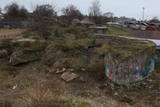 |
On the shore of the Daugava River, to the East of Lielupes Street and South-east of Jātnieku Street, there are the remnants of four battery positions that were blown up in their day. The batteries had 152-mm cannons, and this was part of the former system of fortifications in Rīga (see also Komētforts, the Daugavgrīva fortress, and the fortifications of Mangaļsala). The aim was to protect the city from invaders who came from the sea. From the top of the batteries you can see the Daugava and the northern segment of the manmade Krievu Island (a huge pile of sand). It does have to be said that the condition of this historical monument is quite pitiful.
|
|
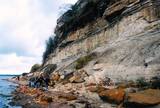 |
This cliff is made of sandstone (its lower part) and limestone (the upper part). It is up to 30 m high, and it is part of the Northern Estonian set of cliffs along the shore of the Bay of Finland. This is a popular tourism destination and viewing location. Recommended Hike along the bottom of the cliff (a rocky beach) in one direction, and then along the top of the cliff to get back (~2 km). From the top of the cliff, you can see a broad segment of the shoreline territory, all the way to Tallinn.
|
|
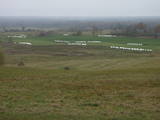 |
Elka Hill is one of the highest surfaces in the western part of the Vidzeme highlands, and it offers a lovely and broad view to the North. There is a small parking lot, a TV and radio tower, and the place where the Gauja River is thought to originate.
|
|
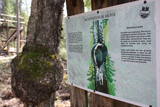 |
1,7 km gara lokveida taka, kas iepazīstina ar dažādiem meža biotopiem, to iemītniekiem un meža apsaimniekošanas pamatprincipiem. Apmeklētāju ērtības nolūkā ir izveidotas koka laipas un neliels skatu tornis. |
|


