
| No | Name | Description |
|---|---|---|
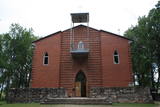 |
The first church in Vecpiebalga was built in 1345, and the next one was built between 1839 and 1845 by the Livonian builder Mārcis Sārums. The church was destroyed in 1944 and restored between 1995 and 1997 (architect Ausma Skumiņa). The altar painting is titled “Christ Walking in the Land of Piebalga.” Outside the church is a rock to commemorate those who suffered from political repressions in Latvia. |
|
 |
The Alejas bakery and guest house is located 0.5 km from the centre of Rucava. The bread here is made with natural sourdough and baked in a wood oven. Various types of rye bread (ordinary rye bread, sweet and sour rye bread with or without other ingredients, rye bread with fruit, etc.), rye bread and garlic croutons, and various types of white bread. By prior arrangement it is possible to buy bread to take home. |
|
 |
Jaanihanso Cider House makes cider from natural Estonian apples. Here there is a special technique applied to making the cider – the cider clears and matures as same as the best champagne in the world does. Here it’s possible to try different ciders and for additional fee, snacks to with it, as well as take a tour around the Cider House. In this case, registering one week in advance is necessary. |
|
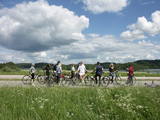 |
This park is found in the Otepää highlands and offers an outstanding example of how the terrain of a protected natural territory can be used for recreation, sports and active leisure. The infrastructure of the park is perfect for such activities and is of a high level of quality.
|
|
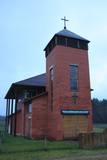 |
Atrodas 2,5 km no Bārtas centra, Bārtas upes labajā krastā. Mūsdienīgais dievnams tapis 2002. gadā (arhitekte: A. Siliņa). |
|
 5 days
|
The historical route from Rīga to Liepāja passes through Dobele, Saldus, Skrunda, Durbe and Grobiņa, and it dates back to the 13th century. Remnants of Scandinavian settlements near Grobiņa also testify to the antiquity of the region. Many things happened on the road and around it that were directly linked to the establishment of the Republic of Latvia and to its subsequent freedom battles. At the Tīreļpurvs swamp, Latvian riflemen demonstrated their battel capabilities and heroism during the so-called Christmas battles, thus proving that a new country had been born. The trails of the swamp are open to visitors, and there is an historical exhibition at the Mangaļi homestead. Rīga is clearly marked along this route by the Latvian National Theatre, where independence was proclaimed in 1918. Later the hostile attack of Bermont’s forces was stopped at the banks of the Daugava, and the superior force was ejected from Rīga and Latvia. Approximately 70 km from Rīga is the Pikšas museum, which is the birthplace of Latvian President Kārlis Ulmanis and a good example of farming between the two world wars. The museum of Colonel Oskars Kalpaks at Airītes offers a look at battles that occurred in the region and at things that Kalpaks did during World War I and the subsequent liberation battles. There were battles near Skrunda and Saldus, and it was in Liepāja that German General von der Goltz conducted a coup that led Latvia’s temporary government to seek refuge on the ship the Saratov, upon which it sailed to Rīga after the city’s liberation. Liepāja has always been an important port, and once it offered passenger services all the way to New York. |
|
 |
Die nach dem Bau der Straße Tallinn – Narva gefundene und rekonstruierte 36 alte Bestattungen (8. – 7. Jh. vor Christus) ist ein interessantes archiologisches Denkmal mit einem Besucherzentrum und einer geschichtlichen Ausstellung. |
|
 |
This is a farm of pedigree rabbits (11 breeds, ~200 rabbits). You can go on a tour of the farm and receive consultations on the breeding and selection of rabbits. You can also buy pedigreed rabbits for yourself. |
|
 |
Die zentrale und auch schönste Straße in Trakai mit bunten Holzhäusern. Eins der seltenen Kenesa-Gebetshäuser der Welt – ein eingeschossiges Holzhaus mit einem bläulichen Dach. |
|
 2 days
|
Маршрут походит для любого путешественника, желающего насладиться красотой природы и средой Северного Курземе, где, кроме водных туристов, нет других людей. Ирбе за короткое время стала популярной рекой благодаря красивым береговым ландшафтам. Мест для ночлега здесь нет, поэтому необходимо взять с собой палатку и заночевать на какой-нибудь стоянке для водных туристов. Информация о маршруте от Latvijas Lauku forums |
|
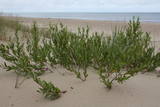 |
The territory is established in order to protect the dunes and the seashore habitats. There are beautiful beaches and wooded dunes, and the paved Klaipēda–Palanga bikeway trails through the park, which is worth travelling at full length. |
|
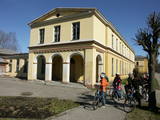 |
Kemeri (Kemmer) are mentioned in the literature sources for the first time in 1561. In the second half of the 18th century and in the beginning of the 19th century the curative properties of Kemeri sulphur spring waters and swamp mud are well known, therefore here representatives of the highest Kurzeme social circles arrive for treatment. The local foresters welcome the guests. During this time the first mud baths are organised. For some time the development of Jurmala and Kemeri beach is terminated by the Fatherland War of 1812. Two decades later – from 1833 until 1835 the benefits of Kemeri were enjoyed by General Governor of the Baltics Graf K. M. Palen, who addresses the Tsar of Russia Nicholas I for supporting further development of the health resort. Plead is supported and in 1836 Tsar allocates 700 ha of state land and grants 100 000 roubles for the construction of sanatorium and paving of the road from Kemeri till Sloka-Tukums high-way. Two years later (in 1938) the first state bath institution is opened. This is also considered the year of founding the health resort. In several stages the formation of Kemeri Landscape Park is begun, which is an important part of the health resort. In the middle and second half of the 19th century further development of the health resort is promoted by steamboat, as well as railroad traffic that are opened in 1877 from Riga till Tukums. In 1912 direct railroad line Kemeri-Moscow is opened. Early before World War I the number of patients reaches 8300 per year. The 1st battlefront of World War I is held in Kemeri swamp for several years and the health resort is significantly destroyed. Despite this fact after the war it develops rapidly and Kemeri becomes a beloved recreation place for the residents of Riga and one of the most modern health resorts in Europe. In 1924 a new bath institution with mud-baths is built in Kemeri, which at the time is one of the most modern in Europe, but in 1936 State President Kārlis Ulmanis opens one of the most prominent buildings of the first independent state of Latvia period – hotel "Ķemeri". Also after World War II – during the Soviet times the health resort is significantly expanded and almost 10 sanatoriums are established within its territory, in which about 100 doctors are employed. In 1971 Kemeri is awarded the status of All-Union health resort. From 1975 until 1985 the largest of sanatoriums is constructed in Kemeri – Līva (initially – Latvija), which has two blocks of eleven storeys. Up to 1200 patients at the same time could receive treatment at Līva, but within a year – up to 140 000 patients. The sanatorium is closed in the beginning of the 90ies of the 20th century as unprofitable. Up to 1994 five sanatoriums operate in Kemeri: "Čaika", "Daugava", "Dzimtene", "Ķemeri" and "Līva" (Latvija) and resort policlinic "Ķemeri". The latter period may be considered the declining fame period of Kemeri as a large-scale health resort. |
|
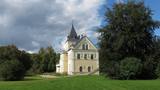 |
The museum is in the mansion of the Dole Estate, which was built in 1898 for the Loeuwis von Menar dynasty. The collection presents Daugava as an important water route, with the apparel of Baltic and Liv tribes, everyday objects, etc. Outside the movement is equipment to catch lampreys and a reconstructed weir to catch salmon. Alongside is a 17th century cannon from the Duchy of Courland that was found in the Misa River and was cast in Baldone. Nearby are four cannons from the Russian tsar’s army. Those were found on a building lot in Salaspils in 2007. |
|
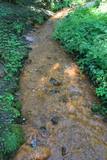 |
The Saltupju sacred stream is 1.3 km to the Northwest of the centre of Aknīste, near the small valley of the Dienvidsusēja River. The stream has been known as a source for medical treatments since antiquity. It is said that streams which flow to the East always have medicinal water, particularly on Easter morning for those who rinse their eyes in it. The water contains iron compounds, which is seen in the brown sediment (the result of iron bacteria). Alongside the stream is a stone with a small indentation, and it is thought to have been a cult stone long ago. A sacred linden tree grows at the edge of the valley. The stream can be seen with good reason as one of the most outstanding streams in all of Latvia. |
|
 |
Atrodas Lubāna dienvidu krastā pie dambja un Īdeņas kanāla, no kura var aplūkot „tipiskas” mitrāju ainavas – niedrājus, aplūstošus krūmājus, mitras pļavas, aizaugušo ezeru. |
|
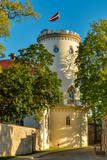 |
Cēsis is in the centre of the Gauja National Park, but it is not part of the park as such. There are many interesting places in Cēsis to visit and examine. The oldest part of the town is of key interest. The origins of Cēsis can be found at Riekstu hill, which is 18 metres high. Between the 11th and 13th century, there was a wooden castle here built by the Vendians. The hill is in the central part of the castle park, and it offers a good view of the park, pond and the ruins of the Cēsis castle, which can be accessed via a long cascade of stairs. The Cēsis castle (see below) was built in the early 13th century as a residence for masters of the Livonian Order, and it was one of the strongest fortresses in the Baltic territories. Alongside it is the New Cēsis castle, which was built in 1777 where the gate fortifications once stood. The Cēsis Museum of History and Art is in the building, alongside which is a visitors centre and the Cēsis Tourism Information Centre. From the tower of the castle, there is a fine view of the castle ruins, St John's Lutheran church and the northern part of the town. Opposite the New Cēsis castle are stables and a wheelhouse (both from the first half of the 19th century). The Cēsis Exhibition Hall is there today. You can look at the exteriors of the granary, the hut for coachmen, and the old brewery. On the other side of the street is the romantic Maija park, which was installed in the 1830s. The park is popular among parents with children, because there is a playground there. From this area, you can walk down some of the old streets of the town – Lielās Katrīnas, Mazās Katrīnas, Mazā Kalēju, Kalēju and Lielā Līvu streets, plus Līvu Square. The wooden buildings along the streets date back to the late 18th and early 19th century. Torņa Street, which weaves its way along the defensive walls of the Medieval castle, offers a look outside the church of a sculpture by Matiass Jansons, "As the Centuries Pass". Legend says that if you rub the lantern carred by the Old Man of Time, you can see the future. One of the most impressive buildings in Cēsis is St John's Lutheran Church, which was built in the late 13th century for the Livonian Order. It is a basilica built in the Roman style and with Gothic elements. The tower, which is 65 m high, was built in 1853. The building was reconstructed several times during the 20th century. Inside the building are grave epitaphs for masters of the Livonian Order and for bishops. The pulpit was installed in 1748, the oak altar followed in 1858, and the altar painting "The Crucified One" dates back to 1862. The stained glass windows around the altar are of great artistic value. The organ was built in 1907 by the E.F. Walker Company, and the instrument is one of the best concert organs in Latvia. A sun clock featuring the year 1744 is at the south-western corner of the church. It is worth climbing the church's tower. At the foot of the building is Rose Square, which began as a market square in the mid-19th century, remained in place until 1927, and was restored in 2008. This is the central square in the town today. During the Medieval Era, there were stockades here, along with the city's well. Rīgas Street has been the main street of the old town from the very beginning, and it is here that you will find the most architecturally outstanding buildings in town from the 18th and 19th centuries. They include the former Cēsis City Hall, the Fābers building, and the Princess building. At one end of the street is Līvu Square, where, during the 13th century, there was a church, a cemetery and a gate in the town walls. Today the square features a lighted fountain which is on the site of a 13th century well known as Lejas Šķimbēgs. At the other end of the street is a reconstruction of the foundations and surface elements of the Rauna gate that was a part of the town walls in the 14th and 15th centuries. The site offers a good idea about Medieval fortifications and the size and mightiness of gates therein. |
|
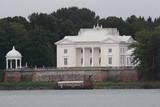 |
Das heute gesehene Ensemble (im Stil des Neorenaissance gebautes Gutshaus) entstand im wesentlichen in der Zeit zwischen 1897 – 1902 als ein Eigentum vom Grafen Joseph Tyszkiewicz und seiner Frau. Ein Park. |
|
 |
A former pharmacy recalls the fact that Ķemeri at
one time was a spa of allSoviet importance. Symbols
devoted to the subject of pharmacies are still on the wall.
|
|
 |
The craftsman uses wicker to produce chairs and tables, as well as wood to make household and practical objects. You can take a tour of the very neat farm, which features wooden sculptures. |
|
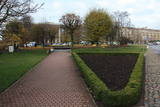 |
Истоки площади Роз уходят в 1911 - 1913 гг., когда на этом месте разбили открытый сад с > 500 кустами роз. В советское время рядом с площадью Роз был установлен памятник Ленину. Восстановленную в 2000 году площадь окружает Лиепайская Педагогическая академия, гостиница «Лива», Центр бизнеса и сделок De Rome (построен в XIX веке, архитектор Пауль Макс Берчи, бывшая гостиница «Рим») и Лиепайский дом латышского общества (камень в основание заложил Карлис Ульманис в 1934 г.). По бордюрам грядок роз размещены памятные знаки городов содружества Лиепаи. К площади Роз подходит улица Зивью (Рыбная), получившая свое название от когда-то существовавшего рыбного рынка. На улице Зивью находится Аллея славы латвийских музыкантов (с 2006 г.), где установлено 35 плит с бронзовым рельефом ладоней музыкантов, 10 плит, посвященные популярным латвийским музыкальным группам, а 5 – ушедшим в мир иной. Здесь же установлена самая большая гитара Латвии. |
|


