
| No | Name | Description |
|---|---|---|
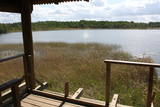 |
This is on the north-western shore of Lake Lielezers of Limbaži, at the start of the Lielezers nature trail. The tower opens up a view of the lake and its lovely shores. It is worth walking the trail, which is several kilometres long, because it is an interesting one. This is part of the ZBR. |
|
 |
Die zentrale und auch schönste Straße in Trakai mit bunten Holzhäusern. Eins der seltenen Kenesa-Gebetshäuser der Welt – ein eingeschossiges Holzhaus mit einem bläulichen Dach. |
|
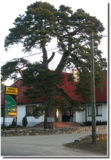 |
The Great Pine of Bigauņciems outside
the Dižpriede café,
|
|
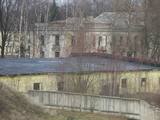 |
The Swedish army built a modern fortress during the 1640s with five bastions and two gates. There were 120 cannons and mortar throwers, barracks for soldiers, flats for officers, a garrison church and warehouses for food at munitions. After the Great Northern War in 1710, the fortress was taken over by the Russian army. After the Soviet occupation in 1940, the Soviet navy took over the fortress. Alongside it is a former Soviet army facility with abandoned buildings and a monument to sailors who served in submarines. The fortress is open for tours on Saturdays and Sundays. |
|
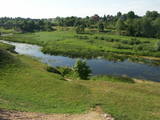 |
The Bauska Nature Park runs for several dozen kilometres along the Lielupe River and its tributaries – the Mūsa and the Mēmele. This is a protected territory. The shores of these rivers contain some of the largest dolomite cliffs in Zemgale. These are protected both as biotopes and as geological monuments. The rivers are important places for river lampreys and vimbas to spawn. Tourists will be attracted by the cultural landscape of the area, as well as the cultural monuments such as the Bauska castle, the Jumpravmuiža park, the Mežotne castle hill, Vīna Hill, the Mežotne castle, etc. The rivers are used for water tourism. |
|
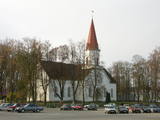 |
Until 13th century, Smiltene region was a part of Talava country, inhabited by Latgalians. After Crusaders invasion it was won by the Archbishop of Riga, and he built a stone castle on the steep river bank of Abuls in 1370. The following wars and epidemics did not spare the development of settlement, nor the people. Present shape of the town began to emerge in 19th century along with the vigorous activities of owner of Smiltene manor first Lieven. Until the World War I, wood working factory, hydroelectric power plant (established in 1901, first in the Baltics), and other companies were operating in Smiltene. In 1944 when the German forces retreated, much of the Smiltene historical buildings were destroyed in the fire. |
|
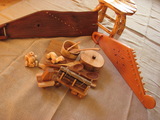 |
Guntis Niedoliņš is a master craftsman, and at this workshop he manufactures wooden jewellery, furniture, interior design objects, spoons, shovels, etc. |
|
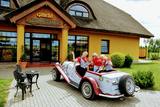 |
Older residents say that the guesthouse is located in the centre of the Domanti village. The guesthouse has four buildings built in accordance with ethnic architectural traditions, including a granary, a sauna and a traditional residence with two ends. |
|
 |
Located at the edge of the Vidzeme Highway (A2) between Ape and Jaunlaiceni, the guesthouse is a lovely location and features a viewing tower. |
|
 |
Small farm with a special lifestyle on Saaremaa that grows, manufactures, processes and sells medicinal plants and herbs. Guests can take a walk in the garden, pick the plants themselves and take part in training workshops. |
|
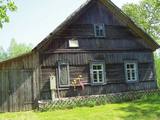 |
The House-Museum of the writer Michael Narics. Reveal the history of political repressions in the
USSR and Soviet Latvia; see creative works of the winners of competition organized by M. Narics Educational
Center.
Working hours: on request |
|
 |
The Lazdiņi farm is one of the most modern farms in Latvia, located in the Krimūni Parish in the north-western part of the Zemgale lowlands. The farm focuses on grain farming (~1,100 ha), processing and storage. Owner Juris Lazdiņš is the chairman of the largest non-governmental organisations in the field of agriculture, and by contacting him in advance, agriculture experts and future experts can go there to exchange experiences. The farm is surrounded by the typical landscape of the Zemgale lowlands. |
|
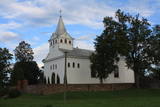 |
Atrodas Jasmuižas austrumdaļā. Dievnams celts 1815. g., bet pārbūvēts 1932. g. |
|
 |
This is Latvia’s oldest nature reserve and, indeed, the country’s oldest protected natural territory. Moricsala is an island in Lake Usma, which is the fifth largest lake in Latvia. The reserve was established in 1912 at the initiative of a group of nature students from Rīga. They wished to protect the deciduous forest of oak trees on the island, along with the local flora and fauna. The nature reserve also includes the Lielalksnīte island. Visits to the reserve, however, are strictly prohibited. |
|
 |
The family restaurant "Hercogs" is situated in the centre of the city of Jelgava, alongside Duke Jacob Square. The chefs use local ingredients and have a partnership with the “Rudiņi” deer garden. Latvian cuisine: Cold soup, venison goulash soup, venison chop, roast pike-perch or catfish, roast pork, sautéed lamb, potato pancakes, sea buckthorn dessert. Special foods: Filet of beef baked on rocks. |
|
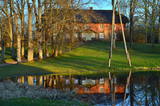 |
This museum is along the road from Jaunpiebalga and Vecpiebalga and was opened in 1969. It focuses on the life and work of two distinguished Latvians – the composer Emīls Dārziņš (1875-1910) and the poet and writer Jānis Sudrabkalns (1894-1975). It features items related to the lives of the two men. Music by Dārziņš can be heard in the museum, tours are offered to individual visitors and groups, and thematic and musical events are held at the museum. |
|
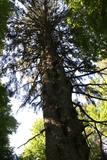 |
This is the thickest and mightiest Norwegian spruce (Picea abies) in Latvia. Its monolithic trunk, with its small holes, is unusual. The tree is in the overgrown park of the former Īve Estate, behind the ruins of the mansion.
|
|
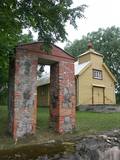 |
The building was built in 1800 and rebuilt in 1825. Zosna Catholic Church is one of the smallest wooden churches in Latgale and the oldest church of the Rāzna National Park. The building is famous for the altarpiece "Madonna with a child". Noteworthy is also the gate, fence (built from red bricks and boulders) and the bell tower. Not far from the church there lives a manager with whom you can agree on seeing the church from the inside. |
|
 |
Atrodas 3 km dienvidos no Velēnas luterāņu baznīcas. Savdabīgo akmens velna skulptūru 1955. g. kā „pieminekli” meliorācijas darbiem veidojis vietējais iedzīvotājs Vilis Zvaigznītis. |
|
 |
Mākslinieka un koktēlnieka Antano Česnulio koka skulptūru parks atrodas Naujasodė ciematā, aptuveni 3 km attālumā no Druskininku pilsētas. Ekspozīcija tiek regulāri atjaunota ar jauniem darbiem. |
|


