
| No | Name | Description |
|---|---|---|
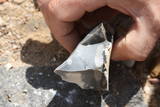 |
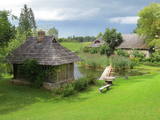
Neliela apdzīvota un ainaviska vieta plašajā Skrobļa (Skroblus) strauta ielejā. Ciema austrumu pusē atrodas Lietuvas mērogā unikāls objekts – klēts - rija, kur no 1929. g. vietējie cilvēki uzveda un skatījās lauku teātra izrādes. Netālu no tās (uz abiem objektiem ir norādes) atrodas Skrobļa avoti (Skroblaus versmės), kas iztek no dziļas starppauguru ieplakas. Avotu gan ir appludinājis bebru uzceltais dambis. Dienvidos no ciema atrodas vecs grants karjers, kas ir viena no retajām vietām Baltijā, kur dabā ir atrodami krama ieža gabali, kas atnesti ar ledāju. |
|
 |
Organic farming principles which maintain the biological diversity of the surrounding region will be explained to visitors during a tour which also offers consultations on environmentally friendly farming. Organic produce is available for purchase, and visitors can relax on the waterside - fishing, enjoying a sauna and making use of local accommodations. A herd of wild cattle can also be observed.
|
|
 |
Находится на улице Лиела, д. 84, в Гробине (т.н. Докторат), где прошло детство писательницы З. Маурини. В Докторате гостили многие известные работники латышской культуры, что оказало большое влияние на будущую писательницу. В 1997 году в здании была создана комната памяти, где писательница жила с 1898 по 1921 год. Посетители могут осмотреть разные экспонаты и увидеть фильм, посвященный столетию З. Маурини. |
|
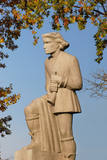 |
Another monument designed by Kārlis Zemdega, this one was installed in 1937 and was initially known as a monument to soldiers who liberated and fell in Rūjiena. The monument survived the Soviet era only because a statue of Lenin that was across the street was on a high pedestal and thus overshadowed the monument to the trumpeter of Talava. |
|
 |
Andrupenes dabas takā var iepazīt sūnas, pārliecināties par sfagnu lielo ūdens uzsūkšanas spēju, gar laipas malām ieraudzīt apaļlapu raseni un purva dzērveni, apskatīt spilves, vaivariņus un purva vārnkāju, kā arī purva pasauli. Takas garums ~ 750m.
|
|
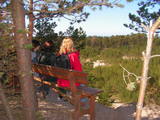 |
One of the highest dunes in Latvia, located between Bernāti and Jūrmalciems villages. It is 37m high and offers a magnificent view of the sea and natural pine forests. The highest dunes in Latvia stand to the South of Jūrmalciems village: the Pūsēnu hill, the Ķupu hill, the Mietragkalns or Tiesas hill, the Pāļu hill, the Garais hill, the Ātrais hill, the Lāvas hill. The Pūsēnu dune is the highest of these dunes which are all called hills by the local people. The Pūsēnu hill developed between 1785 to 1835 when shifting sand became extremely dangerous. Several homesteads were buried in sand, among them „Pūsēni”, where a forester’s family lived. The family is said to have moved to Bārta. The dune was named after the buried homestead. Jēkabs Janševskis, a Latvian writer, wrote in his book „Nīca”: “In olden times, large pine trees were growing in the dunes on the coast of Nīca and they stood steady and firm. But i Swedish times (around 1650), the Swedes built a large kiln for charcoal and tar. Pine wood and stumps provided an excellent material for this. Once a big fire rose, and the charcoal kiln burned down as well as the whole pine forest. The remaining stumps and bare trunks in the vast burnout could not hold the storm-driven sand; it flew further and further burying not only the burned-out forest, but also the nearest fields. In wintertime, when the vast, low marshy grasslands were covered with ice, jets of sand drifted further over its surface, and soon most of the grasslands and large meadows turned into sandy heath-land and dunes.” To reconstruct Liepāja, severely damaged during WWII, a silicate brick factory was built in the town. The main raw material was white sand and it was taken from the Bernātu forest. In the 1960-ies they started to dig off the Green Dune and the White Dune, later also the Pūsēnu hill. The excavators used to work day and night, in three shifts. The work stopped at around 1980, as there was no more sand suitable for production of brick. A trail is set up to facilitate walking in the Pūsēnu Dune in the Bernātu Nature Park. |
|
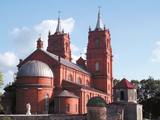 |
Immaculate Conception of Virgin Mary Roman Catholic Church of Nautrēni (Rogovka). The construction
works of the brick church lasted from 1901 till 1914. It is an example of Romantesque style. The
organ was bought in 1939; it is a national cultural monument.
|
|
 |
Ilze Kupča bakes cakes in Mārupe, preserving her grandmother’s traditions. She has received several awards in various competitions in Latvia. She makes cakes and zephirs from natural products, which are either purchased from Latvian farmers or home producers, grown by herself, or even picked in the forests. Individual orders are accepted. Rye delicacies: blackcurrant and apple zephirs with rye breadcrumbs, lingonberry and caramel cake with rye bread. |
|
 |
Dvietes un netāli esošais Skuķu ezeri ir vieni no teritorijas grūti pieejamajiem palieņu ezeriem – lielākie šāda tipa
ezeri Latvijā. Palu laikā pārplūst, savienojoties vienā lielā ūdenskrātuvē.
|
|
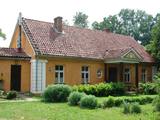 |
Approximately 6 km to the south-west of Iecava is the home of the father of author Edvarts Virza (born Jēkabs Eduards Liekna, 1883-1940), Billītes. The author and his wife, Elza Stērste, moved to the house in 1901. Virza was one of Latvia's most outstanding 20th century authors, poets and prose writers, as well as publicist and translator. He wrote many poems at Billītes, and in 1933 he produced his masterpiece, "Straumēni," which depicts the life of a Latvian farmer. A museum dedicated to Virza is at the house today. It was opened by his children and grandchildren. Contact the museum in advance for a tour. |
|
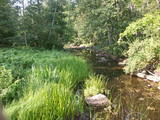 |
A distinct area of the lower reaches of the Vitrupe River, with small sandstone cliffs and many rare species of plants and molluscs. Visitors can visit the Ķirbiži Forest Museum and its information and botany trail. It weaves along both banks of the river and allows people to look at the most typical examples of flora in the region. The noble Vāloži oak tree is a key element there.
|
|
 |
Truly delicious apple juice. Organic farm of apple and sea buckthorn. Visitors can view farms, gardens, production facilities and equipment, as well as taste and buy juices. |
|
 3 days
|
This tour will take you on a walk through the Curonian Spit from Nida to Smiltynė. The Curonian Spit National Park is located on a long, sand-dune spit that separates the Curonian Lagoon from the Baltic Sea coast. A sand beach of ~50 km is running on the western side of the dune spit, while the shore of the Curonian Lagoon is shallow and characteristic of ridged bays overgrown with reeds. The Baltic Coastal Hiking Route starts in the centre of Nida near the port. In Nida, it runs along the Curonian Lagoon promenade, offering beautiful views of the spacious waters. From Nida to Bulvikio Cape, the Baltic Coastal Hiking Route winds along small forest paths leading up and down pine-covered dunes; in the village of Preila, the trail runs along the promenade of the lagoon. Between Pervalka and Juodkrantė, the Baltic Coastal Hiking Route leads along a beautiful, sandy beach. You can take the Raganų kalnas (Hill of Witches) trail in Juodkrantė. The route alternates between the Baltic Sea coast, the dunes and the Curonian Lagoon until it finally reaches the ferry, which will take you to Klaipėda. |
|
 |
The Cīruļi farm is in the Rings of Daugava Nature Park and in the village that is called "Lielie Muļķi" (Big Fools). The owners have more than 100 hives of bees, share experience, talk about the lives of bees and offer tastings and purchase of products. There is a chance to look and buy paintings by the owner who will talk about the "Lielie Muļķi" (Big Fools) village. |
|
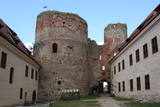 |
Bauska's name in historical sources for the first time is mentioned in 1443. This is the time when on the peninsula between Musa and Memel confluence construction of last Livonian Order castle on the present-day territory of Latvia was begun. At the castle – in Ķirbaksalā populated area so-called Vairogmiests developed. During the 17th century rapid boom of the town was observed. Here were working goldsmiths, silversmiths, carpenters, potters, shoemakers and other craftsmen. In later centuries the city suffered from wars, plague and Napoleon army. Today Bauska old town with reconstructed City Hall and the restored Bauska Castle is one of the most interesting Latvian historical town centres. Bauska is known for its annual events - Ancient Music Festival, Bauska town festival, country music festivals, and other events. |
|
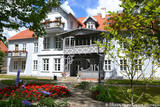 |
The Šilute Estate is often described on the basis of its last owner, Hugo Scheu, who bought the estate in 1889. He restored the estate's buildings and territory, also installing two parks, one for the estate, and the other one known as the "raven forest." Alongside the estate is an English-type park with strolling trails. The park is used by local residents and is on both sides of the curvy Scheu River, with the banks connected by pedestrian bridges. He park stretches to an old railroad bridge and has approximately 150 types of plants, including 40 types of trees and shrubs. |
|
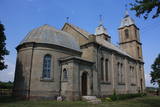 |
Atrodas nomaļā vietā, 0,7 km no Daugavpils – Krāslavas (A 6) ceļa, Daugavas virzienā. Dievnams celts 1933. – 1938. gadā koka kapelas vietā pēc Prāvesta Vaclava Kozlovska projekta, kurš pats arī vadījis celtniecības darbus. Dievnams celts no lieliem cementa ķieģeļiem. Tā lielajā altārī novietota Svētā Antona glezna, bet sānu altārī – Jaunavas Marijas statuja. Gan glezna, gan statuja ir pārvesta no Izvaltas baznīcas. Ikdienā baznīca apskatāma no ārpuses. |
|
 |
The spacious cafe in Gulbene with comfortable chairs and a tasty meal of the day menu. It is also possible to taste various types of pizza and dishes typical for the Gulbene district. Working hours: Monday-Thursday: 10:00 - 22:00, Friday-Saturday10:00 - 03:00, Sunday 11:00 - 22:00 |
|
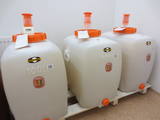 |
The farm produces homemade wine made of rhubarb, birch juice and apples. Tour the winemaking facilities and examine the process. You can taste and purchase products. |
|
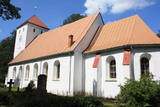 |
Šo sakrālo celtni uzskata par vecāko Zemgales baznīcu, kas joprojām pilda savu pamatfunkciju. Tās celtniecību uzsāka 1567. g. un pēc nopostīšanas atjaunoja 1614. g. Pēc poļu - zviedru un Ziemeļu kara to atkārtoti atjaunoja 1815. g. Dievnamu var apskatīt arī no iekšpuses. |
|


