
| No | Name | Description |
|---|---|---|
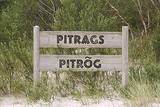 |
was first recorded in documents in 1582. The shallow water around the village contains many sunken ships. In 1826, Pitrags had 11 farms and 190 residents. A saloon was opened in the mid-19th century. In 1937, the village had 12 old farms and 38 fishing operations (mostly new farms). There were several fish processing plants in the village. One of the local residents was the distinguished Livonian language storyteller Marija Šaltjāre (Bertholde, 1860-1930). She shared more than 200 fairy tales and legends, more than 90 songs and games, etc. The Pitrags Baptist Prayer House was built in 1902. It was burned down during World War I, rebuilt in 1925, and renovated in the late 20th century. The Krogi homestead in the centre of Pitrags has a collection of 27 old types of Livonian coastline fencing. The owner also offers a chance to help with the smoking of fish and then to taste the resulting product. |
|
 |
The farm offers various goodies, including cheese, butter, cream, cottage cheese and fresh eggs. |
|
 |
This is an ecological and biodynamic medicinal plant farm that is run by two sisters who produce herbal teas and spices. Educational programmes offer information about the plants and their medicinal properties. You can lease bikes to ride down the bike paths of the Žemaitija National Park. |
|
 1 day
|
From Kaberneeme the route runs through a forest where you can see piles of stones carried here during the last ice-age. The trail soon climbs about 20 m up to the hiking trail, which runs on the old shore line of Lake Ancylus. The trail continues to the Linnamäe HES and a suspension bridge. Follow the trail over the ancient fortress hill of Linnamäe and continue on the right bank of the River Jägala, until reaching the Jägala waterfall. This is the highest natural waterfall in Estonia, more than 8 m high. The Suka bridge is about 500 metres up from the waterfall. After crossing the river, the trail passes through the Jägala waterfall park. Finally, the trail runs through the village of Koogi and arrives at Jõelähtme. |
|
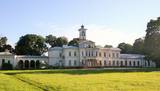 |
This is one of the most expressive estates built in the style of Romanticism. Dating back to the 19th century, it is on a peninsula in Astravo, which can easily be reached from Biržu along the longest wooden bridge in Lithuania, crossing Lake Širvenos. Covering 18 ha, the mixed-plan park was installed from 1851 until 1862. Local fir trees, linden trees and pine trees grow in the park. |
|
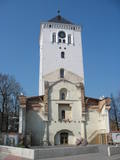 |
The most significant period for the town is the time from 1561 to 1795, when the Jelgava district is a part of the Duchy of Courland and Zemgale. When Jelgava obtains the status of residence of the Duke of (1567t) and becomes the capital of the Duchy (1616) a rapid urban development begins, which is highest of during the reign of Duke Jacob. During the reign of last two Dukes of Courland - Ernst Johann Biron and his son Peter (1775) St. Peter's Academy (Academia Petrina) - the first Latvian Institute is founded, in 1816 is founded Courland Society of Literature and Art, in 1822 the first newspaper in Latvian "The Latvian newspaper" is published, in 1802 the first Latvian theatre building is built, but in 1898- the first building intended for museum. In 1937 Latvian agriculture camera is located in the Jelgava palace, but after two years Jelgava Agriculture Academy is opened. Nearly all the town's historic buildings and art treasures perished in the summer of 1944. After the World War II, Jelgava was rebuilt. Recently the Trinity Church tower has been restored, in which now is located one of the best Latvian interactive museums (very friendly for families with children). |
|
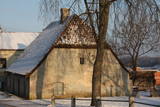 |
This little building is on the left bank of the Venta River beyond the ancient brick bridge. It is located at Pils Street 4. The hut was built in 1735, using rocks from the damaged castle of the duke, and it was built on a terrace that is the last fragment of the walls that surrounded the castle. Also known as the Hangman’s hut, the building was rebuilt during the 19th century. It can only be viewed from the outside. |
|
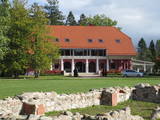 |
About an hour's drive from Riga, in the territory of the old Annas manor, is the internationally recognised design hotel "Annas Hotel". Inspired by the old traditions of Latvian cuisine, the chef creates a new menu every day, allowing you to enjoy a special and extraordinary meal. Latvian cuisine: Stock with chanterelles, rabbit dishes. Special foods: Blackberry-balsamic soup with cottage cheese ice cream. |
|
 |
One of the largest meat and dairy farms in Kurzeme, with a herd of around 500 heads of cattle. The farm also breeds most of the types of fowl that are known in Latvia. An informative tour is available, and you can purchase meat, milk and eggs. |
|
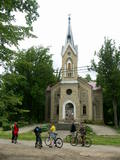 |
18 A. Upīša Street. The church was built in 1897 in the Neo-Gothic style (Architect H. Shel) and it is one of the few19th century city brick buildings. In the church there is the altarpiece "Christ healing the sick" - I. Zeberliņš (1943). You can see the church from the inside during the worship or by a prior arrangement. Near the church, you can see a monument designed by E. Laube (1926) to 80 Latvian riflemen who died in World War I and who were buried in the Warrior's Cemetery near the river Vēršupīte. Near the cemetery, there are also buried J. Kārkliņš and F. Siliņš, fighters of the Kauguri Battle of May 18, 1919. By a prior arrangement, tourist groups can see the church from the inside. |
|
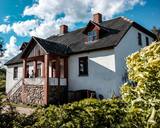 |
Guest house "Ausmas" is located in Valka region, and can accommodate up to 30 people. Catering services are also available both on site and off-site. Guests have access to a wet sauna, as well as a sauna ritual with a skilled bather. The guest house organizes various events, as well as tours and groups of children. There is also an animal farm on the farm, where children can feed and love a variety of animals. The owners actively cooperate with the neighboring farms. The owners of the guest house are home-grown producers who offer guests a variety of smoked meats, cheeses and homemade bread. Master classes are offered in both cheese tying and bread baking. It is possible to visit and organize tastings both with home-made products and with the offer of the surrounding farms. |
|
 |
Taarka Tarõ Köögikõnõ is located in the traditional Setos Farm House, and besides the Setos traditional dishes, also offers flavours of other Finno-Ugric nations and Ukraine. |
|
 |
A family shop in Ikšķile that offers the produce of small Latvian producers and craftsmen. The store is a favourite, not only of the residents of Ikšķile and the surrounding area, but also for shoppers from Riga, Ķekava, Ogre and other cities. An online store is also available. |
|
 |
Уютное кафе в центре Тукумса. Время работы: пн. – сб. с 10:00 до 18:00; вс.- закрыто. |
|
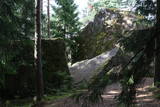 |
Die Größe dieses Feldsteins ist eindrucksvoll, obwohl er nach dem Volumen (262 m3) nur der 16. größte Feldstein Estlands ist. Die Länge beträgt 10,7 m, Breite – 6,5 m, Umfang – 27,8 m. |
|
 |
Plašajā piedzīvojumu un atpūtas parkā ir iespējams piedalīties elpu aizraujošās aktivitātēs. Piedzīvojumu parkā "Supervāvere" visiem aktīvās atpūtas cienītājiem ir iespēja izmēģināt vairāk kā 60 atrakcijas: augstu un zemu kokos izvietoti dažādi virvju ceļi, pārejas un šķēršļi, kā arī ierīkoti nobraucieni pa trosēm. Laižoties pa garākajiem šāda veida nobraucieniem Latvijā gar ausīm svilpo vejš un acīm paveras lielisks skats uz Gaujas senlejas koku galotnēm. Tāpat ir iespējams doties Gaujas upē - ar plostiem, raftiem, kanoe vai piepūšamajām laivām. Gaujas krastā atrodas arī Ozolkalna kempings ar 6 mājīgiem mazajiem namiņiem. Katrā ir divas istabas ar kopīgu sanitāro mezglu. Namiņos iespējams izguldīt 4 – 5 personas. Tie ir apsildāmi, visas gultas ir saklātas, katram viesim ir dvieļu komplekts, iespēja uzvārīt tēju namiņā, pieejams grils, koplietošanas virtuve, bezmaksas WiFi. Ozolkalns arī piedāvā vietu pasākumiem kempinga teritorijā un kopā ar sadarbības partneriem palīdzēs noorganizēt uzņēmuma āra pasākumus.
|
|
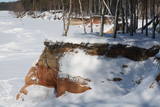 |
This is the most impressive and colourful set of cliffs along the Vidzeme coastline. Waves have created the steep shore that is as much as 6 m high, with several hundred meters of red sandstone cliffs with narrow caves, niches, grottos and other formations. The nearby Veczemu farm is where the Rīga Film Studio shot the films “Long Way into the Dunes” and “The Nest of the Old Fisherman.”
|
|
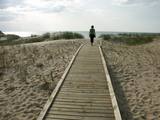 |
The trail tells about the protected nature area which is found in Riga city and has been established to protect the seashore habitats (forests, meadows, reeds, dunes) and the birds, populating the daugavgrīva meadows. There is a bird watching tower with facilities for people with special needs.
|
|
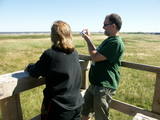 |
The viewing tower is in a seaside meadow near Mērsrags. It is an unusual type of biotope in Latvia and is located to the North of the Mērsrags port. The tower offers a good view of reed-filled meadows, areas where wild cattle have grazed, and an amazing wealth of different kinds of plants. |
|
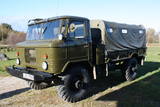 |
Edgars Kārklevalks, operator of a guesthouse Pūpoli, has a restored Soviet military GAZ-66 truck in which he offers historical and informational tours of Northern Kurzeme. The route includes former military territories.
|
|


