
| No | Name | Description |
|---|---|---|
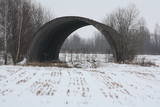 |
Few Soviet military objects are associated with more legends than this one. During Soviet times, this was a reserve airfield, as well as a storage site (just 50 kilometres from the republic’s capital city) for nuclear weapons. These were hidden in two cement hangars that were covered with soil and vegetation. Public information suggests that an RX-24 nuclear bomb weighing 430 kg and a RX-26 nuclear bomb weighing 1,030 kg were stored here, as were air-to-land missiles equipped with nuclear explosives. If there had been an accident here, what would have happened to Rīga, to Latvia, to the Baltic States and to Northern Europe? The airfield is a closed territory today.
|
|
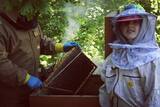 |
The owner produces honey and related products such as pollen and propolis, honey wine, and an alcoholic beverage called “Bee’s Kiss.” You can take a tour of the beekeeping operations and purchase the products. |
|
 |
The farm specialises in goat farming and goat cheese. Tours are available with tastings and purchase of products. The herd has some 150 goats, and visitors can taste and buy goat cheese. The farm is certified as a biological farm that focuses on environmental health. |
|
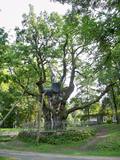 |
This park dates back to the mid-18th century and is to the south of Lake Stelmuže. There are winding trails on all sides of the hillock that lead to the Christ the King Church, with linden, maple, oak, birch, fir, elm and pine trees. At the foot of the hillock is the Laime stream, and visitors are welcome to stroll along the alley of oak trees. The oldest and fattest oak tree in Lithuania is one of the oldest ones in Europe. It is though that it is 1,500 to 2,000 ears old, and its record-setting diameter is 3.5 metres (eight or nine people linking hands are needed to encircle it). The tree is 23 m high. |
|
 |
Teaching workshops and home cafés are common throughout Estonia, but they are found most in Peipsimaa region. During the workshops, the participants, with the help of the chef, prepare 3-4 dishes, which are then shared afterwards. Emphasis is placed on local products and the favourite recipes of Peipsimaa region. Teaching workshops are mainly organised outdoors, where a fireplace is made; a grill, pot or samovar is used. In winter, workshops even take place on the ice of Lake Peipus. |
|
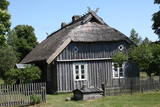 |
Koņuciems of Pape is one of the few seashore fishing villages in Latvia to have preserved an authentic environment to the present day. The Latvian Open-Air Ethnographic Museum has a branch here, “Vītolnieki”, and this is an authentic and ancient fisherman’s farm. +371-2926-2283. The sad fact is that some people have built modern buildings in the village, and it has now lost its earlier untouched charm. |
|
 |
Rukši ir bioloģiskā saimniecība, kura audzē HEREFORD šķirnes liellopus, bariņu blējošas aitas ,vistas. Ar ambiciozu skatienu nakotnē par iespējām nodrošināt ar kvalitatīvu liellopu gaļu visus izsalkušos. |
|
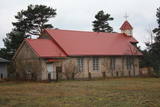 |
Atrodas ciema ziemeļdaļā. Neliela vienstāvu ēka ar svaigi nomainītu jumtu. Pēc vieniem avotiem celta 1883. gadā, citiem – pamatakmens ielikts 1933. g. 1. maijā. Tā tapusi pēc vietējo iedzīvotāju ziedojumiem uz Pirču māju zemes (saimnieks zemi atdevis dievnama celtniecībai). Baznīcas iekārta 2. pasaules kara laikā gāja bojā, tādēļ mūsdienās redzamā ir tapusi 20. gs. otrajā pusē. |
|
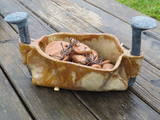 |
The potter offers tours of his workshop, a chance to use the potter’s wheel to produce your own clay dishes, opportunities to draw, and a chance to manufacture drums and dolls. You can buy the finished products and listen to the craftsman playing his drums. |
|
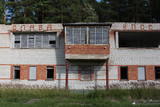 |
The firing range at Skujnieki was once used for summer sports, as well as training in the use of firearms. The Defence Ministry still uses the facility from time to time. The central building of the facility was built in 1982, and its façade is decorated with text in the Russian language: “Слава КПСС” (“All Honour to the Soviet Communist Party).
|
|
 |
Atrodas pie Jēkabpils – Rēzeknes autoceļa (A 12), - autostāvlaukuma malā. No torņa redzama samērā plaša Teiču purva daļa ar atsevišķām salām (kokiem apauguši paaugstinājumi) augstā purva ainavā. Teiču purvam ir dabas rezervāta statuss, tādēļ apmeklējams ir tikai tornis. |
|
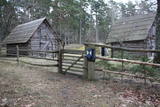 |
Approximately 200 metres to the North-East from the Liv People's Centre, along the Mazirbe-Košrags road, there is the Seppes homestead. The little log granary was built in the 1920s and 1930s by an Estonian fisherman and builder who arrived in Mazirbe from Saaremaa. He was called Jēkabs Jaga. On the other side of the road is the Kalši home, which was built in the early 20th century. It has been restored, but the bricks that were made in a local kiln were preserved for its walls. |
|
 2 days
|
The Forest Trail follows small roads and trails through the woods. Along the route you will see the Ērģeļu Cliffs, where the observation terrace provides a great view of the impressive 700 m wide sandstone cliff and the beautiful natural landscape in the ancient River Gauja valley. One of the most beautiful places on the banks of the River Gauja is at “Caunītes” tourist lodging, where you will end the first day of the route. Further on the trail leads through pine forests and wetlands, across and around hills and slopes. One of the most beautiful views of the River Gauja opens from Sietiņiezis Rock, a 15 m high sandstone cliff where a circular 1.5 km trail has been constructed. Coming to Valmiera, you will reach the so-called “Dzelzītis” bridge (a narrow-gauge railway bridge) and continue walking along the River Gauja to Valmiera Centre. Sites of interest in Valmiera: St. Simon’s Church, ruins of the Livonian Castle and Valmiera Museum. There is also an adventure park “Sajūtu Parks” (“Park of Senses”), where you can walk on the barefoot trail, the tree-top trail and enjoy other activities. |
|
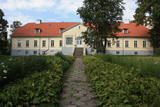 |
Находится ~ в 1 км на восток от центра Априки. Дворец господской усадьбы (стиль барокко) строился с 1742 по 1745 гг., а башня неоготического стиля как пристройка возводилась в конце XIX века. На фронтоне главного фасада дворца выполнен рельеф из песчаника с гербом родов баронов Остен – Сакенов и Корфов, который является самым роскошным элементом среди подобного рода имений Латвии. В здании сохранились и первоначальные элементы интерьера (осматриваются в сопровождении гида) – дверные створки, расписанная голландская печь, оконные дубовые ставни, коробки, чеканные металлические детали и паркет. В комплекс господской усадьбы входит дом управляющего, дом прислуги, хозяйственные постройки и парк. С 1920 года во дворце господской усадьбы действует школа и устроен музей края, который непременно следует посетить! Сейчас в музее выставлена коллекция этикеток производимого в Латвии хлеба. В 1901 году господскую усадьбу приобрел Карл Густав Маннергейм (1867 - 1951), который был президентом государства Финляндии и легендарным автором системы фортификации линий Маннергейма - Зимняя война (1939 - 1940). |
|
 |
Divus kilometrus garās lokveida takas sākums ir meklējams pie Somā nacionālā parka apmeklētāju centra (atklāts 2000. gadā) – Tēramā ciemā. Tā ved gar Mardu strauta (Mardu oja) krastu, kur krustām šķērsām ir sakrituši bebru nogāztie koki, radot diezgan juceklīgu skatu. Apmeklētāju centrā var iegūt nepieciešamo informāciju, noskatīties videofilmu un nacionālajam parkam veltītu ekspozīciju. |
|
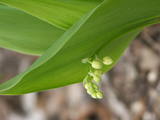 |
This is an uncommon trail. The visitor will learn all about quite “ordinary” trees such as the oak, the linden, the hazelnut, the fir and the pine. The information is quite interesting, however, making use of the heritage of Latvian folklore. The site is located near the Zvārte rock. Visitors will spend around one hour on the trail.
|
|
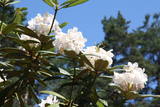 |
72 types of wild rhododendrons with 193 different species
This is the only specialised rhododendron nursery in the Baltic States. Specialists there work on different kinds of rhododendrons, seeking to produce decorative and winter-resistant types of the flower. The nursery also sells plants. In the facility’s pine forest, which covers 11.8 hectares, you can see a large collection of rhododendrons from all over the world.
There are 64 winter-resistant types of rhododendrons at “Babīte,” including “Alma Mater,” “Academia Scientiarum,” “Emeritus,” “Eduards Smiļģis,” “Dita Krenberga,” and others (these were developed by Rihards Kondratovičs). All of these are appropriate for Northern Europe.
|
|
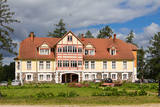 |
Close to Otepää, in a very beautiful place, surrounded by woods and hills, Canterville loss is waiting for you. A great place to relax with your family. Large playground for children. The restaurant serves both romantic meals and lunch during workshops. |
|
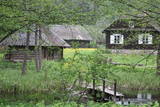 |
Salos, Vaišnoriškė, Strazdai, Šuminai sind die bewohnten Dörfe im Augštaitija- Nationalpark, in denen historische Einzelgehöfte mit Holzgebäuden erhalten sind. |
|
 |
The Juniper, a symbol of the island of Saaremaa, is also a valuable syrup. Guests will find out a lot about junipers. From spring to autumn you can enjoy the splendour of the garden, as well as look inside the ancient peasant's house. |
|


