
| No | Name | Description |
|---|---|---|
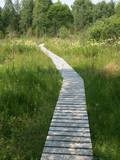 |
This small restricted area protects the Swedish juniper and the lime meadows in which it grows. There is a marked circular trail which allows visitors to study one of the few but excellent stands of juniper in Latvia. The bushes are 50 to 70 years old, and all around them are interesting habitats, plants and animals. Natural stands of juniper in the Baltic States are the result of farm work such as reaping, chopping, etc., as well as of herding of sheep and other livestock. A small part of the area is still “managed” by sheep. Unfortunately many junipers have died because of overgrowing of territory. |
|
 |
It is possible to look at African ostriches of different ages; to listen to stories about or of ostriches. It is possible to buy crafts made of ostrich feathers, skin and grease, fresh ostrich eggs. |
|
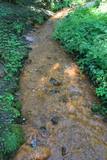 |
The Saltupju sacred stream is 1.3 km to the Northwest of the centre of Aknīste, near the small valley of the Dienvidsusēja River. The stream has been known as a source for medical treatments since antiquity. It is said that streams which flow to the East always have medicinal water, particularly on Easter morning for those who rinse their eyes in it. The water contains iron compounds, which is seen in the brown sediment (the result of iron bacteria). Alongside the stream is a stone with a small indentation, and it is thought to have been a cult stone long ago. A sacred linden tree grows at the edge of the valley. The stream can be seen with good reason as one of the most outstanding streams in all of Latvia. |
|
 2 days
|
Latvia is the land of apples, so producing cider here is only natural! The ancient traditions of apple growing in our country, as well as the variety of high-quality apple cultivars, are key advantages of Latvia's cider culture. In our climate zone, it is challenging to grow good grapes for wine production, but the local conditions are particularly suitable for making apple cider. This is a natural consequence that local cider producers are increasingly mastering with excellence. The Cider Route will take you to various cideries in Latvia, as well as to restaurants and pubs that serve it. The Cider Route allows you to understand the specifics of Latvian cider, introducing you to the culinary traditions and cultural heritage of different regions. You will have the opportunity to meet the cider makers themselves, who run small farms, tend to the orchards, share about their work, and even let you participate in it. |
|
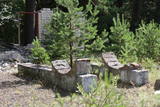 |
The No. 521 Border Guard post at Ovīši is owned by the Defence Ministry and is closed to civilians. Visitors can only look at the ruins of some buildings in the dunes.
|
|
 |
This farm is in a lovely location that offers a view of Lake Sauka. He breeds cattle which spend all year long on the sides of nearby hillocks. The owner will offer you a tour, show you the animals, and offer sweet cherries and apples from his garden. |
|
 |
Meklējams pie Gulbjiem – Dvietes senlejas informācijas centra. No torņa labi pārskatāma ūdeņiem bagātos pavasaros pārplūstošā Dvietes paliene, dzīvei savvaļā pielāgoto mājlopu aploki un izlīkumotā Dvietes upīte. |
|
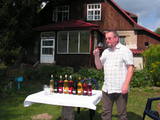 |
The owner of the guesthouse produces homemade wine from blackberries, black currants, lingonberries, oak leaves, birch sap, strawberries, gooseberries, apples, cranberries, cowslip, and 20 other raw materials. You can taste the wines, learn about how it is produced, and purchase some to take along with you. |
|
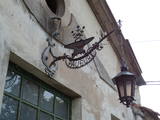 |
The craftsman produces practical and household items on the basis of Latvian ethnography, also continuing old traditions related to Latvian blacksmith operations. You can forge your own nail or horseshoe. |
|
 |
This farm produces organic grains, and it has a bakery at which tasty rye bread, wheat-rye bread and croutons for bread yoghurt are produced. Bread can be purchased on site.
|
|
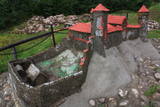 |
The Naujene castle hill is on the steep bank of the Daugava River, is up to 25 metres high and has two valleys on its sides. Between 1275 and 1277, the master of the Livonian Order, Ernst von Ratzenburg, organised the construction of a brick castle to replace a Lettigalian wooden castle that had stood there before. The castle had a drawbridge and an external and internal forecastle. Until the middle part of the 16th century, the castle was the residence of one of the top officials in Dünaburg. The forces of Ivan the Terrible sacked the castle in 1577, after which the location lost its strategic importance. New fortifications were built in the location that is now the city of Daugavpils. Alongside the ruins of the castle is a miniature model that helps to imagine the appearance of the location many centuries ago. A well-appointed pathway leads from the car park to the castle hill. The hill offers one of the loveliest views of the curvy Daugava River and its surrounding nature park. |
|
 |
You can watch blacksmiths at work at this smithy, and you can order metal decorations, fences and other products on the basis of individual agreement with the blacksmith. |
|
 |
Kõpu lighthouse s the world’s oldest continuously operating lighthouse. There are exhibitions in the lighthouse, and a cafe. |
|
 |
A place where you can enjoy nature and food. The tavern Kogre got its name from Seven Fish Soup - crucian (koger), is the seventh fish. The owner is a fisherman, and together with his wife he prepares various dishes from his catch. |
|
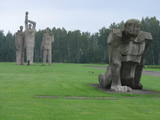 |
A Nazi concentration camp was at this location during World War II, and there is information to suggest that more than 50,000 residents of occupied Europe were murdered here. This is one of the largest ensembles of its type, taking up 25 hectares of land. It was opened in 1967 and has large groups of sculptures, including “Mother,” “Solidarity,” “Unbroken One” and “The Path of Suffering.” The wall of the entrance gates has a thematic exhibitions. |
|
 |
The cafe is situated in Jekabpils, in the shopping centre Aura, on the left bank of the river Daugava. The premises are comfortable and have a touch of a countryside, which can be felt in the wooden interior of the place. They offer breakfast, dinner or supper here. Working hours: 9:00 – 20:00 |
|
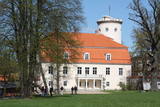 |
The history of Cēsis begins at the Riekstu hill, which is 18 m high and the surrounding area. There was a wooden castle built by the Vendian tribe that stood there from the 11th to the 13th century. The hill is in the central part of the castle’s park, and it offers a fine view of the park, a pond and the ruins of the Cēsis Castle. A long staircase leads to the hill. The Cēsis Castle was built in the early 13th century as the residence of masters of the Livonian Order, and it was one of the most fortified forts in the Baltic region. Alongside is the New Cēsis Castle, which was built in 1777 in a place where gate fortifications had been before. The building houses the Cēsis Museum of History and Art, and an annex contains the Castle Visitor Centre and the Cēsis Tourism Information Centre. From the tower of the castle, we get a good view of the castle ruins, St John’s Lutheran Church and the northern stretches of the city. Opposite the new castle is the stable of the Cēsis Castle Estate and a wheelhouse (both from the first half of the 19th century). Today these house the Cēsis Exhibition Hall. Other buildings include a granary, a hut for coachmen and an old brewery. On the other side of the street is the romantic May park, which was installed during the 1830s. Streets in Cēsis include Lielā Katrīna, Mazā Katrīna, Mazā Kalēju, Kalēju and Lielā Līvu streets and Līvu square with wooden buildings from the late 18th and early 19th century. Torņa Street stretches along the walls of the Medieval castle. Outside the church is a sculpture, “As the Centuries Pass By,” and legend has it that anyone who rubs the lantern of the Old Time Man can see the future. One of the most impressive buildings in Cēsis is St John’s Lutheran Church, which was built in the late 13th century by the Livonian Order. The Roman-style three-segment basilica has elements of Gothic design and a 65 m steeple that was installed in 1853. The building was reconstructed several times during the 20th century and contains grave plaques relates to masters of the Livonian Order and local bishops. The pulpit dates back to 1748, the oak altar was manufactured in 1858, and the altar painting “Crucified One” was painted in 1862. The windows of the altar part of the church contain artistically valuable stained glass. The organ was manufactured in 1907 by the E.F. Walker firm, and it is one of the best concert organs in Latvia. The solar clock with the number 1744 is in the south-wester corner of the church. It is worth scaling the viewing tower of the church. At its foot is Rose Square, which was a market square from the mid-13th century until 1927 and was restored in 2008. This is the central square in the city. During the Middle Ages, a punishment pole and the city well were here. Rīgas Street has been the main street in the old part of the city from the very start, and here we find most of the architecturally distinguished buildings from the 18th and 19th century – the former city hall, the Fābers house and the Princess house. At one end of the street is Liv Square, where there a church, cemetery and the Rīga gate in the city’s walls existed in the 13th century. Today the square is decorated by a lighted fountain at a place where a well was found in the 13th century. On the other end of the street we find a reconstruction of the foundations of the Rauna gate from the 14th and 15th century, offering a good look at Medieval walls and the size and strength of the gates. It is commonly claimed that the national flag of Latvia was born in Cēsis, but it must be emphasised that the flag that is mentioned in chronicles was designed in Cēsis in 1279 as the ideological prototype of the current Latvian flag, while the story of the first national flag actually comes from Valmiera, where it was sewn in 1916. |
|
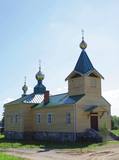 |
Tiskādi Orthodox Church is the cultural monument of the local significance. The construction works of the building lasted from 1829 to 1878. The
church was reconstructed in 2008. The church has antique icons and the library
of sacred literature.
|
|
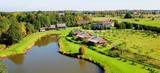 |
The "Agluona" guesthouse offers coffee and dishes from Little Lithuania and Žemaitija. Tastings are offered of locally baked bread and Little Lithuanian pierogi and waffles. |
|
 |
Atrodas skaistā vietā – pašā Daugavas krastā. Ēdina, klāj galdus, piedāvā braucienus ar kuģīti pa Daugavu. |
|


