
| No | Name | Description |
|---|---|---|
 |
The farm breeds purebred and crossbred cattle for seed, fattening and meat production. It sells piglets and pork, grows grains and potatoes, and engages in beekeeping. Six ponds are used to breed carp, tench and orfe. During the winter, fishing is possible in special basins that are based on the flooding of a curve in the Bērzene River. Valti offers a look at biological farming, beef cattle breeding, genetic work related to purebred animals, and fishing outdoors. The farm has a special seminar room and kitchen for seminars and training. The farm maintains the Oskars Kalpaks trail, which crosses a territory that is geological and landscape interest. |
|
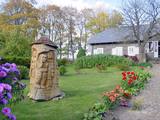 |
This museum is at the Griežioneliu farm in the Anīkšču region. It was opened in 1968 as an authentic farm with plants that come from that time. The history of the farm is related to biological heritage. |
|
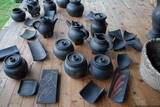 |
The attractive potter is a member of the “Potter School,” and he uses knowledge from his ancestors. The “Malny Wylky” workshop offers a look at traditional pottery work, including a foot-powered potter’s wheel and a firing pit that uses firewood and the smoke technique. You can examine and purchase the finished products. Vēsma, in turn, is an oil painter and will demonstrate her artworks. |
|
 |
Atrodas 0,9 km no Jaunpiebalgas muižas pils, Jaunpiebalgas centra virzienā. Redzot šo ēku, nav jāpārliecina, ka tā ir viena no garākajām Vidzemē. Tik gara, ka grūti pat „iedabūt kadrā”. |
|
 10 days
|
The tour introduces modern day life in rural Finland, Estonia and Latvia and includes visits to small farms raising livestock and producing delicious foods, and to ethnographic villages preserving the traditional lifestyle in a contemporary environment. The tour also involves sites of historical and cultural interest. |
|
 |
The café is in the historical centre of Tukums and offers various Latvian baked goods and pastries. |
|
 |
The number of types of peonies in this garden is close to 400, and collect Dagnija Voika is proud of one of the largest collections in Latvia. There are 30 types of shrub peonies, and other flowers that grown there include bearded irises, Siberian irises, daylilies, as well as less common plants such as yuccas and eremurus. The garden is open in June, when the owner organises a peony festival and offers tours. The valuable peony roots are used to produce the PEO series of cosmetics, and plants can be purchased. |
|
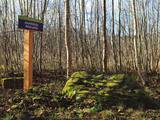 |
Jaunstašuļi Devil's Footstone is situated in the village of Jaunstašuļi in overgrown place beside the
derelict houses. It is hard to find it without the guide. The boulder is 0,75 m high and its circuit is 5,85 m.
On the surface there is the human foot: the length 0,3 m, width 0,09 m, depth 0,02. There was another foot.
It’s obviously scaled off. The North side of the boulder has three casted steps.
|
|
 |
Zemnieku saimniecībā "Rudzīši" iespējams apskatīt dažādus mājputnus - vistas, tītarus, dažādu šķirņu pīles un zosis. Mini zoo mīt arī cūkas, aitas un kazas. Tiek piedāvāta izjāde ar poniju, kā arī iespēja pārnakšņot brīvdienu mājā. |
|
 |
The saloon is in the historical centre of Līgatne, alongside a pond, and in a building that was once home to the first Līgatne paper factory. Latvian cuisine: Vidzeme stroganoff, grilled Kolka herring, grilled pork, Amata trout, potato pancakes with cream, pancakes with jam, beer, kvass. Special foods: A special dessert. |
|
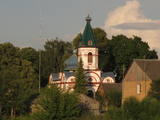 |
This is an urban construction monument that was created between the 17th and 19th century, and it is of national importance. The street layout around Jelgavas and Rātūža streets forms closed blocks of buildings. There are Lutheran, Catholic, Orthodox and Baptist churches in Jaunjelgava. One of the most outstanding architectural monuments is City Hall, which was built in 1912 and features Art Nouveau forms. None of the city’s five synagogues has survived. The historical centre of Jaunjelgava features a promenade that runs along the banks of the Daugava River. This is a popular place for strolls, leisure and swimming. |
|
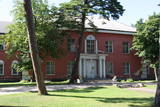 |
The former military field hospital is in the park, south from Ventspils Seaside Open-air Museum. A few of the small architectural forms of the building have been preserved.
|
|
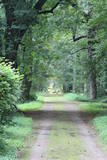 |
This is the oldest arboretum in Latvia. It was planned by the owner of the Skrīveri Estate, Maximmilian von Sievers (1857-1919). It has to be said that before World War I, there were two times more species of plants in the park than is the case now. The plants are grouped in accordance with the geo-botanic regions of the world. There are trails in the park, and signs showing the Latvian and Latin name of each plant are there, as well. There’s a fountain which is operated from every hour on the hour from 11:00 AM until 11:00 PM from Tuesday until Sunday. On the other side of the Rīga-Daugavpils highway is the Skrīveri Forest Park with hiking trails.
|
|
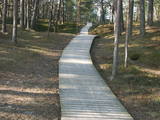 |
The nature reserve “Plieņciema kāpa” is founded in 1987 and covers 60.6 hectares of land. Since 2005 it is a Natura2000 site. The nature reserve protects a 150-200m wide and 3.5km long part of a distinct, continuous dune rampart. The dunes shelter Plieņciems village protecting from sea winds. The key natural values here are rare and protected biotopes of national and European significance: “Wooded dunes of the coast 2180” in the area of 61.8 ha, “Fixed dunes with herbaceous vegetation, 2130 (grey dunes)” in the area of 8.27 ha, “Shifting dunes along the shoreline with Ammophila arenaria (white dunes) 2120 in the area of 3.20 ha”, “Black alder swamp forests 9080”, ) in the area of 2,68 ha, as well as rare and protected species of Latvian and European significance including eastern pasqueflower (pulsatilla patens), Rolling Hen-and-chicks(Jovibarba sobolifera), Nothorhina muricata, Wryneck (Jynx torquilla), Woodlark (Lullula arborea). In the nature reserve, there is a “Vabu square” – a deflation in the dune where for centuries local fishermen have been drying nets. In the 18th and 19th centuries ships were built here. Nine ships have been built here in 1882 - 1925. The four-masted gaff-rigged schooner with hoisting engine “Eurasia” was completed in 1925, the largest ship built by the Kurzeme fishermen. It was one of the works of Martin Morgenstern (1866-1945), a famous shipbuilding master. Thanks to dunes, Plieņciems village was a popular holiday resort and has been mentioned in written sources already in 1738. Clergymen and landlords with their families used to stay here. In 1808, a merchant from Riga bought the local pub and replaced it with a massive two-storey building with a large ball-room and dining hall. On July 15, 1810, a sea bathing facility was opened for health treatment. For arrival of the empress Elisabeth Alexeievna, the wife of emperor Alexander I of Russia, who was a grandson of Catherine the Great, the road from Tukums town was repaired, the two highest hills were levelled, a road passage was dug across the Plieņciems dune, and a lime-tree alley was planted to facilitate access to the beach and bathing spot. Later, in 1920ies, the resort circles consisted mainly of the Kurzeme region landlords. There was a dance-floor in the park of Plieņciems village, and a special orchestra played music for resort guests three times a day. |
|
 |
This farm grows hemp and offers information about the history of the plant and its uses in nutrition and saunas. Hemp butter, ice cream, tea and hemp milk are offered. Take a tour with degustation. |
|
 |
The cafe Baravika is situated in the centre of Rezekne city. It offers a wide variety of dishes. Working hours: Mon-Fri 8.30 līdz 18.00 |
|
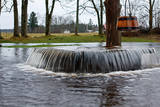 |
Tuhala region has settlements of about 3000 years of age. There are 11 ancient settlement sites, 30 cult stones, 3 burial sites, 4 sacred groves, etc. Tuhala Landscape Reserve has a unique natural feature - the Nõiakaev (Witch´s Well) which “boils” up water during floods at 100 l/s, and 5 mightiest energy columns of the country. |
|
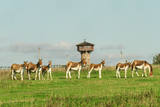 |
Te plašos aplokos mīt 38 sugu savvaļas dzīvnieki (kiangi, lāči, lūši, vilki, meža cūkas, aļņi, vāveres, plēsīgie putni) un visdažādāko šķirņu mājdzīvnieki – Latvijas zilās, Hailandes un Galovejas govis, Romanovas aitas, Vjetnamas cūkas, pīles, zosis, tītari u.c. Acīgākie dīķos pamanīs retās Eiropas kokvardes. Kalvenes pagasta „Cīruļi” – tā ir lieliska, nesteidzīga atpūta lauku vidē, iepazīstot dzīvo dabu! Darba laiks no novembra līdz martam: katru dienu no 10:00 – 16:00 |
|
 12 days
|
This is the longest of the Forest Trail tours, where you will hike on many beautiful forest nature trails in Latvia and Estonia. These nature trails are part of the Forest Trail and this tour is suitable for self-drive tourists, who wish to hike different sizes of trails and get an impression of the forest diversity in both countries. You have the possibility to see the northern coniferous forests with spruces and pines, broadleaf forests, wet floodplain forests and picturesque forests growing on slopes and ravines. You will also see the most interesting tourist sights in Latvia and Estonia, which are close to the Forest Trail. In Latvia you will visit Sigulda, the historic Ligatne papermill village, medieval Cesis, the River Amata valley, which is located in Gauja National Park. Then you will drive to the less populated eastern part of Latvia – the Northern Gauja protected landscape area, Aluksne Town and hike in the Korneti-Peļļi subglacial depression, one of the most impressive ravines in Latvia. You can climb to Drusku castle mound – the highest and steepest of all the castle mounds in Latvia, When entering Estonia, you will see the highest point of the Baltics – Suur Munamagi Hill, where the observation tower is built. Further on the tour will lead you to the River Piusa valley, Obinitsa, with the culture of Seto people. You will hike in the historic Varska resort town, which is very close to the Russian border. Then you will reach Tartu and Lake Peipsi, which is the 5th biggest lake in Europe. You will hike in the Kurtna landscape reserve, see the Ontika limestone cliff, Valaste waterfall – the highest in Estonia. Finally you will hike in one of the beautiful wooded areas in Estonia – Lahemaa National Park. The tour ends in Tallinn, where you can enjoy the medieval Old Town and many other attractions. |
|
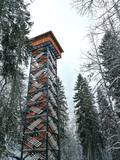 |
Dabas liegumā "Lielie Kangari" atrodas 33 metrus augsts skatu tornis, kura virsotnē atrodas platforma, no kuras paveras skats uz Kangaru ezeru un Lielkangaru purvu. Dabas liegumā izbūvēta arī nepilnu divu kilometru gara pastaigu taka ar tiltiņiem un skatu platformu pie ezera. Takas sākumā izvietotais veselības maršruts ikvienu apmeklētāju aicina kārtīgi izvingroties un izkustēties. Apmeklētāju informēšanai un izglītošanai visas takas garumā izvietoti arī informatīvie stendi ar fotogrāfijām, kas apvieno varenu stāstu un teiku kopumu par notikumiem, vietām, tēliem un parādībām dažādās apkārtnes vietās. |
|


