
| Nr | Name | Beschreibung |
|---|---|---|
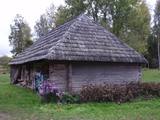 |
This is the home of singer and oral tradition keeper Lidija Jansone, who is a holder of the Latvian Order of Tree Stars and a fierce defender of the cultural heritage of the Suiti people. She will tell you about her community’s history and traditions and about the special bourdon singing of the Suiti. Lidija will also talk about how beer was once brewed by our ancestors for various celebrations. |
|
 |
Das litauische Institut für Obst- und Gartenbau erhielt 1992 den Status eines staatlichen Wissenschaftsinstituts. Es ist nicht nur wissenschaftlich tätig, sondern auch als Züchter und Entwickler. Das Institut baut litauisches Obst und Gemüse an und erzeugt daraus hochwertige, gesunde und natürliche Produkte. |
|
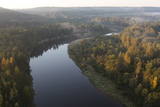 |
Eine der eindrucksvollen Reliefgestaltungen im Baltikum. Bei Sigulda erreicht das Urstromtal eine maximale Tiefe von 85 m ( Breite ung. 1 km). Schöne Sandsteinaufschlüsse aus dem Devon ist ein Anziehungspunkt. |
|
 |
Der Hof von Jadvyga Balvociute ist ein zertifzierter ökologischer Hersteller von Kräutertees. Besucher sind das ganze Jahr über willkommen, jedoch sind der Frühling und Sommer besser für einen Besuch geeignet. Frau Balvociute hält 45-minütige Vorträge zu Kräutern, an die sich eine 30-minütige Exkursion durch die Pflanzenkollektion im Freien anschließt. |
|
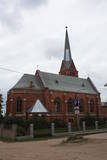 |
Atrodas t.s. Baznīcu kalnā – 18. novembra ielā 66. Apjoma ziņā – lielākais Daugavpils luterāņu dievnams, kuru cēla laikā no 1891. - 1893. g. neogotiskā stilā no sarkanajiem ķieģeļiem (arhitekts Vilhelms Neimanis). 1941. g. baznīcā izcēlās ugunsgrēks un gāja bojā lielākā daļa no tās sākotnējās iekārtas. Turpmāko divu gadu laikā baznīcu daļēji atjaunoja, taču vēlāk tajā izveidoja noliktavu u.c. baznīcai „nepiederīgas” iestādes. 1985. g. ēka vēlreiz cieta ugunsgrēkā. Pagājušā gadsimta deviņdesmito gadu sākumā uzsāka baznīcas atjaunošanas darbus, uzstādīja solus un altāri, kas ir Ogres Amatniecības vidusskolas audzēkņu darinājums. |
|
 |
Dieses Territorium umfasst den Küstenabschnitt zwischen der Straße Ventspils-Liepāja und der Ostsee auf beiden Seiten des Flusses Užava. Das Gebiet wurde eingerichtet, um sowohl die Küstenbiotope wie die Graudünen und als auch eine Reihe von gefährdeten Pflanzen zu schützen. Südlich der Mündung der Užava steht oben auf einer steilen Düne einer der romantischsten Leuchttürme von Lettland – der Užava – Leuchtturm.
|
|
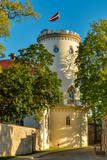 |
Cēsis is in the centre of the Gauja National Park, but it is not part of the park as such. There are many interesting places in Cēsis to visit and examine. The oldest part of the town is of key interest. The origins of Cēsis can be found at Riekstu hill, which is 18 metres high. Between the 11th and 13th century, there was a wooden castle here built by the Vendians. The hill is in the central part of the castle park, and it offers a good view of the park, pond and the ruins of the Cēsis castle, which can be accessed via a long cascade of stairs. The Cēsis castle (see below) was built in the early 13th century as a residence for masters of the Livonian Order, and it was one of the strongest fortresses in the Baltic territories. Alongside it is the New Cēsis castle, which was built in 1777 where the gate fortifications once stood. The Cēsis Museum of History and Art is in the building, alongside which is a visitors centre and the Cēsis Tourism Information Centre. From the tower of the castle, there is a fine view of the castle ruins, St John's Lutheran church and the northern part of the town. Opposite the New Cēsis castle are stables and a wheelhouse (both from the first half of the 19th century). The Cēsis Exhibition Hall is there today. You can look at the exteriors of the granary, the hut for coachmen, and the old brewery. On the other side of the street is the romantic Maija park, which was installed in the 1830s. The park is popular among parents with children, because there is a playground there. From this area, you can walk down some of the old streets of the town – Lielās Katrīnas, Mazās Katrīnas, Mazā Kalēju, Kalēju and Lielā Līvu streets, plus Līvu Square. The wooden buildings along the streets date back to the late 18th and early 19th century. Torņa Street, which weaves its way along the defensive walls of the Medieval castle, offers a look outside the church of a sculpture by Matiass Jansons, "As the Centuries Pass". Legend says that if you rub the lantern carred by the Old Man of Time, you can see the future. One of the most impressive buildings in Cēsis is St John's Lutheran Church, which was built in the late 13th century for the Livonian Order. It is a basilica built in the Roman style and with Gothic elements. The tower, which is 65 m high, was built in 1853. The building was reconstructed several times during the 20th century. Inside the building are grave epitaphs for masters of the Livonian Order and for bishops. The pulpit was installed in 1748, the oak altar followed in 1858, and the altar painting "The Crucified One" dates back to 1862. The stained glass windows around the altar are of great artistic value. The organ was built in 1907 by the E.F. Walker Company, and the instrument is one of the best concert organs in Latvia. A sun clock featuring the year 1744 is at the south-western corner of the church. It is worth climbing the church's tower. At the foot of the building is Rose Square, which began as a market square in the mid-19th century, remained in place until 1927, and was restored in 2008. This is the central square in the town today. During the Medieval Era, there were stockades here, along with the city's well. Rīgas Street has been the main street of the old town from the very beginning, and it is here that you will find the most architecturally outstanding buildings in town from the 18th and 19th centuries. They include the former Cēsis City Hall, the Fābers building, and the Princess building. At one end of the street is Līvu Square, where, during the 13th century, there was a church, a cemetery and a gate in the town walls. Today the square features a lighted fountain which is on the site of a 13th century well known as Lejas Šķimbēgs. At the other end of the street is a reconstruction of the foundations and surface elements of the Rauna gate that was a part of the town walls in the 14th and 15th centuries. The site offers a good idea about Medieval fortifications and the size and mightiness of gates therein. |
|
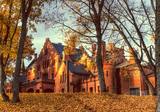 |
Als Prototyp des Schloßes hat das Schloß Windsor in England gedient. Der Bau des Gebäudes hat 1883 geändert. Der letzte Schloßbesitzer war Friedrich fon Berg (1845 – 1938), der bekannte Züchter der Getreidekörner. Ein Park. |
|
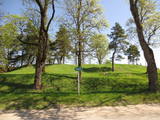 |
Is an ancient Courlandian castle hill and is found in the very centre of Alsunga. It was named in 1659 when General Berg from Kurzeme put cannons on it to attack Swedish forces that had fortified themselves in the Alsunga castle. The hill is 8 to 10 metres high and 24 x 54 metres wide, offering a lovely view of the St Michael Roman Catholic Church, as well as the Alsunga windmill lake that is alongside it. There is a distinct terrace around the hill, and it once was the foundation of wooden defensive structures. On the other side of the street, to the West of the castle hill, is a cemetery with fire graves of Courlandians that date back to the 11th to 13th century. Archaeologists examined the area during the middle part of the last century. The Suiti celebrate Easter and other holidays on the hill. |
|
 |
Alltägliches Leben und Bauernarbeit, Schaffarm mit tollen estnischen Schwarzkopfschafe. Auf altertümlichen Kulturpfad (Steingräber, Felder, Heide) erfahren sie mehr von den altertümlichen Esten und Geschichte des Bauernhofes. Am Hof beschäftigt man sich mit Handarbeit, auch die Gäste haben die Möglichkeit etwas aus Wolle zu basteln. |
|
 5 Tagen
|
Alte Handelswege haben nicht nur Güter, aber auch Kenntnisse und Kultur, alles, was damals neu un unbekannt war, verbreitet. |
|
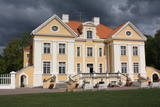 |
Eins der prächtigsten Landgutskomplexe Estlands. Das Gutsschloss wurde 1697 gebaut. Das heutige Aussehen hat das Gebäude im 18. Jh. erhalten. Ein Park mit Teichen und Gartenlauben. Viele Wirtschaftsgebäude. |
|
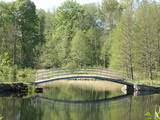 |
Der Park des Landgutes von Zasa befindet sich an den Ufern des Mühlenteiches von Zasa (im Norden von Zasa), der sich von dem Flus Zasa gebildet hat. Mit der Bildung des Parks wurde im 18. Jh. begonnen, der Park wurde als ein Landschaftspark im romantischen Stil gebildet. Gleichzeitig mit der Bildung des Parks wurde auch mit dem Bau des Schlosses von Zasa begonnen, deren Besitzer Heinrich von Sass war, nach dem der Bezirk von Riga Zasulauks benannt worden ist. Im 19. Jh., als das Landgut von Zasa einen anderen Besitzer bekommt, wird es als eines der reichsten und schönsten Landgüter der Umgebung angesehen. Es ist wert, einen Spaziergang in dem großen Park mit den vielen Brücken, dem Baum der Werwölfe, dem Teufelsstein und der heiligen Quelle zu machen. Die Besichtigung des Parks unter der Leitung eines Reiseführers: +371 26337227. |
|
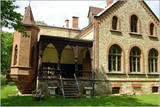 |
Zvārtavas pils aicina ceļotājus un dabas draugus, kultūras un mākslas cienītājus iepazīties ar Zvārtavas pili un citiem muižas kultūrvēsturiskiem objektiem, izbaudīt parku un ezeru, izzināt novada vēsturi un apskatīt mākslas darbus, kuri radīti šeit plenēros un rezidencēs, gan LMS muzeja kolekcijas ekspozīcijas un aktuālās izstādes. Skaistā Zvārtavas pils celta 1881.gadā un ir viena no spilgtākajiem neogotikas stila arhitektūras pieminekļiem Latvijā, kas ir valsts nozīmes kultūras piemineklis. Pašlaik pils pieder Latvijas Mākslinieku savienībai, un tieši šis fakts ir pamats pils unikalitātei. Pilī ir saglabājušies neogotikas interjeri, koka kolonas vestibilā, oriģinālās parketa grīdas, mēbeles un stikla kupols ar vitrāžām, caur kurām gaisma dažādos toņos, veido zīmējumus uz sienām un grīdas. |
|
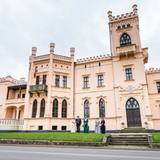 |
Das Schloss wurde von 1859 bis 1863 auf Veranlassung des Barons Alexander von Vietinghoff im Stil der späten Tudor-Neogotik (eins der bedeutendsten Denkmäler solchen Stils in Lettland) mit einem reichen Kalk-Außenputz errichtet. Den Baronen von Vietinghoff gehörte das Schloss bis zur Agrarreform im Jahre 1920. Von 1921 bis 1940 wurde das Schloss durch das 7. Infanterieregiment von Sigulda requiriert. Zurzeit befindet sich im Schloss das Museum von Alūksne mit einer Dauerausstellung und das Naturmuseum “Vides labirints”. Einige der ungewöhnlichen Exponate des Museums „Vides labirints” sind die fluoreszierenden Minerale, die im Licht verschiedener Farbenspektren anzuschauen sind! |
|
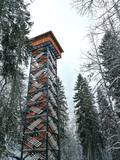 |
Dabas liegumā "Lielie Kangari" atrodas 33 metrus augsts skatu tornis, kura virsotnē atrodas platforma, no kuras paveras skats uz Kangaru ezeru un Lielkangaru purvu. Dabas liegumā izbūvēta arī nepilnu divu kilometru gara pastaigu taka ar tiltiņiem un skatu platformu pie ezera. Takas sākumā izvietotais veselības maršruts ikvienu apmeklētāju aicina kārtīgi izvingroties un izkustēties. Apmeklētāju informēšanai un izglītošanai visas takas garumā izvietoti arī informatīvie stendi ar fotogrāfijām, kas apvieno varenu stāstu un teiku kopumu par notikumiem, vietām, tēliem un parādībām dažādās apkārtnes vietās. |
|
 |
Tas atrodas pie „Burtnieku” mājām Īlē, kur viņš dzīvojis no 1837. – 1845. gadam. Tēvs Juris Barons apglabāts Īles kapsētā. Savu vārdu nemirstīgu Krišjānis Barons darījis, vācot, sistematizējot un sastādot Latvju Dainu krājumu. Tautasdziesmas jeb dainas ir mazi, ritmiski dzejolīši, parasti četrrindes. Pie Latvju dainu vākšanas Barons pavadījis sava mūža lielāko daļu – apmēram 25 gadus gandrīz dienu pie dienas. |
|
 |
Der Garten liegt am Ufer des Flusses Gauja in Nähe der Burgruine von Valmiera. Erzählung über die Verwendung von Pflanzen beim Kochen. Programme zum Brot-, Lebkuchenbacken, Käsezubereitung. |
|
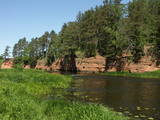 |
Dieser Park ist ein Gebiet, das vom Menschen kaum verändert wurde – Sandsteinklippen, verschiedene Höhlen, Biotope, Arten und Landschaften sind der attraktive Aspekt dieses Gebietes. Der Salaca-Fluss ist einer der wichtigsten Flüsse in der Ostseeregion als Laichgebiet für den Lachs, und es ist der zweitwichtigste Fluss für Wassertourismus in der lettischen Region von Vidzeme. Hier gibt es geologische Denkmäler, die für Besucher besonders attraktiv sind – Die Roten Klippen, der Skaņais-Berg, die Neļķu-Klippe, die Velna-(Teufels) Höhle usw. Hier sind auch solche Kulturdenkmäler wie der Livische Burgberg, der Vecsalaca - Gutshof, das Livische Museum, das Vantenberģi - Anwesen, die einzigartigen Neunaugen - Stauwehre usw. Im Park befindet sich auch eins der beliebtesten touristischen Ziele in Nordvidzeme – der Skaņākalna-Park, der ein dichtes Netz von Wanderpfaden hat. Der Salaca ist auch beliebt bei Fischern. Dies ist Teil des Nordvidzemer Biosphärenreservats.
|
|
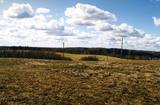 |
No ģeogrāfiskā un kultūrvēsturiskā viedokļa interesanta teritorija Latgales augstienes Rāznavas paugurainē, kuras nozīmīgākie resursi ir dažāda veida biotopi, ainavas, reljefs un Šķaunes ezers. Istras pauguraines dabas parkā nav ar tūrismu saistīti labiekārtojumi, bet šo teritoriju var apskatīt arī „no malas”, braucot pa grantēto ceļu no Soboļinas uz Osinovku, kas iet līdztekus parka ziemeļu robežai (skats uz Šķaunes ezeru).
|
|


