
| Nr | Name | Beschreibung |
|---|---|---|
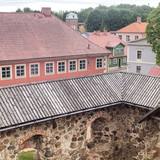 |
Es wird angenommen, dass sich auf dem Hügel Ķezberkalniņš die Burg Lemisele der Liven des Kreises Metsepole befand. Genauso kann man Angaben darüber finden, dass bis zum 16. Jh. aus dem Meer über den Fluss Svētupe und den See Dūņezers bis hier Händler gefahren sind. Im Jahr 1223 hat der Bischof Albert in Limbaži eine gemauerte Burg gebaut. Die Stadt Limbaži wurde wie die Stadt Valmiera zum Mitglied der Hanse. Am Anfang des 16. Jhs. verringerte sich die wirtschaftliche Rolle der Stadt, weil der Fluss Svētupe und der See Dūņezers für die Schifffahrt nicht mehr nutzbar waren. In der Zeit zwischen dem 16. – 18. Jh. haben die Stadt und die Einwohner unter verschiedenen Kriegen, Krankheiten und Bränden gelitten. Im Ergebnis ist die Einwohnerzahl auf acht Menschen gefallen. In der Jahrhundertwende 19.-20. Jh. und am Anfang des 20. Jhs. erneuerte sich hier das wirtschaftliche Leben. |
|
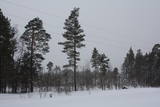 |
Between Saunags and Vaide on the road to Kolka, you will see an area on the left (South) side of the road where there was a massive forest fire in 1992 which burned approximately 3,300 hectares of forest. Biologists use the area to study the regeneration of the forest. There were extensive and destructive fires here during the early 20th century, as well. Swedish scientists say that there have been at least 15 fires in the forests of Šlītere over the last several centuries. The burned area is in a nature reserve and can only be viewed from the road. |
|
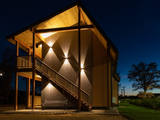 |
Bestes Apartments is a new guest house that can accommodate 45 guests at a time (+ 10 extra beds). The guest house was built and designed in the Latvian style (a wooden building made here in Mūrmuiža), beds made in Latvia, bed linen made in Latvia were used. |
|
 |
The restaurant-cafe Moka is situated in Estonia, in the city of Tartu, not far from Tartu university and offers a wide variety of foods. |
|
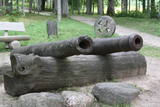 |
Established in 1900 at the place where the Pērse River flows into the Daugava (now the reservoir of the Pļaviņas hydroelectric power plant), the park offers a look at 17th century Swedish cannons and monuments from Medieval graves. Next to the high school in the park is a restored fountain, “Head of a Faun,” which was near the legendary Pērse waterfall during the 1930s. The waterfall is now underwater, but its location is indicated by a stone sculpture, “Girl of Pērse,” which was created by the sculptor Juris Zihmanis. A path leads to an 11 metre high wooden sculpture, “For Eternity,” by the sculptor Ģirts Burvis, and another sculpture, “Little Owl,” which is the work of the Rurāns brothers, both of whom are sculptors of wooden sculptures.
|
|
 |
Das im 18. – 19. Jh entstandene Ensemble von Gutshofsgebäuden mit Museum Audru und Spiritusfabrik. |
|
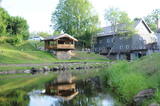 |
Die Engelsmühle ist ein alter Hof am Fluss, wo ab 1851 eine Wassermühle betrieben wurde. |
|
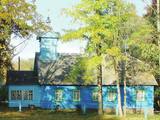 |
Štikāni Old-Believers Prayer House. The construction works of the church were held in 40s of the 20
th century on the site of the previous church built by brothers Rogozini. You should see Gospel (the protected
art object).
|
|
|
|
Bērzes upes labajā krastā, vietā, kur tagad paceļas Dobeles pilsdrupas, jau 1. gadu tūkstotī p. m. ē. atradās zemgaļu apmetne un vēlāk – koka pils. Gandrīz simts gadus pils izturēja vairākus krustnešu uzbrukumus un aplenkumus, un tikai 1289. g., kad vācieši bija pilnībā izpostījuši apvidu un tālāka pretošanās kļuva bezcerīga, zemgaļi paši nodedzināja savu koka pili un neuzvarēti aizgāja uz Lietuvu. 700 gadus vēlāk, 1989. gadā, godinot zemgaļu cilšu piemiņu, bijušās senpilsētas vietā tika atklāta piemiņas zīme, ko veidojis mākslinieks Mārtiņš Zaurs. Akmenī iecirsts teksts: “Zini, no šīs vietas pirms 700 gadiem zemgaļi aizgāja lepni un brīvi”, kā arī dzejnieka Viļa Plūdoņa vārdi : “Mēs svešā malā ejam, bet sirds mums paliek te”. |
|
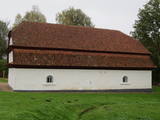 |
In der Kornkammer des Landgutes, die die einzige dreistöckige im Empirestil gebaute Kornkammer in Lettland ist, werden Gerichte der Region Kurzeme angeboten, an deren Vorbereitung man auch teilnehmen kann. Die Wirtin erzählt über Traditionen und die Geschichte der Kornkammer. Lettische Küche: Fischsuppe, Ampfersuppe, Knödel (süße, salzige), Schweinerippen, Käse, süße Gerichte, hausgemachter Wein. Das besondere Gericht: Das Gericht Koča: nahrhafte Graupengrütze mit Zwiebeln und Fleisch. |
|
 |
Auf den landwirtschaftlichen Flächen von 36 ha im Grenzgebiet zwischen Lettland und Weißrussland weiden Kühe, die pro Jahr ca. 10 Tonnen Milch geben, die vor Ort verarbeitet wird. Verkostung und Erwerb von Quark, saurer Sahne, Sahne, Käsespezialitäten, hausgemachtem Eis und Fleischerzeugnissen. Man kan auch an einem Herstellungsprozess teilnehmen. Teilnehmer des Netzes des kulinarischen Erbes Lettgallens. Biologische Landwirtschaft. |
|
 3 Tagen
|
Here you will learn about home-based manufacturers, farms, companies and others in northern Vidzeme that produce various dairy products such as milk, yogurt, cottage cheese, cheese, ice cream, etc. You’ll start out in Cēsis with its Medieval old town, castle ruins, St John’s Lutheran Church and other destinations. Wind your way through the Gauja National Park (Ungurmuiža, Lake Ungurs, the Medieval castle and church at Straupe). You’ll hit the seashore at Saulkrasti and then drive along it to Tūja, where you will turn inland again. In Limbaži you will find Medieval castle ruins, a monument to the great folklorist Krišjānis Barons and other objects. Drive on to Valmiera (St Simon’s Church, castle ruins, a museum, Emotion Park, etc.), Rūjiena and Naukšēni (the Naukšēni Estate). Along the “Northern Pathway” you will reach Kārķi and then Smiltene and legendary Rauna (the Raunas Staburags cliff) before returning to your starting point. |
|
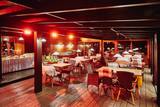 |
Das Restaurant befindet sich am Rand der Straße von Vidzeme (A2). Es ist ein schönes Blockhaus mit Strohdach und Innenausstattung aus alten Zeiten. Für die Vorbereitung der Speisen werden alte Traditionen mit den heutigen Anforderungen der Kunden verbunden. Lettische Küche: Kalte Suppe, Suppe mit Fleischbällchen, graue Erbsen mit Speck, Gerstengrütze, Neunaugen in Senfsoße, auf Kohlen gebackener Zander, gebratenes Schweineohr, Schweineschenkel-Braten, Hähnchenleber in Sauerrahmsoße, geschichtetes Roggenbrot-Dessert, Quarkdessert mit Moosbeerensoße. |
|
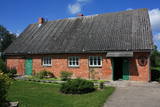 |
Das Museum befindet sich in Aknīste, an der Kreuzung der Skolas Straße und Miera Straße. Dieses Museum ist noch ein Ort, der bei der Erkundung der Kultur und der Geschichte der Region Sēlija helfen wird. In dem Museum (eingerichtet im Jahr 1988) kann man eine Sammlung von Altertümern (aus der Steinzeit und Bronzezeit) und Gegenstände besichtigen, die über berühmte Persönlichkeiten aus der Gegend und die Kultur der Selen erzählen. Besonders wertvoll ist die Sammlung des Geschirrs der Selen. |
|
|
|
Das ehemalige Militärversuchsfeld für Panzer, von welcher heute nur noch indirekte Zeugnisse erhalten geblieben sind (siehe die Erzählung).
|
|
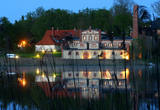 |
The renovated historic distillery at Mooste Manor (1909) is home to the Estonian Photo Tourism Centre. The guesthouse on the second floor of Mooste Distillery offers cosy rooms with all modern conveniences. |
|
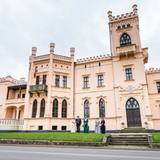 |
Das Schloss wurde von 1859 bis 1863 auf Veranlassung des Barons Alexander von Vietinghoff im Stil der späten Tudor-Neogotik (eins der bedeutendsten Denkmäler solchen Stils in Lettland) mit einem reichen Kalk-Außenputz errichtet. Den Baronen von Vietinghoff gehörte das Schloss bis zur Agrarreform im Jahre 1920. Von 1921 bis 1940 wurde das Schloss durch das 7. Infanterieregiment von Sigulda requiriert. Zurzeit befindet sich im Schloss das Museum von Alūksne mit einer Dauerausstellung und das Naturmuseum “Vides labirints”. Einige der ungewöhnlichen Exponate des Museums „Vides labirints” sind die fluoreszierenden Minerale, die im Licht verschiedener Farbenspektren anzuschauen sind! |
|
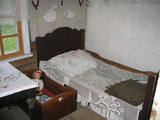 |
Der älteste Teil der jetzigen Wohnriege ist die Riegenstube mit dem Erdfussboden aus 19.Jh. Das Wohnzimmer mit Kammern wurde in der II. Hälfte des XIX. Jahrhunderts gebaut. |
|
|
|
Līdz 40m augsta ar mežu apaugusi Gaujas labā pamatkrasta nogāze ar vairākiem smilšakmens atsegumiem. Viens no tiem atrodas nogāzes lejasdaļā un veido 7m platu 5m dziļu nišu. Otrā krastā – vairākus metrus augstais Leimaņu iezis. Abi atsegumi atrodas aiz Amatas ietekas.
|
|
 |
"Ziedlejas" offers sauna treatments and events in the contemporary design Glass Sauna, Smīma Spruce Smoke Sauna and Black Sauna, which is located in an unspoilt corner of the forest. The ritual sauna treatment includes heating, herbal compresses, herbal scrub, big beating, swimming in the pond, massage with healing oil and honey, vibrating with sound, tea, home-baked bread. The sauna treatment lasts four to five hours and is led by a sauna master. Various master classes are possible in connection with sauna rituals and the use of plants in healing and beauty care and the preparation of appropriate preparations. Bicycle rental is available, which includes access to the Ziedleju xc / enduro trails, bicycle training and bicycle guide services. It is also possible to organize and lead team building events, as well as team communication trainings. |
|


