
| Нo | Название | Описание |
|---|---|---|
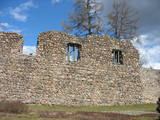 |
Строительство замка в Валмиере было начато в 1283 году. Во время Северной войны (1702 год) замок сожгли, а в конце 17 века снесли внешние стены города. Сохранились развалины замка и другие остатки средневековых укреплений. |
|
 |
Saimniecības drava atrodas netālu no Isnaudas pagasta Bobišiem, dabiskā vietā, kur dabiskā vidē nav lauksaimniecībā izmantojamo zemju un citu objektu. Bišu iegūtā produkcija tiek pārstrādāta Zilupē, Sila ielā 4, kur saimnieki uzņem ekskursijas un var iegādāties saražotos labumus. Saimniecība ir bioloģiski sertificēta. Iegūst liepu un dažādziedu medu. |
|
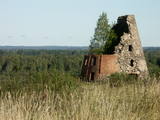 |
The area known as the territory of high hillocks has several heights – Lakta Hill (250 metres above sea level), Egļu Hill (268 metres above sea level), and Bākūži Hill (272 metres above sea level). They are connected by an earthen road – it’s worth hiking the trail to find the best viewing areas. A very fine view of the backs of hillocks in the Vidzeme highlands can be seen from the northern side of Lakta Hill.
|
|
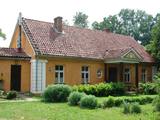 |
Примерно в 6 км к юго-западу от Иецавы находится дом отца Эдварда Вирзы (настоящее имя - Екабс Эдуардс Лиекна) (1883-1940) "Биллитес", в который писатель и его жена Элза Стерста переехали в 1901 году. Э. Вирза был одним из величайших писателей, поэтов, прозаиков, публицистов и переводчиков 20-го века. Многие из стихотворений были написаны в "Биллитес", а в 1933 году здесь появилась на свет легендарная работа «Страумени», изображающая жизнь латышского крестьянства. В "Биллитес" создан музей Э. Вирзы. Его основателями являются дочь Э. Вирзы и Э. Стерсты Амарилис Лиекна с сыном Эдвардом Лиекной, дочерью Анной Жигуре и внучкой Дианой. Предварительно договорившись о посещении, желающие могут ознакомиться с музеем и творчеством Э. Вирзы. |
|
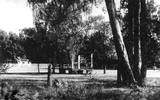 |
Это здание - одно из пяти зданий комплекса „Kurhaus”. Это небольшое здание во времена курорта Нейбаде было домом с ваннами с подогретой морской водой. Сюда в бочках на лошадях привозили с моря воду, чтобы гости курорта в штормовую погоду могли освежиться в морской воде. |
|
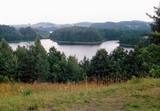 |
Vermutlich ein heidnischer Hügel. Schöner Blick auf die 6 Seenlandschaften. Ein Symbol vom Nationalpark. |
|
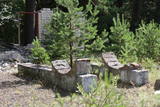 |
Овишский 521-й пост погранохраны находится в собственности Министерства обороны ЛР и является закрытой территорией для гражданских лиц. Интересующимся доступны только развалины отдельных зданий в дюнах.
|
|
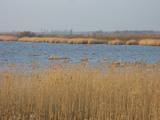 |
A shallow, eutrophic (more than 60% coverage), lagoon-type lake, which is a restricted area to protect the overgrowing lake and the damp meadows which surround it. There are some 60 species of nesting birds in the area. The system of dams on the southern shore of the lake can be used by visitors to look at the area.
|
|
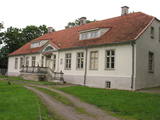 |
Muiža vēsturiskajos dokumentos pirmoreiz ir pieminēta 16. gs. Tagad redzamā vienstāva kungu māja ir vairākreiz pārbūvēta laikā no 17. – 19. gs. 1997. g. ēku vēlreiz atjaunoja un tagad tajā atrodas viesu nams un Vilsandi nacionālā parka apmeklētāju centrs, kur var iegūt ne tikai vērtīgu informāciju, bet arī apskatīt Vilsandi apkārtnē atrastās fosilijas. No Lonas muižas var uzsākt pārgājienu uz Vilsandi salu. Vienā no muižas ēkām ir izveidota Vilsandi nacionālajam parkam veltīta ekspozīcija. |
|
 3 дня
|
Это один из 6 маршрутов путешествий в серии «Насладитесь деревней!», который приглашает Примерное время прохождения маршрута: четыре – пять дней, в зависимости от количества выбранных достопримечательностей и времени, отведенного для их осмотра. |
|
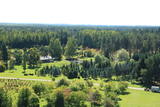 |
This arboretum is in a lovely location in the Vidzeme highlands. It covers 140 hectares of land and offers a look at interesting coniferous trees, lianas, lilacs, rhododendrons and peonies. The facility has a modern visitor information centres.
Unique species: The Tulip Tree (Liriodendron tulipifera), the Fringe Tree (Chionanthus virginicus), and the Kobushi Magnolia (Magnolia kobus).
|
|
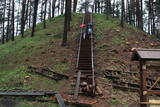 |
Viens no lielākajiem Augštaitijas pilskalniem, kas 2011. g. pēc vērienīgiem rekonstrukcijas darbiem ir izzināms jaunā kvalitātē - gan no infrastruktūras, gan arī ainaviskā viedokļa, jo iepriekš biezais pamežs (tagad retināts) traucēja uztvert iespaidīgo objektu. Arī no pilskalna plakuma paveras labs skats uz diviem blakus esošajiem ezeriem. Tā virsotnē apskatāms piemiņas akmens, kas vēsta par pirmā Lietuvas valsts prezidenta Antana Smetona (Antanas Smetona) apmeklējumu 1934. g. viņa 60 gadu jubilejā. Pilskalns it ticis apdzīvots jau I tūkstošgadē pirms Kristus. Uzskata, ka 14. – 15. gs. te atradusies hronikās aprakstītā Linkmenu pils. Jaunizveidotā taka pilskalnu savieno ar vēl vienu populāru apskates objektu – Ladakalni. |
|
 |
Находится в Вецлиепае, в гостинице «Лива». В меню предлагаются блюда латышской и мировой кухни. В процессе готовки блюд используются выращенные самими пряные растения. Латышская кухня: Малосольная селёдка с творогом, тонкие блинчики с начинкой, картофельные блины, маринованные свиные ребрышки, запеченная оленина с можжевеловыми ягодами, жареная утиная ножка, жареное филе судака с гречкой, копченое филе сельди. Особое блюдо: «Тресочка по-лиепайски» - треска холодного копчения с картофелем, луком и укропом в керамическом горошке. |
|
 |
Место в центре Тарту, где можно попробовать небольшие легкие закуски типа fish & chips, приготовленные из продуктов, полученных в окрестностях озера Пейпус. В небольшом магазинчике кулинарные традиции окрестностей Пейпуса органично соединяются с принципами современного кулинарного искусства, при этом для приготовления блюд используются только самые лучшие местные продукты. Огромной популярностью среди гостей пользуются приготовленные из филе судака fish & chips, сочный бургер и врап (разновидность буррито). |
|
 |
The trail tells about grey dunes which have survived thanks to the border restrictions and the presence of military. The trail starts from the parking place at the mouth of the Užava river. It is one of the few natural rivermouths in Europe. One can also see the „tacis”, an industrial installation for lamprey (Lampetra fluviatilis) fishing during their spawning migration period. The 3km long trail is circular. It winds for 1.5km from the Užava rivermouth to the North, along the coastline (the beach is covered with sand and pebbles), and returns to the starting point by a gravel road through grey dunes. Along the trail, one can observe a distinct white dune with rare plant species Linaria loeselii, Lathyrus maritimus, Anthyllis arenaria, Tragopogon heterospermus. About 1km from the rivermouth, in the sea, one can see a wrack of a sailing ship (parts of frame). The visibility depends on the flow of sand in the sea. The way back opens a beautiful view of the range of grey dunes. Unfortunately, Scots Pine starts taking over the area. There are three important biotopes of EU significance: „Fixed dunes with herbaceous vegetation 2130”, „Decalcified fixed dunes with Empetrum nigrum 2140” and „Dunes with Salix arenaria 2170”, forming a unique mosaic. Typical species here: mountain Alison ‘(Alyssum gmelinii), Pasqueflower (Pulsatilla pratensis), Sand Pink (Dianthus arenarius), Rosemary Leaved Willow (Salix rosmarinifolia), Dark Red Helleborine (Epipactis atrorubens), Kinnikinnick (Arctostaphylus uva-ursi). As a former military site, some military constructions can be seen here like horseshoe-shaped sand ramparts by the road in gray dunes. They were built to disguise military vehicles in case of sea attack. By the Kangroti graveyard, towards the Užava river, there is an underground pillbox. It is a one-man fortification to fire along the coastal perimeter. The Mouth of River Užava walking route is in the nature reserve „Užava” |
|
 12 дней
|
The tour combines the most beautiful southern parts of the Forest Trail in Lithuania and Latvia. The route starts in Druskininkai, Lithuania, and for the next day you will walk through forests of the Dzūkija National Park. After getting to Vilnius and Kurtuvėnai Regional Park, two sections of the Forest Trail will take you from Dengtiltis to Šaukėnai. Since it is among the most forested areas of Central Lithuania, the Kurtuvėnai Regional Park with its glaciated valleys is a wonderland of forests, waters and wetlands. The Forest Trail will run along small forest paths, tourist trails, beautiful tree alleys and wetlands. Next you will take public transportation to reach the Žemaitija National Park, where you will taketwo sections of the Forest Trail from the pilgrimage town of Žemaičių Kalvarija along the lakes of Plateliai, Ilgis and Beržoras to the town of Plateliai. It is one of the most beautiful towns of Samogitia taking pride in its manor park and the viewing platform on Lake Plateliai. Žemaitija National Park takes pride in its old pine and fir forests, as well as mixed forests. From there on the Forest Trail takes you along the riverside promenade in Kuldīga, continues through the nature park “Abavas senleja” from Renda to the wine and cider town Sabile and Kandava. The section along the Abava River Valley Nature Park is the most diverse river valley in Kurzeme in terms of landscapes and terrain. The final section of the tour takes you to the Ķemeri National Park, which is an important place for the protection of wetlands. As to the town – Ķemeri – it is the former balneological and sulphur springs resort. The tour ends on the seaside – the village of Bigauņciems, from where you can easily get to Rīga. Optionally, one can take a detour along the Lake Sloka trail with its bird-watching tower or pay a visit to the “Forest House” – the visitor’s centre of the Ķemeri National Park. |
|
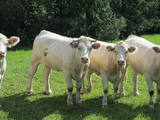 |
Выращивают овощи, лечебные растения и производят мед. На полях хозяйства пасется крупный рогатый скот мясной породы Шароле. Приобретение продукции. Хозяйка поделится опытом и расскажет также о других окрестных биологических хозяйствах. |
|
 3 дня
|
This part of the Forest Trail gives an opportunity to see Setomaa or “the Land of Setos” which is inhabited by Setos – an ethnographic group with specific ancient traditions and a unique language dialect. Forest Trail hikers can visit the traditional Setos homestead and enjoy Setos cuisine. The forests of the region are especially charming in early autumn, when the ground is coloured lilac by the blooming heather. There is a good chance to pick wild mushrooms and berries. One of the most beautiful sections of this trail in Setomaa leads along the River Piusa, where the river is surrounded by sandstone outcrops. You will also visit the Piusa caves. The tour will end in Värska resort – with its sanatorium and SPA, which use the strengths of local nature: mineral water and lake mud. Värska mineral water is well known in Estonia and elsewhere. |
|
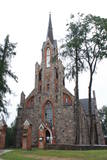 |
Found in the northern part of Cesvaine, the church was built of fieldstones in the Neo-Gothic style in 1879 by the architect Paul Max Bertschy. The church was restored in 1929 and again in the early 1990s. The altar painting, “Christ on the Cross” (1923) is by Jēkabs Bīne.
|
|
 2 дня
|
Аукштайтия является крупнейшим и одним из старейших регионов Литвы, который с 15-го века называют «истинной Литвой». В этом путешествии вы насладитесь сельскими дарами, которые Аукштайтский край предлагает сегодня. |
|


