
| Nr | Name | Beschreibung |
|---|---|---|
 12 Tagen
|
Dauer: 9 Tage / 12 Tage, für wen: unabhängige Individualreisende. Transport: Fahrrad, Kanu, gesamtlänge - ~ 446 km Radfahren, ~ 7 km im Kanu. Reiseverlauf: Riga - Gauja-Nationalpark - Otepää - Ahja-Fluss - Tartu - Lahemaa-Nationalpark - Tallinn |
|
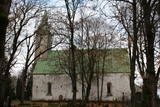 |
Vienīgā baznīca nacionālā parka teritorijā. Tā atrodas Kirblas (Kirbla) ciemā – uz neliela pacēluma, kas Baltijas ledus ezera laikā bijusi sala, kuru no visām pusēm ietvēris ūdens. Kirblas baznīcas pirmsākumi ir meklējami 16. gs. un par tās celtniecību saglabājušies dažādi interesanti nostāsti. Tas ir viens no mazākajiem Igaunijas dievnamiem (29 x 11 m). |
|
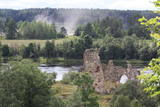 |
Found on the right bank of the Daugava where the little Karikste river flows into the Daugava, all that remains of the castle today is a set of ruined walls and foundations. The castle was built by the Livonian Order in 1224, and it was inhabited until the mid-17th century, when it was sacked during the Polish-Swedish war. The ruins offer a good view of the local gravel road that goes along the right bank of the river valley.
|
|
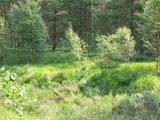 |
Das Wort grinis verweist sich auf einen in Lettland sehr ungewöhnlichen Waldtyp. Es gibt zwei Typen – den Heidekrauttyp und den Grastyp. Das ist das Ergebnis einer langandauernden Wechselwirkung zwischen Natur und Mensch. Solche Gebiete findet man nur an wenigen Stellen an der Küste der Ostsee. Eine sehr seltene Pflanze, die in diesem Gebiet wächst - die Glockenheide - war der Hauptgrund, warum hier ein Naturreservat 1936 errichtet wurde. Eine stillgelegte Eisenbahnlinie zwischen Ventspils und Liepāja führt durch dieses Reservat von Norden nach Süden. Besuche des Reservats sind streng verboten.
|
|
 |
Es befindet sich im Zentrum von Ventspils neben dem Rathausplatz. In angenehmer Atmosphäre können Gäste typisch lettische Küche genießen. |
|
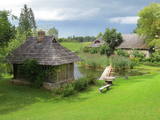 |
Auf diesem umweltfreundlichen Hof (in der Naturalwirtschaft in einer ethnographischen Gestalt) kann man Vorort gezüchtete ländliche Leckereien kaufen und Informationen über diese Produkte erhalten. Auf diesem Einzelgehöft kann man sich zu Sonnenwende-Festen anmelden und eine ländliche Sauna genießen. |
|
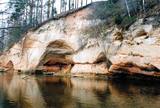 |
This is one of the most beautiful ancient river valleys in Estonia – 12 km long with nearly 40 revealed Devonian sandstone cliffs. Among these, the most important ones are Viira müür, Kalamatu müür, and Põdramüür.
|
|
 |
Dieses Territorium schützt die Landschaft der Lielauce – Hügel, die ein Teil des Ostkurzemer Hochlandes sind. Die Seen Zebrus und Svēte befinden sich in diesem Gebiet. Am nordöstlichen Ufer des Zebrus – Sees kann man den Burgberg Ezerlūķi sehen. Am östlichen Ufer des Sees befinden sich eine Bootsstation sowie ein Aussichtsturm und einige Informationstafeln über das Gelände. Das Gebiet umfasst geschützte Biotope wie Sumpfflüsse und sumpfige Wälder mit geschützten Vögeln und Fledermausarten.
|
|
 |
Einen malerische Sandsteinfelsen bis 600 m lang und 21 m hoch am linken Flussufer vom Gauja. |
|
 |
In Kalakuningad werden geräucherte Fische direkt aus dem Ofen und während der Saison frische Fische sowie eingelegte Fische in verschiedenen Saucen angeboten. Die Produkte kann man auf dem Markt in Pärnu und im Laden in Kalakuningad sowie direkt am Betrieb im Dorf Pärnumaa kaufen. |
|
 |
Ogu un augļu dārzs, dažādu ievārījumu, sulu, sīrupu ražošana un tirdzniecība.
|
|
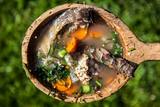 |
Hier werden Kurse angeboten, bei denen man lernt traditionelle Fischsuppe nach jahrhundertealten Rezepten der Region Ost-Oberlitauen zu kochen. Man erfährt hier viel über Ernährungsgewohnheiten, Bräuche und Lebensart in der Region ab dem 13. Jh. Auf dem Hof besteht zudem die Möglichkeit, zu angeln, Pilze zu suchen und Waldbeeren zu suchen. |
|
 3 Tagen
|
Это один из 6 маршрутов путешествий в серии «Насладитесь деревней!», который приглашает Примерное время прохождения маршрута: четыре – пять дней, в зависимости от количества выбранных достопримечательностей и времени, отведенного для их осмотра. |
|
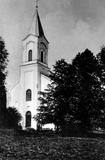 |
The first building of the church was built in 1641. The fourth building of the church was only built in 1856 – during the times of Pastor Johann Wilhelm Knierim. Its altar painting – The Crucified Christ (Golgotha) was painted in 1856 by Jozeps Millers, who was influenced by the altar piece in Munich Louis Church created by his teacher Peter Cornelius. An epitaph of Baroness Auguste Amalija von Pistohlkros, the sister of the owner of Bīriņi Manor and the patroness of the church, was immured in the memorial wall. Construction of the tower was completed on 11 June 1856, as evidenced by a memorial plaque on the wall of the church with an inscription “Erbaut von August Pistolkors 1856”. The church was consecrated in 1864. And a year later an organ by Martin Company with 8 registers, which was extended to 14 registers in 1903, was installed in the church. Unfortunately, the organ was destroyed in WW2. Saulkrasti (Pēterupe) Evangelical Lutheran Church survived both World War 2 and the Soviet period. The Soviet era was one of the most difficult times for the church, because many churches in the area were destroyed, pastors were discharged and the congregation fell apart. The Pēterupe congregation remained. As an architectural monument the church was lucky enough to undergo roof repairs of the tower even during Soviet times. Funds were granted by the Chairlady of the Executive Committee Ņina Manzūrova. |
|
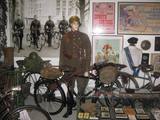 |
This collection contains bicycles from five different armies and five different eras in the history of Latvia. They include a World War I bicycle from the Russian Empire, a bicycle from the Latvian army, two World War II German bicycles, and a Monark-brand military bicycle from Sweden that was donated to the renewed Latvian army in the 1990s. The exhibition also features items that are related to the use of military bicycles – seals, awards, and information about the bicycle units of Latvia’s Home Guard.
This is the only bicycle museum in Latvia, and its exhibits are unique, as well.
|
|
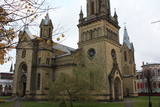 |
Atrodas starp Kr. Valdemāra un Kuršu ielām. Viena no iespaidīgākajām un greznākajām pilsētas celtnēm, kas būvēta neoromantikas formās. 19. gs. beigās katoļu draudze nevarēja saņemt atļauju jauna dievnama celtniecībai, tādēļ uz vecās ēkas uzbūvēja jaunu, kur vecā baznīca tapa par lielākās ēkas sānu kapelu. Baznīcas sienas un koka griestus rotā attēli ar Bībeles sižetiem. Dievmātes kapelā saglabājies mazās baznīcas (no 18. gs.) centrālais altāris. Baznīcas griestos ir iekārts burinieka modelis, ko dāvinājuši vētras laikā izglābušies jūrnieki. |
|
 |
This viewing tower is on a narrow peninsula among Lake Lukna, Lake Višķi, and Lake Boltars. From it, you can see all three lakes, the hillocks of the area, as well as Ambeļi and Višķi. Come here when the bird-cherry trees are in bloom!
|
|
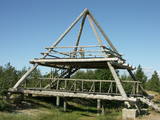 |
This is the only viewing platform of its kind. It is north of Pāvilosta, between the sea and Latvia’s largest gray dune. The second level of the platform offers a good view of the habitats which surround the dune, as well as the seashore and the largest seashore rock on the shores of the Baltic Sea – the Pāvilosta sea rock. You can also see the northern part of Pāvilosta. When it is windy outside, you’ll see kiteboard riders showing their tricks.
|
|
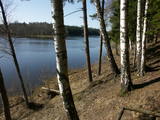 |
Der Valguma See – der bis zu 3 km lange
und 27 m tiefe See hat sich in einer
subglazialen Rinne gebildet.
|
|
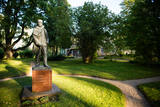 |
Das Gedenkmuseum von Eduards Veidenbaums (1867 – 1892) wurde 1959 im Haus „Kalāči”, wo seit dem fünften Lebensjahr wohnte und auch starb der hervorragende lettische Dichter und Übersetzer. Neben dem Haus ist ein Ausstellungssaal gebaut worden, in dem thematische Ausstellungen organisiert werden. Im Garten des Museum wurde 1961 ein vom Bildhauer Laimonis Blumbergs errichtetes Denkmal für E. Veidenbaums aufgestellt. Daneben ist ein Vorratshäuschen erhalten geblieben, in dem E. Veidenbaums im Sommer lebte. Der Dichter ist auf dem Liepas Friedhof bestattet worden. |
|


